Wonderland
AJA MONET IS SAYING IT WITH HER CHEST
On her sophomore album the color of rain, Surrealist Blues artist aja monet blurs – and rids – of the boundaries between poetry, protest and music.
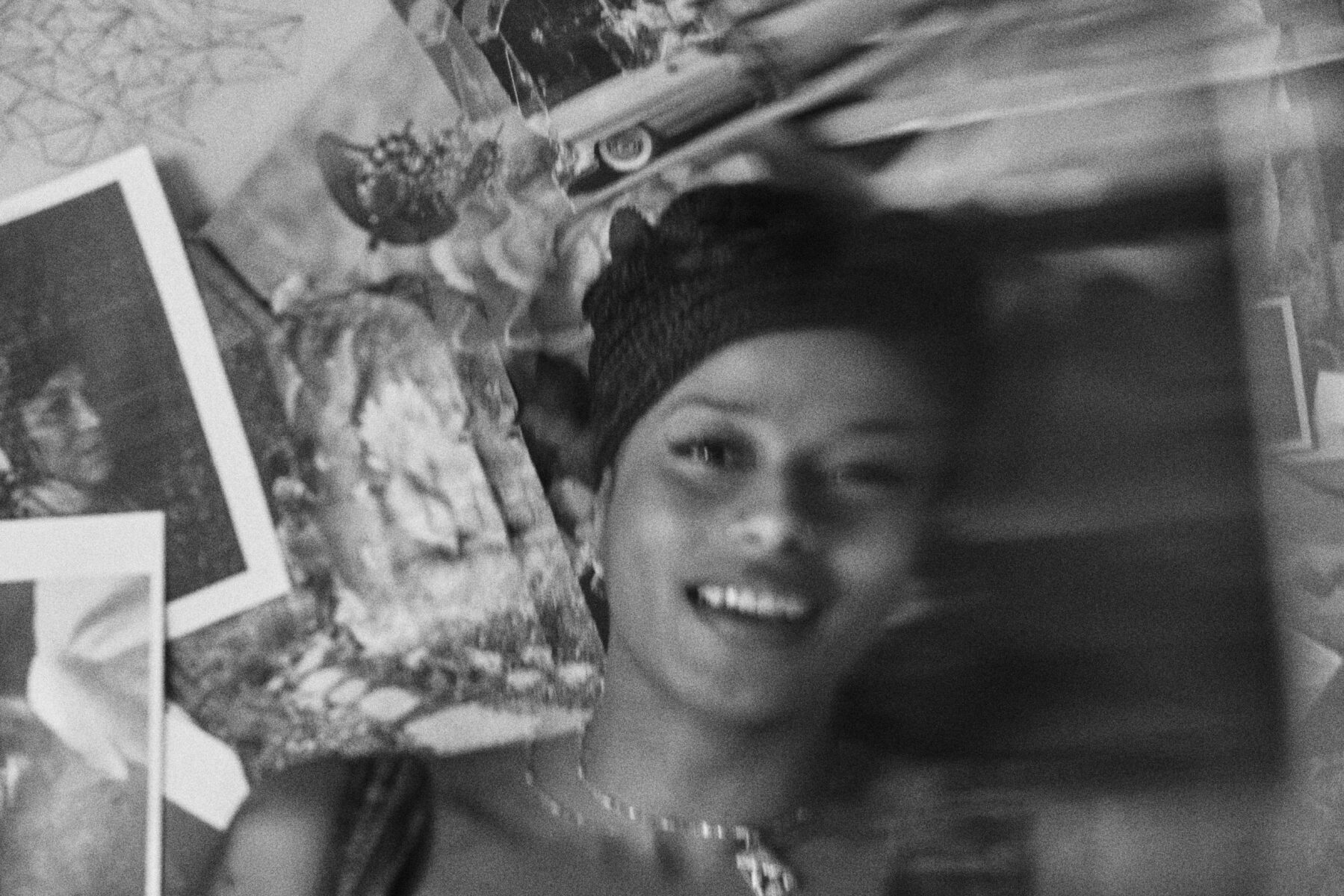
Somewhere between jazz club improvisation and political sermon, aja monet has built a body of work that cannot be confined to neat categorisation. She’s a poet, songwriter, singer, activist, cultural worker, community organiser, and, of course, Surrealist Blueswoman. It’s a long list, but for monet, none of these labels could suffice on their own. They’re all embodied at the beginning of her new sophomore album, the color of rain, where she softly commands: “Say it with your chest.” In her hands, what was a Kevin Hart-uttered phrase that once existed as internet bravado becomes an imperative – not merely firm encouragement, but conviction and instruction.
Across the record, the Grammy-nominated polymath transforms her thought, feeling and lobby into a fluid story that unravels with nuance and complexity – it’s like your tongue being tied, but still somehow making sense. the color of rain doesn’t just sit at the crossroads between poetry and music – saying so would minimise it, and this refuses to be. Rather, it dissolves all distinctions. On the 15-track album, jazz spills over into soulful, electronic textures that then moulds into live percussion. Through it all, monet’s soft, husky voice flows, sometimes reciting, sometimes singing, other times sounding like she’s prophesying directly to you.
The record follows her 2023 debut, when the poems do what they do, the work that first introduced many listeners to her deeply-enriching musical approach to poetry. Where that album felt rooted in tradition and origin – pulling heavily from the Black Arts Movement, the collective she found her feet in, and jazz poetry lineage – the color of rain expands outward, producing a more experimental sound and story yet with that same remarkable ease. Produced alongside legendary bassist Meshell Ndegeocello and drummer Justin Brown, the album feels intentionally restless, refusing containment at every turn. It marks her gradual transition from the sheltered intimacy of live cafe shows – the energy of which fostered many – to stages and halls.
Traces of Los Angeles’ Beat Generation, the Nuyorican Poets Cafe scene, and the sprawling sonic collages of artists like Moor Mother are embedded throughout the record. Still, nothing feels overly referential. Pulling from experiences that built the Brooklyn-native’s inner world, monet’s domain runs too personal and too deep, if plainly put, to read as imitation.
This is the artist whose first poem – a school assignment – told the story of a child hanging themselves from their bunk bed. It’s grim, yes, but earnest. “If I were going to write poems, they had to have some weight to them,” she says now. And it’s that sharp yet sensitive instinct that still shapes her work today. Whether she’s unpacking heartbreak, spiritual unrest or collective survival, there’s an aversion to flattening emotion into something easily digestible. Instead, she lyrically dances and wrestles with the understanding that truth is often uncomfortable, and that poetry should leave fingerprints. She proves, time and again, that it’s an art form with a unique ability to do so.
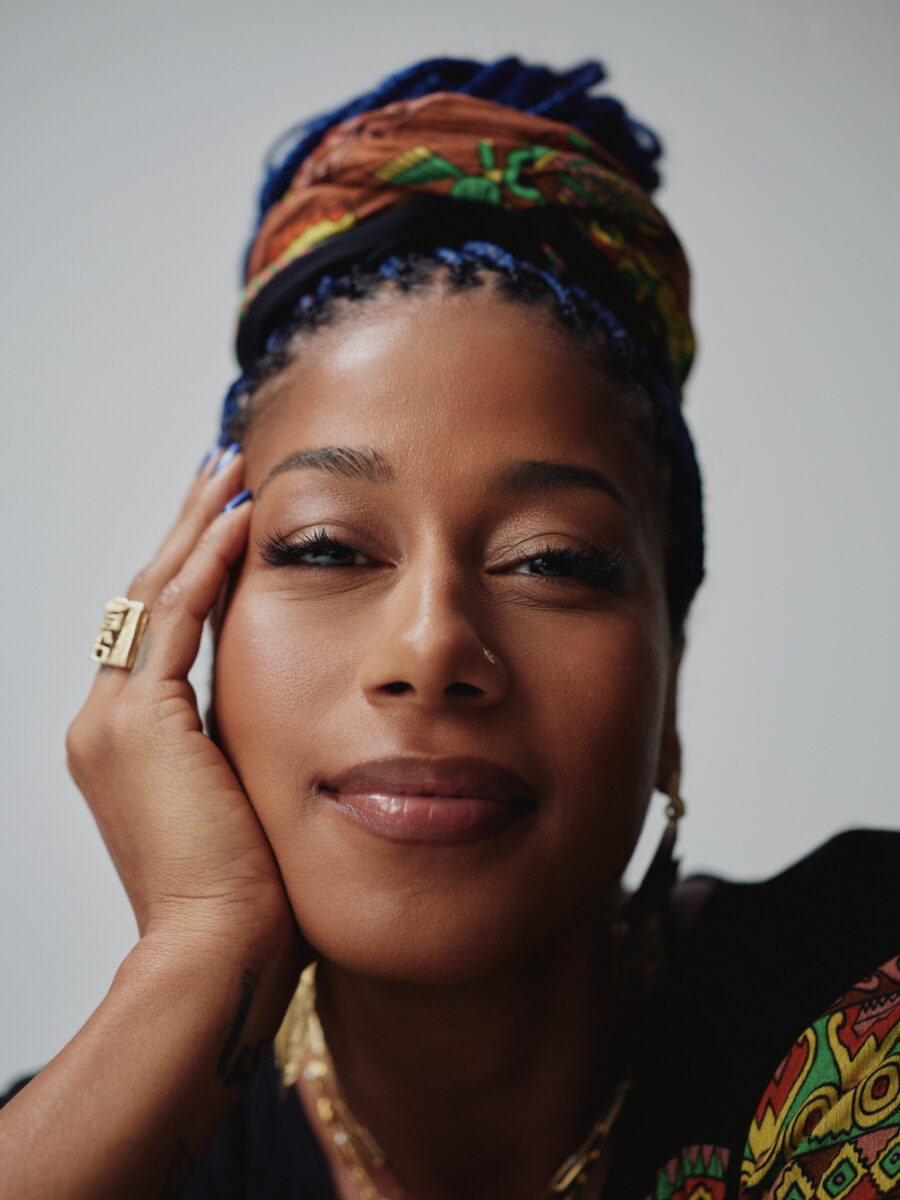
What makes the color of rain so magnetic is the way it constantly shapeshifts. A typewriter becomes percussion. Background harmonies swell and disappear as if you’re caught in a whirlpool of passing thoughts, mumbles and, of course, song. Features from artists like soul and hip-hop singer Georgia Anne Muldrow oscillate through tracks with a playful unpredictability, highlighting the increasing power that monet has allowed her music to breathe new life to. Elsewhere, she rallies rappers Mick Jenkins and Vic Mensa to add their grounded rap edge on “melting clocks” – an additional bite amongst her soft grit. These are songs that rarely settle into fixed structures, instead unfolding like conversations in real time.
Lyrically, it comes as no surprise that monet remains one of contemporary poetry’s most evocative writers. Her images feel both tactile and cosmic, yet not overwhelming: silence becomes “a garden of breath,” miracles are “a muscle we practice,” and Blackness is rendered with softness, divinity and history – battling against preconceived notions and hatred, which she has made her mission to do since the beginnings of her career. Even when addressing political exhaustion or systemic violence – particularly on the haunting “for the Congo” – she avoids didacticism, allowing emotion to tug on the paper threads of thesis-natured matters.
Nevertheless, the album’s biggest revelation is monet herself. Historically celebrated for her oration and slam poetry cadence, on the color of rain, monet embraces herself at her most expansive. She hums, she coos, she stretches syllables and bends melodies, sprinkling careful riffs and trifles into their gradients until her voice feels inseparable from the instrumentation surrounding it. Where previously she was experimenting with how to ensure her discography wasn’t just poems and music, here, the music becomes the poem – and vice versa. On tracks like “song of myself,” her delivery becomes so immersive that it barely scans as spoken poetry.
From loud to lingering, bellowing to bassline, this is the table she’s prepared and everyone’s welcome. Bring your grief and celebration, protest and love. Here, monet reminds us that saying something “with your chest” doesn’t have to mean hardness. Sometimes, it simply means telling the truth out loud – being a light amongst the “indigo”.
Listen to “say it with your chest”
Having been a poet for most of your life, how do you stay excited about it as a creative endeavour?
I’ve just accepted that it is a way of being, a way of seeing the world. I just love it; I love what poets do with language, I love listening to poetry, I love reading it, I love embodying it, existing with it. Recognising the brilliance of other people’s relationship to poetry keeps me inspired. I don’t think I’ll ever get tired of poems.
Your storytelling touches on the earnest, the real and uber revealing. What’s the hardest truth you feel that you’ve had to confront through writing?
The sobering reality of confronting yourself and the things that you need to work on better. In terms of my wellbeing and spiritual resolve, but also in terms of confronting my contradictions in the ways that I’ve allowed and perpetuated abuse. Poems and the truth that come through them reveal themselves to you – you have to face the truth when you sometimes don’t always want to, or know how to.
Is there an emotion or idea that you’ve yet to explore but want to?
I don’t know, but I think I’m a funny person even though it doesn’t always come across in my work. In shows and live performances, this comes to light more. I love the imagination and creativity of humour. I also want to explore more of what will come of the world that awaits us. I think about that a lot.
Poetry can be inward and singular, but you describe it as largely collaborative – why?
Before you even get to writing a poem, there’s all these other elements that help you form a poem in the first place, which is essential. A lot of poems are born out of relatable feelings and experiences, whether that be loss, grief, joy or longing. All of these things have something to do with the people that we love; even when you go through heartbreak, the person that broke your heart is helping you write the poem, so they’re a part of it at that point, even if you don’t want them to be. It’s also collaborative in the sense that you’re never truly alone [writing poetry]. You carry a lineage, you are part of a continuum, and so a lot of writing poetry asks about your relationship to your spirit and what practices have you cultivated to be of service to spirit? I think that’s all collaborative.
Who are some of the artists, musicians and writers that you feel most inspired by?
Ones that are really interdisciplinary, that have multiple passions, and those show up in different ways in their work. Some of the classics would be Nina Simone, Lauryn Hill, Sade, Tracy Chapman etc., in terms of singing. Then to think about poets, Jayne Cortez, June Jordan, Amiri Boraka, Gil Scott-Heron…my list could go on and on. I’m really inspired by all types of artists that can offer something that allows us to have new information, encourages us to keep going, and ultimately, that helps us deepen our relationship to why we’re here.
Your work touches Surrealist Blues. What does the phrase mean to you, and where does it sit within your artistry? The world-building you’re creating within it?
It means that I’m contextualising myself in the way of the surrealist movement and the blues. I think when you look up both of these things separately and delve into the artist’s relationship with their work in these fields, then you could start to understand the kind of poet I see myself as, and what tradition I’m leaning on.
When did that switch take place where your poetry became music?
I think all poems are music; everything about it signals this to me. They call poetry verse, which is because verse was made to music. Meter, rhythm, tone, all of these things are sonic cues and information of sound. So, I think poems are a sound art. The main difference for me now is that I have collaborators to explore that relationship to sound with.
There’s a timelessness that threads through both poetry and jazz, but some of your songs are quite topical – for example, “melting clocks” featuring Mick Jenkins and Vic Mensa, released this month. How do you navigate that balance and find the right pace/tempo?
I would say that “melting clocks” is an invitation to contemplate our relationship to time and our relationship to music as a capsule of time. Music holds our connection to the passing of time in such a distinct way. I’m really grateful for the relationship between poetry and jazz, because they’re integral to each other, and I feel like this song really demonstrates it in an experimental way.
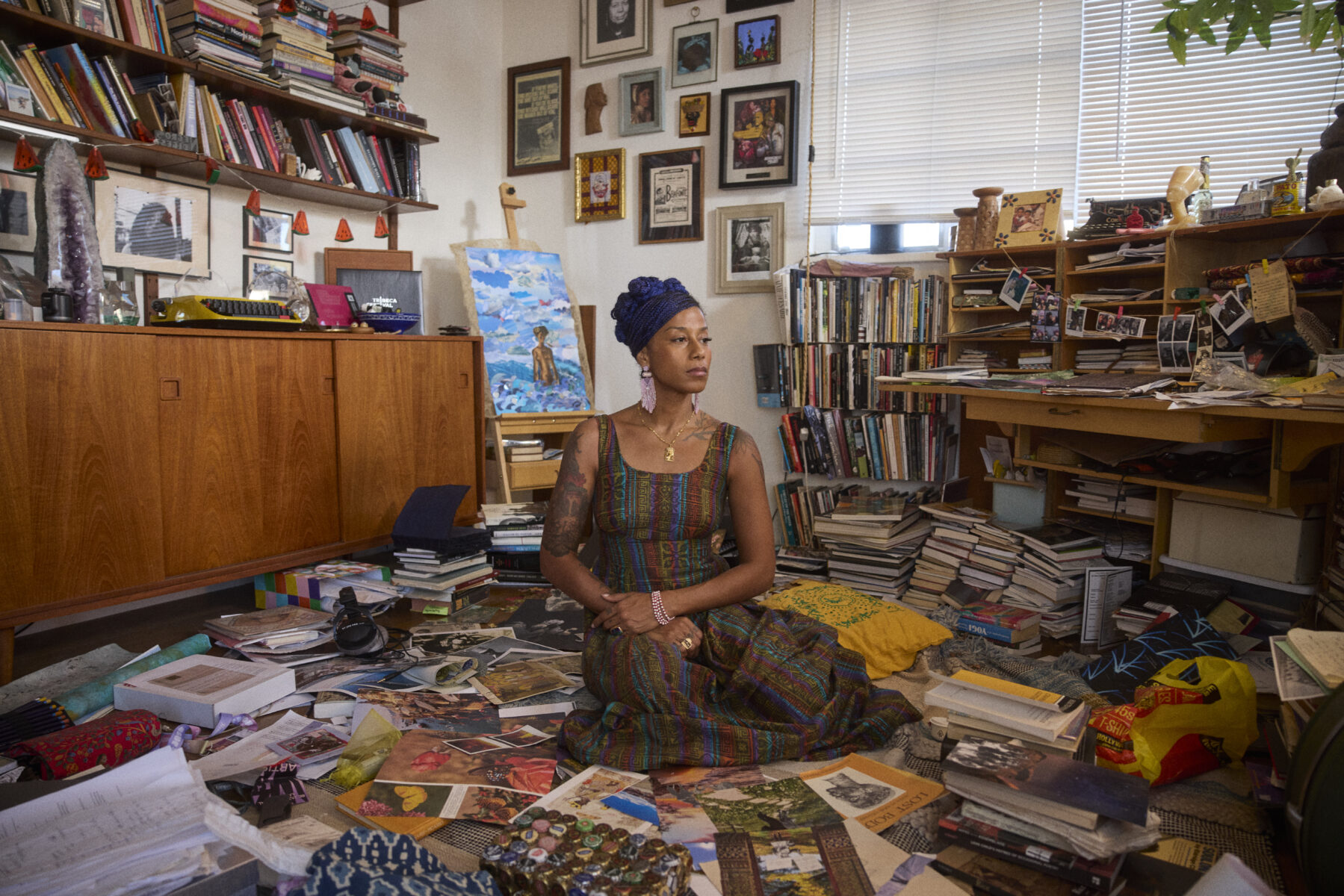
Talk us through your upcoming album, the color of rain. When did it begin to materialise and become a fuller project? Were there any moments or conversations that sparked the idea for this?
It didn’t come to be until I met with Meshell, and she had this enthusiasm to make a record with me. In those conversations, we became more and more invested in exploring what could happen working together and the ideas that could come with collaborating. I think being on tour, especially being double-billed with her in Berlin, was one of the moments we got to connect, and we could realise that something would come of this. Essentially, the color of rain was born to bring new life to the poems that I was creating.
The producer lineup for this is incredible, with Justin Brown and Meshell Ndegeocello – how did these collaborations come together, and what was the process of making this record?
Justin Brown is one of my favourite drummers in the whole world, and of course, I’ve just spoken about Meshell. It’s great to admire your favourite artists and for them to admire you; to have that admiration be reciprocal and for there to be respect. I look up to Meshell so much and for the contributions she’s made to the music of our culture, which spans so many generations, whilst still being so young. It feels good to be making music with people who respect poetry as an art form, but also understand poetry to be music as a symbiotic relationship. Justin is also a divine, unique soul who respects the power and language of words and wants that to reflect in music.
Is there a particular line or verse from this project that you find yourself coming back to?
Right now, there are so many different lines that make me feel so grateful and proud of the record. The first track on the album “Say It With Your Chest”, I think that’s such a declarative statement, and that’s the one I’m returning to most from the record right now – to be courageous, be true, and be sincere.
You’re also touring soon, with a few stops in the UK and Europe. What can fans and listeners expect from your performance?
There’s going to be an expansion and development of sounds, which will only deepen the connection to the poems. All my poems are different, so I’m excited for people to experience the love and attention that’s poured into the live performance. I’m also excited for people to experience the burgeoning garden that comes from sharing music with people in real time, offline, and present with one another. I think it’s so rare and precious to have present moments that reflect the awe of poetry in relation to music. I’m so excited to fall in love with performing again, and again, and again, with the audience in collaboration.
Listen to the color of rain…