[analyse_image type=”featured” src=”https://images.euronews.com/articles/stories/09/77/20/13/1200x675_cmsv2_46c434c0-de73-51a4-9e94-ba093696f77e-9772013.jpg”]

Where I went on a craft beer bar crawl around Sofia

Urban heat islands: What are they and how can we combat them?

Humanoid robots face off in Beijing’s first high school football final

Latest news bulletin | May 27th, 2026 – Morning
Where I went on a craft beer bar crawl around Sofia
Urban heat islands: What are they and how can we combat them?
Humanoid robots face off in Beijing’s first high school football final
Latest news bulletin | May 27th, 2026 – Morning
What’s left of a €100,000 salary after tax across Europe?
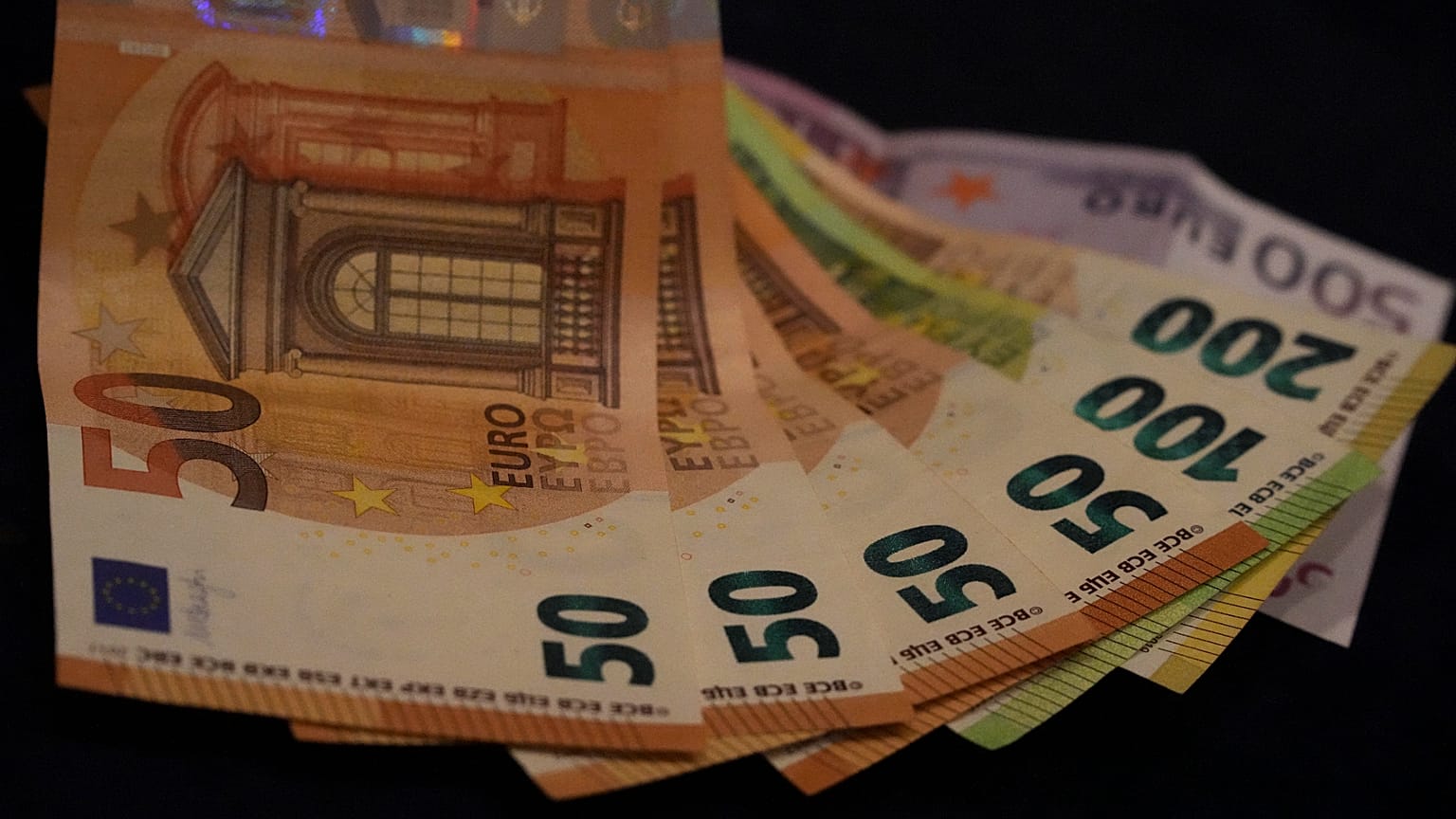
Where in Europe can you take home the most from a €100,000 salary?
– Copyright Copyright 2019 The Associated Press. All rights reserved

 Facebook
 Twitter
 Flipboard
 Send
Send Reddit
 Linkedin
 Messenger
 Telegram
 VK
VK Bluesky
 Threads
 Whatsapp
Eastern Europe generally offers higher take-home pay on a €100,000 gross salary, whereas Western and Northern Europe tend to show lower net figures at this income level. Tax calculations are complex, and Euronews Business provides approximate estimates.
Tax burdens vary significantly across Europe. Income level is generally the decisive factor. Some countries apply flat tax rates while others use progressive systems, meaning higher earners pay a larger share.
 ADVERTISEMENTADVERTISEMENT
Being single or part of a couple, having one or two incomes, and having dependent children all affect net salaries.
So, let’s say someone earns €100,000 a year in gross. They are single with no children. How much would they take home? What would net salaries look like across European countries?
Calculations are challenging , these are estimates
The calculation is challenging as it depends on several variables. Tax systems themselves vary with some countries having a straightforward approach while others are more complex.
Euronews Business estimated the take-home pay on a €100,000 gross salary based on the OECD Tax Wedge 2026 report, OECD country files, PwC Worldwide Tax Summaries and national sources.
Tax rates used are for 2025. Non-euro currencies were converted using ECB reference rates on 31 December 2025. This mainly reflects 2025 estimates.
Some variables that could still affect the calculation are not included. No additional income sources are taken into account. These are therefore approximate estimates intended to broadly compare the tax burden across European countries.
Bulgaria leads the rankings
Among 31 European countries (EU member states plus the UK, Switzerland, Norway and Turkey), take-home pay on a €100,000 gross salary ranges from €50,750 in Belgium to €86,930 in Bulgaria.
Bulgaria is the only country where net pay exceeds €85,000. The next highest is Estonia at €74,400. Czechia (€72,800), Malta (€72,500), Switzerland (€70,500) and Cyprus (€70,300) are the countries where workers keep at least €70,000 from a €100,000 gross salary.
UK offers the highest take-home among major economies
In the United Kingdom, workers keep almost 70% of their gross salary at this income level.
Take-home pay is €69,900, the highest among Europe’s five largest economies. Spain (€64,200) and France (€63,000) sit in the middle, while Germany (€57,900) and Italy (€56,700) offer the lowest take-home rates among the big five.
Lowest take-home: Belgium, Denmark and Sweden
At the lower end, Belgium (€50,750) ranks last overall, followed by two Nordic countries: Denmark (€51,500) and Sweden (€52,000). Austria (€54,200), Slovenia (€55,060) and Greece (€56,615) are also among the countries where a €100,000 gross salary results in one of the lowest take-home pay in Europe.
Portugal (€57,000) and Romania (€58,500) are also below €60,000 net.
Poland (€60,225), the Netherlands (€60,500), Lithuania (€60,500), Croatia (€61,000) and Luxembourg (€61,500) are slightly above that level.
Among Nordic countries, Norway (€66,900) offers the highest take-home pay, followed by Finland (€62,200). Both are significantly higher than Denmark and Sweden, which sit just above €50,000.
In Ireland (€64,000) and Turkey (€63,200), workers take home less than two-thirds of their €100,000 gross salary. Slovakia (€67,855) and Hungary (€66,500) sit slightly above, with a difference of around €2,000 to €3,000.
Regional trends: Eastern vs Western and Northern Europe
Eastern Europe generally lets workers keep more of a €100,000 gross salary. These countries often have flatter income tax systems, lower top marginal rates or capped social security contributions.
Western and Northern Europe tend to show lower take-home pay at this income level. Countries such as Belgium, Denmark, Germany, Austria, France, Sweden and the Netherlands carry a heavier burden due to progressive income tax, employee social contributions and other levies.
Local and regional taxes can also shift the rankings. Capital cities and regions are used in the estimates.
How does €100,000 compare to average wages?
While €100,000 is a decent gross salary in some countries, it is above average in most of Europe. According to OECD data for 2025, Switzerland is the only European country where the average wage for a single person without children exceeds this level, at €107,487.
Within the EU, Luxembourg has the highest average wage at €77,844. Thirteen of the 22 EU countries in the list have average wages below €50,000, with Slovakia the lowest at €19,590.
Top personal income tax rates
Top personal income tax rates for the highest earners vary widely across Europe and follow regional patterns. Nordic and Western European countries generally have the highest top marginal rates, typically between 45% and 60%. Central and Eastern Europe, including the Balkans, tend to levy lower rates.
Go to accessibility shortcuts
Read more
Where in Europe do workers earn the most — and the least?
Top personal income tax rates in Europe: Who pays the most in 2026?
Take-home pay across Europe: What’s left after taxes?
Where in Europe do workers earn the most — and the least?
Top personal income tax rates in Europe: Who pays the most in 2026?
Take-home pay across Europe: What’s left after taxes?

Five sectors where the EU is critically dependent on Chinese imports

Oil steadies at $100 and markets stay volatile as US-Iran talks stall

BP sacks chairman Manifold in fresh blow to troubled energy giant

EasyJet probed in Italy over alleged unfair baggage pricing

Marianne d’or: Paris Mint to issue first solid-gold coins in 100 years
Turkish tourists flock to Greece as rising costs put Greeks off Turkey
Where in Europe do households save most of their income?
Portugal’s Meo seeks €82m from state over Huawei 5G exclusion
Five sectors where the EU is critically dependent on Chinese imports
Finnish smart ring maker Oura plans IPO at over €9 billion valuation
[analyse_source url=”https://www.euronews.com/business/2026/05/27/whats-left-of-a-100000-salary-after-tax-across-europe”]