[analyse_image type=”featured” src=”https://images.euronews.com/articles/stories/09/76/94/16/1200x675_cmsv2_1a0e46d2-fc5b-5f14-a3d4-f17f837bf3f1-9769416.jpg”]

No reply means yes: EU pushes silent approval for energy grid permits

Britons flock to beaches and pools as UK breaks May heat record

US and Armenia pledge to move forward on corridor during Rubio visit

Limiting trade with Israeli settlements is ‘normal’ – French minister
No reply means yes: EU pushes silent approval for energy grid permits
Britons flock to beaches and pools as UK breaks May heat record
US and Armenia pledge to move forward on corridor during Rubio visit
Limiting trade with Israeli settlements is ‘normal’ – French minister
Chewing gum and ash-filled cookie jars: Inside the world of extreme pop fandoms
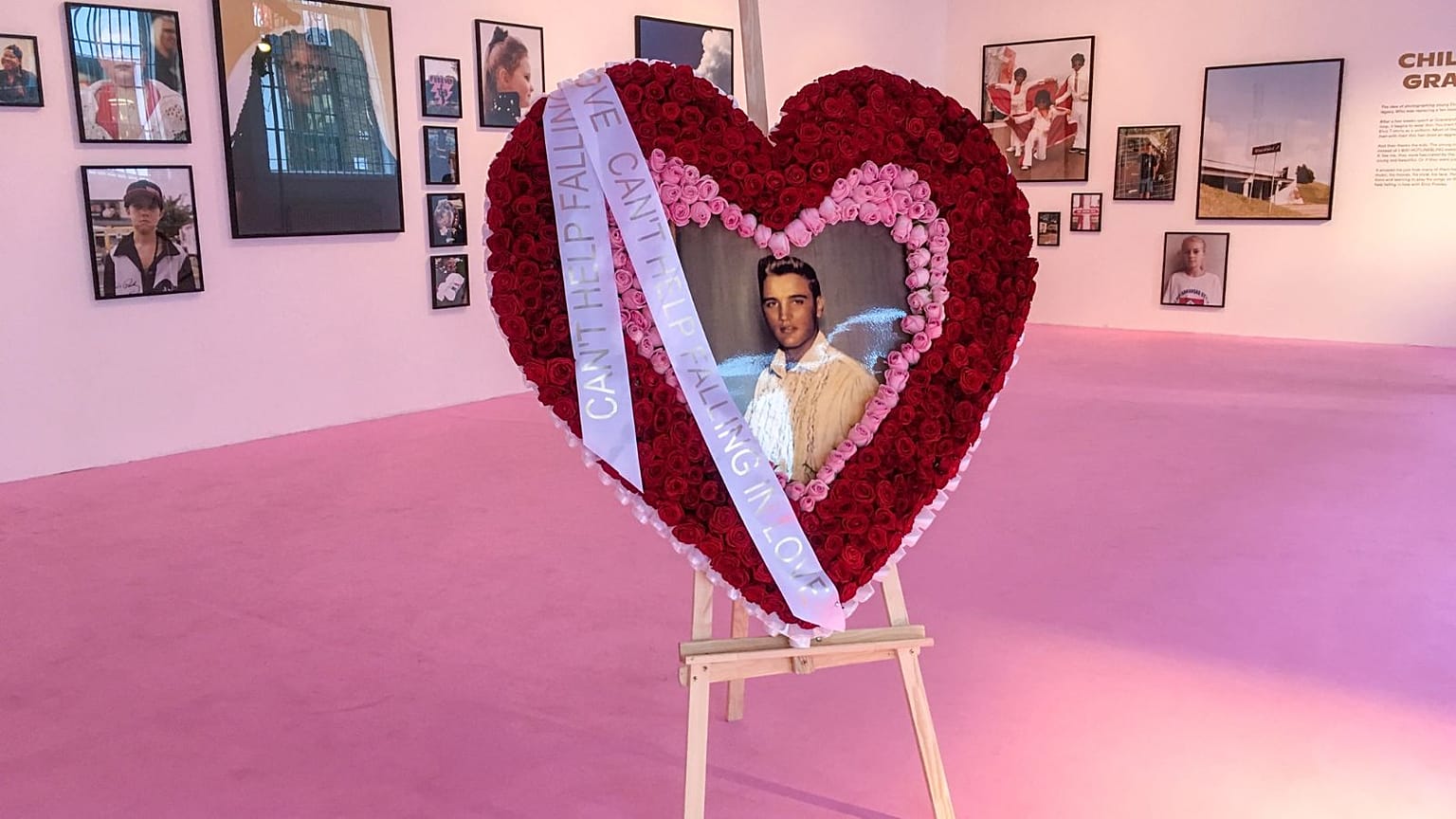
Children of Graceland (project).
– Copyright Hayley Louisa Brown

 Facebook
 Twitter
 Flipboard
 Send
Send Reddit
 Linkedin
 Messenger
 Telegram
 VK
VK Bluesky
 Threads
 Whatsapp
‘Holy Pop!’ takes visitors inside the bizarre and beautiful world of obsessive fans.
I have loved many people in my life, but for a while, I loved Christina Aguilera the most.
 ADVERTISEMENTADVERTISEMENT
It started as most millennial pop culture obsessions once did: standing in the aisles of a record shop. My dad said I could choose anything, so I chose ‘Stripped’, Aguilera’s second (and at the time, newly released) album.
Slotting it into the car’s CD player on the way home, I rolled down the windows and felt my old identity slipping into the breeze, replaced by a gust of something new.
Maybe I wasn’t a pre-pubescent girl obsessed with cartoon dogs and rainbow flannel skirts. Maybe I was a misunderstood woman with a powerful voice and poetic angst – I just hadn’t found the right low-rise jeans yet.
The years that followed were a blur of GeoCities fan pages, collecting every magazine poster I could find, and wearing a fake nose ring from Claire’s Accessories. I changed my Nokia ringtone to ‘Fighter’, perfected the dance routine from ‘Dirrty’, and kept the brochure from the 2003 Xtina tour beside my bed like a bible.
Then one day, as quickly as my obsession had taken hold, it vanished – leaving behind only the memories and mementos.
A tin pencil case with the singer’s face on, a crumpled image of her wearing those infamous chaps. Nostalgic nonsense to anyone else, but once magical buoys amidst the chaos of adolescence to me.
The power of such celebrity devotions, and the identities we construct around them, is the subject of a new exhibition at London’s Somerset House, titled ‘Holy Pop!’
Filled with shrines and souvenirs dedicated to everyone from The Spice Girls to Elvis, it feels like stepping inside a teenager’s diary. The bubblegum glow of perfume bottles, dazzling diamantéd pews, and hurriedly scrawled love letters; everything belongs to someone else’s inner-world.
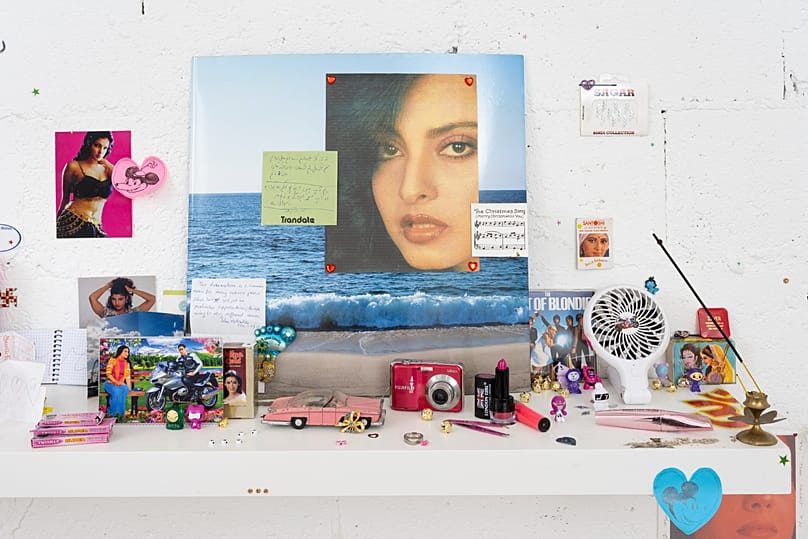
“The exhibition is obviously about pop culture, but it’s also about people, and how we navigate life. The things that we hook onto to make us survive life and feel a sense of belonging,” curator Tory Turk told Euronews Culture.
“Looking after your objects, carefully arranging them is really therapeutic. And actually, it’s really meaningful.”
It was during her time working at HyMag, which boasts the world’s largest collection of magazines, that Turk developed a fascination with niche-subject enthusiasts and their collections – the kinds of tacky or strange objects that hold no traditional museum prestige, but harbour a unique humanness.
“It was the stuff that had been overlooked by the canon who were interested in the best in design,” she said. “I felt like pop culture was seen as a bit low rent, and so I started collecting collectors.”
Gotta have faith
As the world has become more secular, people have turned their veneration towards celebrities and pop culture to fill a void.
In her novel “Beautiful World, Where Are You”, Sally Rooney calls it “a malignant growth where the sacred used to be.” But for all the parasocial and potentially harmful consequences of putting celebrities on pedestals, there can be an endearing quality to it too.
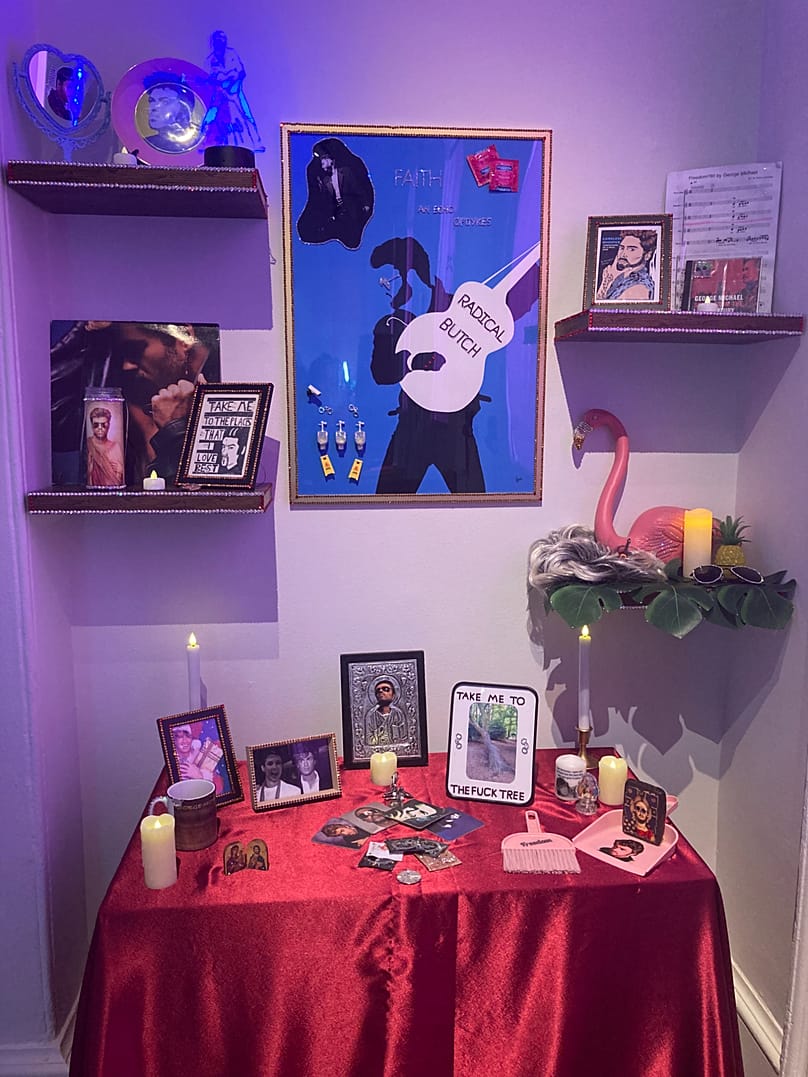
From holographic stickers of George Michael on heart-shaped mirrors, to pastel pink tribute wreaths and Yellow Submarine cookie jars filled with ashes, it’s astonishing to see how fandoms inspire community, connection, and a creativity that’s both clumsy and enchanting.
For most people, these passions can be sparked out of nowhere by anyone and anything. But it’s noticeable that certain icons – like Dolly Parton, Prince and Elvis – seem to hold a particular intensity of appeal that continues to captivate new generations.
“I think some people just have that magic, and it’s that magic that touches people’s souls,” Turk said. “For example, Elvis’ spirit of just crashing into pop culture. He became like Jesus, you know. A prophet.”
Nina Simone’s gum
The exhibition ends in a darkened room, where only the orb-like glow of a tiny piece of chewing gum can be seen. This is perhaps the most holy of all the objects here: a cloudy blob that, for a brief moment in time, was in the mouth of Nina Simone.
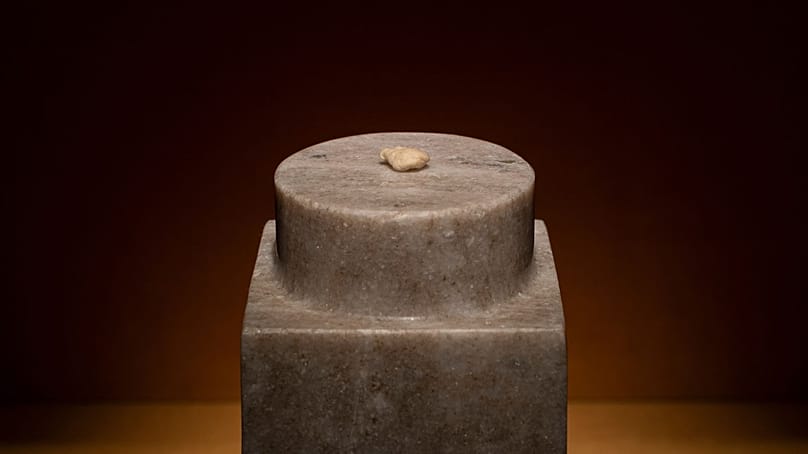
The singer had left it on her piano during a London performance in 1999, which Australian musician Warren Ellis then rushed to retrieve. He later wrote a book inspired by it, saying: “I love the fact that this little thing, this gum, is actually nothing, and that it became something almost sacred and spiritual. A hallowed relic…”
As anyone who has wandered through a flea market or pondered an abandoned sock on the pavement will know, it’s often the most mundane objects that connect us to each other most.
At ‘Holy Pop!’, these objects not only represent society’s shift towards celebrity worship, but a desire within all of us to hold onto the way a specific time, place or person made us feel.
“An object has the power to transport you back to a time and a feeling. Keeping a train ticket or, you know, stealing the butt from [a celebrity’s] cigarette butt,” Turk said.
“However mundane, or however silly, these things have the power to make you feel a certain way.”
After all, the mementos of our celebrity devotions are never truly shrines to them, but shrines to ourselves: the people we have been, and the people we have loved unashamedly – Dirrty dance routines and all.
‘Holy Pop!’ is open now at Somerset House in London, UK, until 9 August 2026.
Go to accessibility shortcuts
Read more

When Michelangelo met Rodin: Paris Louvre show matches two masters

Gaza artists stage open-air exhibition amid war and fragile ceasefire

War stories of displaced Ukrainian Refugees feature in Lithuanian exhibition in Baku
When Michelangelo met Rodin: Paris Louvre show matches two masters
Gaza artists stage open-air exhibition amid war and fragile ceasefire
War stories of displaced Ukrainian Refugees feature in Lithuanian exhibition in Baku

So long, ‘Saxophone Colossus’: Jazz legend Sonny Rollins dies aged 95

Rockers Metallica urging fans to donate blood on last leg of EU tour

Suffering in silence: Brussels arts festival tackles childhood trauma

K-pop makes history by dominating 2026 American Music Awards

‘Backrooms’: Everything you need to know about liminal horror
A Chris or a talking animal more likely in films than a woman over 60
FBI ‘concerned’ about death threats to Bruce Springsteen during tour
Where mountains, art and urban life meet
‘A heartbreaking loss’: Celebrities pay tribute to James Van Der Beek
Two 17th-century paintings recovered after nearly 100 years missing
[analyse_source url=”https://www.euronews.com/culture/2026/05/26/chewing-gum-and-ash-filled-cookie-jars-inside-the-world-of-extreme-pop-fandoms”]