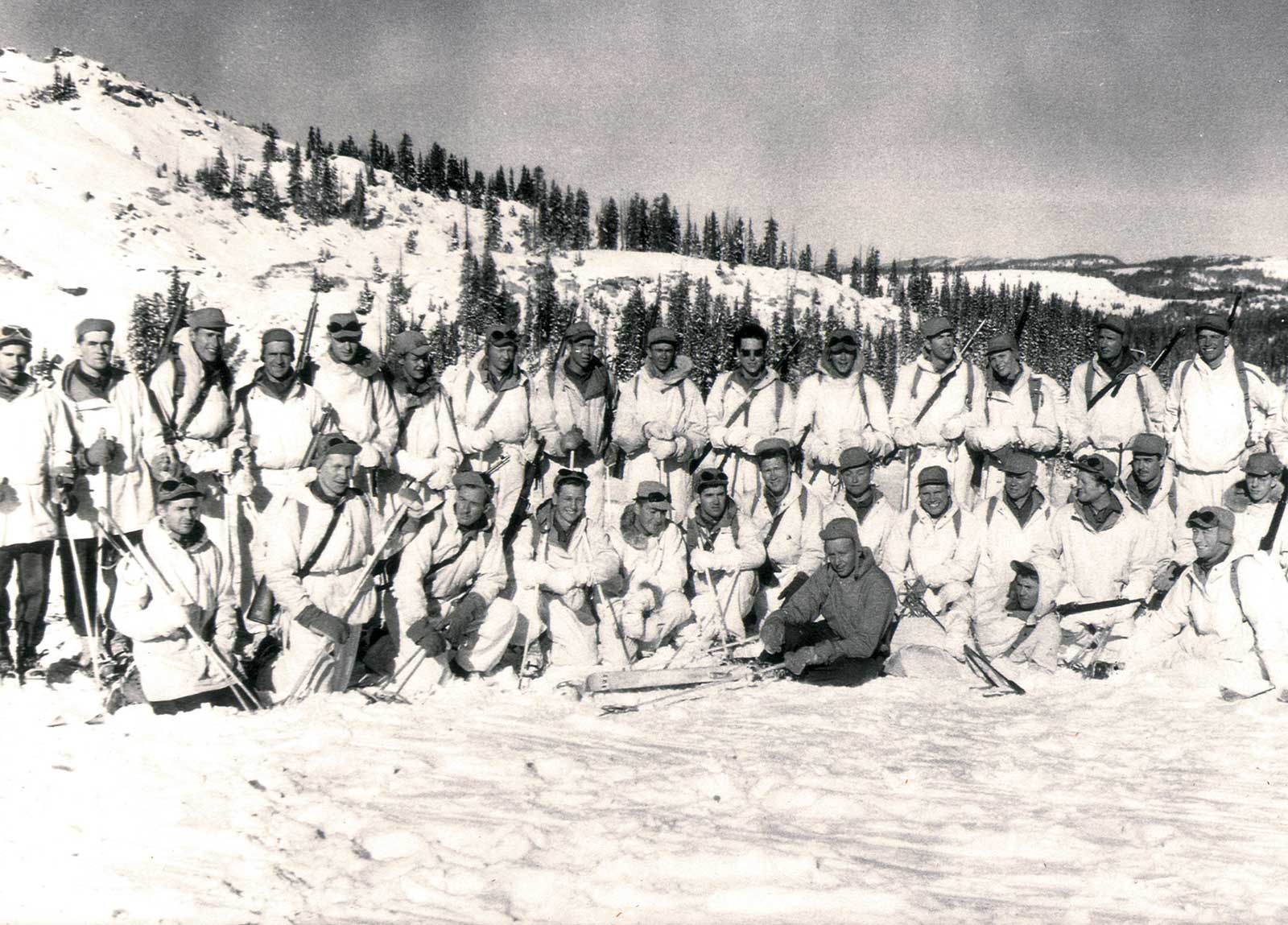
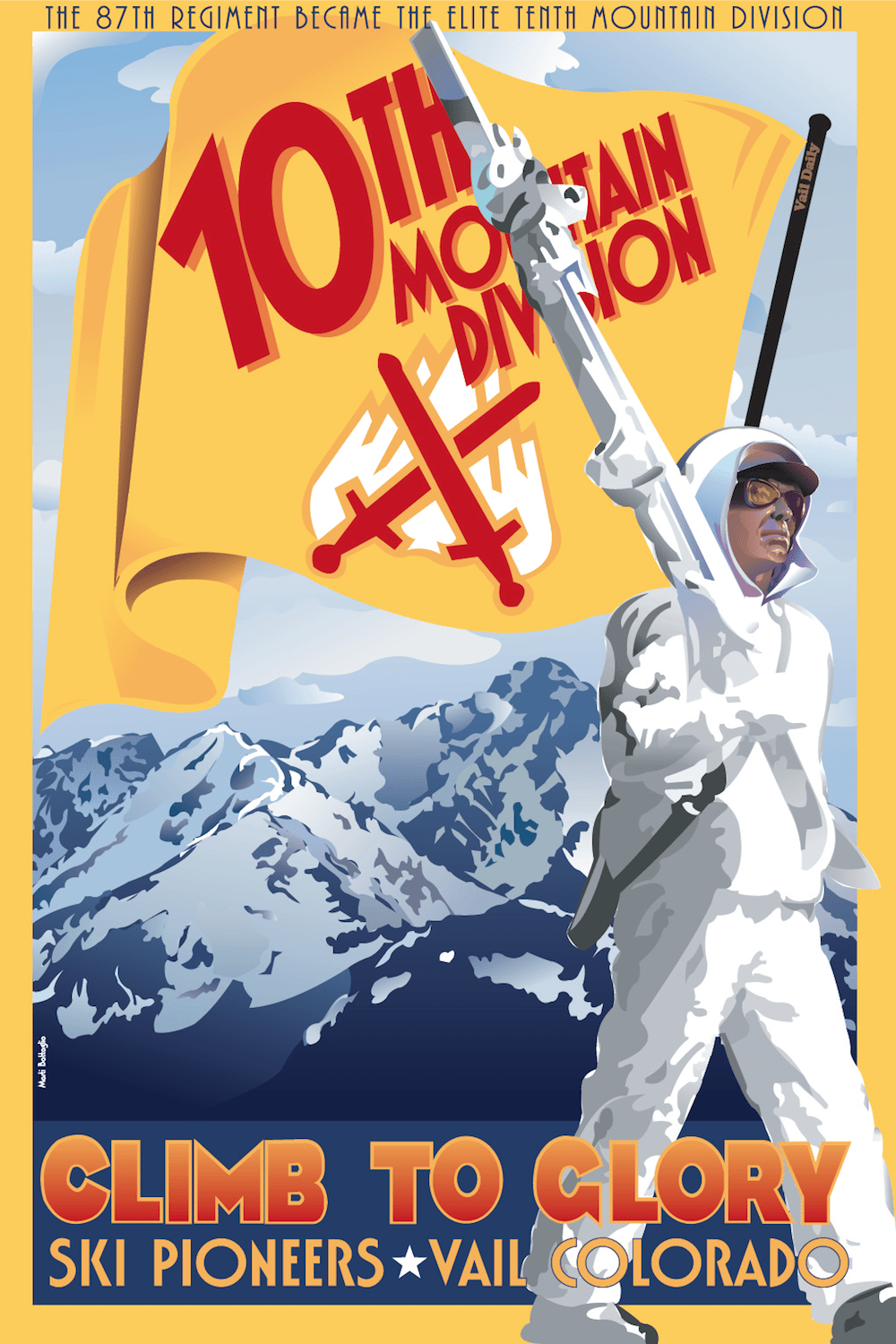
It’s often claimed that veterans of the U.S. Army’s 10th Mountain Division helped establish or influence more than 60 ski areas across the United States, including iconic destinations such as Vail Mountain Resort and Aspen Snowmass. While the exact number varies depending on definitions, historians and U.S. ski institutions consistently agree on one point: the 10th Mountain Division played a foundational role in shaping the modern American ski industry.
Origins: America’s Mountain Warfare Experiment
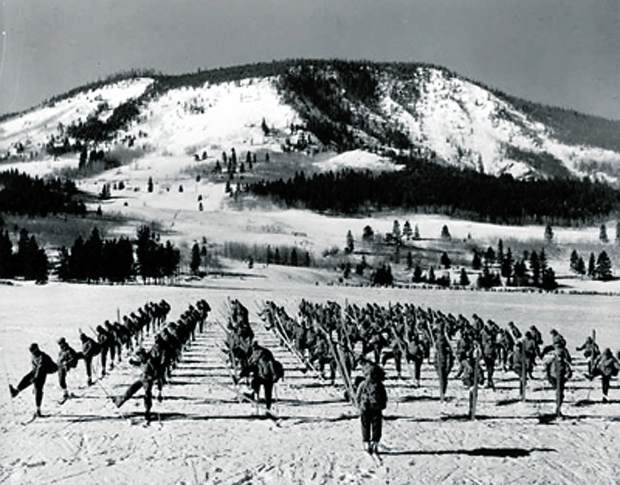
The 10th Mountain Division was formed in 1943 as a specialised U.S. Army unit trained for winter and alpine warfare during World War II. Its primary training base was Camp Hale in Colorado, located near present-day Leadville. Today, the site is preserved as part of the Camp Hale–Continental Divide National Monument, designated by the U.S. government in 2022.
According to the National World War II Museum and the U.S. Army Center of Military History, the division was designed to fight in extreme alpine terrain similar to the European front, particularly the mountains of northern Italy. Training was intense and highly specialized. Soldiers learned skiing, rock climbing, survival in sub-zero conditions, and high-altitude combat tactics. Civilian mountaineers were brought in as instructors, including experienced climbers from the American Alpine Club and pioneering guides from the Pacific Northwest.
Mountaineering expertise was also developed at locations such as Mount Rainier, where climbers trained soldiers in glacier travel and survival in deep snow conditions under the supervision of experienced alpine instructors.

Combat in the Italian Alps
In late 1944, the division was deployed to Italy, where it fought in some of the most difficult terrain of the Italian Campaign. According to official U.S. Army records, the 10th Mountain Division participated in sustained combat in the northern Apennine Mountains and played a key role in breaking German defensive positions such as Riva Ridge and Mount Belvedere.
The division suffered significant casualties but earned a strong combat reputation. Its performance in mountain warfare is still studied in modern U.S. military doctrine, particularly for cold-weather operations.
Official records from the U.S. Army note:
- Approximately 114 days of continuous combat in Italy
- Nearly 1,000 killed in action
- Over 4,000 wounded in action
- One Medal of Honor recipient (PFC John D. Magrath)

From Soldiers to Ski Industry Founders
After World War II, many veterans returned home with advanced skiing and mountaineering skills but limited civilian opportunities in mountain sports. This created an unexpected legacy: they helped professionalise and expand recreational skiing in the United States.
One of the most influential figures was Pete Seibert, a 10th Mountain Division veteran who later co-founded the Vail ski resort after recognising the potential of Colorado’s back bowls.
Another key figure was Friedl Pfeifer, an Austrian-born skier and 10th Mountain instructor, who helped develop early ski operations in Aspen alongside Walter Paepcke, leading to the growth of modern Aspen Mountain and the broader Aspen ski system.
Veterans were also instrumental in developing ski instruction programs, ski patrol systems, and mountain safety standards across the United States.

The National Ski Patrol and Safety Revolution
One of the most important institutional legacies connected to the division is the creation of the National Ski Patrol.
It was founded in 1938 by Charles Minot “Minnie” Dole, who advocated for organized ski safety after a series of winter accidents in New England. During and after the war, many 10th Mountain Division veterans joined and expanded ski patrol systems nationwide, bringing military-grade rescue skills, avalanche awareness, and mountain medicine expertise into civilian ski areas.
Today, the National Ski Patrol is the largest mountain safety organization in the world and remains a direct link between military alpine training and civilian skiing infrastructure.
How Many Ski Areas Did They Actually Influence?
A frequently repeated claim is that 10th Mountain Division veterans founded or helped develop more than 60 ski areas across the U.S. This figure is widely cited in ski culture but is difficult to verify precisely.
More conservative historical summaries from ski historians and organizations such as the Colorado Snowsports Museum and U.S. Army heritage publications suggest:
- Veterans directly founded or co-founded several major resorts (including Vail and Aspen-area development)
- Many more became ski school directors, patrol leaders, and resort managers
- Their influence spread indirectly through training, instruction systems, and ski industry leadership
Rather than a single definitive number, the strongest conclusion supported by historical institutions is that the 10th Mountain Division veterans were disproportionately responsible for the professionalization and expansion of American ski culture in the post-war period.

The Division Today
The modern 10th Mountain Division (United States Army) is based at Fort Drum, New York, and remains an active light infantry division. It is no longer a specialised mountain warfare unit, but it retains its historic designation.
According to the U.S. Army, the division has deployed extensively since the 1990s, including operations in Somalia, Haiti, the Balkans, Iraq, and Afghanistan.
Legacy in American Skiing
The legacy of the 10th Mountain Division is visible across nearly every aspect of modern skiing in the United States:
- Resort development (Vail, Aspen, Sugarbush, Whiteface and others)
- Ski patrol systems and mountain safety
- Professional ski instruction standards
- Avalanche awareness and alpine rescue techniques
In many ways, the American ski industry did not simply evolve after World War II—it was built by soldiers trained to survive and move in the harshest mountain environments on Earth.

Personally, every time I see that 10th Mountain Division sign on Highway 89 in Lake Tahoe, I think of these guys and what they did for our country and for skiing. Above all, thank you to the 10th and all of America’s warriors.