[analyse_image type=”featured” src=”https://images.euronews.com/articles/stories/09/76/42/12/1200x675_cmsv2_cdb0a73d-1677-5c99-af9c-00042d89497e-9764212.jpg”]
NATO fighter jet downs stray Ukrainian drone over Estonia

Caber-nay: Beer consumption tops wine for the first time in France

Zurita de Oliveira, mother of Portuguese rock, gets a documentary film

Lawmakers raise alarm over legality of US lethal drug boat strikes
NATO fighter jet downs stray Ukrainian drone over Estonia
Caber-nay: Beer consumption tops wine for the first time in France
Zurita de Oliveira, mother of Portuguese rock, gets a documentary film
Lawmakers raise alarm over legality of US lethal drug boat strikes
Joint ESA–China mission begins mapping Earth’s protective magnetic field
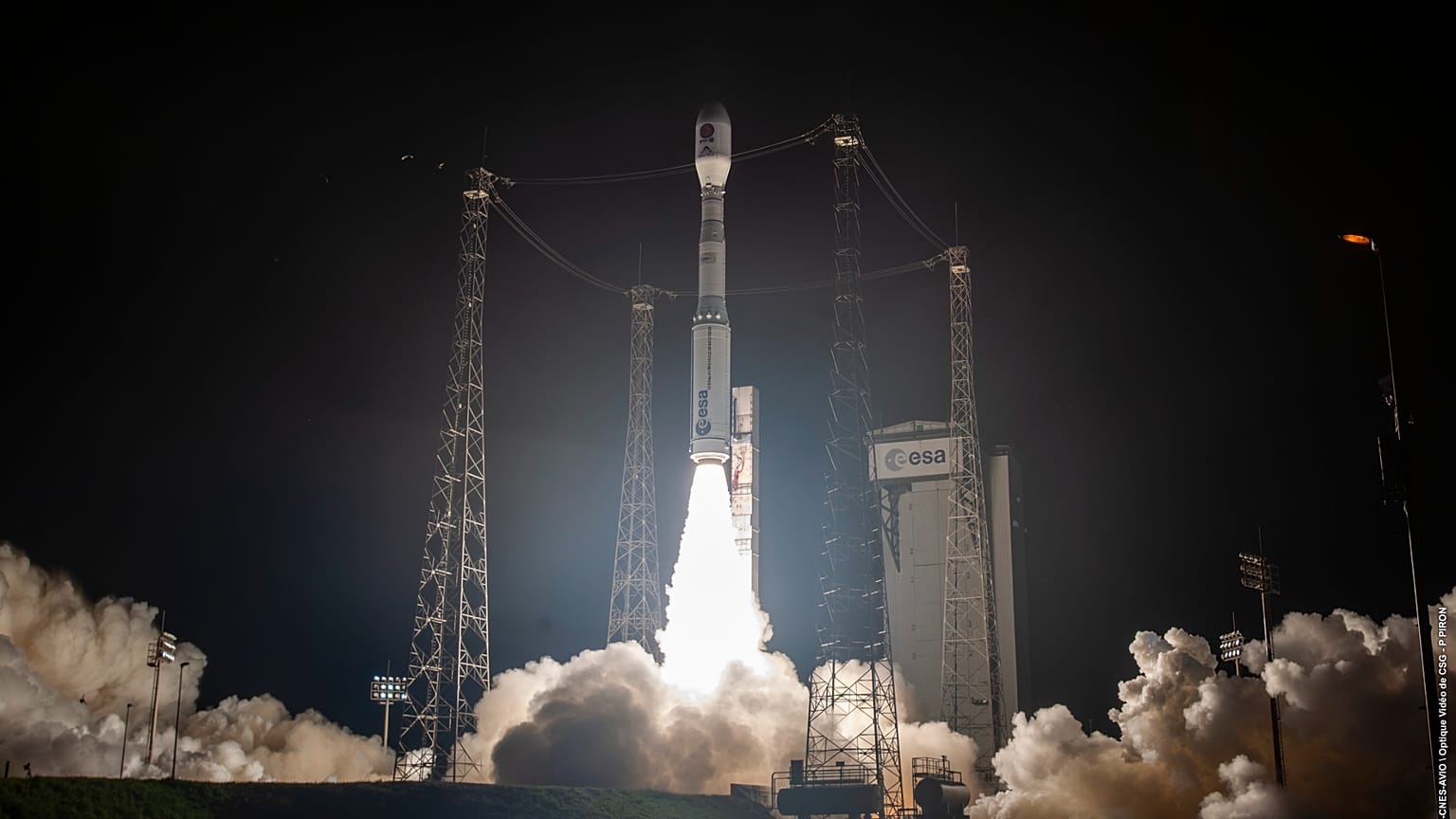
A night-time photo showing the Vega-C rocket, equipped with SMILE, from a launchpad. It is surrounded by four metal pylons and clouds of smoke
– Copyright ESA-S. Corvaja

 Facebook
 Twitter
 Flipboard
 Send
Send Reddit
 Linkedin
 Messenger
 Telegram
 VK
VK Bluesky
 Threads
 Whatsapp
The SMILE mission will track the Earth’s magnetosphere, which protects the planet from charged particles that come from the Sun.
A European-Chinese mission that will X-ray the Earth’s magnetic atmosphere is officially in space.
 ADVERTISEMENTADVERTISEMENT
The European Space Agency’s (ESA) Solar Wind Magnetosphere Ionosphere Link Explorer (SMILE) mission sent a 3-metre-tall spacecraft equipped with trackers and antennas into orbit on Tuesday from its launch site in French Guiana.
The joint mission, launched with the Chinese Academy of Sciences (CAS), will track the Earth’s magnetosphere, which protects the planet from gentle streams of charged particles, called the solar wind, that come from the Sun.
The SMILE mission will help scientists understand a gap in the solar system and help keep technology and astronauts safe in the future, according to ESA.
“If it weren’t for the magnetosphere, life could not survive on planet Earth,” ESA said about the mission.
The craft will measure how, where and when the solar winds interact with our planet during the mission.
During the mission, the craft will go as far as 121,000 kilometres above the North Pole, or one-third of the way to the Moon. It will also gather up to 45 hours per orbit of continuous observations of soft X-ray and ultraviolet light.
Smile sent its first signal back to scientists just two hours after launch, and it deployed solar panels, which means it can collect sunlight to power its systems and science instruments.
Go to accessibility shortcuts
Read more
NASA’s Psyche swings past Mars on journey to mysterious metal asteroid
Artemis III: NASA details next steps in Moon programme

Iran executes aerospace engineer for alleged CIA and Mossad espionage
NASA’s Psyche swings past Mars on journey to mysterious metal asteroid
Artemis III: NASA details next steps in Moon programme
Iran executes aerospace engineer for alleged CIA and Mossad espionage

Elon Musk loses OpenAI case after he waited too long to sue

These are tech titans in Beijing with Trump and what they want

How South Korea is turning workplace skills into robot training data
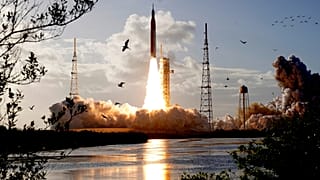
Artemis III: NASA details next steps in Moon programme

Trump China visit: Here’s how the two AI superpowers compare
The EU’s plan to tackle ‘cookie fatigue’
China unveils a giant rideable robot straight out of sci-fi movie
Malta gives citizens a paid version of ChatGPT Plus for free
Space systems: Prepared or at risk? |Euronews Tech Talks Podcast
Dumb phones and iPods: Meet the people disconnecting with old tech
[analyse_source url=”https://www.euronews.com/next/2026/05/19/joint-esachina-mission-begins-mapping-earths-protective-magnetic-field”]