Yoshi and the Mysterious Book review – the loveliest, most playful series of surprises
There’s no place like tome.
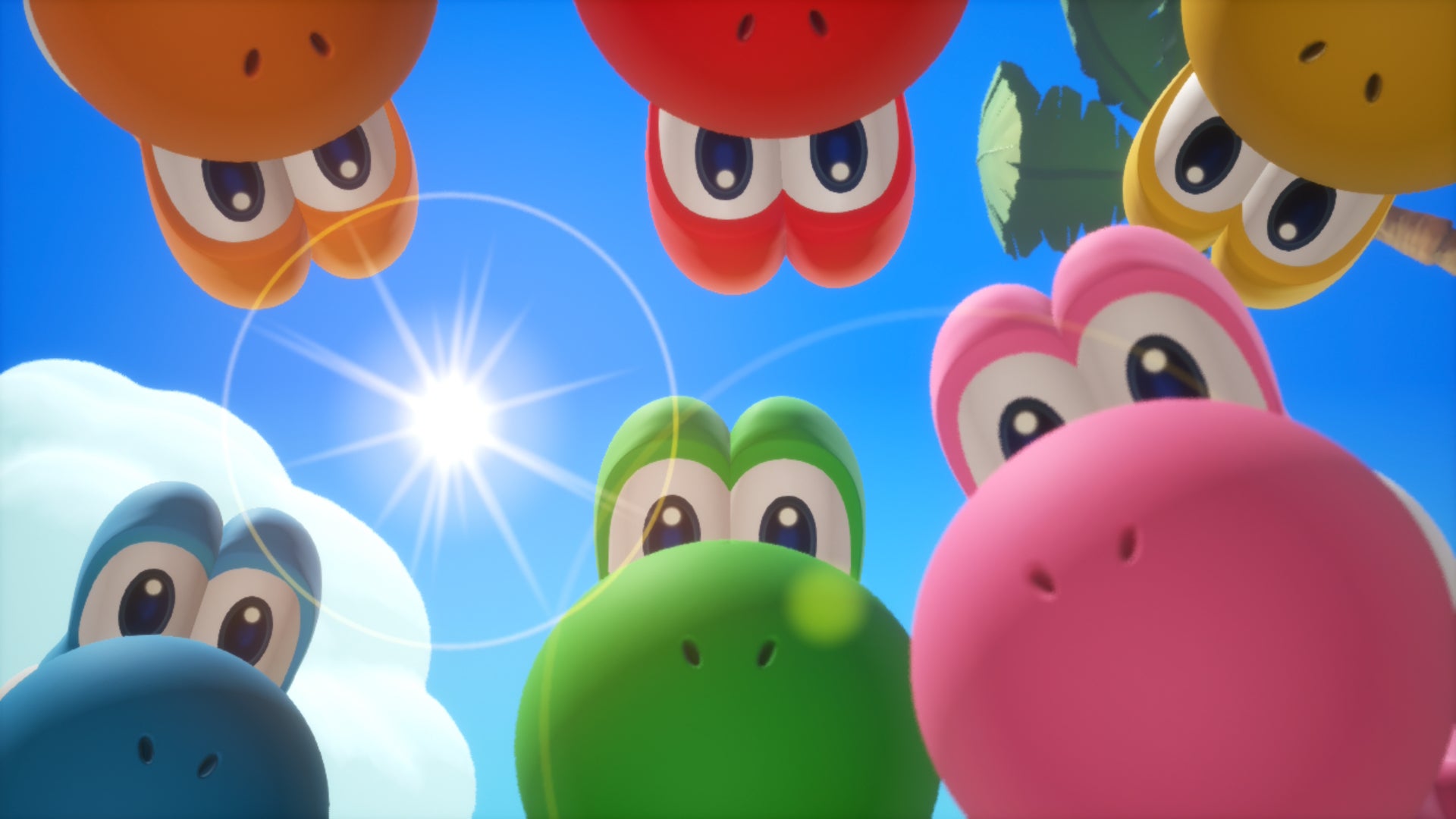

Yoshi and the Mysterious Book might be the loveliest surprise of the year so far. It certainly is for me. Going in, I don’t think I was expecting too much. There’s the slightly forgettable title, for one thing, and then I’d picked up the idea that, since this wasn’t a Zelda or a mainline Mario, I could probably give it a miss.
Gosh. Wrong. The latest Yoshi game is definitely aimed at younger players – there’s no real peril and you can’t die, and most difficulty spikes come from a very occasional inscrutability in terms of what you should be doing next – but I think there’s a surprising amount here for players of all ages. There’s that idea again – surprise, surprising. Yoshi and the Mysterious Book is a bit of a treat.
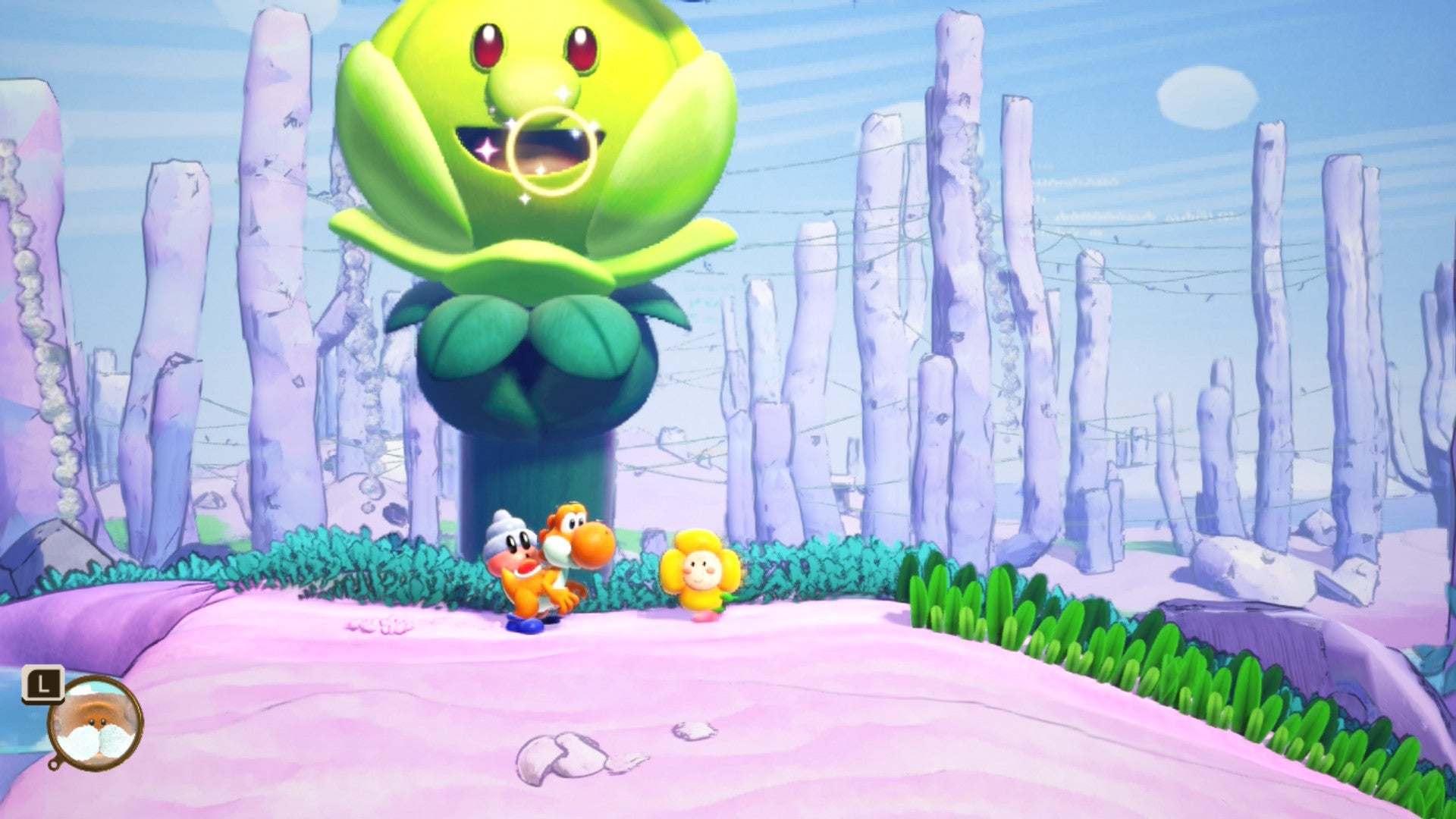
I’ll admit I was confused at first. Yoshi’s latest adventure takes visual cues from Yoshi’s Island, that SNES masterpiece that created its world out of folded cardboard and pastels. The new game dials back the papercraft a little in favour of chunky 3D assets, but the edges of each level still dither away into sketching, and Yoshi’s animation has been given a frame-dropped feel that makes it feel, on occasion, like the output of a flickbook.
It was those sketched level edges that initially confused me. Yoshi’s Island was a mind-meltingly inventive platformer, but it was also an A to B affair for most of the time. You start at the left of a level and head for the right. But when I got to what I took to be the end of a level in Yoshi and the Mysterious Book, something interesting happened: that is, nothing at all. I couldn’t march off the screen and onto the next challenge. I was still in the level itself. The game clearly had a different idea of how a level should end.
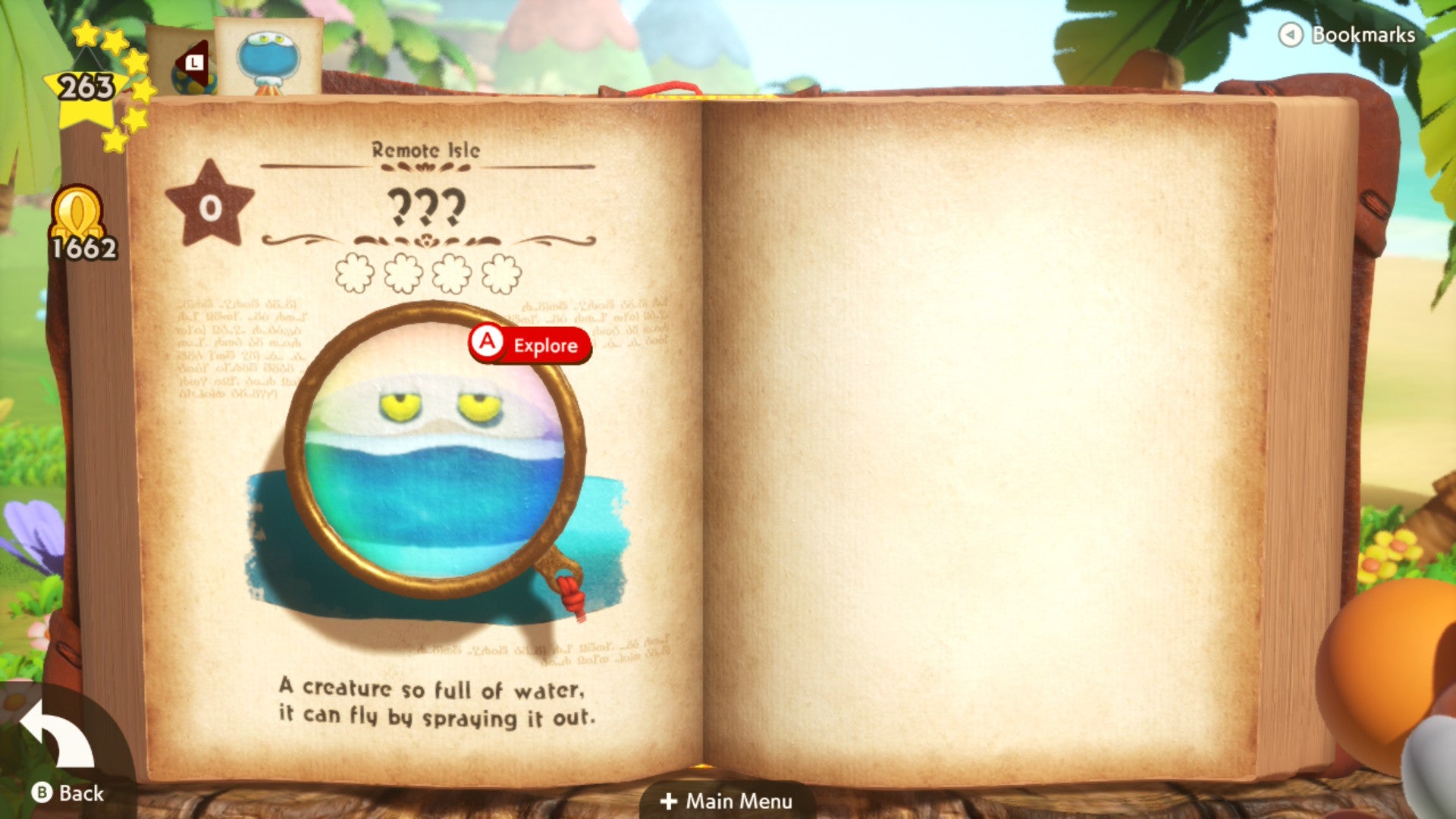
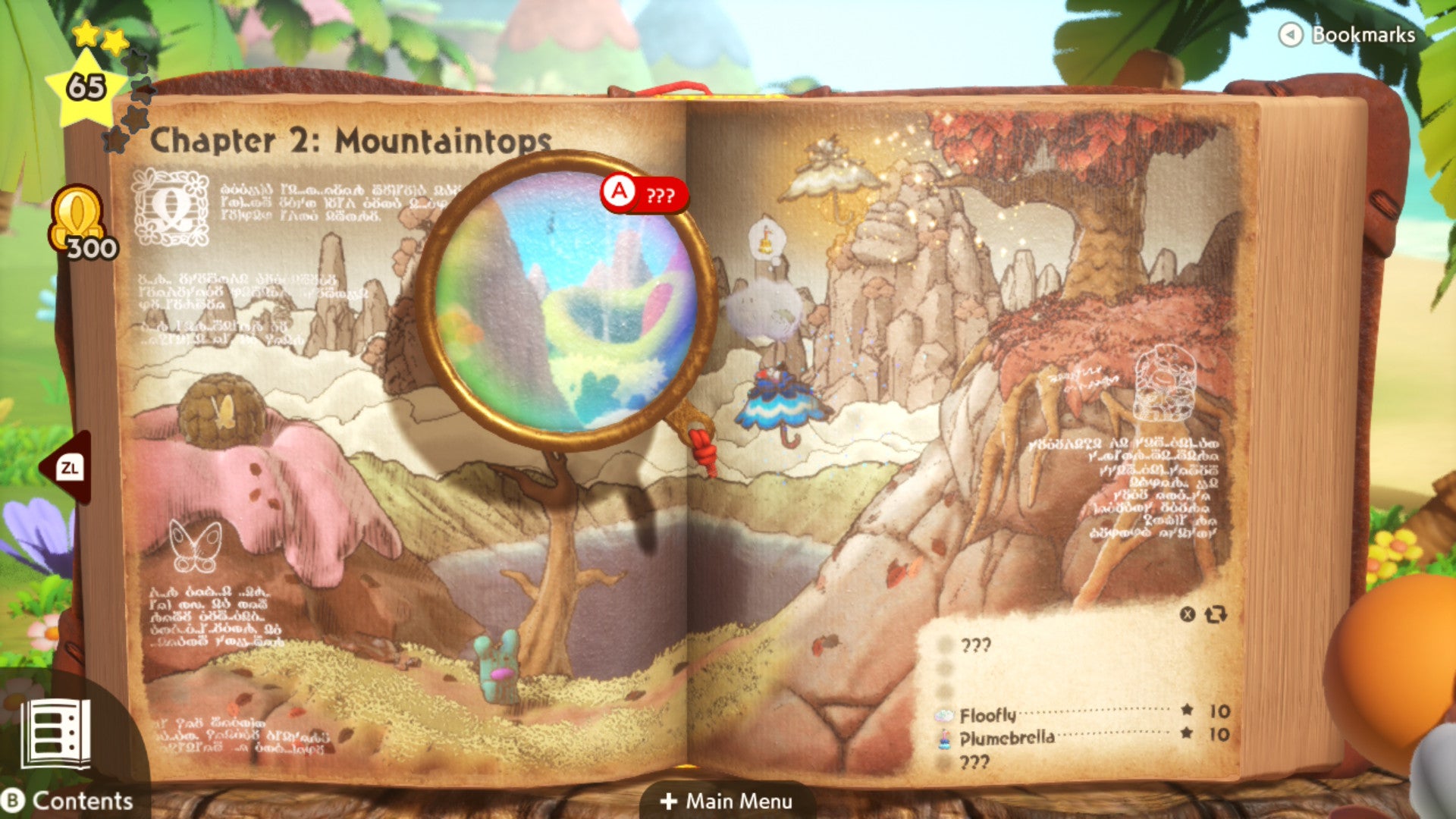
This is because of the overall conceit. In this game, Yoshi’s tasked with filling in the blank pages of an anthropomorphic encyclopedia. Each double-page spread of the book (when I worked mostly in print, I never quite lost the thrill of referring to these as DPSs) is a new area, and each level comes from one of the creatures in these areas. So you drop into Remote Isle, say, and you decide to learn as much as you can about the goonie birds, those lozenge-shaped gulls from – I think? – Yoshi’s Island itself.
Learning about a creature isn’t a question of moving from left to right, although this is still a 2D platformer and there is a lot of platforming. I’d say the main difference is that rather than marching forward all the time, you’re trying to explore the potential of everything you find in the world. So what happens if Yoshi tries to eat the goonie bird? What if Yoshi throws an egg at it? What happens if it bounces into the fire? Where might it nest?
Caption
Attribution
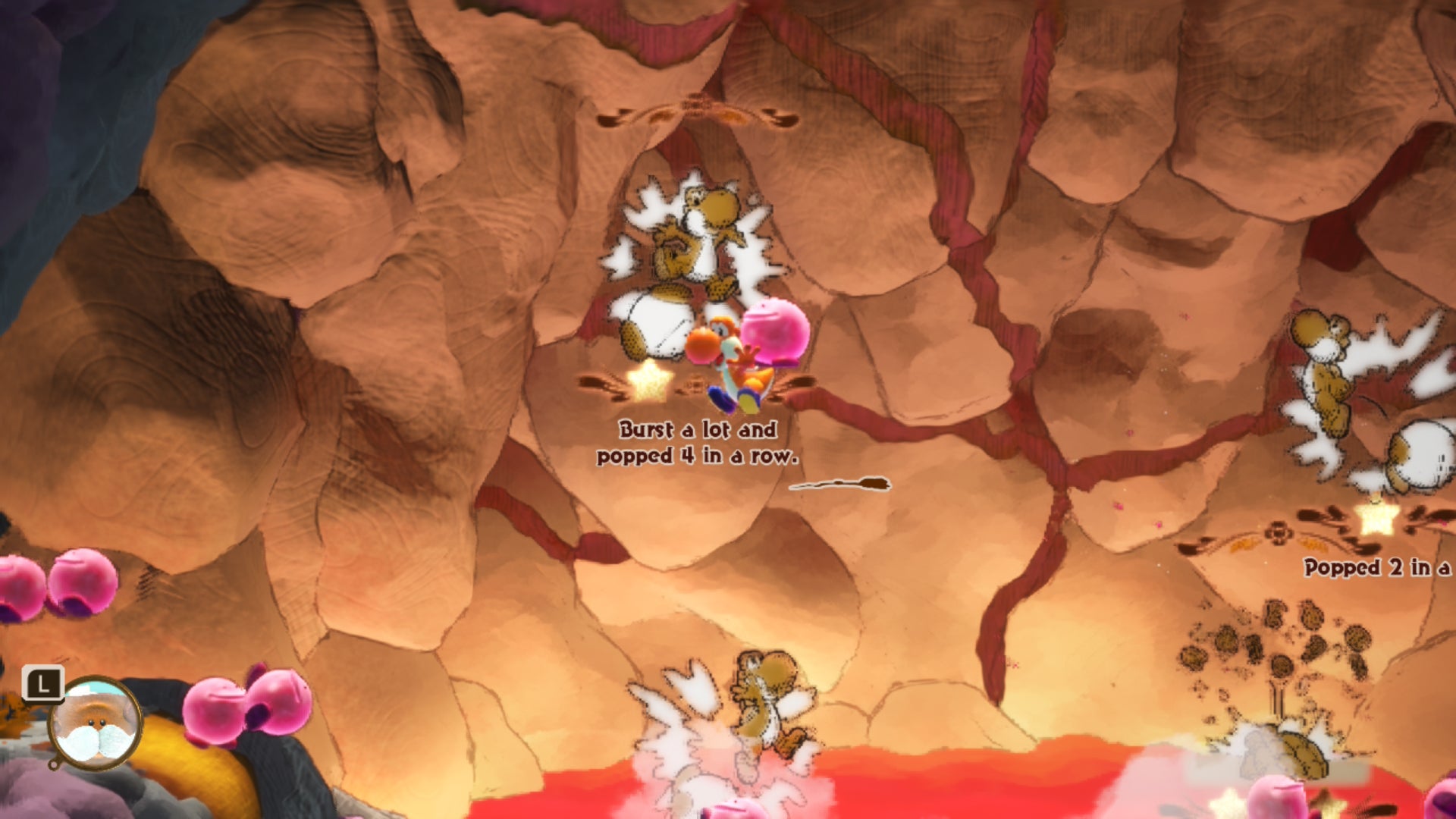
A couple of things here. Firstly, if you’ve played any of the Yoshi platformers over the years, the move-set is basically the same. Yoshi can grab things with his tongue and swallow them to turn them into eggs. Eggs can then be chucked about for fun and profit. The glorious, strained flutter jump is still intact, as is the ground pound, and Yoshi can hop an item onto his back, where he once carried babies Mario and Luigi, to then use it when the time is right. Maybe it’s a flower that will allow Yoshi to sprout flowers when he walks. Maybe it’s an apple someone else wants to eat. Maybe it’s something that will bash down barriers.
Secondly, you need to see all this stuff at your disposal as parts of a chemistry set. It’s a real “try this with that” game. Sometimes, you’re simply trying to understand the properties of the creature you’re investigating. Sometimes you’re trying to reach it – cue barriers and platforming. Sometimes you’re trying to find out how it interacts with the world. Sometimes you’re tracking down its family. From these simple ideas, levels erupt as a series of discoveries.
Hit each level’s big discovery – one that gives you a clear understanding of the creature – and you’re back to the DPS again and you can either track down a new creature or mop up any discoveries about the last one that you missed. This is brilliant because as you learn more about one creature, it often opens up opportunities with other creatures. The whole ecosystem slots together in enriching ways.
I don’t want to spoil too much of this stuff, because Yoshi and the Mysterious Book really is a chain of lovely revelations. But I particularly loved a kind of creature that stuck to things and changed their behaviours, and I loved another creature that was part chewing gum and part trampoline. The game has dozens of these things. It’s a real menagerie. All this with bosses and puzzles and endless lovely little jokes and asides. Levels, meanwhile, encompass everything from forests filled with hollow trees to beaches with pirate ships resting in nearby caves. It’s a game filled with playgrounds.
This is wonderful if you’re a kid, I reckon. But if you’re an adult, particularly one who was old enough to encounter Yoshi’s Island back in the day, it’s something else. Physics has always been the secret ingredient in Mario games, but Yoshi’s Island really expanded on all that stuff, exploring the kind of material physics of its world that you’d later see in games like Angry Birds. With the SNES hardware, Yoshi’s world was one in which enemies could be squashed or squeezed or bent out of shape. It wasn’t just a Newtonian world anymore, but one in thrall to Young’s Modulus. (Someone explained this to me once, but I won’t mangle it here. It is very Googleable, however.)
Caption
Attribution
So, weirdly, when I think back to Yoshi’s Island, I don’t think of A to B levels so much as I think of something that works a lot like Yoshi and the Mysterious Book. Both are games of experimentation, of interacting with the environment and discovering everything that it can do. A watermelon can be a gatling gun. A dandelion seed can be a psychedelic drug. That yellow stuff that cakes surfaces can be dug through, but you can also get stuck in it. Wow!
I’m tempted to say that Yoshi and the Mysterious Book isn’t so much a sequel, then, as it is a game inspired by what it felt like to play Yoshi’s Island. It’s a game about the imagination and strange rigour that Nintendo always brings to its platformers. It’s a surprise. It’s a delight.
A copy of Yoshi and the Mysterious Book was provided for this review by Nintendo.
Yoshi and the Mysterious Book might be the loveliest surprise of the year so far. It certainly is for me. Going in, I don’t think I was expecting too much. There’s the slightly forgettable title, for one thing, and then I’d picked up the idea that, since this wasn’t a Zelda or a mainline Mario, I could probably give it a miss.
Gosh. Wrong. The latest Yoshi game is definitely aimed at younger players – there’s no real peril and you can’t die, and most difficulty spikes come from a very occasional inscrutability in terms of what you should be doing next – but I think there’s a surprising amount here for players of all ages. There’s that idea again – surprise, surprising. Yoshi and the Mysterious Book is a bit of a treat.
I’ll admit I was confused at first. Yoshi’s latest adventure takes visual cues from Yoshi’s Island, that SNES masterpiece that created its world out of folded cardboard and pastels. The new game dials back the papercraft a little in favour of chunky 3D assets, but the edges of each level still dither away into sketching, and Yoshi’s animation has been given a frame-dropped feel that makes it feel, on occasion, like the output of a flickbook.
It was those sketched level edges that initially confused me. Yoshi’s Island was a mind-meltingly inventive platformer, but it was also an A to B affair for most of the time. You start at the left of a level and head for the right. But when I got to what I took to be the end of a level in Yoshi and the Mysterious Book, something interesting happened: that is, nothing at all. I couldn’t march off the screen and onto the next challenge. I was still in the level itself. The game clearly had a different idea of how a level should end.
This is because of the overall conceit. In this game, Yoshi’s tasked with filling in the blank pages of an anthropomorphic encyclopedia. Each double-page spread of the book (when I worked mostly in print, I never quite lost the thrill of referring to these as DPSs) is a new area, and each level comes from one of the creatures in these areas. So you drop into Remote Isle, say, and you decide to learn as much as you can about the goonie birds, those lozenge-shaped gulls from – I think? – Yoshi’s Island itself.
Learning about a creature isn’t a question of moving from left to right, although this is still a 2D platformer and there is a lot of platforming. I’d say the main difference is that rather than marching forward all the time, you’re trying to explore the potential of everything you find in the world. So what happens if Yoshi tries to eat the goonie bird? What if Yoshi throws an egg at it? What happens if it bounces into the fire? Where might it nest?
Caption
Attribution
A couple of things here. Firstly, if you’ve played any of the Yoshi platformers over the years, the move-set is basically the same. Yoshi can grab things with his tongue and swallow them to turn them into eggs. Eggs can then be chucked about for fun and profit. The glorious, strained flutter jump is still intact, as is the ground pound, and Yoshi can hop an item onto his back, where he once carried babies Mario and Luigi, to then use it when the time is right. Maybe it’s a flower that will allow Yoshi to sprout flowers when he walks. Maybe it’s an apple someone else wants to eat. Maybe it’s something that will bash down barriers.
Secondly, you need to see all this stuff at your disposal as parts of a chemistry set. It’s a real “try this with that” game. Sometimes, you’re simply trying to understand the properties of the creature you’re investigating. Sometimes you’re trying to reach it – cue barriers and platforming. Sometimes you’re trying to find out how it interacts with the world. Sometimes you’re tracking down its family. From these simple ideas, levels erupt as a series of discoveries.
Hit each level’s big discovery – one that gives you a clear understanding of the creature – and you’re back to the DPS again and you can either track down a new creature or mop up any discoveries about the last one that you missed. This is brilliant because as you learn more about one creature, it often opens up opportunities with other creatures. The whole ecosystem slots together in enriching ways.
I don’t want to spoil too much of this stuff, because Yoshi and the Mysterious Book really is a chain of lovely revelations. But I particularly loved a kind of creature that stuck to things and changed their behaviours, and I loved another creature that was part chewing gum and part trampoline. The game has dozens of these things. It’s a real menagerie. All this with bosses and puzzles and endless lovely little jokes and asides. Levels, meanwhile, encompass everything from forests filled with hollow trees to beaches with pirate ships resting in nearby caves. It’s a game filled with playgrounds.
This is wonderful if you’re a kid, I reckon. But if you’re an adult, particularly one who was old enough to encounter Yoshi’s Island back in the day, it’s something else. Physics has always been the secret ingredient in Mario games, but Yoshi’s Island really expanded on all that stuff, exploring the kind of material physics of its world that you’d later see in games like Angry Birds. With the SNES hardware, Yoshi’s world was one in which enemies could be squashed or squeezed or bent out of shape. It wasn’t just a Newtonian world anymore, but one in thrall to Young’s Modulus. (Someone explained this to me once, but I won’t mangle it here. It is very Googleable, however.)
Caption
Attribution
So, weirdly, when I think back to Yoshi’s Island, I don’t think of A to B levels so much as I think of something that works a lot like Yoshi and the Mysterious Book. Both are games of experimentation, of interacting with the environment and discovering everything that it can do. A watermelon can be a gatling gun. A dandelion seed can be a psychedelic drug. That yellow stuff that cakes surfaces can be dug through, but you can also get stuck in it. Wow!
I’m tempted to say that Yoshi and the Mysterious Book isn’t so much a sequel, then, as it is a game inspired by what it felt like to play Yoshi’s Island. It’s a game about the imagination and strange rigour that Nintendo always brings to its platformers. It’s a surprise. It’s a delight.
A copy of Yoshi and the Mysterious Book was provided for this review by Nintendo.
15 comments