[analyse_image type=”featured” src=”https://velo-cdn.outsideonline.com/wp-content/uploads/2026/05/pogacar-giro-absence-2026.jpg”]
Tadej Pogačar is not racing the 2026 Giro d’Italia. He did not pin on a race number, climb a mountain, or roll through a single Italian piazza for sign-on.
Yet halfway through the Italian grand tour, he is everywhere.
His absence is shaping how Jonas Vingegaard races. That void is giving wings to a second tier of GC contenders who suddenly sense a genuine chance to win.
And without Pogačar’s dominance as a reference point, the peloton almost seems unsure how to race at all.
It is visible in the strange sight of unsung breakaway rider Afonso Eulálio carrying the maglia rosa into the second week while Visma-Lease a Bike controls the race with a surprisingly light grip.
Before the Giro started, the consensus was clear that a race without Pogačar would give everyone else a chance to shine.
Pogačar skipped the Giro to focus on July. Yet even as he prepares for the Tour de France, his absence has become the race’s defining force.
That is how large he now looms over professional cycling.
Even when he is not racing, he is shaping the outcome.
Vingegaard is saving his best for the Tour de France
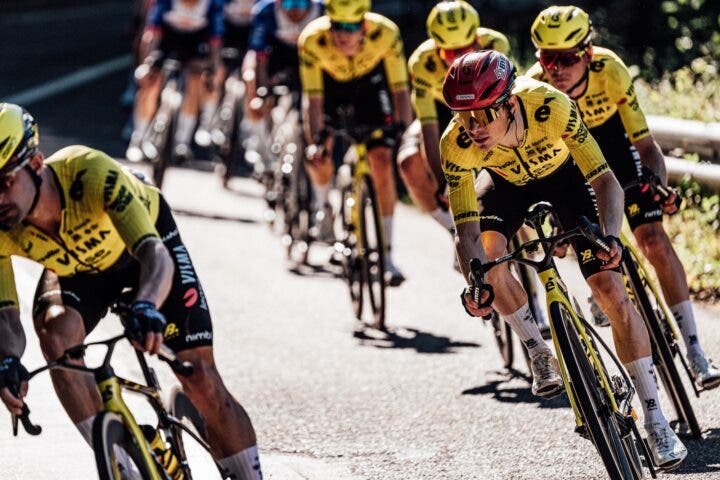
The team benefiting most from Pogačar’s absence is Visma-Lease a Bike.
Vingegaard chose to race the Giro in part because Pogačar would not be here.
After a bruising two-year run at the Tour — where injuries compounded the damage Pogačar inflicted — Vingegaard wanted a grand tour he could race on his own terms. The 2025 Vuelta a España proved he could still win one.
Going into Tuesday’s time trial, the Giro is unfolding exactly as Visma would have wanted: controlled, composed, and increasingly one-sided.
What is striking is not how aggressively Vingegaard has raced, but how much he appears to be holding back.
On Blockhaus and again Sunday on the Giro’s second major summit finish, Vingegaard never looked like he truly uncorked his full power. Even while breaking climbing records and winning stages, he has done just enough but no more.
The thermonuclear attacks that define the Pogačar playbook have not arrived.
Without Pogačar here to force his hand, Visma’s approach is cool, measured control rather than an all-out appetite for destruction.
That could mean one of two things: either Vingegaard’s form is still building toward July, or Visma sees no reason to bury itself in May. Probably both.
The Dane came to Italy to win the Giro, but not at the expense of the Tour de France.
Team brass believe Vingegaard can take pink in Rome and still arrive in July capable of beating Pogačar.
And the Giro-Tour double remains one of cycling’s most challenging milestones. Pogačar made it look easy, but before that, the last rider to do it was Marco Pantani some 25 years before.
That balancing act hangs over every kilometer of this race.
These riders benefit the most from Pogačar skipping the Giro
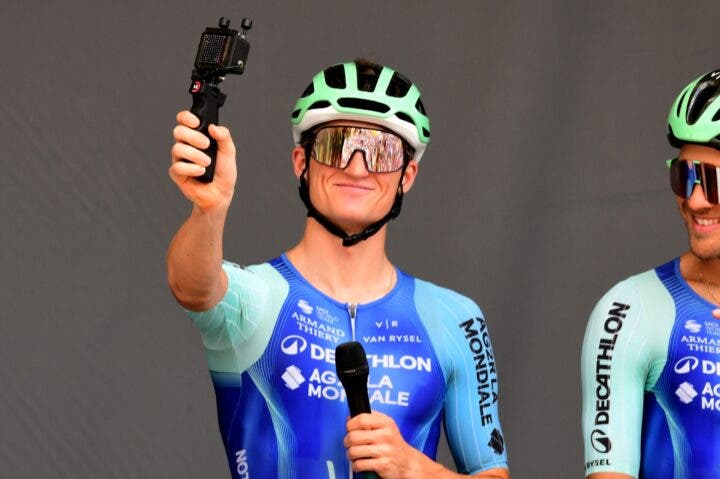
If Vingegaard is racing with restraint, the rest of the peloton should be charging into the void.
A Pogi-free grand tour presents a rare opening to chase one of cycling’s biggest podiums without the sport’s dominant force standing in the way.
Somewhat surprisingly, the rest of the peloton seems almost as cautious as Visma.
The weight of the Giro’s brutal final week is certainly hanging over everyone. Even without Pogačar, week 3 in northern Italy remains unforgiving.
Felix Gall has seized the opportunity more aggressively than anyone. The Decathlon-CMA CGM climber has emerged as one of the race’s revelations.
With young teammate Paul Seixas absent — the rider hyped as the “next Pogačar” — Gall has the full weight of the team behind him. The looming time trial remains a question mark over his podium bid.
Jai Hindley also looks liberated and Giulio Pellizzari looked ready to step boldly into the spotlight, but a stomach bug has reportedly spread across Red Bull-Bora-Hansgrohe. If the young Italian recovers, he could still become the breakout star this Giro needs.
Riders like Ben O’Connor, Egan Bernal, and Derek Gee-West have all spent years getting pummeled by Pogačar.
This Giro looked like their best opportunity yet, but so far none have fully grabbed the chance.
The Giro podium is there for the taking but almost no one is stepping up yet.
The 2026 Giro is more open without Pogačar — just not always more exciting
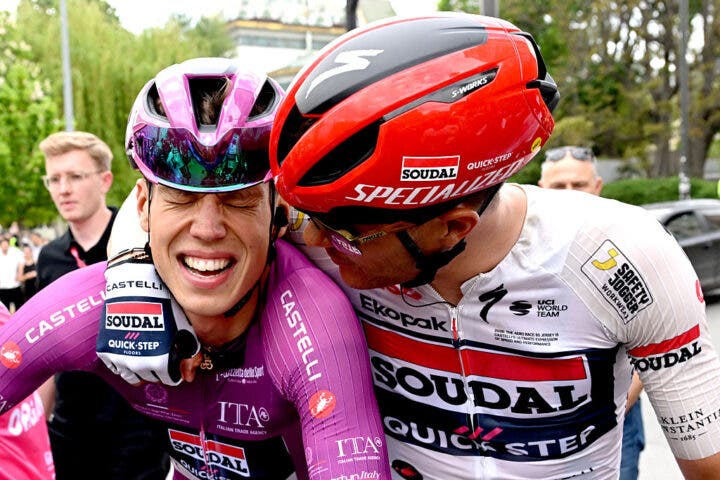
This Giro opened up even more when UAE Emirates-XRG — Pogačar’s very own team — was gutted by crashes and illness.
Pre-race favorite João Almeida, sent to lead in Pogačar’s absence, fell ill before the start. Adam Yates, the team’s Plan B, crashed out during the opening weekend.
Not only is Pogačar missing, but his usually dominant UAE squad has also been defanged and relegated to stage-hunting mode.
Without Pogačar and UAE pummeling the race into submission, mountain stages have oddly drifted between hesitation and opportunism.
Riders glance at each other, waiting for someone else to commit. No one’s stepping into the void.
The contrast with Pogačar’s Giro appearance in 2024 is stark. During his Giro victory, Pogačar won six stages and finished in the top three on three others. He was everywhere.
In 2026, Vingegaard is doing just enough to secure pink, not bulldoze the peloton.
Perhaps that contrast is a reflection of their characters. Vingegaard has told the media he’s here to win the Giro, not showboat across Italy for three weeks.
This Giro still feels cautious. The brutal final week looms.
But without Pogačar here to smother everything, rival riders are leaving opportunities on the table.
Why Pogačar is the Giro’s biggest story — even without racing it
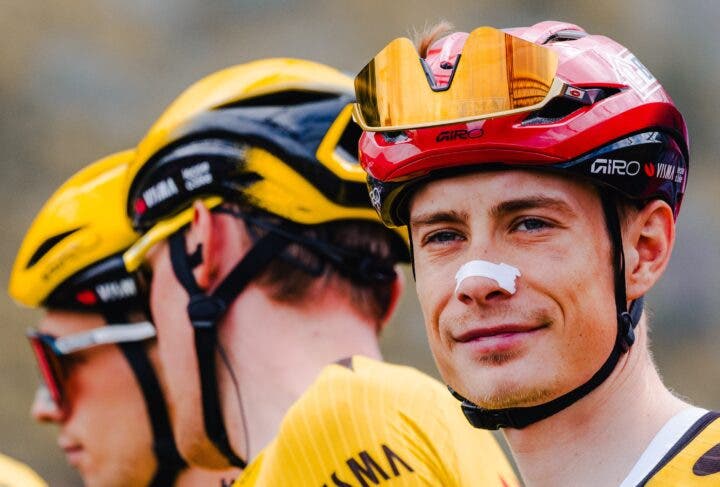
There is also the matter of what Pogačar brings to a race simply by being in it.
The 2024 Giro drew record crowds and scenes of tifosi chaos as fans tracked his every move. The Slovenian races with pure aggression and instinct, attacks from impossible distances, and turns even routine stages into spectacles.
Remove him, and while the unpredictability of a different winner increases, the volume and excitement levels often drop.
On paper, this Giro should be more open and more exciting, right?
More riders should believe they can win stages and hit the podium. Without Pogačar, Visma feels this pink jersey is theirs and the team is racing accordingly.
But the feeling that someone could light a match and blow the race to pieces at any moment just is not hanging over this Giro.
That is the Pogačar paradox. His dominance can feel inevitable or even predictable, yet it is rarely dull.
Whether the Giro is better without him remains an open question.
What is obvious is how deeply he still shapes this race in his absence.
Halfway through the Giro, the race almost feels haunted with the ghosts of Pogi past.
Everyone in Italy still looks like they are waiting for Pogačar to attack around the next corner.
[analyse_source url=”https://velo.outsideonline.com/road/road-racing/giro-ditalia/pogacar-giro-ditalia-2026-absence/”]