“A great score is not heard” – From Indiana Jones to Star Wars, musical legend Gordy Haab on becoming a caretaker of some of video games’ most prolific franchises
“I’ve always pushed myself to go in this direction.”
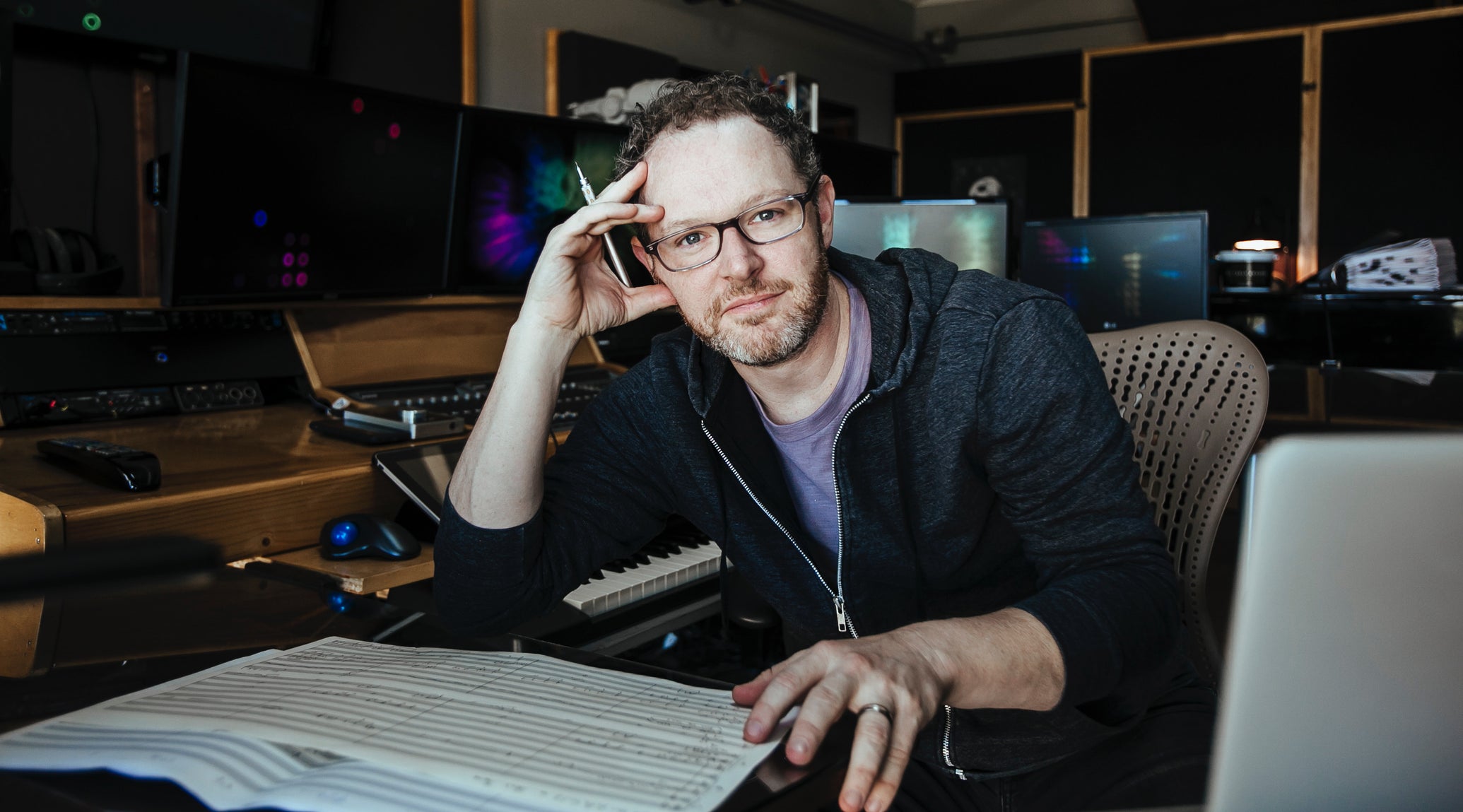

American composer Gordy Haab is a force to be reckoned with, pun absolutely intended. His catalogue of video game work includes composing scores for the likes of Star Wars Jedi: Fallen Order, Star Wars Jedi: Survivor, Star Wars Squadrons and, most recently, Indiana Jones and the Great Circle. He is arguably our generation’s John Williams, perfectly encapsulating everything we have heard and loved from those iconic scores gone before, but with that extra dash of Haab seasoning.
I got the chance to sit down and chat with Haab ahead of last month’s video game BAFTA awards, where Indiana Jones and the Great Circle was nominated for its musical score. What followed was an enchanting half an hour, as we dived into Haab’s early life and how the films of Steven Spielberg inspired him, to moving to Los Angeles and scoring fanfilms created in old abandoned tortilla factories, before being contacted by LucasArts where his first foray into the world of video games began.
A man after my own heart, Haab credits E.T for first igniting the musical flame within him. “I remember going home after seeing the movie and – as we would typically do – my family would sit around the dinner table and talk about it. My mum asked me who my favourite character or what my favourite storyline was, and I couldn’t remember the characters’ names, but I could sing all of the tunes and the score,” Haab tells me. He says that from a very young age, his family knew there was something about music, and specifically music in films, that attracted his attention. “It has always been a goal,” Haab tells me. “I’ve always pushed myself to go in this direction – I’ve known what I wanted to do since I was a toddler.”
Haab set his sights on breaking into the film industry, and eventually moved to Los Angeles, where he attended university. Here he met a number of student filmmakers, who worked on everything from short films to full length features. “I was really into doing low budget horror films, that was my bread and butter for the first couple of years when I was in the film business,” he recalls. One such director he worked with was Michael Scott (no relation to The US Office), and after collaborating on a couple of student films together, they discovered they were both big Star Wars fans, and it wasn’t long before this shared passion caught the eye of LucasArts itself.
“I’ve known what I wanted to do since I was a toddler”
“Scott was making a short fan film, just him and his buddy getting started with lightsabers in an old abandoned tortilla factory,” Haab says. “It was interesting because they made it like a demo for visual effects, and I wrote the music for it. They put it on YouTube in 2004/2005, back when it wasn’t a ‘thing’ for something to go viral, but it had something like 1m views inside of a week, which was really huge for that time period.”
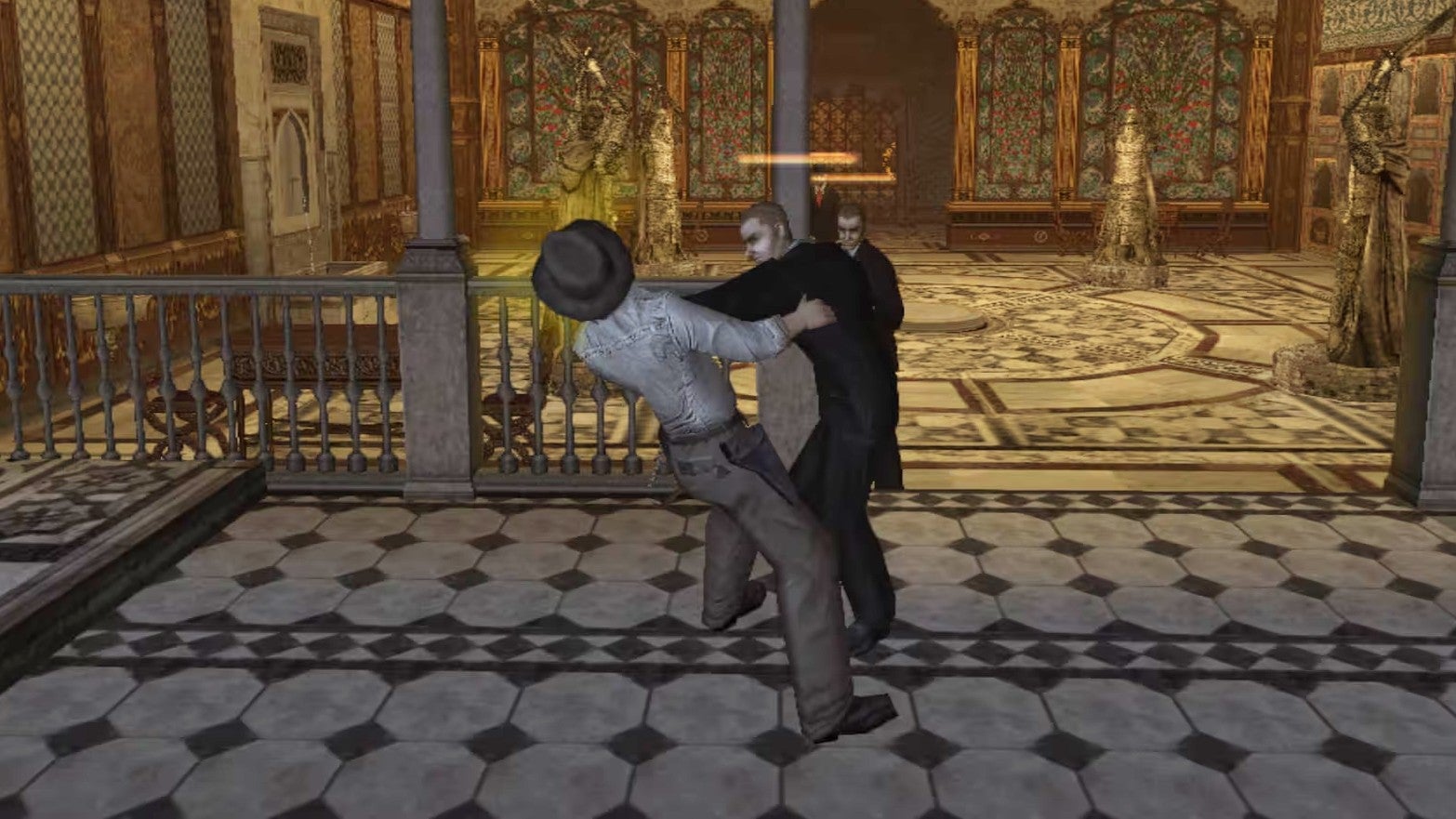
This once small demo project made its way to LucasArts, who contacted Haab to see if he would be interested in scoring a video game. The game? Indiana Jones and the Staff of Kings. And that is how his musical career in the games industry started.
But while Haab had landed a job on a video game, he still worked on TV and film music as well, and his other credits include the likes of MTV’s The Truth Below and the Oprah Winfrey Network’s The Judds. This made me wonder if a composer has to approach music for different mediums in ways that are unique to the final product. Yes and no. “I’ve always approached writing music for a film, or a television show, or a game the same way – I write music for the sake of music first,” he tells me. “At least that way, I am starting with something that is inherently musical. And then I find a way to make it work technically for the medium it is for.”
“It’s a unique challenge that games offer to composers”
Haab notes that games, especially modern games, are much more like scoring a film than they perhaps once were, because of the many cinematic cutscenes that are now peppered between gameplay sections. “Indiana Jones and the Great Circle is a great example. If you were to take only the cutscenes out of this game and put them together, you’d end up with practically two feature film lengths of films. So that aspect of it I am scoring just like you would a film,” he says. It gets more complicated when he has to create music for the gameplay itself, though, as it can be “almost like reverse engineering” a massive musical puzzle.
“It’s a unique challenge that games offer to composers in that we have to find creative ways to have music be able to stretch over long periods of time, or evolve based on a player’s input,” he explains. “To simplify it, it is like when I was a kid I had these Choose Your Own Adventure books. It’s like building this branching system, musically. So you get to the end of a piece of music, and if you are in a battle and you are winning, I will have to have a version that transitions into a winning version. Similarly, if you are losing, I need a version that transitions into that.
“There are all of these possibilities within making music interactive, which creates these kinds of cool challenges, and it is fun to work that way. But in the end, I try to approach all mediums in the same way. I try to be musical first and tap into the emotion of the narrative and story first and foremost, and then reverse engineer how it works technically.”
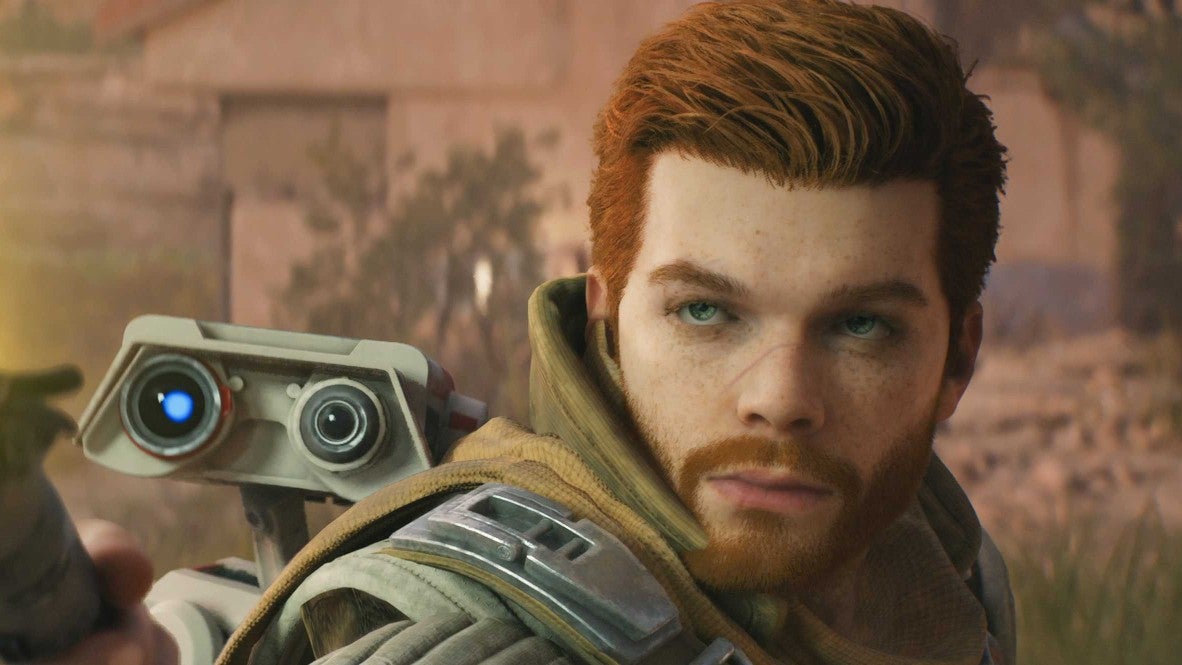
During his time as a student in LA, Haab was fortunate enough to be taught by many great film and TV composers. One such composer was Jerry Goldsmith, whose decades-long career included working on comedy horror film Gremlins, the theme for The Man from U.N.C.L.E. in the 1960s, and as the composer for 1999’s still-brilliant-to-this-day The Mummy. But while Haab graduated many years ago and has gone on to have an illustrious career, he still remembers some wise words from his former tutor.
“One of the interesting things Jerry said was, ‘If you’ve written a good score, you won’t notice it. You won’t hear it. A great score is not heard. But if you take it away, everything falls off the rails’. So the score needs to be there to enhance that emotion but never get in the way of the emotion and story,” Haab tells me.
“Composers, we all want to write our magnus opus symphony over the top, but the story is king,” he says, laughing. “But if the story is being sacrificed for the sake of this great creation you’ve come up with musically, then it is the composer’s job to edit and pull back on it.” When he is writing his own scores, Haab’s goal is to step away from it, even for a day, and then come back to it and listen to it alongside the scene it will underscore. “If I get lost and stop noticing my own music, I know I’ve done a good job,” he says.
It is one thing, though, to do a good job on something totally original that has no expectations from pre-established fans, but what about coming up with an original score for a franchise that is beloved already? How does Haab make sure he is still being respectful of all the work that has come before, particularly in franchises like Star Wars or Indiana Jones.
“I’ve always looked at it as I have two possibilities,” he answers. “I could write music that is pastiche, a sound-a-like – a knock off of the original scores, which I picture as a ‘paint by numbers’ version. Which if I do, yes, I could get something that sounds just like the scores from the original Star Wars films, but it is always going to be second rate. Or I can approach it by just borrowing the same colour palette and then creating something completely original. A brand-new painting. It can be anything, but if I use the same colours there is going to be enough there to harken back to the sound that everyone knows and loves from those franchises.”
“If I get lost and stop noticing my own music, I know I’ve done a good job”
Even so, Haab says it can still be daunting when it comes to pleasing fans, and sometimes he feels a desire to write something just like the original scores, because he knows they work well. “But then, I have to remind myself that I am also a huge fan of Star Wars and Indiana Jones. I grew up on these movies. So I was able to learn how to release that pressure by ignoring that noise and just writing a score I would enjoy. Because if I write something that I like – and I am a fan of these franchises – then I think I will at least please the majority of that fanbase.”
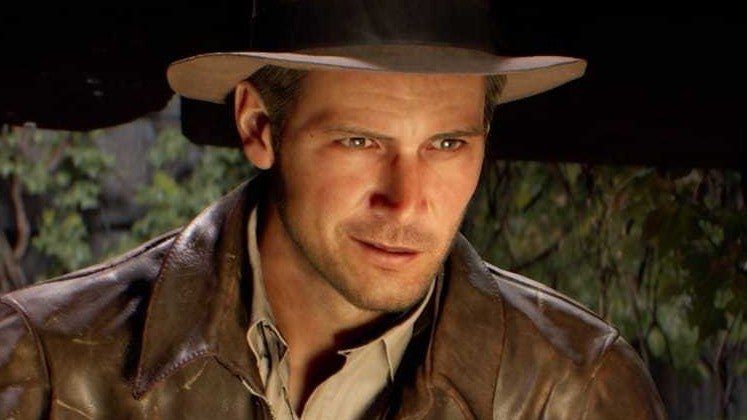
Working on Indiana Jones and the Great Circle has felt like, well, coming full circle for Haab. His first foray into the video game industry was Indiana Jones and the Staff of Kings from 2009, and now, his latest work on the franchise has been nominated for a BAFTA. “I am able to see my entire career until now bookended by two Indiana Jones projects,” he says, smiling, “and I can very rationally step out of my own self and listen to what I did on Staff of Kings and what I have done on the Great Circle, and hear a real creative evolution in my own music.”
I ask if, having worked on two iterations of Indiana Jones games, he can sum up the franchise in just one chord? “Major seventh chord!” he immediately replies. “Listen to the bass section of the original Raiders March: that bamp ba naaa, bamp ba na na naaa, then the bamp ba naaa [he sings this] – that’s the major seventh chord. And John Williams did that because it added colour. And that is something that I’ve always been attracted to in the scores he would write. And I like the sound of that major seven. I don’t know how to explain it; it is just very… it just feels… happy and good, and interesting and complex.”
Haab’s passion for his work is infectious and I feel myself swept along by his enthusiasm. But there are some who regard video game music with snobbery. Haab admits that even today, there are filmmakers who are surprised when he tells them he’s scored games, because they assume games aren’t capable of producing more than short chiptune soundtracks. “A director will say, ‘Oh you work on games too – that’s cool.’ And I will play them something and they go, ‘Wait! Is that all synthesiser?’ And I go, ‘No, that’s the London Symphony Orchestra. It is way more common than you think.’”
“I didn’t grow up in a community that had orchestras where I could go to hear Beethoven”
Haab considers it part of his job to educate people on video games because there’s a lot of really great music being written in this area. “I’m of a different generation of a lot of those playing games now, but I talk to gamers when I go to conventions and this kind of thing, and a lot of fans will come up to me – and I am getting this very unique thing that I didn’t expect to happen, but it is happening much more often – when fans are coming up to me and saying they believe that the music from Star Wars, for example, that I was the one that created that music, because their only anchor point for the franchise are the games that they play,” he says. “They don’t know the films, they know the games.”
There is a huge fanbase, especially in the younger generations, where their exposure to symphonic music in particular is happening through games – much like Haab had with films. “I didn’t grow up in a community that had orchestras where I could go to hear Beethoven, so I think it is very important to shed light on .”
Haab points to the rise in video game-specific concerts, like we have seen for The Witcher and Stardew Valley, as demonstrations of increasing popularity. “These shows are selling out. It tells you a lot about how passionate the fanbase for these games are, and how important the music is to those fans,” he says in closing. “I would love to see more of it, but in many ways I am seeing more of it. It is happening as we speak.”

My time with Haab comes to an end all too quickly. In this short space of time I have found myself with a new appreciation for video game music and its composers. It is fair to say Haab has sprinkled more than just a little bit of magic into the worlds we visit in games, and I will be looking forward to hearing what he has planned next. Until then, though, I am going to relisten to the Raiders March, and picture the smile on Haab’s face when I hear that major seventh chord.
Indiana Jones and the Great Circle makes its Switch 2 debut this week, 12th May. It’s also available on PC, PlayStation 5 and Xbox Series S/X. We awarded it five stars in our Indiana Jones and the Great Circle review.
American composer Gordy Haab is a force to be reckoned with, pun absolutely intended. His catalogue of video game work includes composing scores for the likes of Star Wars Jedi: Fallen Order, Star Wars Jedi: Survivor, Star Wars Squadrons and, most recently, Indiana Jones and the Great Circle. He is arguably our generation’s John Williams, perfectly encapsulating everything we have heard and loved from those iconic scores gone before, but with that extra dash of Haab seasoning.
I got the chance to sit down and chat with Haab ahead of last month’s video game BAFTA awards, where Indiana Jones and the Great Circle was nominated for its musical score. What followed was an enchanting half an hour, as we dived into Haab’s early life and how the films of Steven Spielberg inspired him, to moving to Los Angeles and scoring fanfilms created in old abandoned tortilla factories, before being contacted by LucasArts where his first foray into the world of video games began.
A man after my own heart, Haab credits E.T for first igniting the musical flame within him. “I remember going home after seeing the movie and – as we would typically do – my family would sit around the dinner table and talk about it. My mum asked me who my favourite character or what my favourite storyline was, and I couldn’t remember the characters’ names, but I could sing all of the tunes and the score,” Haab tells me. He says that from a very young age, his family knew there was something about music, and specifically music in films, that attracted his attention. “It has always been a goal,” Haab tells me. “I’ve always pushed myself to go in this direction – I’ve known what I wanted to do since I was a toddler.”
Haab set his sights on breaking into the film industry, and eventually moved to Los Angeles, where he attended university. Here he met a number of student filmmakers, who worked on everything from short films to full length features. “I was really into doing low budget horror films, that was my bread and butter for the first couple of years when I was in the film business,” he recalls. One such director he worked with was Michael Scott (no relation to The US Office), and after collaborating on a couple of student films together, they discovered they were both big Star Wars fans, and it wasn’t long before this shared passion caught the eye of LucasArts itself.
“I’ve known what I wanted to do since I was a toddler”
“Scott was making a short fan film, just him and his buddy getting started with lightsabers in an old abandoned tortilla factory,” Haab says. “It was interesting because they made it like a demo for visual effects, and I wrote the music for it. They put it on YouTube in 2004/2005, back when it wasn’t a ‘thing’ for something to go viral, but it had something like 1m views inside of a week, which was really huge for that time period.”
This once small demo project made its way to LucasArts, who contacted Haab to see if he would be interested in scoring a video game. The game? Indiana Jones and the Staff of Kings. And that is how his musical career in the games industry started.
But while Haab had landed a job on a video game, he still worked on TV and film music as well, and his other credits include the likes of MTV’s The Truth Below and the Oprah Winfrey Network’s The Judds. This made me wonder if a composer has to approach music for different mediums in ways that are unique to the final product. Yes and no. “I’ve always approached writing music for a film, or a television show, or a game the same way – I write music for the sake of music first,” he tells me. “At least that way, I am starting with something that is inherently musical. And then I find a way to make it work technically for the medium it is for.”
“It’s a unique challenge that games offer to composers”
Haab notes that games, especially modern games, are much more like scoring a film than they perhaps once were, because of the many cinematic cutscenes that are now peppered between gameplay sections. “Indiana Jones and the Great Circle is a great example. If you were to take only the cutscenes out of this game and put them together, you’d end up with practically two feature film lengths of films. So that aspect of it I am scoring just like you would a film,” he says. It gets more complicated when he has to create music for the gameplay itself, though, as it can be “almost like reverse engineering” a massive musical puzzle.
“It’s a unique challenge that games offer to composers in that we have to find creative ways to have music be able to stretch over long periods of time, or evolve based on a player’s input,” he explains. “To simplify it, it is like when I was a kid I had these Choose Your Own Adventure books. It’s like building this branching system, musically. So you get to the end of a piece of music, and if you are in a battle and you are winning, I will have to have a version that transitions into a winning version. Similarly, if you are losing, I need a version that transitions into that.
“There are all of these possibilities within making music interactive, which creates these kinds of cool challenges, and it is fun to work that way. But in the end, I try to approach all mediums in the same way. I try to be musical first and tap into the emotion of the narrative and story first and foremost, and then reverse engineer how it works technically.”
During his time as a student in LA, Haab was fortunate enough to be taught by many great film and TV composers. One such composer was Jerry Goldsmith, whose decades-long career included working on comedy horror film Gremlins, the theme for The Man from U.N.C.L.E. in the 1960s, and as the composer for 1999’s still-brilliant-to-this-day The Mummy. But while Haab graduated many years ago and has gone on to have an illustrious career, he still remembers some wise words from his former tutor.
“One of the interesting things Jerry said was, ‘If you’ve written a good score, you won’t notice it. You won’t hear it. A great score is not heard. But if you take it away, everything falls off the rails’. So the score needs to be there to enhance that emotion but never get in the way of the emotion and story,” Haab tells me.
“Composers, we all want to write our magnus opus symphony over the top, but the story is king,” he says, laughing. “But if the story is being sacrificed for the sake of this great creation you’ve come up with musically, then it is the composer’s job to edit and pull back on it.” When he is writing his own scores, Haab’s goal is to step away from it, even for a day, and then come back to it and listen to it alongside the scene it will underscore. “If I get lost and stop noticing my own music, I know I’ve done a good job,” he says.
It is one thing, though, to do a good job on something totally original that has no expectations from pre-established fans, but what about coming up with an original score for a franchise that is beloved already? How does Haab make sure he is still being respectful of all the work that has come before, particularly in franchises like Star Wars or Indiana Jones.
“I’ve always looked at it as I have two possibilities,” he answers. “I could write music that is pastiche, a sound-a-like – a knock off of the original scores, which I picture as a ‘paint by numbers’ version. Which if I do, yes, I could get something that sounds just like the scores from the original Star Wars films, but it is always going to be second rate. Or I can approach it by just borrowing the same colour palette and then creating something completely original. A brand-new painting. It can be anything, but if I use the same colours there is going to be enough there to harken back to the sound that everyone knows and loves from those franchises.”
“If I get lost and stop noticing my own music, I know I’ve done a good job”
Even so, Haab says it can still be daunting when it comes to pleasing fans, and sometimes he feels a desire to write something just like the original scores, because he knows they work well. “But then, I have to remind myself that I am also a huge fan of Star Wars and Indiana Jones. I grew up on these movies. So I was able to learn how to release that pressure by ignoring that noise and just writing a score I would enjoy. Because if I write something that I like – and I am a fan of these franchises – then I think I will at least please the majority of that fanbase.”
Working on Indiana Jones and the Great Circle has felt like, well, coming full circle for Haab. His first foray into the video game industry was Indiana Jones and the Staff of Kings from 2009, and now, his latest work on the franchise has been nominated for a BAFTA. “I am able to see my entire career until now bookended by two Indiana Jones projects,” he says, smiling, “and I can very rationally step out of my own self and listen to what I did on Staff of Kings and what I have done on the Great Circle, and hear a real creative evolution in my own music.”
I ask if, having worked on two iterations of Indiana Jones games, he can sum up the franchise in just one chord? “Major seventh chord!” he immediately replies. “Listen to the bass section of the original Raiders March: that bamp ba naaa, bamp ba na na naaa, then the bamp ba naaa [he sings this] – that’s the major seventh chord. And John Williams did that because it added colour. And that is something that I’ve always been attracted to in the scores he would write. And I like the sound of that major seven. I don’t know how to explain it; it is just very… it just feels… happy and good, and interesting and complex.”
Haab’s passion for his work is infectious and I feel myself swept along by his enthusiasm. But there are some who regard video game music with snobbery. Haab admits that even today, there are filmmakers who are surprised when he tells them he’s scored games, because they assume games aren’t capable of producing more than short chiptune soundtracks. “A director will say, ‘Oh you work on games too – that’s cool.’ And I will play them something and they go, ‘Wait! Is that all synthesiser?’ And I go, ‘No, that’s the London Symphony Orchestra. It is way more common than you think.’”
“I didn’t grow up in a community that had orchestras where I could go to hear Beethoven”
Haab considers it part of his job to educate people on video games because there’s a lot of really great music being written in this area. “I’m of a different generation of a lot of those playing games now, but I talk to gamers when I go to conventions and this kind of thing, and a lot of fans will come up to me – and I am getting this very unique thing that I didn’t expect to happen, but it is happening much more often – when fans are coming up to me and saying they believe that the music from Star Wars, for example, that I was the one that created that music, because their only anchor point for the franchise are the games that they play,” he says. “They don’t know the films, they know the games.”
There is a huge fanbase, especially in the younger generations, where their exposure to symphonic music in particular is happening through games – much like Haab had with films. “I didn’t grow up in a community that had orchestras where I could go to hear Beethoven, so I think it is very important to shed light on .”
Haab points to the rise in video game-specific concerts, like we have seen for The Witcher and Stardew Valley, as demonstrations of increasing popularity. “These shows are selling out. It tells you a lot about how passionate the fanbase for these games are, and how important the music is to those fans,” he says in closing. “I would love to see more of it, but in many ways I am seeing more of it. It is happening as we speak.”
My time with Haab comes to an end all too quickly. In this short space of time I have found myself with a new appreciation for video game music and its composers. It is fair to say Haab has sprinkled more than just a little bit of magic into the worlds we visit in games, and I will be looking forward to hearing what he has planned next. Until then, though, I am going to relisten to the Raiders March, and picture the smile on Haab’s face when I hear that major seventh chord.
Indiana Jones and the Great Circle makes its Switch 2 debut this week, 12th May. It’s also available on PC, PlayStation 5 and Xbox Series S/X. We awarded it five stars in our Indiana Jones and the Great Circle review.
7 comments