[analyse_image type=”featured” src=”https://velo-cdn.outsideonline.com/wp-content/uploads/2026/05/Copy-of-Copy-of-SLEEP-3.jpg”]
The Giro d’Italia has been either brutally attritional or stupidly easy. So easy at times that we could have joined the ride.
Power files from the first three stages of the Giro reveal those not caught up in crashes or chasing bunch sprints have barely made it out of zone 1.
The WorldTour peloton tootled across Bulgaria at 170 watts average power and 100bpm heart rate.
They’re numbers better suited to your weekend coffee ride.
For pre-race favorite Jonas Vingegaard, the opening stage was just an extended warmup for the 20 to come.
“It felt like a 3.5-hour training ride today,” Vingegaard told Feltet after he’d cruised along the Black Sea coast on Friday.
Vingegaard wasn’t just bragging.
The entire Giro peloton has been nose-breathing for most of this Giro d’Italia.
Decathlon climber Johannes Staune-Mittet shared an image of his Wahoo after stage 1 to highlight he pushed 168 watts for 3 hours 36 minutes in the opening stage. Per his Strava power analysis, that’s zone 1 – recovery.
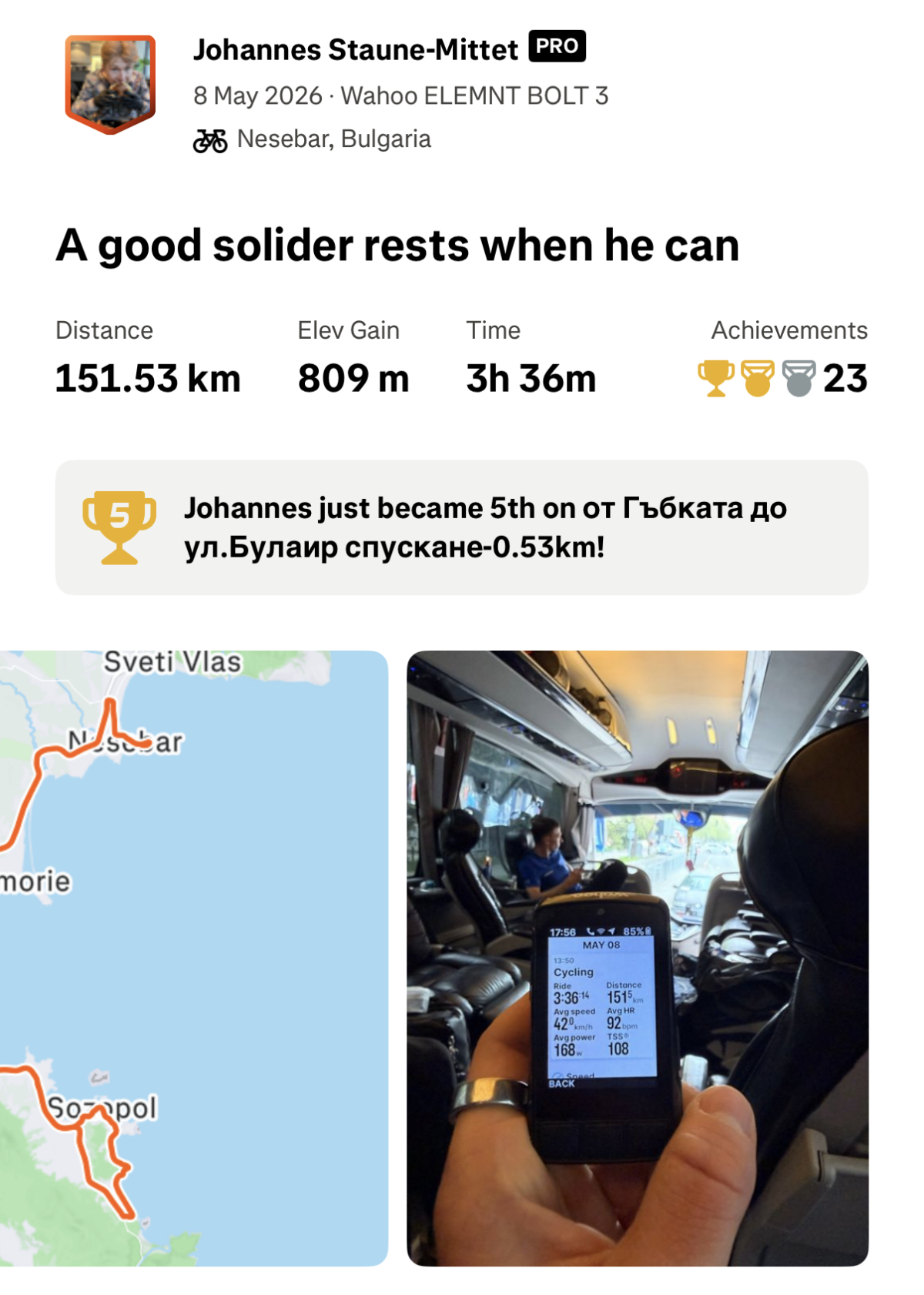
The next two days were no different for the Norwegian talent – or anyone else who rode the grande partenza without a cause.
Staune-Mittet averaged 172 watts and 98bpm during stage 3. He went crazy with 189 watts and 104bpm in the crash-blighted, hill-riddled second stage.
Random other Strava files reveal the same trend.
Canada’s Nickolas Zukowsky (Pinarello-Q36.5) averaged 170 and 172 watts as he surfed wheels in the bunch and stayed out of the sprint trains on stages 1 and 3. Likewise, Nick Schultz (NSN Pro Cycling) averaged 172 and 166 on the Giro’s two sprinter stages.
Their normalized powers – a better indication of physiological “effort” or toll – didn’t trend far differently.
These riders with 5+ watt-per-kilo FTPs have been riding so easy they’re probably de-training.
Easy starts, savage ends
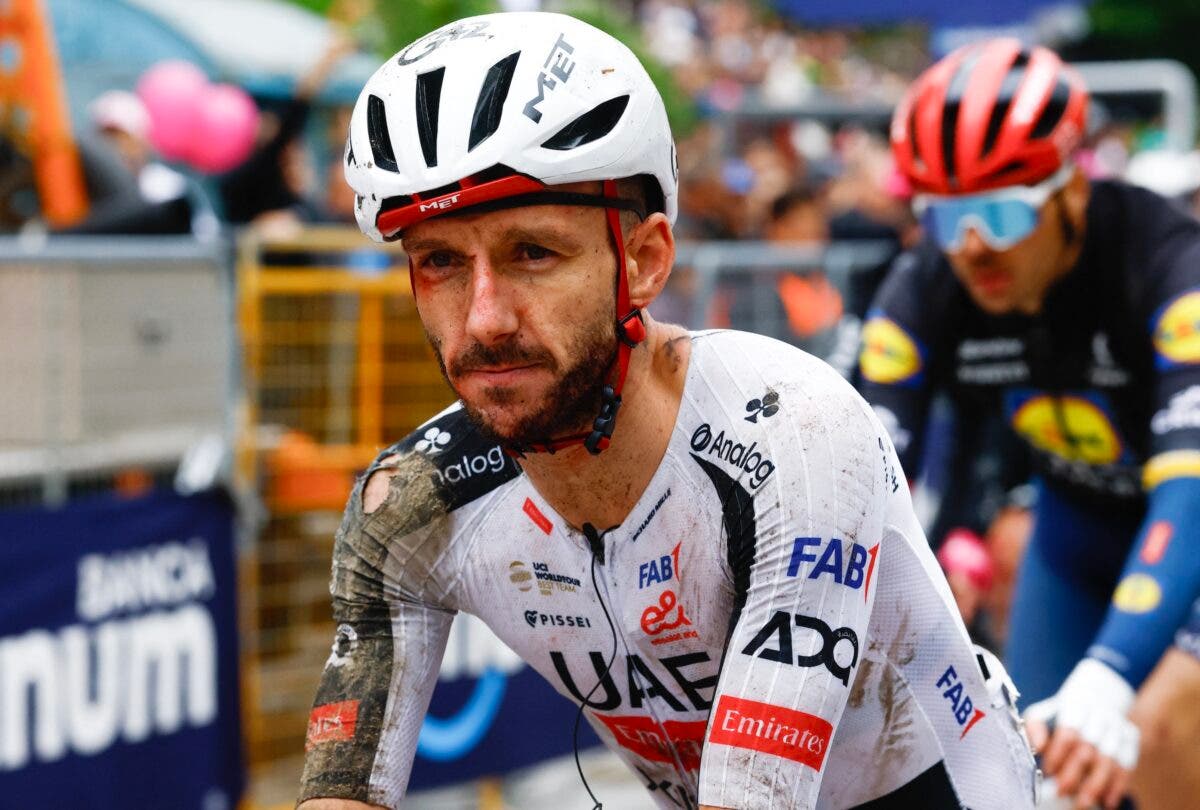
But that doesn’t mean the Giro d’Italia has been a total joy ride. Far from it.
Two huge crashes in two days decimated a peloton that’s been hitting the final hour of racing so fresh it’s like a firework with a very short fuse.
Erlend Blikra of Uno-X Mobility reinforced that the easier the start, the harder – and sketchier – the end.
The big Norseman was the unfortunate epicenter of the super-speed crash in the final kilometer of stage 1.
“It was really easy the whole day, so I think everybody was super fresh in the end,” Blikra told TV reporters on Friday. “That just makes it more hectic.”
Per data published by Velon, Paul Magnier maxed out at 1,710 watts when he won the race’s first pink jersey in a 64kph uphill sprint. After such an easy day, Italian monster Jonathan Milan hit the double-century with a 2,010-watt peak sprint.
What happened to the high-speed revolution?
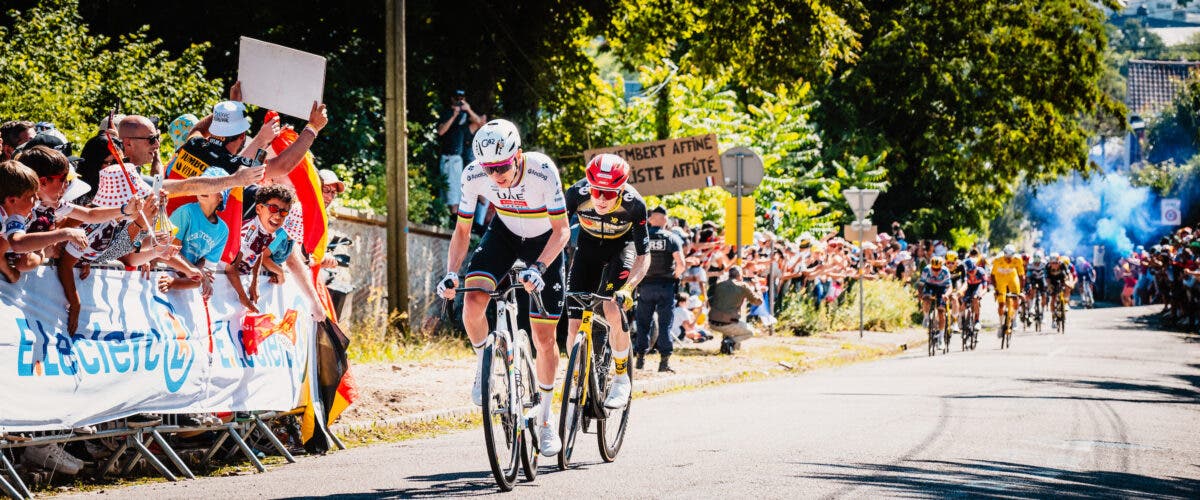
The all-day rolling speed has barely broken 40kph so far at this Giro d’Italia.
It’s like the high-performance, super-power evolution of the sport didn’t take the flight across to Bulgaria.
The recent classics and grand tours were ridden like wild men. Average speeds for cobbled monuments and Tour de France sprint stages pushed 50kph.
Riders like Tadej Pogačar and Mathieu van der Poel demanded whopping watts from kilometer zero. Only freakishly durable phenoms like Pogi, MVDP, and Vingegaard can thrive in racing that’s as hard in the first hour as it is in the last.
Even the fight for a breakaway with one percent chance has become furious in the modern WorldTour.
So why has the Giro snoozed through three soft breaks in a row?
Safety before speed at the Giro d’Italia
What changed?
The Bulgarian parcours wasn’t exactly hard. It barely went uphill beyond stage 2.
But that doesn’t mean there’s been nothing for opportunists to chase. Bonus seconds, UCI points, and valuable sponsor time have been scattered all over the road at intermittent primes.
Maybe team motivations – and mojos – will change when the bunch hits more familiar Italian territory Tuesday.
A shift in the strategies of the GC teams could have been a factor in the Giro’s slow start.
Unlike at the Tour de France, the super teams have been happy to take a back seat while the sprint squads have their day.
Visma-Lease a Bike chose to sit at the back of the bunch to keep Vingegaard out of trouble, and Red Bull-Bora-Hansgrohe has done similar for Giulio Pellizzari and Jai Hindley. UAE Emirates-XRG has been decimated by crashes and so can’t influence the race like it does at the Tour de France.
For many riders, racing really starts Tuesday after a long transfer across the Adriatic Sea.
“The goal was to come through the opening stages safely, and with Jonas we succeeded in doing that,” Visma director Marc Reef said Sunday in a team note. “Jonas rode a strong finale on stage 2, which gives us a lot of confidence for the rest of this race.”
Stages in the tricky Italian south this week should caffeinate the Giro d’Italia ahead of a bruising encounter on the Blockhaus on Friday.
After a three-stage warm-up, the peloton should be primed and ready.
[analyse_source url=”https://velo.outsideonline.com/road/road-racing/giro-ditalia/the-giro-peloton-has-been-pushing-crazy-low-power/”]