Wonderland
RUNNING ACCORDING TO ISAMAYA FFRENCH
Isamaya Ffrench reunites with Nike for the limited-edition ‘Run Forever’ Running Capsule, a collection rooted in London shaped by running, recovery and sculpting the body after effort. Here, she talks about discipline, movement, and what it means to feel good in your body.
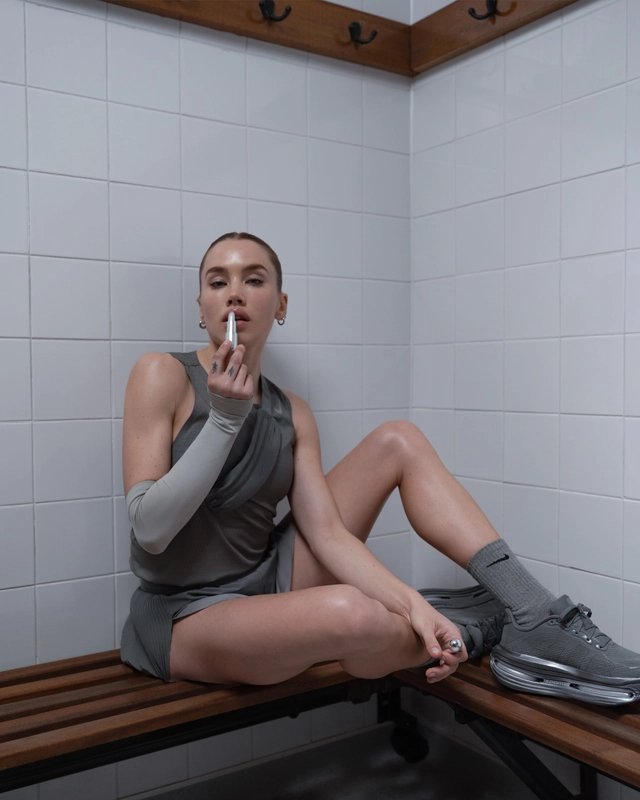
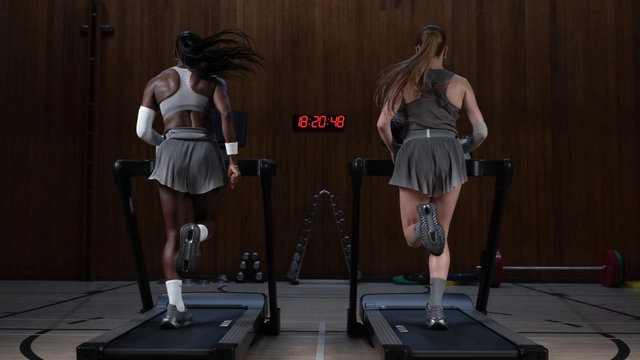
Running is having a moment in London (and everywhere), visible in the crowds that took over the city for its legendary marathon route, and building again towards the upcoming half marathon season. It feels like the right moment, then, for makeup artist, creative director and avid runner Isamaya Ffrench and Nike to collaborate on the limited-edition ‘Run Forever’ Running Capsule, inspired by London and the athletes set to move through its streets this spring. Filtered through Isamaya’s transgressive approach to beauty and design, with a campaign starring the record-breaking British sprinter Dina Asher-Smith, alongside her mother.
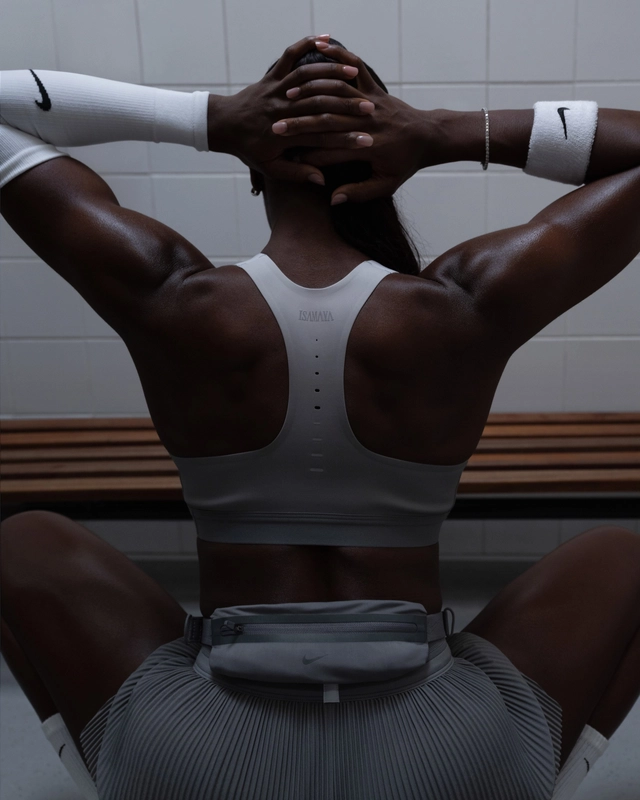
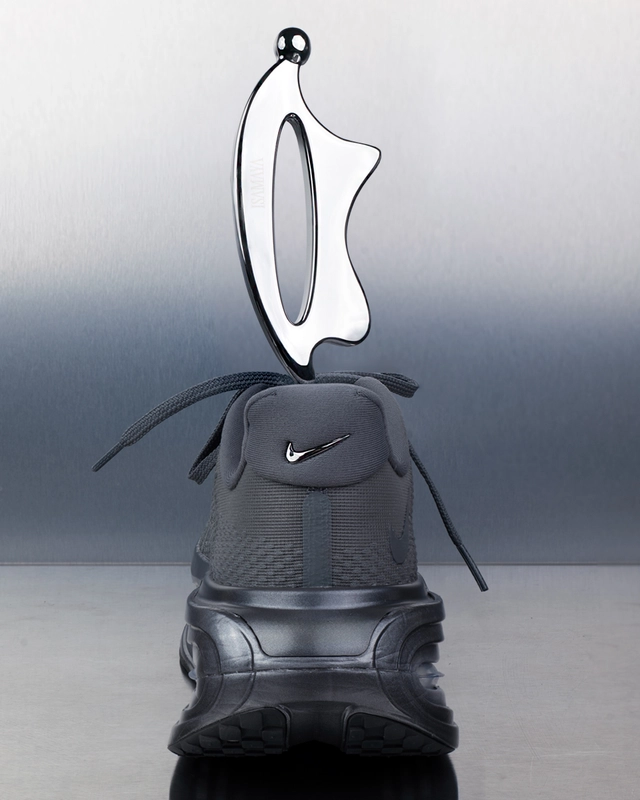
The result? The industrial Vomero Premium sneaker, reworked in a metallic grey finish, paired with matching performance sets and a sculpting recovery tool developed in collaboration with reflexologist Maria Pecoff, designed to support the body after impact. True to Isamaya’s practice, the collection sits between beauty and utility without separating the two. Everything is considered and functional, reflecting both her own relationship to movement and the city that shapes it.
Here, the beauty mogul speaks to Wonderland about feeling good in her body, discipline and working with Nike on this collaboration:
What was the starting point for this collection, and in what ways does it mark a departure from your first partnership with Nike?
The starting point was the shoe itself, the Vomero’s machine-like, stacked construction. Metal is my favourite raw material, and there was something immediately right about designing a metallic grey colourway for something so engineered and precise. Our first collaboration taught me how important rituals, whether they’re beauty and fashion related or not, are for athletes. I instilled the same spirit in this collaboration, adding to the function of the shoe.
The project draws on your experience as a runner, framing the body not as something to be admired, but as a vehicle for instinct, discipline, endurance and force. What is your relationship with running like today, and how has it reshaped the way you understand your body?
I think running is interesting because you get direct feedback. If you’re overworked, stressed, in great physical shape, anxious, energised – running gives you a kind of immediate relational feedback that helps you define where you’re at. It feels very different from any other kind of exercise in that respect.
How closely were you involved in the design of this new silhouette, and how does it channel your signature aesthetic?
I worked directly with the Nike team on the whole shoe – colour, material, finish, design additions, etc. The silhouette was already extraordinary; the Vomero has this inherently technical, almost industrial quality that I responded to immediately. I like the monochromatic feel and I feel that it amplifies all the technical aspects and doesn’t overload an already complex shoe.
This collection is also rooted in your relationship with London. What do you love most and least about the city, and how has running helped you navigate its pace and intensity?
What I love: the fact that it asks something of you. London doesn’t let you coast, and I genuinely respect that. What I find harder is that it rarely slows down enough for you to understand what it’s given you, you have to carve that out yourself. Running has helped with that. You move through the city on your own terms, at your own pace, and suddenly you see it differently.
London can be both energising and exhausting. Has running changed your relationship to the city physically — the routes you take, the way you occupy space?
I’ve run all over London – literally and it’s made me fall in love even more with the city. I love every aspect of London and running brings me to unexpected places that I wouldn’t normally visit.
Can you tell us about the sculpting tool included in this drop? Why was it important to introduce it now, and did it stem from a personal need?
I’ve been collecting face and body massage tools from all over the world for years. Another interesting fact about the Vomero trainer is that it’s a recovery shoe: it’s so gentle and cushions so much shock that it’s the best shoe out there to help injured athletes to ease back into their practice. I designed this metal reflexology tool to massage legs and feet as part of a broader, post training recovery routine. It can be laced into the shoe as well!
Running has seen a surge in popularity in recent years, with a new wave of attention and cultural cachet surrounding it. Why do you think the practice is resonating with so many people right now? And how central is community to your own experience of running?
So much of contemporary life involves a kind of constant self-presentation. Running, even now, even with the aesthetics and the culture around it, still has this core of radical privacy. During a marathon, you perform for yourself and you’re simultaneously alone with your body, along with thousands of people doing the same. That’s rare. There’s something in that collective effort that feels genuinely human.
How do you think about discipline in your life beyond the finish line? Do you see parallels between a runner’s mindset and the way you move through your day-to-day?
For me personally it’s not so much about discipline as it’s a necessity. I’ve always been a very active person and movement to me today is essential to keeping myself grounded.
Do you see running as part of your beauty routine, in the same way one might approach skincare or makeup?
I think of all of them as tools. They’re all there to make you feel good or give that extra push you need to feel confident, powerful, safe.
What does “feeling good in your body” actually mean to you, beyond surface-level beauty?
There’s a particular kind of confidence that comes from physical effort, and it has nothing to do with how you look. It’s more like trust. You’ve shown up for your body, and it shows up for you. That’s what I wanted people to feel putting on this collection: not looked at, but capable.