[analyse_image type=”featured” src=”https://velo-cdn.outsideonline.com/wp-content/uploads/2026/05/GettyImages-2274724800.jpg”]
The Vuelta a España Femenina reached its conclusion on Saturday with a dramatic showdown on the Angliru, one of the most daunting climbs in the sport. Petra Stiasny raced to a brilliant stage win while Paula Blasi wrested the red jersey off the shoulders of Anna van der Breggen.
Here are five key takeaways from this year’s race.
1 – The peloton has a new star
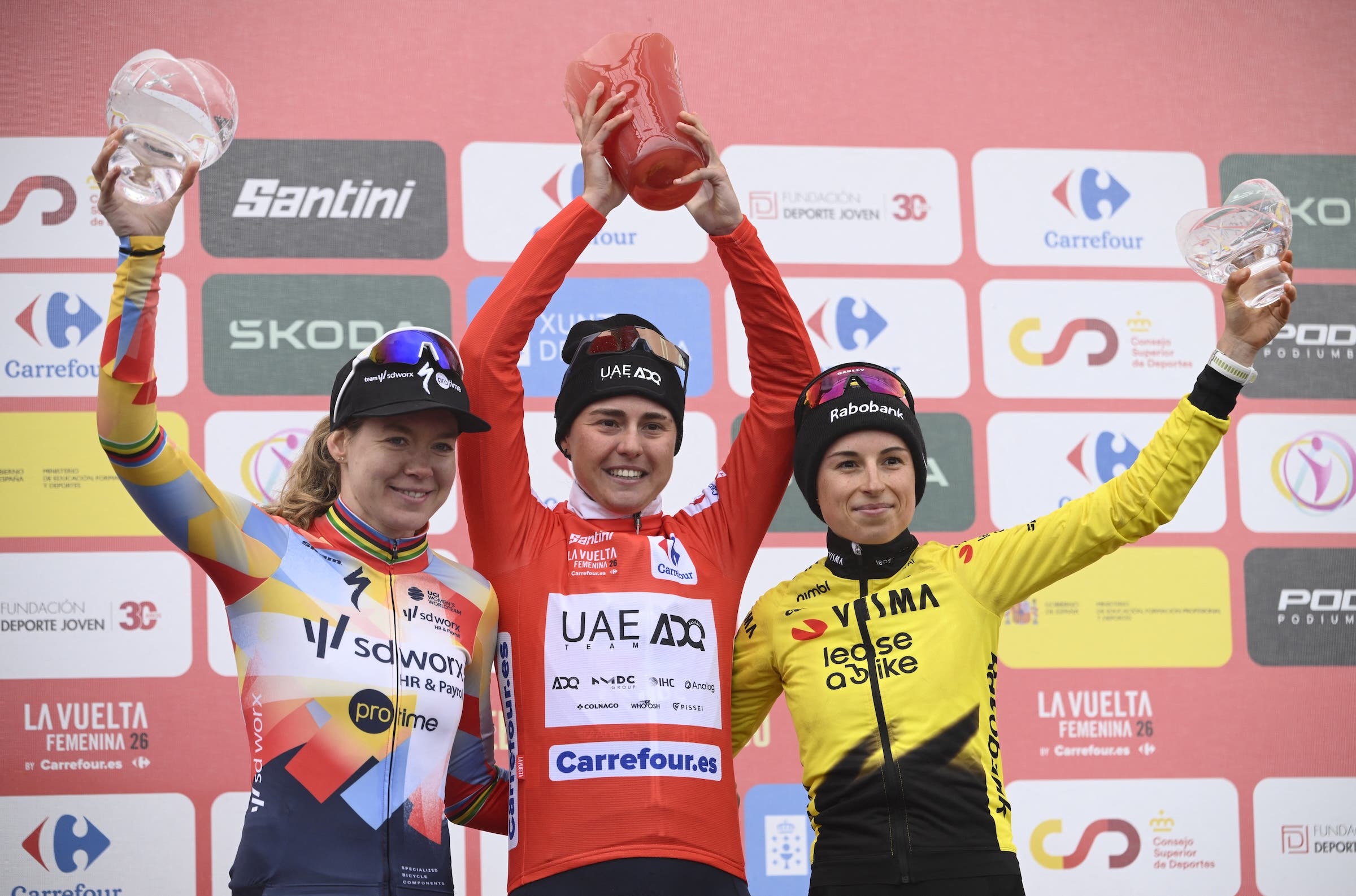
It’s still early in the year but Paula Blasi has already had a season to remember, riding at a significantly higher level than before and surprising both those following the sport and also herself.
The 23 year old Spaniard won three 1.1-ranked events last season but has stepped up a gear since the start of 2026, winning the mountains classification and taking third overall in the Santos Tour Down Under in January, then beating the sport’s biggest names to take the Amstel Gold Rce in April.
Third in Flèche Wallonne and fifth in Liège-Bastogne-Liège further confirmed her talent, but it is in the Vuelta Femenina where she has given the clearest indication yet that she is a future star of the sport.
Blasi followed up her second place on Friday’s mountain stage with a more significant runner-up slot on Saturday’s summit finish of l’Angliru, leaping from second to first overall in the Vuelta and taking the final GC.
“I still can’t believe it. Wearing the red jersey as winner of La Vuelta Femenina is something incredible,” the UAE Team ADQ rider said on Saturday. “It was another crazy day and this climb was so hard. I just tried to stay focused and calm. I knew what pace I had to hold on the climb.
“When I saw Anna van der Breggen was struggling a bit, it gave me extra motivation, but I still tried not to go too deep and simply stick to my own rhythm until the finish.
“It’s an incredible joy, even if I still haven’t fully realised what I’ve done today and in these past few weeks.”
Stage winner Petra Stiasny is another who will leave the race overjoyed and, like Blasi, the 24 year old has confirmed her own arrival as a star climber.
2 – Anna van der Breggen is back…kind of
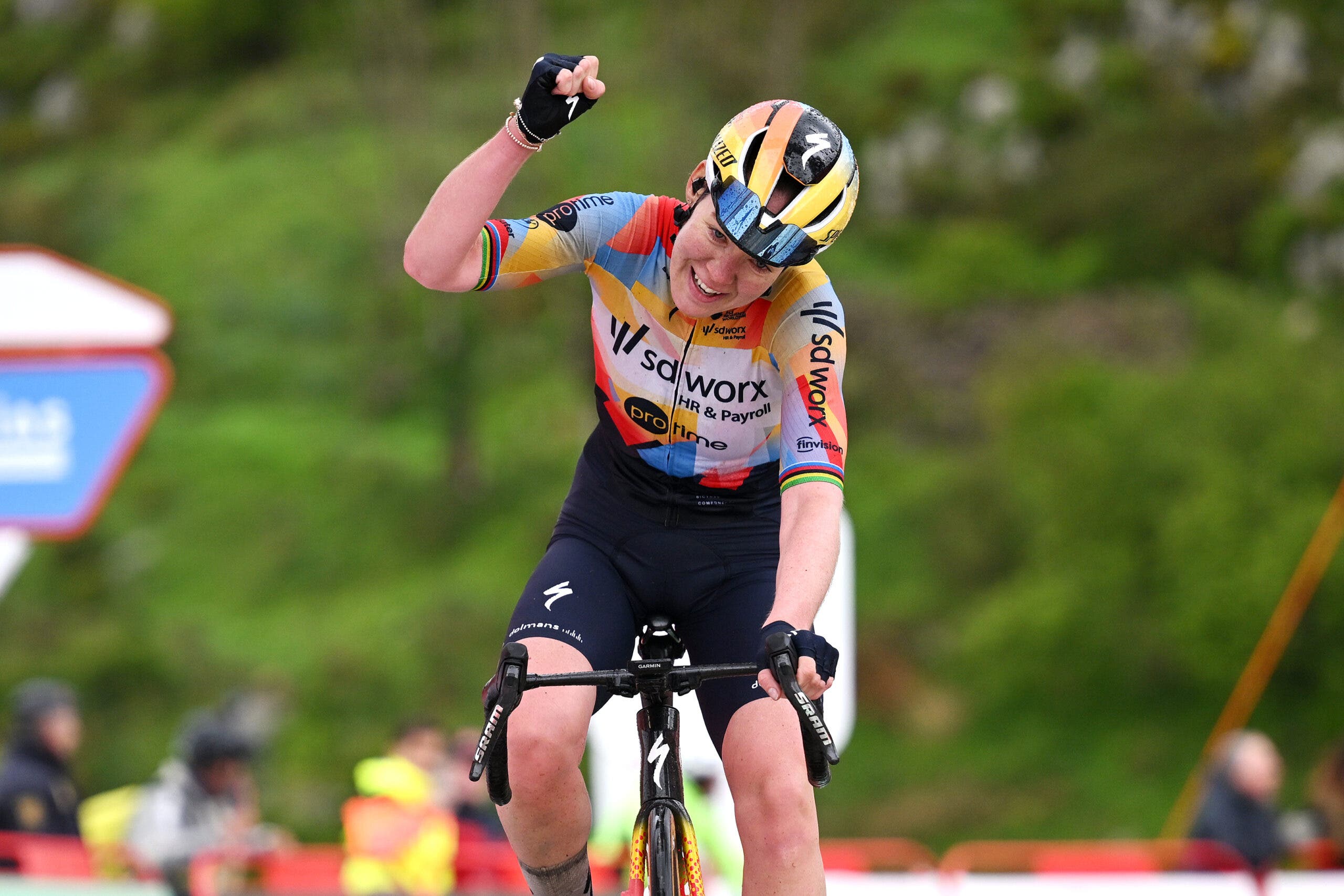
Anna van der Breggen was gutted to slip out of the red jersey on Saturday, having looked like the likely race winner 24 hours earlier, but she can take a lot of encouragement from the race.
Her stage win atop Les Praeres. Nava was evocative of her past domination of the sport, with the victory being the most impressive yet in her comeback to the sport. The 36 year old didn’t rely on tactics, but instead simply rode all of her rivals off her wheel.
That thrust her into the red jersey but while she started Saturday’s final stage eight seconds clear of Blasi, she was soon into the driving seat due to losing contact four kilometers from the finish.
“I gave it everything, but it just wasn’t enough, and right now that’s really disappointing,” Van der Breggen said. “I fought for everything I was worth, but in the end I just came up short.”
She dug very deep to triumph on Friday and this may have been a factor in her weakening on the last day.
“It’s especially frustrating because on the final steep section of the Angliru I actually came quite close again; a gap of 24 seconds to Paula Blasi on a climb like this is basically nothing,” she said. “Once the pain in your legs fades, you start thinking: ‘If only I hadn’t let that gap open up,’ but on the bike at that moment it really felt like a big difference.”
Van der Breggen retired from the sport at the end of 2021. She worked as a DS for the SD Worx/Protime team but stunned the sport when she announced she would come out of retirement for the 2025 season.
Last year was solid but, with the benefits of that racing in her legs, she is on a better level this season. And while she didn’t get the GC win she was craving, she can build on this and shine, perhaps in the Tour de France Femmes.
“After my comeback, I hoped it would once again be possible to fight for the overall victory in a Grand Tour, and it’s amazing to already be this close to the top again,” she said. “This gives me confidence to keep building on this path.”
3 – Ferrand Prévot has more work to do
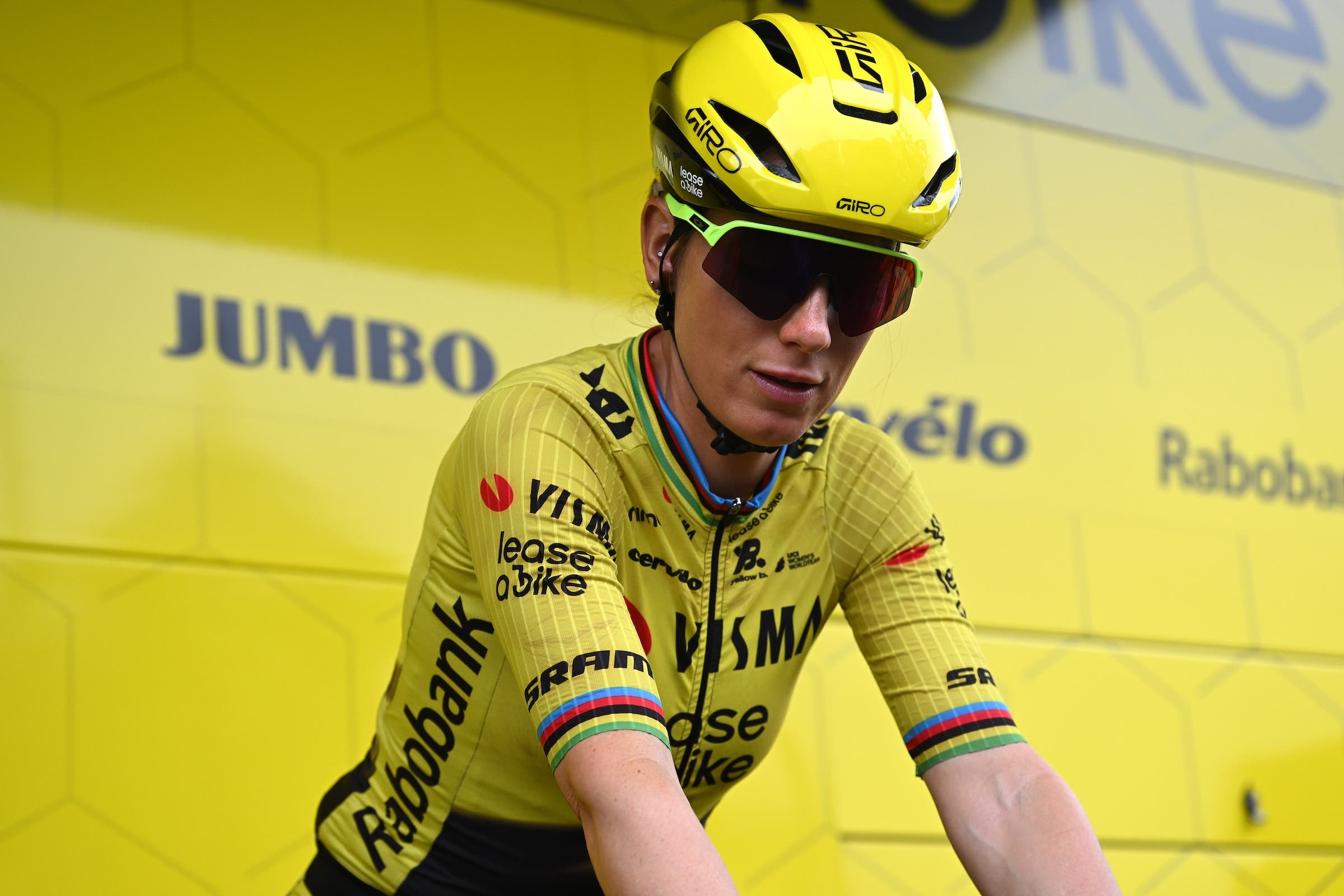
Fans of Pauline Ferrand-Prévot may be concerned by what was an mostly anonymous showing in the mountains. She demolished her rivals in last year’s Tour de France Femmes avec Zwift, dropping them with ease on the toughest stages, but was herself in the firing line at the Vuelta.
She was only 22nd on Friday’s first mountain stage, losing 2:06 to Van der Breggen.
“It was really a very tough finish. The conditions were very hectic, but I did enjoy the ride. I was able to ride the final climb at my own pace. If I hadn’t done that, I would have really blown up,” she said then. “Of course I want to do better, but I think this fits well with my progression towards the Tour de France Femmes.”
However on Saturday things were even more testing, with the Visma-Lease a Bike rider losing a staggering 13:42 on the Angliru. That saw her plummet 19 places to 35th overall, ending the seven stage race 15:29 off Blasi.
It is worth remembering that 12 months ago she withdrew from the same race, frustrated with her showing on the first climbing stage. Her directeur sportif Jos van Emden was also frustrated then, and made that clear.
“If you start the Vuelta with GC ambitions, you can’t get dropped on a climb like this. Unfortunately, that’s what happened. It’ll be difficult to play a role in the classification from here.”
Ferrand-Prévot was a non-starter the following day, with her team declaring that “she does not feel fit enough to continue racing.”
Comparing the two seasons is not straightforward. She won Paris-Roubaix last year and was second in the Tour of Flanders. She equalled the latter result this year and was third in Roubaix, having worked for Marianne Vos. Seventh in Flèche Wallonne was solid rather than spectacular.
The results are not miles apart, but it is worth remembering that 2025 was her first season concentrating on road racing following several years focussing on off-road competition. Being more competitive this spring might have been expected.
Still, with nearly three full months to go to the Tour de France Femmes, Prévot has time to improve. She’s got a lot of work to do to return to her 2025 summer form but, having done it once, she will have faith that another Tour win is possible.
4 – Niewiadoma still paying for Cipressa fall
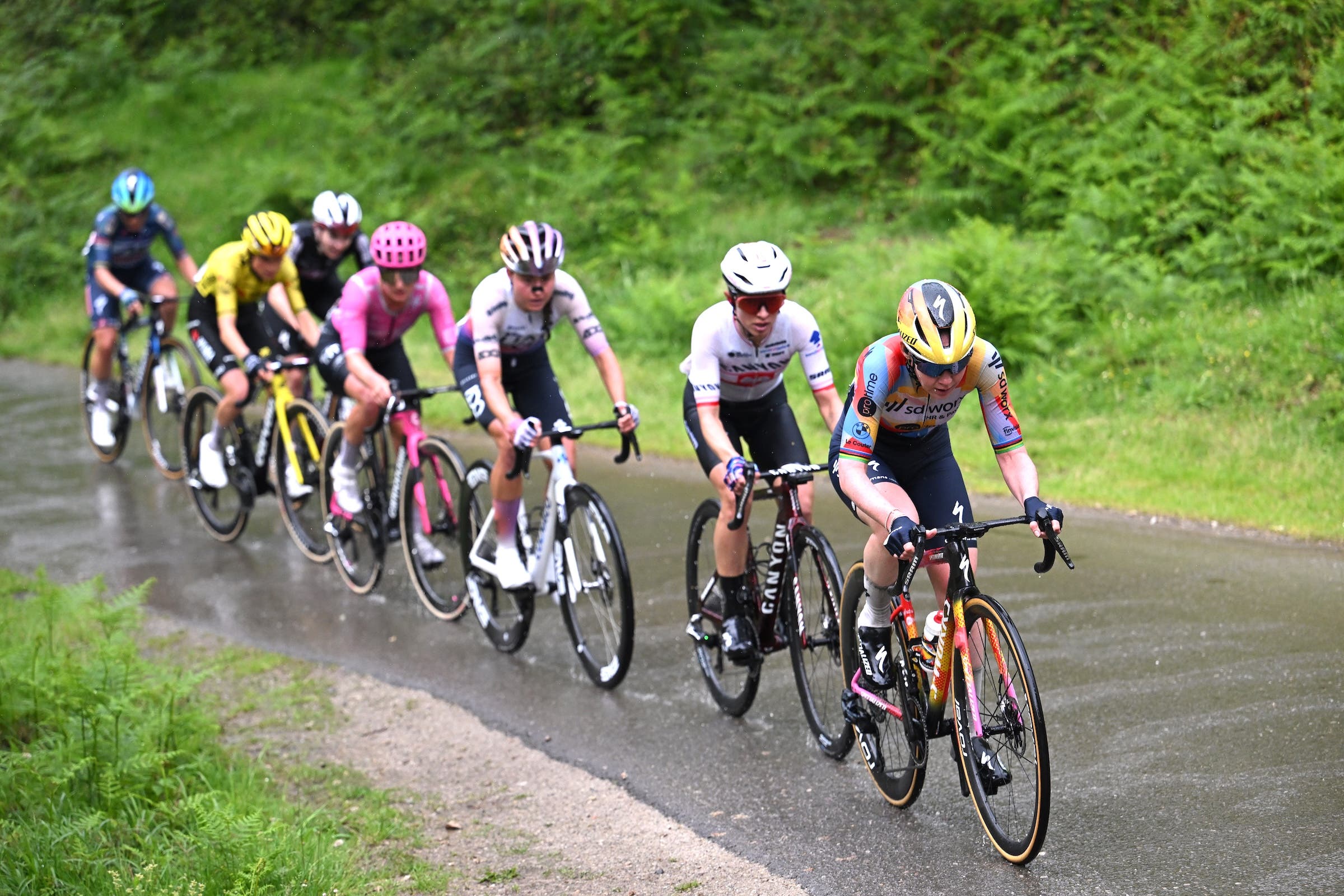
Another former Tour winner Kasia Niewiadoma will also leave the Vuelta dissatisfied with how things turned out. She is one of the top climbers in the sport but was way off her usual standard in the race, being dropped on Friday’s summit finish, taking tenth, and admitting she expected more.
“The climb was just super steep. I mean, it’s hard to get any sort of cadence on that steep, steep climb,” she said. “It was a 20-minute straight strength effort today. I exploded early, and then it was just suffering to the finish.
“I need some time to digest today, and to realise it was just a warm-up for what we have to race up tomorrow.”
She started Saturday hoping for more but the stage did not bring the improvement she was aiming for. She was never in contention for the win, slipping out the back 6km from the summit of the Angliru and ultimately crossing the line 2:16 behind the storming stage winner Petra Stiasny (Human Powered Health).
That saw her end the race 3:09 behind Blasi, a significant gap in a one week stage race.
Niewiadoma looked more at ease on the shorter climbs of the Ardennes Classics, placing second in the Amstel Gold Race, third in Liège-Bastogne-Liège and fourth in Flèche Wallonne.
She may be concerned by the ground she lost on the longer climbs this week but should keep her crash in Milan-San Remo in mind. That fall on the Cipressa put her out of competition for almost one whole month, something which may have made the difference in her races since.
There’s also another reason for encouragement: she was a non-finisher in the Vuelta in 2024, the year she won the Tour de France, and was 11th overall last year, 5:57 off race winner Vollering. In that context her eighth overall this time does mark an improvement.
She was also a long way ahead of Ferrand-Prévot, who will be a key rival in August.
5 – Lotte Kopecky has gone all in on old approach
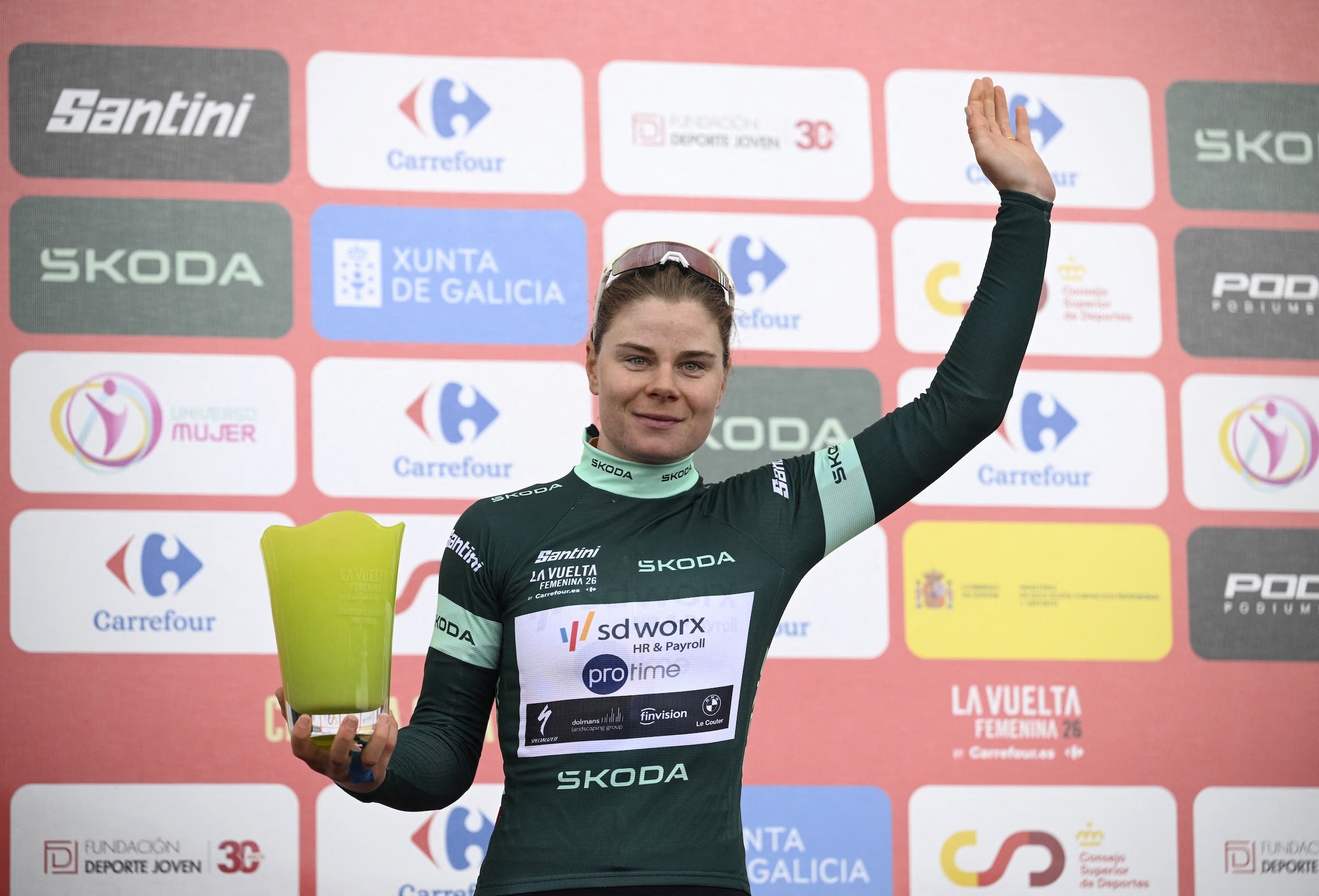
Then-world champ Lotte Kopecky was in a hopeful frame of mind 12 months ago, believing that she could contend for a podium in the Tour de France Femmes avec Zwift. She had finished second overall in 2023 and was working hard to be ready for the 2025 edition.
However she was all but anonymous in the Tour, netting 11th on one stage and finishing a very distant 45th overall.
Kopecky opened up about her frustrations over the winter, saying in December that efforts to lose body fat lead sapped her strength and led to her body retaining fluid.
“At some point, I had an enormous calorie deficit. The strange thing was that my weight didn’t go down,” she told Nieuwsblad. “There was too much of an imbalance. That was very frustrating. In a way, I was starving myself and I saw no results.
“In hindsight, I was told that my body must have gone into a kind of conservation mode.”
This spring has seen her change her approach. More muscular than many other riders, she has stopped trying to match the bodyweight of the climbers and has instead focussed more on races and disciplines that suit her natural physique.
She won Nokere Koerse and Milan-San Remo, and was fourth in both the Tour of Flanders and Paris-Roubaix.
Kopecky was frustrated early on in the Vuelta Femenina, netting second on stage one and stage three. However she got things exactly right on day four, winning into Antas de Ulla, then took over the green jersey with a second place finish on stage five.
Saturday’s race was painful. “The Angliru climb was simply horrible. I’ve never experienced anything like it,” she said. “I have a lot of respect for the riders who had to fight for the general classification on this climb.”
While any GC ambitions were out of the question when she dropped from first to 43rd overall on Friday’s first mountain stage, she was satisfied with how the race had gone.
“Of course, it’s nice to secure the green jersey. With a stage win and the points jersey, I leave this Vuelta with a good feeling,” she said.
“I’m also proud of the way the team raced this week. With three stage victories, three days in the red leader’s jersey, the green jersey and second place in the overall classification, we can only be satisfied.”
She can be, and so too can the Vuelta Femenina organizers after a stirring edition of the race.
[analyse_source url=”https://velo.outsideonline.com/road/road-racing/vuelta-a-espana/five-conclusions-vuelta-femenina/”]