[analyse_image type=”featured” src=”https://velo-cdn.outsideonline.com/wp-content/uploads/2026/05/DSC_5472.jpg”]
Welcome to Velo’s China Cycle coverage, where we share our favorite things we’ve found at the 2026 show. Bikes, components, accessories, and more: if we think it’s cool, you’ll see it. See the rest of our China Cycle coverage.
Walking through the China Cycle show, I had the chance to connect with Chris Froome. If that seems incongruous with your idea of the China Cycle event, welcome to 2026. In the US, we tend to think of Chinese brands as a new frontier of consumer options, but it’s a connected world and that sentiment goes both ways.
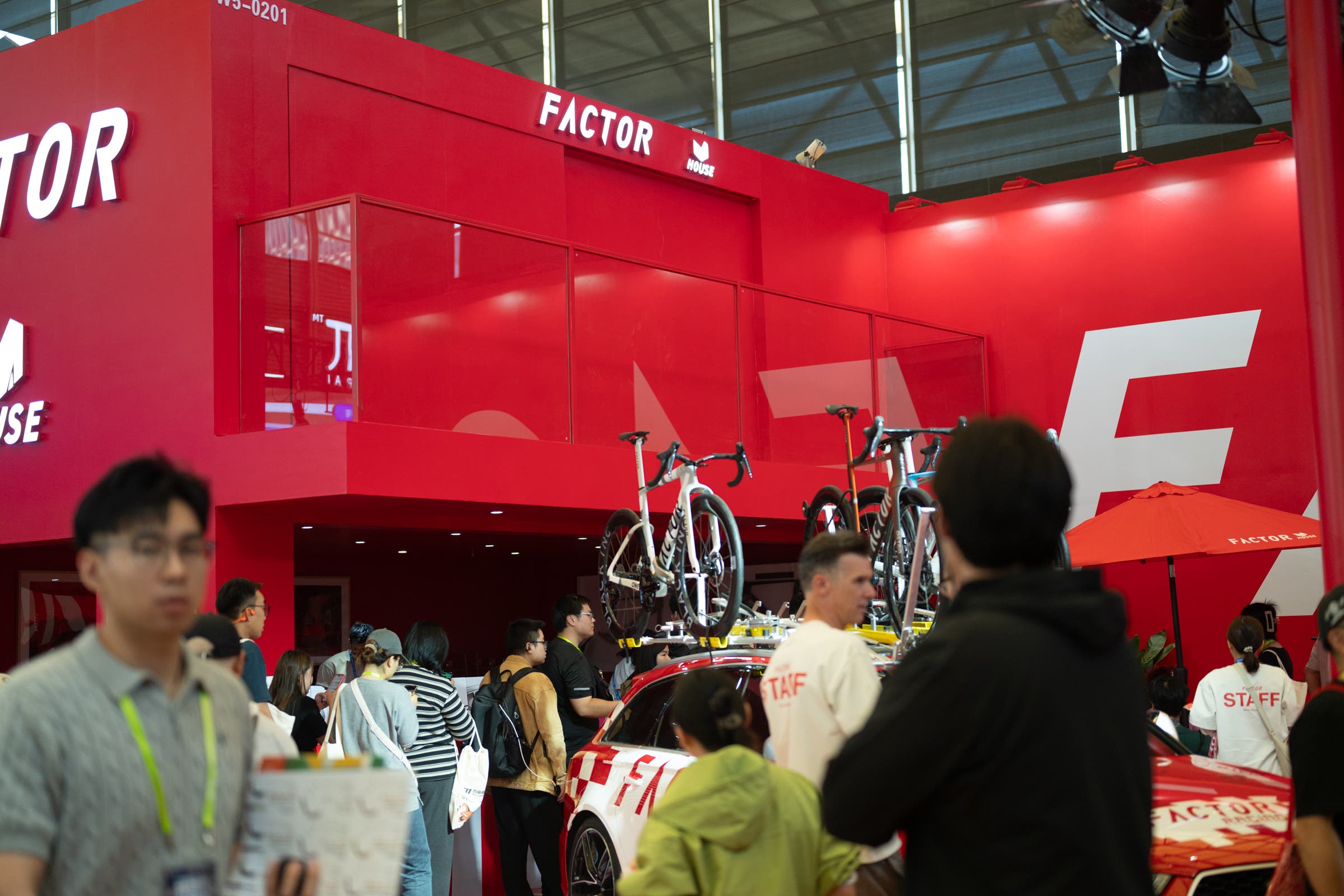
What was once a European-centric sport is now looking at mainland China as the next frontier, and a place where an unrepresented brand is missing an opportunity. Factor is already a brand that spans multiple cultures successfully, so the company had Chris Froome in its booth signing autographs. I also had the chance to ask him some questions about his involvement in the business.
Froome initially invested in Factor back in 2021, along with Point King Capital and Skip Capital. At the time, he joined the Factor Board of Directors alongside Sam McKay, who represented both investment firms, and CEO Rob Gitelis, who retained his position as majority shareholder. Five years later, I only had a brief moment to ask a few concise questions, but I wanted to take the opportunity to see if things had changed for Froome. Certainly, his professional career is different, but what does that mean for Factor Bikes?
I started by giving Froome an opportunity to revisit his history. Five years is a long time for anyone, but certainly for someone whose professional career has gone through such a dramatic transformation in that window. We’ve previously discussed how Froome became involved in Factor back in 2021 when talking with Gitelis, but what would Froome remember as his reason for choosing the brand?
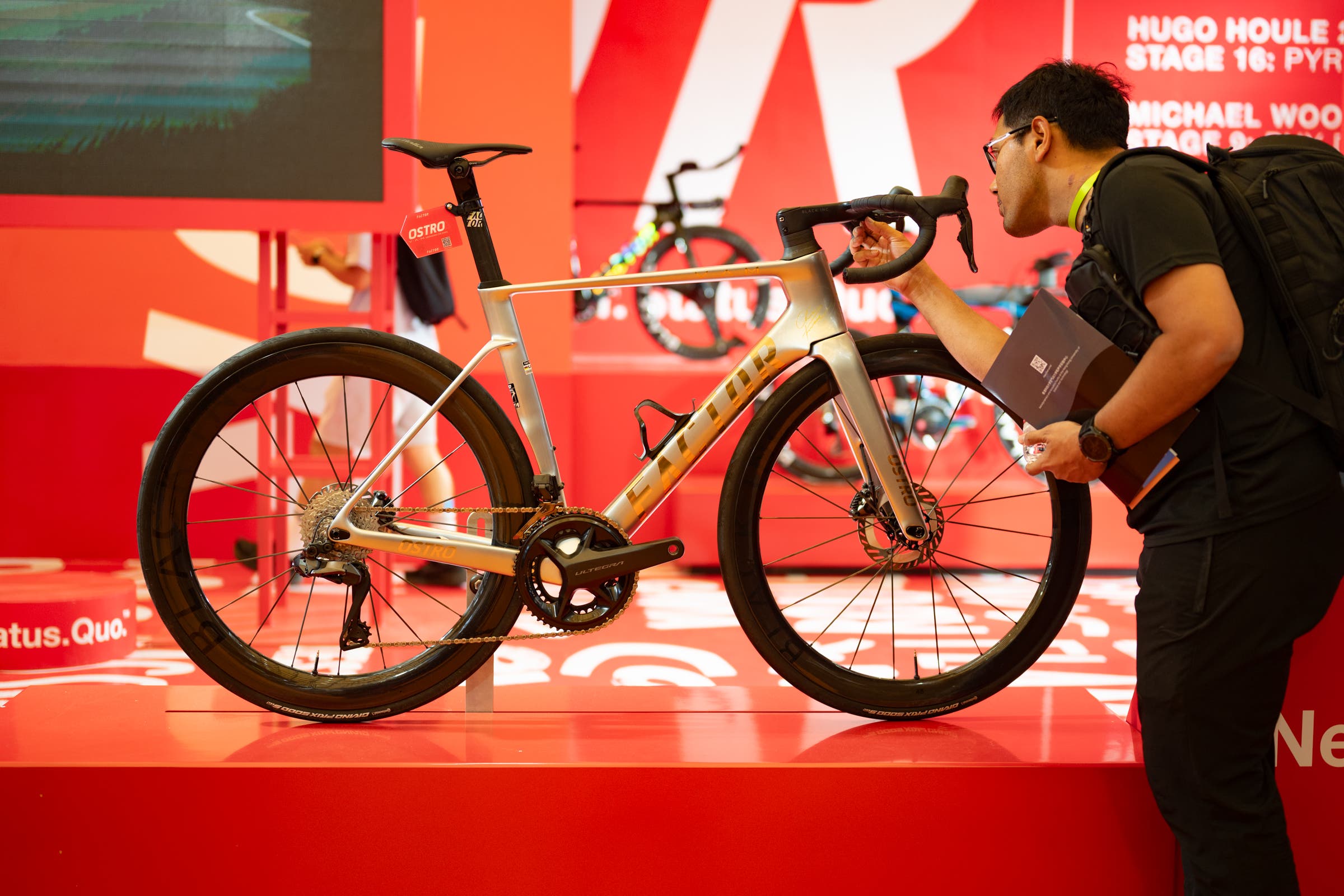
Froome confirmed that while he was riding a Factor bike at the time with his team, Israel Start-Up Nation, that wasn’t his only motivation. As he tells the story, he appreciated the bike and Gitelis, but it was really more about the structure of the company. Froome claimed that while he was interested in investing in a bike brand, he was looking for a situation where he could make a real difference. Factor had manufacturing expertise, but it wasn’t such a massive corporation that he would get lost among layers of corporate structure. He wanted to be able to give suggestions—such as a stiffer handlebar on the Factor Ostro—and then see those suggestions come to fruition in future bikes.
Of course, that’s old news now, and all relationships go through a honeymoon stage. The next thing I asked was how much of that initial structure had changed. Was Froome still as involved as he had been back in 2021?
His response was that his involvement has actually grown. His life has slowed down a bit, but he still sounds excited about Factor. Not only is he a board member who rides the product, but he laughed a bit as he looked around and shared that even just being in China was a mark of how much deeper his involvement has become. He also noted that Factor has experienced huge growth since then, so there’s naturally more to do.
It sounds like his involvement isn’t only on the business side, though. I wanted to nail down exactly how much of a reflection of him—and his riding—each Factor bike rolling out of the factory really is. It was here that I saw him get a bit cautious. I’ve seen racers sometimes claim that each bike is a close reflection of their personal style. Instead, Froome started by saying he was no engineer; he was just a guy who loved to ride bikes and had some opinions about what makes a good one.
It wasn’t until I tried to talk about the Factor One—a personal favorite of mine—that Froome got a little more sure of himself. That bike is such a reflection of the wind tunnel that he wasn’t heavily involved in its development. Besides, he’s not a sprinter who might naturally gravitate toward it. Instead, it sounds like his favorite is the Ostro VAM, and that earlier story of the stiffer handlebar came up again. Factor does a lot of things that Froome isn’t directly involved in, but he has his favorites, and he gives his opinions when he thinks it might be worthwhile.
Certainly, one of the areas that is important to Factor, but where Froome is perhaps less involved, is gravel cycling. Given that Froome made his career on the road, I was curious about his take on gravel. I also wondered if he was about to start showing up to gravel events. Although it sounds like that’s not on the table for now, what he told me was just as personal. Froome seemed to deeply understand why road cyclists would gravitate to a car-free environment, but he also mentioned how much he loves to see the technology and design currently happening in the off-road segments of cycling.
This led us to discuss the future of cycling a bit, as I asked if Froome—as “roadie” as a person could get—expected to see a trend back toward road cycling. Interestingly, I did not ask about gravel racing, but that is exactly where Froome took the discussion. He told me he expects to see gravel cycling continue to grow as a reprieve from cars, but that gravel racing is on the cusp of looking a lot more like road racing. He said that while, in the past, gravel was a place where a “lone soldier” could show up without much support and make a name for themselves. He thinks that era is coming to an end though. In the future he expects we will see more and more team racing tactics showing up in the gravel scene.
I didn’t ask Froome about his professional future, as that wasn’t what we were there to talk about. Instead, we focused on what he’s doing right now with Factor Bikes. Ultimately, it sounds like he’s truly excited not only about the brand he’s helping shape, but also the future of racing in all its forms.
[analyse_source url=”https://velo.outsideonline.com/road/road-gear/chris-froome-factor-bikes-china-cycle/”]