[analyse_image type=”featured” src=”https://images.euronews.com/articles/stories/09/74/90/12/1200x675_cmsv2_ffeda74a-2f6d-5660-a69f-8adfa538906b-9749012.jpg”]

Zelenskyy says Hungary returned cash seized from Ukraine bank workere

Have Kneecap posters been censored in London transport?

Lufthansa hits record revenue as Iran war fuel costs eat into profits

Mélenchon 2027 candidacy not popular among wider French left
Zelenskyy says Hungary returned cash seized from Ukraine bank workere
Have Kneecap posters been censored in London transport?
Lufthansa hits record revenue as Iran war fuel costs eat into profits
Mélenchon 2027 candidacy not popular among wider French left
Spain’s record 794 Blue Flags: The beaches and marinas travellers should visit in 2026
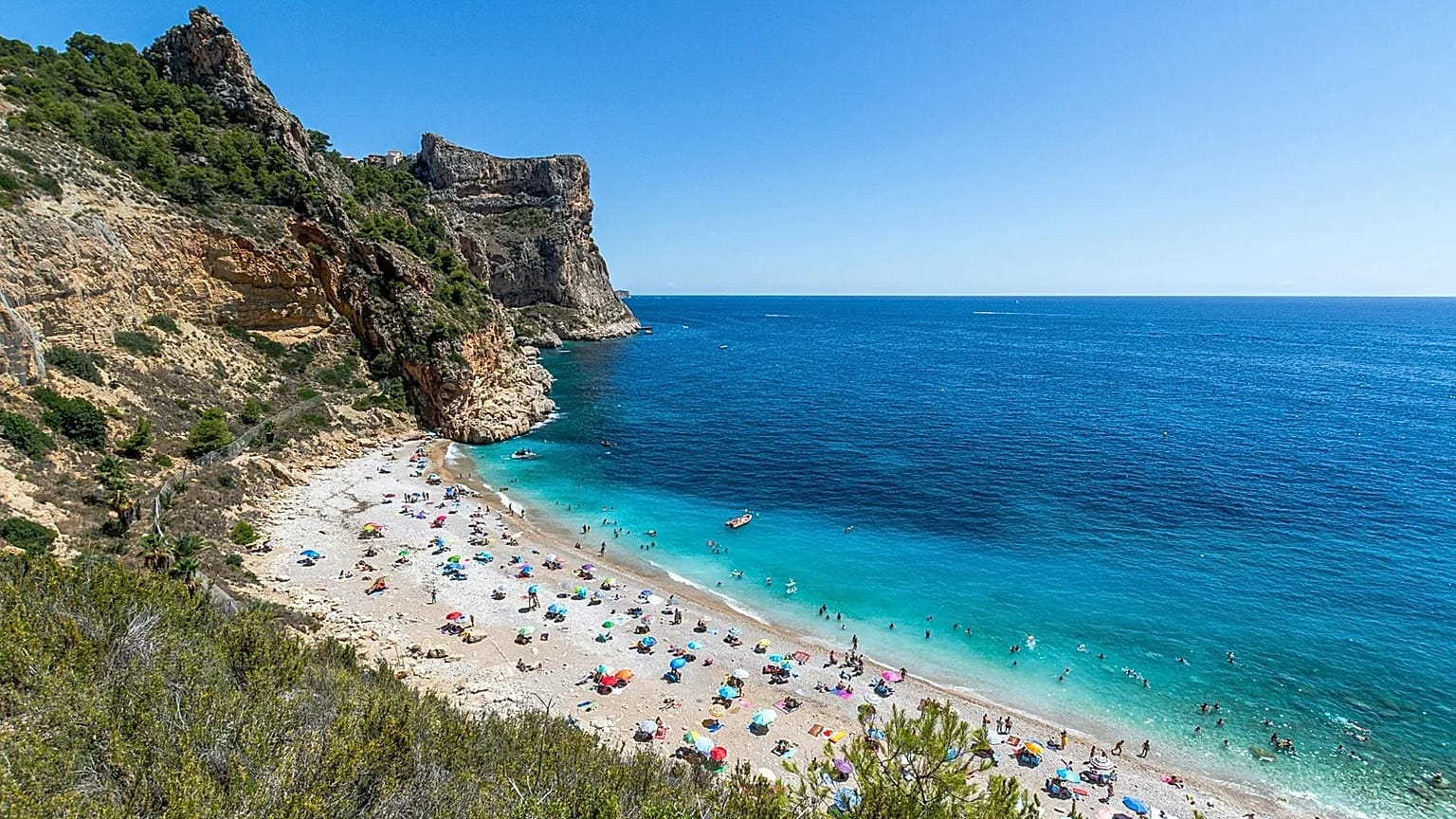
Cala del Moraig is a stunning Blue Flag beach on Spain’s Costa Blanca
– Copyright Photo by Eduardo Kenji Amorim on Unsplash

 Facebook
 Twitter
 Flipboard
 Send
Send Reddit
 Linkedin
 Messenger
 Telegram
 VK
VK Bluesky
 Threads
 Whatsapp
When choosing a beach in Spain, the Blue Flag label is a guarantee of a good day by the sea, with clean waters, accessibility and safe swimming.
Spain’s diverse coastline of almost 8,000 kilometres isn’t short of beautiful beaches, but this year it’s the high eco-standards and safety that sets them apart.
 ADVERTISEMENTADVERTISEMENT
This week, the Blue Flag International Jury has awarded Spain a record 677 flags for its beaches, alongside 111 for marinas and six for tourism boats.
At a staggering 794 in total, 44 more than in 2025, the Mediterranean country edges above Greece which received a total of 657 and Türkiye which received 625.
Spain’s 677 Blue Flag beaches account for 15% of all Blue Flag beaches worldwide.
As many as 713 beach entries were submitted by Spain, all hailing from the country’s various municipalities, cities and autonomous regions. Spain’s latest record milestone follows a strong 2025, when it secured 750 Blue Flags.
The Valencian community led the Spanish beach rankings with 151 Blue Flags awarded across 48 municipalities, followed by Andalusia with 143, Galicia with 118, Catalonia with 101, and the Canary Islands with 52.
Catalonia, Andalusia and Valencia were awarded the most Blue Flags for the marinas. While the six tourism boats were awarded across Andalusia and Valencia.
“Spain has never achieved such outstanding results in the Blue Flag programme,” said Rosario Sánchez, the Spanish Secretary of State for Tourism.
“Once again, we emphasise that this success is the result of collaboration between municipal, regional and national entities, marinas, businesses, universities, foundations, associations and citizens, all of whom demonstrate responsible work in meeting the programme’s demanding criteria in environmental education, management and information, compliance with current legislation, excellent water quality, accessibility and safety.”
In a post via X, the Spanish State Secretariat for Tourism celebrated the country remaining a leader in the field and congratulated all recognised municipalities.
Beaches to go to
Grab your swimsuit, sunglasses and sunscreen – Spain’s Blue Flag beaches are calling. Here are some beaches to add to your bucket list:
La Malvarrosa, Valencia: Once a swampy area in the mid-19th century, Playa de la Malvarrosa has transformed into one of Valencia’s most popular urban beaches. Today, its golden sands attract surfers, divers, volleyball players and food lovers, drawn to its many volleyball courts, a promenade and rows of beachfront restaurants.
El Encinarejo, Andalusia: In southern Spain, El Encinarejo became Jaén province’s first Blue Flag beach without a sea coast in 2024. This inland beach is a quieter alternative to the country’s coastal stretches set at the backdrop of the El Encinarejo reservoir. On offer are calm waters, ideal for swimming, and rugged rural scenery.
Playa de la Virgen de la Nueva, Madrid: Think beige sands, turquoise clear waters, mountainous landscapes and plenty of natural shade. Located on the San Juan Reservoir, the beach offers activities for both sea and land lovers, including kayaking, wakeboarding, as well as mountain biking and hiking.
What are Blue Flags?
The Blue Flags programme is an internationally recognised eco-label awarded to beaches, marinas and tourism boats that meet high environmental and safety standards in water quality and environmental management to ensure good practice within tourism.
Each year, an international jury of experts, including representatives from the United Nations Environment Programme, UNESCO, Education for Sustainable Development, European Network for Accessible Tourism, and European Environment Agency, evaluate destinations before awarding the certification.
It was first created in 1985 by the French arm of the Foundation for Environmental Education. The programme later expanded beyond France to Spain, Denmark and Portugal as an environmental educational initiative. In Spain, the foundation’s partner NGO is the Association of Environmental and Consumer Education.
With 40 consecutive editions now completed (1987-2026), the programme is present in 51 countries across five continents and in more than 5,000 locations.
Go to accessibility shortcuts
Read more

Travelling to Spain in 2026? Here’s what’s new for travellers

Valencia to put a limit on the number of citywide holiday homes

Grand Voyager | Exploring Valencia
Travelling to Spain in 2026? Here’s what’s new for travellers
Valencia to put a limit on the number of citywide holiday homes
Grand Voyager | Exploring Valencia

Raves, cruises and train rides: Where to watch the 2026 eclipse

Euronews Travel Channel – Travel News, Guides, Magazines & Inspiration | 24/7

Aman’s Sveti Stefan resort to reopen five years after beach access row
Travelling to Bosnia and Herzegovina? Here’s what you need to know

From galleries to guest rooms: The best art-inspired stays in Europe
Jet fuel crisis: Airlines cut 13,000 flights and two million seats
UAE airspace fully reopens as flights set to return to normal
Pilots wanted for $100k role, but they won’t leave the ground
Four of Europe’s spectacular national parks you can reach by train
From galleries to guest rooms: The best art-inspired stays in Europe
[analyse_source url=”https://www.euronews.com/travel/2026/05/06/spains-record-794-blue-flags-the-beaches-and-marinas-travellers-should-visit-in-2026″]