[analyse_image type=”featured” src=”https://velo-cdn.outsideonline.com/wp-content/uploads/2026/05/horizonGIRO.jpg”]
The Giro d’Italia returns with a familiar script and an age-old threat — the Italian grand tour is always harder than it looks.
Even if it’s billed as “Giro light,” 109th edition of the corsa rosa will grind the peloton down to its core.
Despite the hype and promise of action for three weeks in May, the race will be and always is decided in the final brutal week.
Getting there is always the hard part.
With 21 stages, nearly 3,500 kilometers, and 48,700 meters of climbing — that’s the equivalent of scaling Everest six times — the pain is stretched across three unforgiving weeks.
And that adds up.
Jonas Vingegaard is the five-star favorite, the peloton’s proven grand tour master who’s taking on the fabled Giro-Tour de France double before a rematch with Tadej Pogačar in July.
With two yellow jerseys and one Vuelta a España, the Giro’s pink jersey is his to lose.
But the Giro’s attritional, back-loaded route, laden with nasty roads and even nastier weather, means that for even for him nothing will come easy.
And this course is much more brutal than some are giving it credit for.
Organizers might have taken a bit off the edge to attract a marquee name like Vingegaard, but the Giro is still the Giro.
Any grand tour is about being present at every moment, but a few decisive days should decide everything.
These are the six days where the 2026 Giro will be won or lost:
1. Three days NOT to lose the Giro
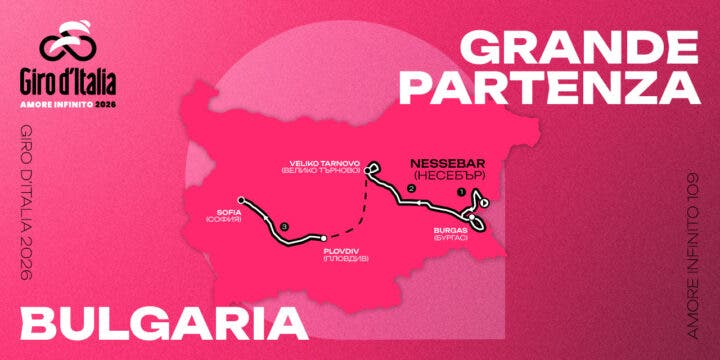
Another foreign start for the Giro, another chance for GC riders to lose the race even before it starts.
Things can go off-script even before the opening credits are done.
Last year, Derek Gee-West lost valuable time in the opening stage in Albania, something that later cost him a chance to hit the podium.
This year seems a little bit less complicated — at least on paper — but foreign roads, unknown terrain, and variable weather can create chaos and unpleasant surprises at every turn.
The key for the GC riders is to stay upright and avoid trouble, often easier said than done in a twitchy peloton anxious for an early win.
The best stage to watch — if you’re not a total Giro junkie plugged in all weekend — would be Saturday’s stage 2.
At 221km with 2,600m of climbing, the profile is hard enough that it won’t deliver a pure bunch sprint.
The Bulgarian trio is hardly decisive, but far from harmless if you end up in a gutter.
2. Stage 7 Blockhaus: The Apennines sleeping giant
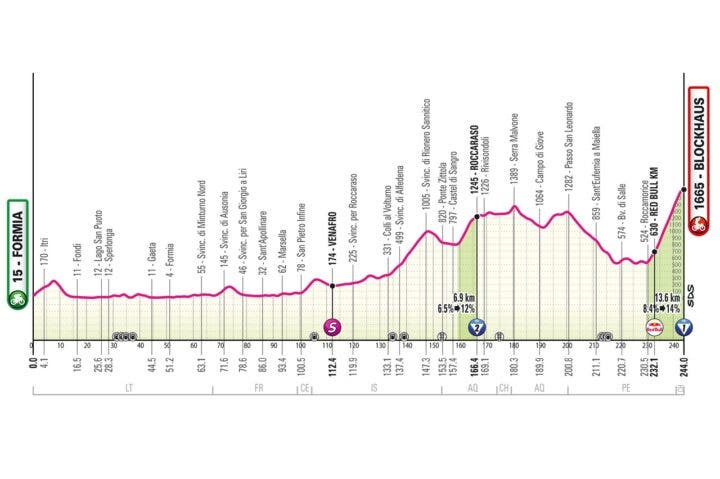
The Blockhaus is one of the most legendary and selective climbs in the Giro d’Italia, and it comes early this year.
After three stages in Bulgaria and a transfer back to Italy, the route bounces along the spine of Italy’s boot for some early sprint opportunities before hitting the first major mountain test of 2026.
At 13.6km at 8.4 percent, with ramps kicking to 14 percent, there’s nowhere to hide for pretenders to the throne in this early beast.
If the legs aren’t there, the climb will deliver the Giro’s first GC cull.
The Blockhaus won’t crown a winner. It will expose the weak.
3. Stage 10: Time trial sentence
In 2026, there is only one time trial, but it could prove a race-breaker.
Long at 42km and dead flat along the Mediterranean coast from Viareggio to Massa, stage 10 could shape this Giro perhaps more than any mountain summit.
Vingegaard should crush everyone on this one, both for the stage win and to take control of the pink jersey, perhaps for good.
Everyone is expecting Visma-Lease a Bike to try to take control early, and after Blockhaus, this is the most decisive stage in the first half of the Giro.
Vingo can take seconds per kilometer against the likes of Egan Bernal and Ben O’Connor, and potentially turn this Giro into a race for the podium.
4. Stage 14: First Alpine verdict
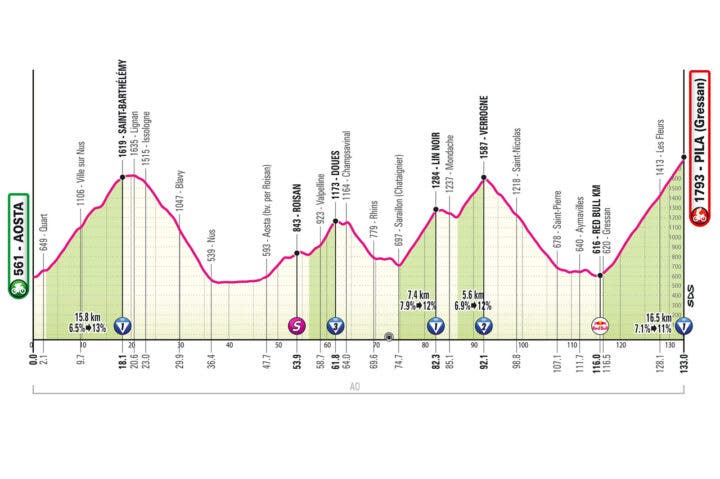
Stage 14 is where the Giro finally gets real with an old-school mountain monster. Time to butter up the popcorn, because the Giro is going to blow up.
After nearly two weeks of racing in the legs, this one will hurt.
Short and explosive at 133km, with 4350m in vertical, the stage opens with a Cat. 1 climb right off bat, which could be a trap for anyone who misses the selection early.
Three more stacked up climbs will soften up the legs, so by the time the race hits the final ascent to Pila, the hammer will drop.
The closing 16.5km climbs at a steady 9 percent, with ramps punching to 11 percent inside the final three kilometers, this first true mountaintop finale could blow up the race.
This summit finish deep in the Italian Alps could be ideal hunting ground for Vingegaard to slam the door shut if he’s flying.
5. Stage 19: ‘Queen stage’ to decide the Giro
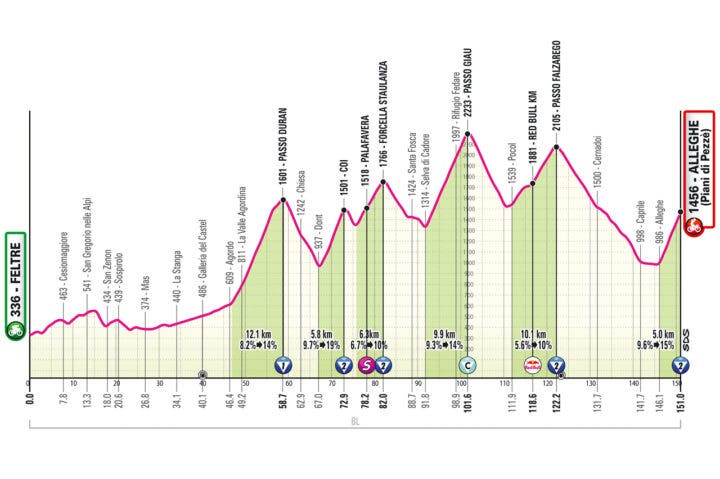
The Giro’s fearsome third week lives up to its billing this year.
True, the route might be missing a few early hit outs, but back-to-back bruisers in stage 19 and 20 make up for it.
This brutal 151 km mountain showdown in the Dolomites squeezes in a staggering 5,000 meters of elevation gain to make it this Giro’s “queen stage.”
This relentless chain of climbs opens with Passo Duran, with ramps to 14 percent, followed by the brutal Forcella Staulanza, where gradients spike to 19 percent. Then comes the centerpiece at the Passo Giau — this year’s Cima Coppi at 2233m — nearly 10km at 9.3 percent.
The suffering doesn’t end there. The Falzarego batters legs one last time before a long descent and the final sting in a vicious 5km summit finish to Piani di Pezzè, “only” a second-category, but averaging 10 percent with 15 percent ramps.
This is a true Giro tappone.
6. Stage 20: Last chance saloon
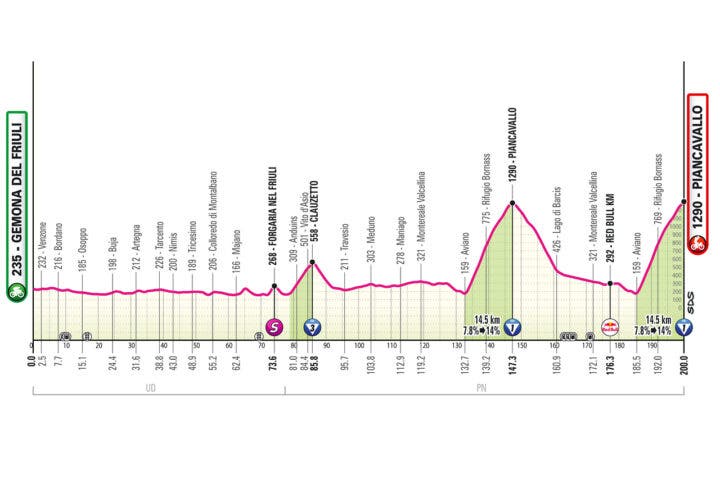
This is the final roll of the dice. If there’s anything left to decide, it has to happen here.
At 200km with nearly 4,000m of climbing, it’s a long, brutal day designed to break what’s left of the peloton.
The profile include two ascents of Piancavallo, the climb made famous by Marco Pantani.
At 14.5km and 7.8 percent, with ramps pushing 15 percent, Piancavallo is where someone can make a move, if there’s anything left in the tank.
Final mountain stage reversal? Maybe.
If Vingegaard has things firmly in control, Colorado climbing ace Sepp Kuss might be cut loose to chase victory to complete his grand tour stage win sweep.
Anyone who makes it to Rome for the 21st and final stage won’t be thinking this was a Giro “light.”
The corsa rosa will be as brutal as it ever was.
[analyse_source url=”https://velo.outsideonline.com/road/road-racing/giro-ditalia/giro-ditalia-2026-route-decisive-stages/”]