[analyse_image type=”featured” src=”https://velo-cdn.outsideonline.com/wp-content/uploads/2026/05/FAULKNER.jpg”]
Kristen Faulkner might have the future of female performance in her fingertips.
The Alaskan Olympian has coded an AI platform that could spark a revolution in how female athletes train and perform.
Faulkner told Velo she wants her off-season project to ignite the conversations needed to address a gaping gender gap in sports science.
“So little performance research is done on women, particularly regarding the needs of elite female athletes,” she said. “So I took matters into my own hands. I started writing the research myself.
“I did not want to keep waiting for someone else to study the questions that matter to my body.”
Modern theories on training, nutrition, and recovery are predominantly written by men using research conducted on men.
But that pesky Y chromosome means male and female physiology is not the same.
You can’t copy-paste male-centered theories onto women and move on.
That’s why Faulkner, an Olympic gold medalist, venture capitalist, and Harvard graduate, tapped into another of her skillsets.
Computer science.
“There is a real need for better tools in this area of female performance,” Faulkner told Velo.
“So many generalized training models do not fully reflect women’s physiology. I’m very bullish on that [problem]. It’s a big part of what I’m building,” she said.
Faulkner used her computer science degree and nine years of her own data to code menstrual patterns, hormonal shifts, and all the nuances of female physiology into a performance dashboard that actually works for women.
Everything from watts and training load to hormonal markers and sleep data is the input of a program that Faulkner says navigated her toward a 20-minute power PB in March at the Pan-AM Championships.
The “Kristen System” will inform Faulkner’s performance this week with EF Education-Oatly at the Vuelta España Femenina.
And for the next two years, it will be the brain behind her gold medal defense at the LA Games in 2028.
Filling blanks in a gendered view of sport science

Faulkner isn’t the only one who sees her performance future in artificial intelligence.
The AI boom is sweeping through pro cycling.
Team Ineos last week hailed its collaboration with AI powerhouse Netcompany as “one of the most significant partnerships in cycling.”
UAE Emirates-XRG, Visma-Lease a Bike, and Red Bull-Bora Hansgrohe all use AI dashboards to scour thousands of datapoints and inform existing decisions about training, logistics, and programming.
But Faulkner’s system isn’t about refining the present.
It’s about helping build a future.
“Menstrual cycle phases, hormonal shifts, recovery patterns, metabolism, and even how heat and sleep interact with them can all matter [in performance],” Faulkner told Velo. “There’s a real opportunity to build more individualized, evidence-driven systems that take those factors seriously.
“I hope my work also encourages more organizations to invest in tools and innovation built specifically for women.”
As Faulkner said, the opportunity is huge.
While professional women’s sport is growing fast, the theories that support the female elite are way behind the curve.
This paper from the BMJ journal of sport and exercise medicine states that female authorship of scientific publications is less than 25 percent.
A separate 2025 review found that 46 percent of studies used male-only subjects, while just 8 percent were female-only. All told, women account for just one-third of participants across all mixed and single-sex sports science studies.
Even in an age of smart watches, breath sensors, and marathon supershoes, there’s no mass-market training platform tailored to female athletes.
More to come? Faulkner partners AI software brand
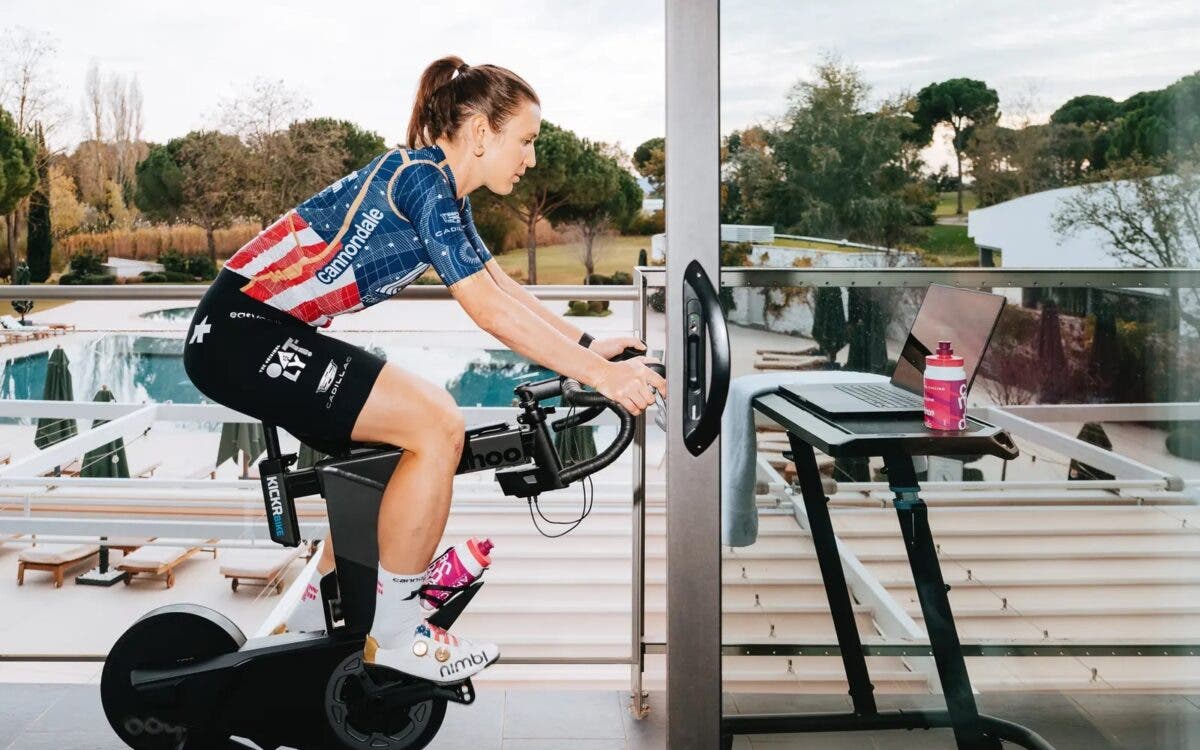
Faulkner said she was tired of “waiting for someone else to study the questions that matter to my body” when she revealed details of her project.
She’s not waiting to invest more of her energy into systems that could shape the future of female performance, either.
The 33-year-old recently partnered with AI computing tool Sanity, opening the doors to a wider rollout of her Kristen System.
Faulkner didn’t share the details or intentions of her collaboration with Sanity.
However, she did tell Velo that her project is ripe for expansion to her teammates at EF Education-Oatly, or maybe even further.
She’s also revealed she’s already beta testing the tool with a small group of athletes.
“I’ve been struck by how many people have reached out saying they feel this same pain point and want to join the waitlist,” she said. “That tells me the opportunity is real.”
Faulkner sees a future for female performance in her DIY dashboard.
However, she is also mindful of the dangers of athletes using AI.
The insights a platform provides are dangerous if they’re based on false assumptions in its programming or incorrectly interpreted by the user.
That’s why the Alaskan is in no rush to push the project forward.
“Right now, the priority is building something rigorous, useful, and well-tested before opening it up more publicly,” Faulkner told Cycling Weekly in a separate interview.
“There are a lot of considerations that come with putting something like this into other people’s hands, and I want to do that well.”
‘Kristen’s work is going to move things forward’
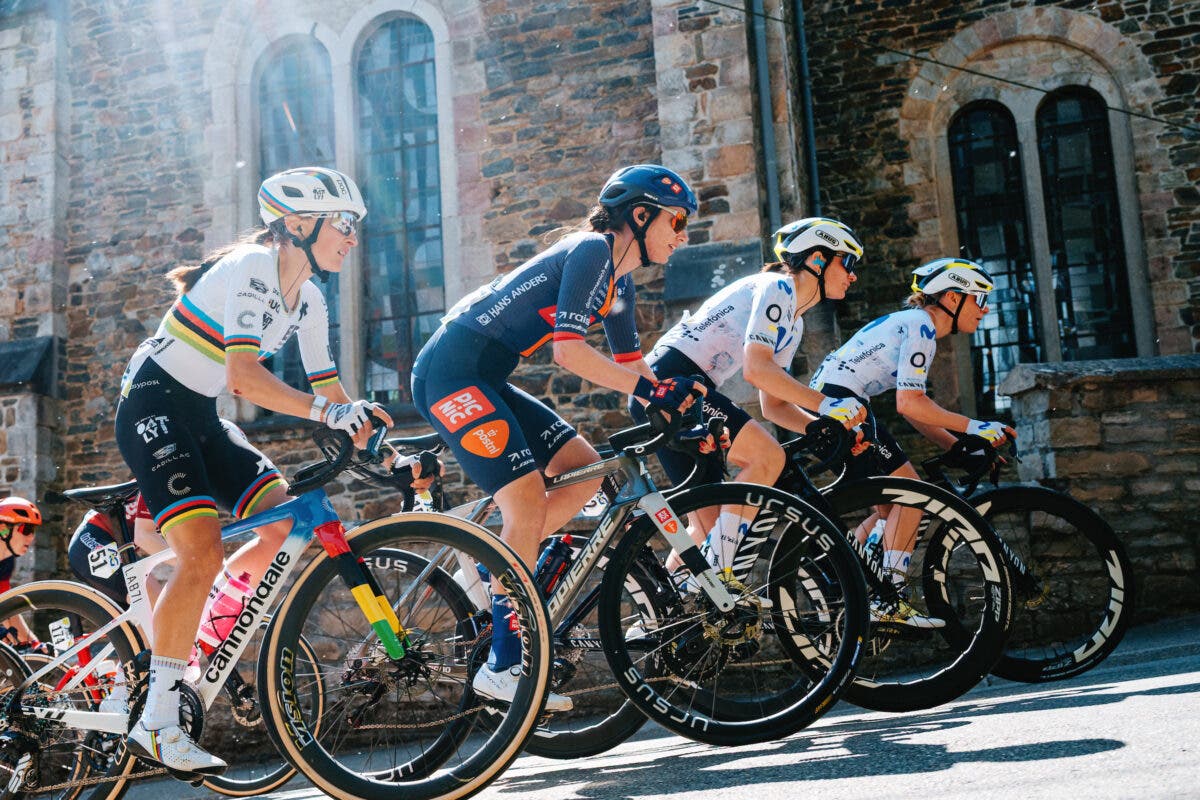
Whether her platform is rolled out wider or not, Faulkner hopes her project sparks a much-needed focus on women’s performance.
Many in the female elite believe it’s been too long coming.
‘The gap in female exercise physiology research is a major problem,” said leading endurance trainer and sport scientist Megan Roche. “Addressing that goes beyond research; it needs to be a part of every physiology and training discussion.”
Roche works with leading female and male runners and riders.
She believes a more holistic view of training theory will lift both sides of the gender divide.
“Instead of thinking ‘how does this men-oriented theory apply to women,’ I envision a world where researchers are also thinking, ‘how does women’s training science inform how men should think about training?,’” Roche told Velo. “Coaches who think that way will have an advantage, and not just when coaching women.
“Kristen’s work is going to move things forward for all athletes.”
[analyse_source url=”https://velo.outsideonline.com/road/road-training/kristen-faulkner-fix-gender-problem-sport-science/”]