Wonderland
“THE DEVIL CAN WEAR WHATEVER THE FUCK SHE WANTS”: MOLLY ROGERS ON THE DEVIL WEARS PRADA 2
Costume designer Molly Rogers returns to The Devil Wears Prada 2, carrying forward Patricia Field’s original vision while navigating a modern fashion world of digital lookbooks, viral paparazzi shots, and online discourse. From debunking rumours to working with Lady Gaga, she tells us how the Devil, and crew, still dress entirely on their own terms.
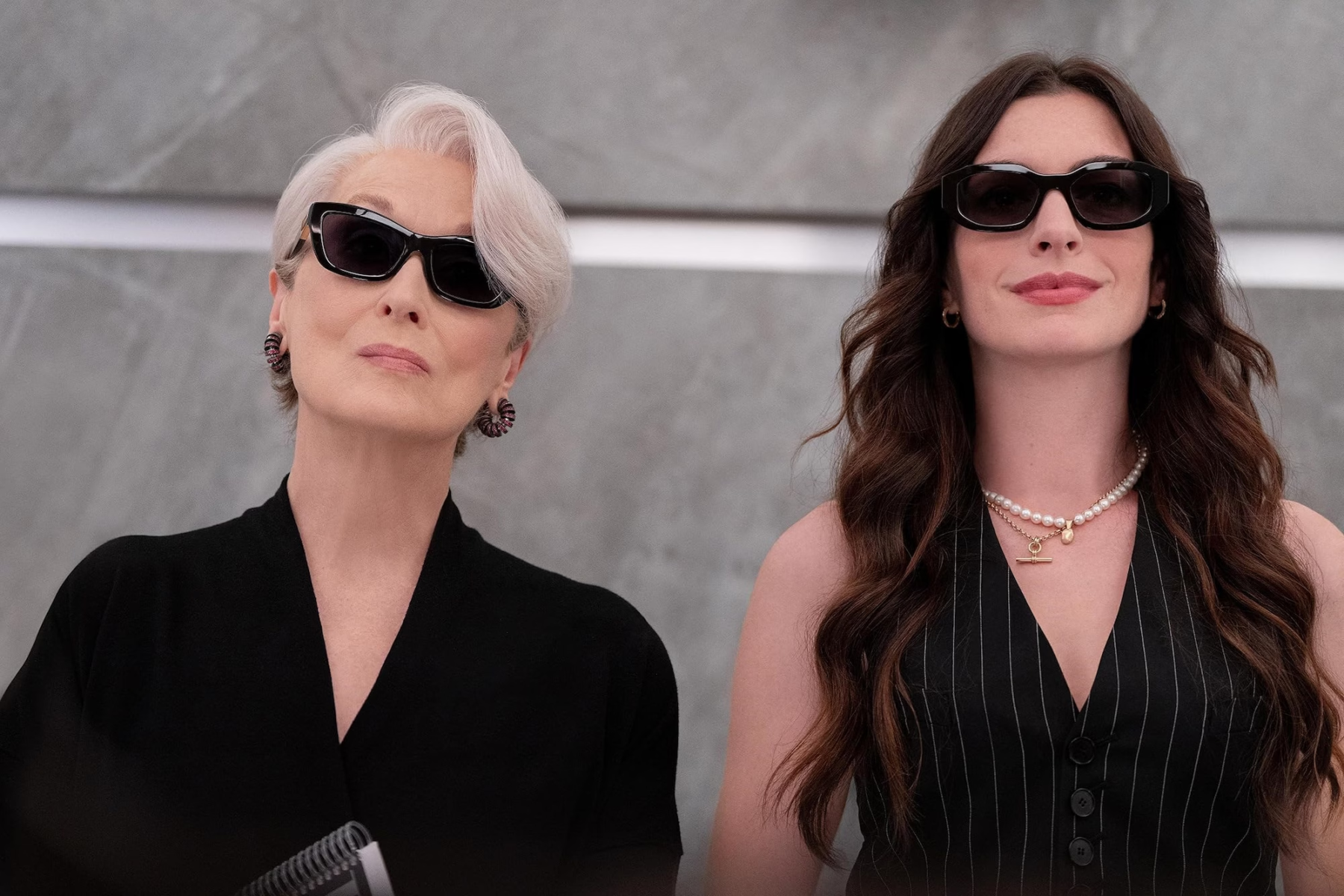
Before The Devil Wears Prada sequel even had a release date, it was already being discussed across the internet and throughout the fashion industry. No one could quite believe the fan-favourite film was actually getting a reboot nearly 20 years later.
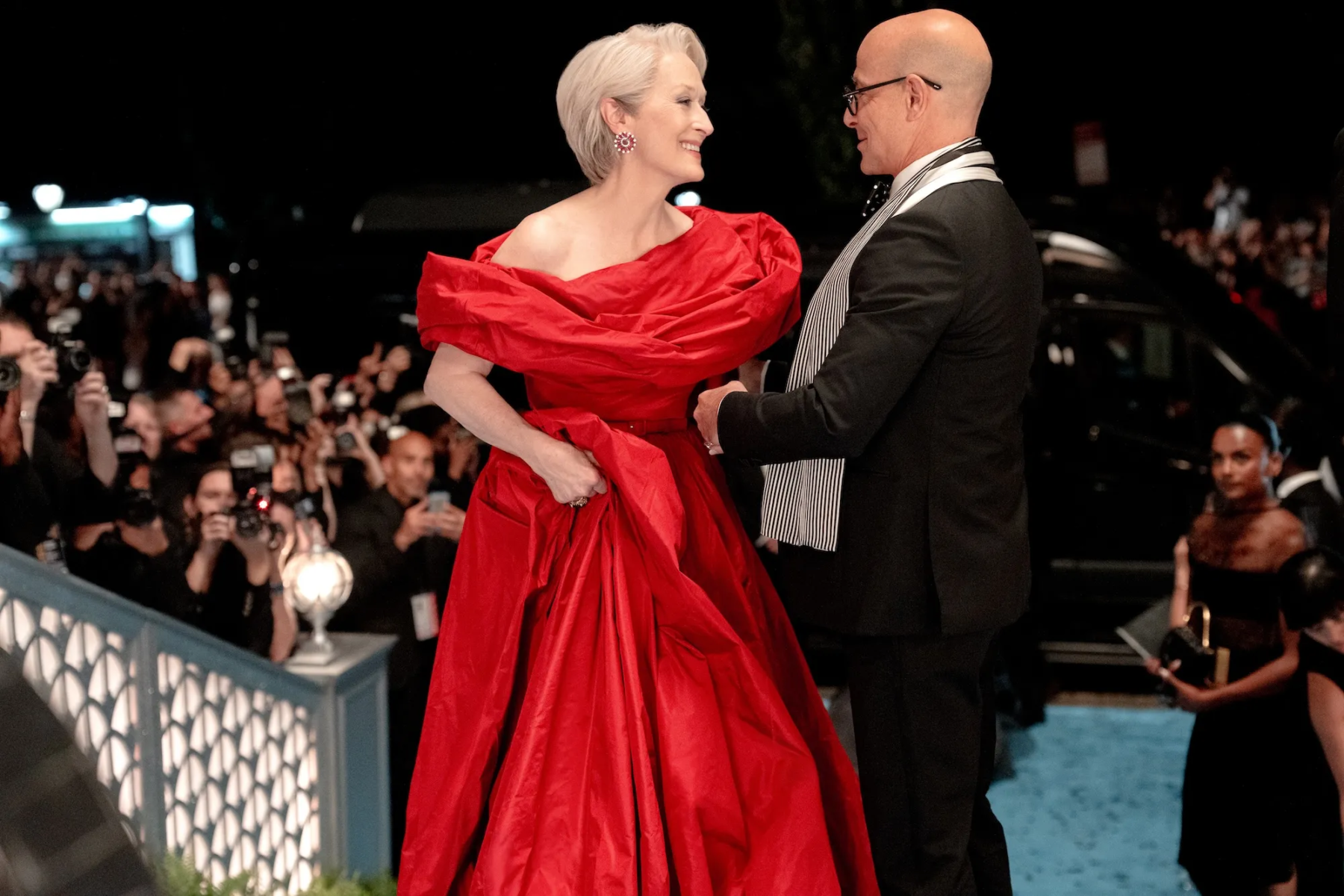
Blurry paparazzi shots of Meryl Streep in a red Balenciaga gown, designed by Pierpaolo Piccioli, on what looked like the steps of the Metropolitan Museum of Art were dissected like runway stills, while images of Anne Hathaway and the cast between takes spawned TikToks about everything from sunglasses to belts. Half the world had an opinion on what Miranda Priestly and the Runway team should be wearing, and the other half was speculating on what they would wear.
But Molly Rogers wasn’t concerned with any of that. The costume designer who worked under Patricia Field on the original 2006 film now returns as lead costume designer for The Devil Wears Prada 2. “I had been best friends with Pat since the ’80s, since I left London and went to New York,” she says. “We worked together for a long time on Sex and the City. She went to do Emily in Paris without me, and I stayed in New York with Sarah Jessica Parker for And Just Like That.”
“The most valuable thing I learned from Pat,” Rogers continues, “is that the costumes from the first film don’t date, and that became the goal for the second one.” You can’t clock a specific year from Andy’s jeans or recognise full runway looks. You recognise the characters that Field first shaped. “Nigel: pocket squares, creative director. Emily: sharp, ambitious, a bit dangerous. Andy: classic American reporter. Miranda: power.” That framework, she says, became her map. “To be able to work with this cast again is truly like lightning striking twice.”
The industry is different now, something the film reflects, and Rogers says her process has changed just as much. “On the first film, we got on ladders and dug through Donna Karan archives in plastic bags. We stayed all day. Did Pat let me have lunch? No. She said, ‘Have a cigarette, have a coffee, and keep it moving.’” Things have shifted, though not necessarily for the worse. “Now, if I sent a young shopper to a warehouse in New Jersey, they’d say, ‘Why would I ever do that? I can just look at the digital lookbook.’”
She pushes back at the mention of the Valentino Rockstud heels that caused a minor online riot when they appeared in the first trailer, as fans insisted Miranda would know better than to wear what they saw as a blast from the past, especially now that Alessandro Michele has reworked the style. “I didn’t pick those,” she cuts in, before I’ve finished the sentence. She was in Italy prepping when the marketing team went into the wardrobe room looking for an eye-catcher. “The wardrobe team guarded that room with their life, but they called me and said, ‘The shoe has been changed.’ If you’re not a fashion person, you don’t know that that character would not wear that shoe. It’s a bit flashy.” Her friends at Valentino, she adds, were naturally thrilled.
Every brand was generous in participating, from Dior to Chanel to smaller designers and boutiques, but the bigger revelation is that the Devil still doesn’t really wear that much Prada. “And she didn’t in the first one either,” Rogers shrugs. She says she sent over a wishlist, but the Prada pieces weren’t available, “Who says no to the Devil?” she laughs, before adding: “Meryl always wins. She can wear whatever the hell she wants to. The Devil can wear whatever the fuck she wants.”
Rogers also talks fondly of Mr. Armani and Monsieur Valentino, both of whom passed away while the film was being made. Mr. Valentino, she recalls, was the first designer to offer support on the original film after spotting Streep on holiday, immediately offering his fashion house’s backing.
Giorgio Armani was also set to be part of the sequel in a more direct way, with a Milan Fashion Week scene planned around one of his shows. But his passing weeks before filming meant that instead, the cast’s Milan schedule ultimately led to a very viral appearance at a Dolce & Gabbana show, filmed in character, with Meryl Streep and Stanley Tucci front row, and Simone Ashley who plays Miranda’s new assistant Amari sitting in the second row, naturally.
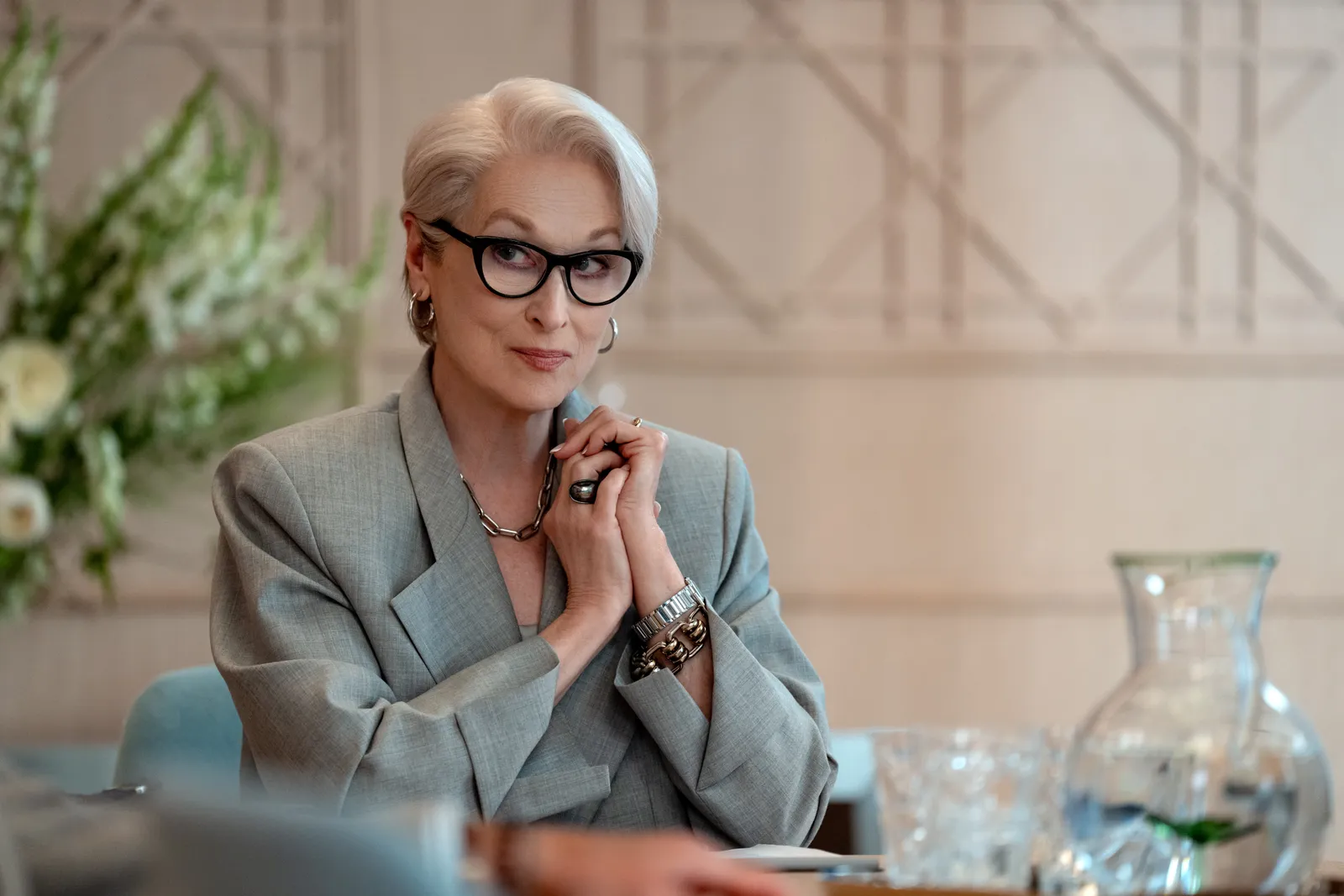
The Anna Wintour question lingers, the comparisons are inevitable. Did she have any input? Rogers purses her lips. “No.” She is firm on this. “Meryl Streep has created a character, this is not a documentary.” The mood boards, she says, referenced fashion figures with presence and longevity, not a single living editor. Miranda is a silhouette. When I mention Plum Sykes, who recently wrote about being real life Emily, she immediately shakes her head. “You enter the world of runway, you don’t enter the world of Vogue. There’s not a Plum Sykes lookalike at the desk, okay? But I am sure she’d love that.”
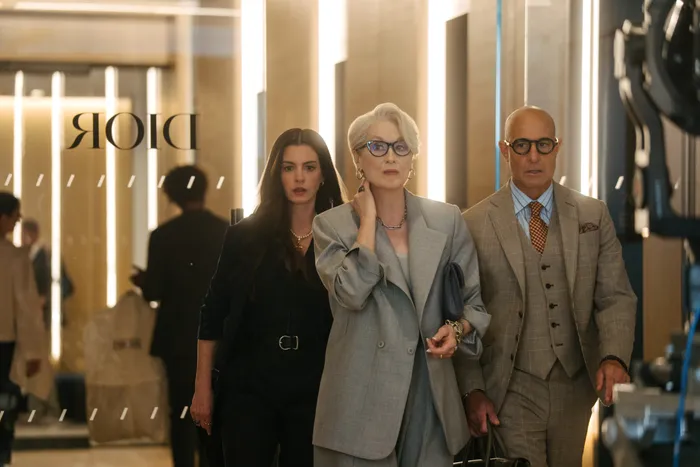
Emily Charlton’s evolution is the most visible. Now a top executive at Dior, her wardrobe is sharper, icier, more intimidating than before. The inspiration? “Kate Moss,” Rogers says, “messy, fierce, too cool, a bit dangerous”. Dior’s team were heavily involved, with custom looks arriving from Jonathan Anderson days after he took the helm. One survived the edit. A ball gown scene did not. “I was crushed,” Rogers admits.
Andy, played by Anne Hathaway, meanwhile still carries the spirit of what Patricia Field originally built: Americana, a serious journalist, borrowed from menswear. But this time, Rogers says, the wardrobe isn’t about someone trying to fit into a fashion publication, it’s the language of a travelled journalist who already knows who she is. References to Robert Mapplethorpe and Diane Keaton in Annie Hall inform the look: loose silk shirts, vests, rolled sleeves, wide-leg trousers.
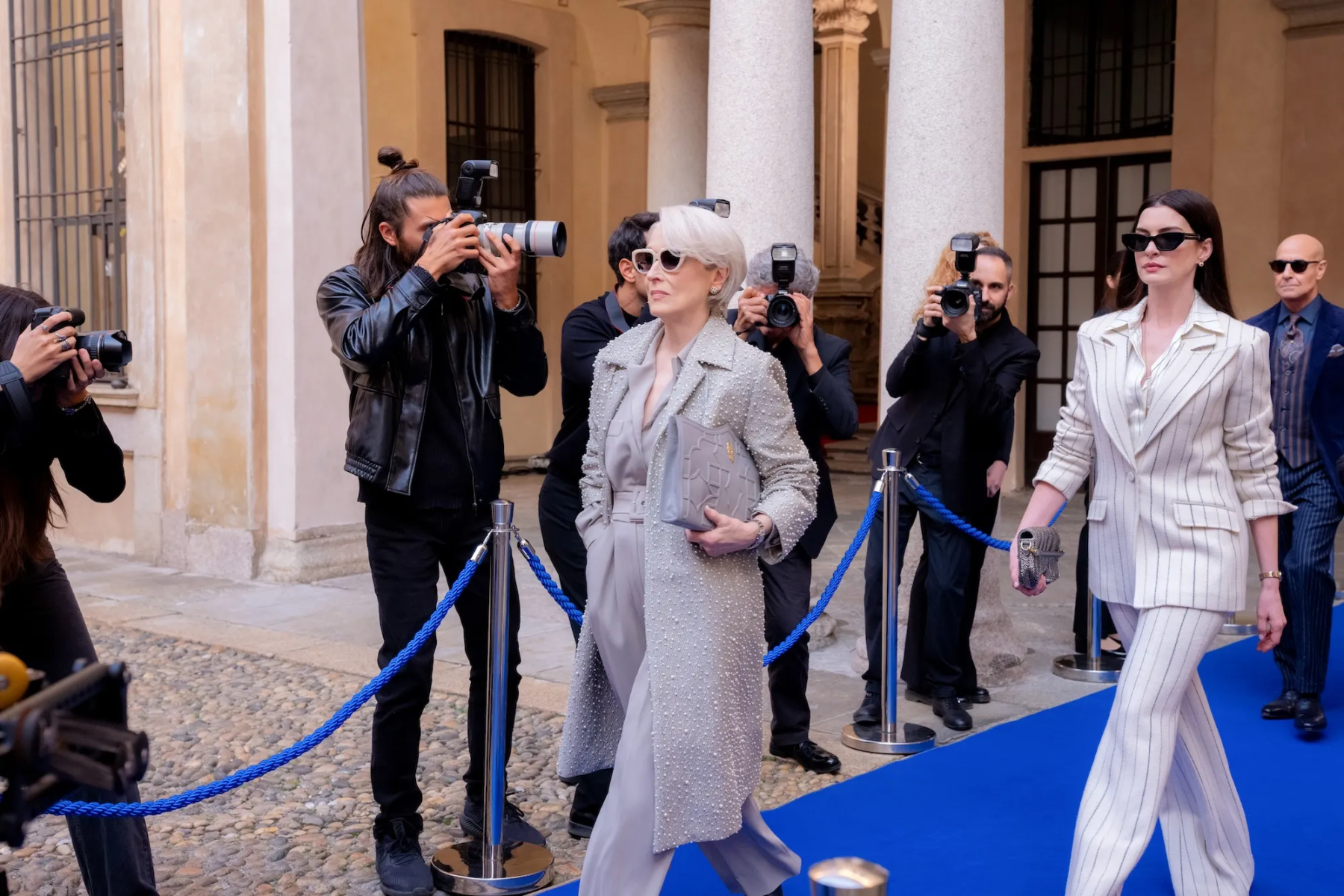
Then there are the fabulous cameos. Lady Gaga appears and, according to Rogers, walked into fittings with her own archive pieces from Los Angeles. “I was gagging for Gaga,” she laughs. “That’s the headline. She blows my mind as an actor. She comes into a room and gives 110 percent of her attention, to you, to why you are there, what you’re doing, and how you get there.”
Another surprise appearance comes from the legendary Donatella Versace, who shares a scene in Milan with Emily. Rogers recalls Versace texting her multiple outfit options ahead of the shoot. Her response was simple: it needed to be “VERSACE.”
Rogers knows the discourse is coming. It already has. But she’s clear these clothes were never designed for internet verdicts. They were built to inform a character, and for longevity. The internet will do what it does. Miranda Priestly will do what she does. And, as Rogers keeps repeating, the Devil does not wear trends, brands, or what anyone online thinks she should. She wears whatever she wants.
Will there be another “cerulean sweater” moment? She laughs. “I don’t know. We will see what the kids decide.”
Words – Moira Gonzalez