Wonderland
GIA MARGARET HAS REDISCOVERED HER VOICE – LITERALLY
After recovering from a career-threatening vocal injury, Chicagoan polymath Gia Margaret is hardened, not broken, and returns with the conviction and authenticity of somebody who has long been deprived of channelling a talent they were made for.
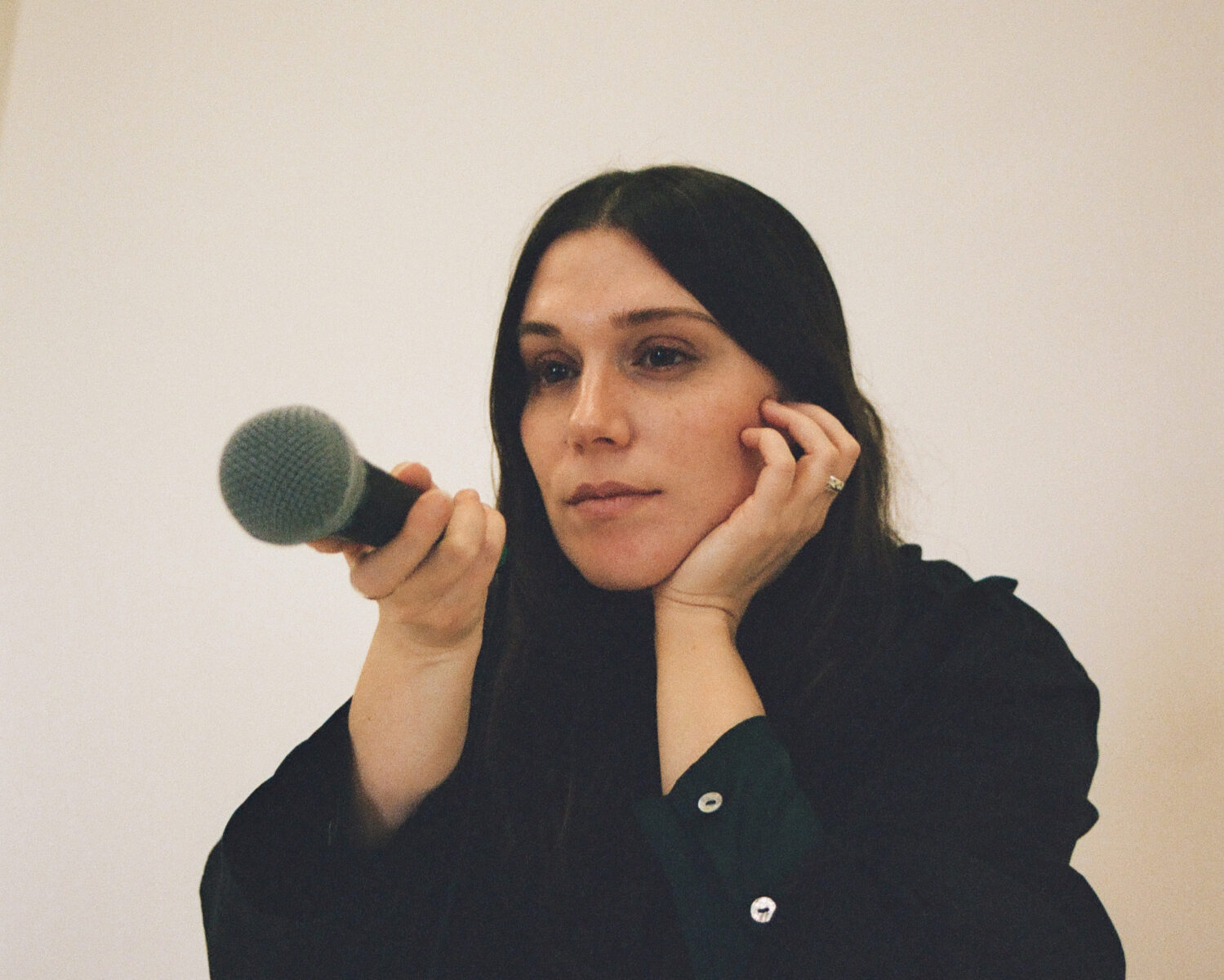
If you’d like to hear a story of a modern-day musical miracle, then look no further than the release of Gia Margaret’s eagerly awaited fourth album, Singing. “There was a time when I really didn’t know if I would sing again. So once I healed, there was a lot of internal pressure to come back strong,” Margaret says in the most restorative of ways. “I didn’t know who I was anymore. So it felt like beginning again, and reconnecting with these very old, old parts of myself.”
The career threatening injury kept her from singing for years, so she strove to develop alternative musical languages, mastering the intricacy and intimacy of the strand of ambient music pioneered by Ernest Hood and perfected by The Books, Hood being renowned for his solo album, 1975’s Neighbourhoods a cult status record of synthesiser-based pieces intersecting with the serene sounds of small-town living, similarly pioneering American-Dutch duo The Books responsible for the beautiful, better yet indecipherable record 2002’s Thought for Food.
During the adversity, the Chicago pianist, composer and songwriter made two largely instrumental albums, 2020’s self-titled and 2023’s Romantic Piano –losing herself within the infinite possibilities of sound, Now, her physical voice healed and her artistic voice honed, she comes full circle with Singing, her first vocal-led album since 2018’s debut There’s Always Glimmer. The new work is a glittering waltz built from soft piano cadences and gentle inflexions, with all the tenderness and fragility of the first snowflake of winter.
Singing is the sound of breaking free from a cocoon, a thing of beauty that you’ve long wished to share with the world. As the album, shared via Jagjaguwar, is released into the world ,Margaret reflects on a journey of healing, meditates on the freedom to sing anew and discusses pushing herself into a whole new territory.
Listen to Singing…
Read the exclusive interview…
I can imagine being able to put your voice onto record again must have felt like a huge release?
It’s a release but it also feels strange; after not having done it for so many years, I will have these moments where I listen back to my vocal takes and I have to convince myself that is my voice. Ultimately, it feels like a miracle because I spent so much time not knowing it would ever happen again.
When it came to the vocal approach for this album, did it almost feel like you had to go back to basics?
The first song that I recorded was such a minimal composition. I had to rebuild my own stamina and that took its own timeframe. I suppose it was like training that vocal muscle again. I like how on the record we ended up with a real variety of sparseness but also quite dense vocal stuff. Even with the sparse elements, it still forced my brain to tap into the production and instrumental elements. I felt like I was blending all these new skills that I had and slowly letting them go whilst mending my voice.
Almost like your own healing process manifested itself in that way!
It made me dig deeper into healing, and to realise I still had some ways to go. Eventually I learnt the only way to progress is to work through it, that can pertain to so many areas of our lives, usually the thing we are avoiding is the thing that we need to be doing to get to where we want to eventually be.
If the record had to be described in a manifesto or summed up as a story, how would you best go about it?
It’s the most inner-work I have ever created. I think singing is so much more than the physical; it is allowing yourself to be totally vulnerable. Speaking and using your voice is so much more than just sound.
The album sounds as if it is sitting at the crossroads between ambient and pop music. How does it feel to add a pop flourish to an ambient track but also ambient intricacies to a pop tune?
I feel like there should never be any rules, and this album really tested my dedication to that theory. In the past I have felt self conscious about my music because I didn’t know how to categorise myself as an artist, especially when I was making instrumental music. Eventually I decided when approaching this album that I was going to let the songs ask for what they needed, and go with the flow. I can never sit down and make definitive decisions about what I’d like it to sound like, and in a way, that felt like a huge part of my healing process.
The record sounds incredibly textural, filled with tiny moving parts, almost like this huge machine powering itself on. Walk me through your recording process, or even your own background in electronic music.
I have such a deep appreciation for electronic music, especially for downtempo electronica. When I’m writing, I hear what you are describing. Sometimes, I think “I am Portishead”, but I’m definitely not!
I really love industrial sounds and distortion, and the sensation of being out in the world, finding music in things that aren’t typically musical. I’m often walking around with a field recorder just trying to capture sound all the time. I’ve always been interested in sound, and when I’m writing a song, I always recall where I was in the moment. I really enjoy incorporating those details; it’s helpful to put me back in that place and to capture the emotion of the moment.
It sounds like every song on Singing has its own keen sense of place and memory attached to it?
I make a lot of music that doesn’t see the light of day. I release the stuff that has the core feeling I’m always searching for. Are you a musician?
I play the synthesiser…
You’ll know the feeling you get when you are playing or creating, and you reach this elevated space; it’s almost like you are out of your room or above it. I don’t feel it with everything I make, but I felt it every step of the way on Singing. It makes me feel like I’m creating from a higher headspace.
The album was created between London, Eau Claire and Chicago, do you think it carries a piece of each location in the final sound?
While recording in London, we worked with Guy Sigsworth, who feels so incredibly English. [laughs] The record has these flourishes that are such an embodiment of him that instantly transport me back to London. Whilst in Eau Claire, the recordings were very lush; it was a green place and felt pastoral. Whereas in Chicago, the elements we recorded feel like they have a bit more grit, the city is full of artefacts that are personal to me, so it makes sense to reflect that way.
You had the assistance of an all star cast on this project, with special mention to Kurt Vile, how did you manage to get in touch with him?
It was at the point where we were finishing the album, and I was desperate for the final track “E-Motion” to make its way onto the final cut, and I really wanted a closing guitar solo, I was thinking “who would be a good fit for this and then I thought Kurt would absolutely kill it”. I knew Kurt through a mutual friend and got in contact that way, he’s so nice and cool.
He actually recorded it whilst on tour using his rig during a sound check [laughs], I love the spontaneity of the track.
What’s next up for Gia Margaret after this project?
I have an idea, but it never usually turns out how I originally envisioned. I would hope it is more experimental, another experience where I feel free to take risks. I feel the most engaged when I’m challenging myself. I’d like to go off the deep end.
Words – Tobias Furlong