Wonderland
MOTHER MARY WANTS YOU TO WORSHIP AT POP’S ALTAR
For his latest film, David Lowery transformed Anne Hathaway into an all-singing, all-dancing global pop phenomenon… and then put her in a gothic ghost story. Here’s why – and how – he did it.
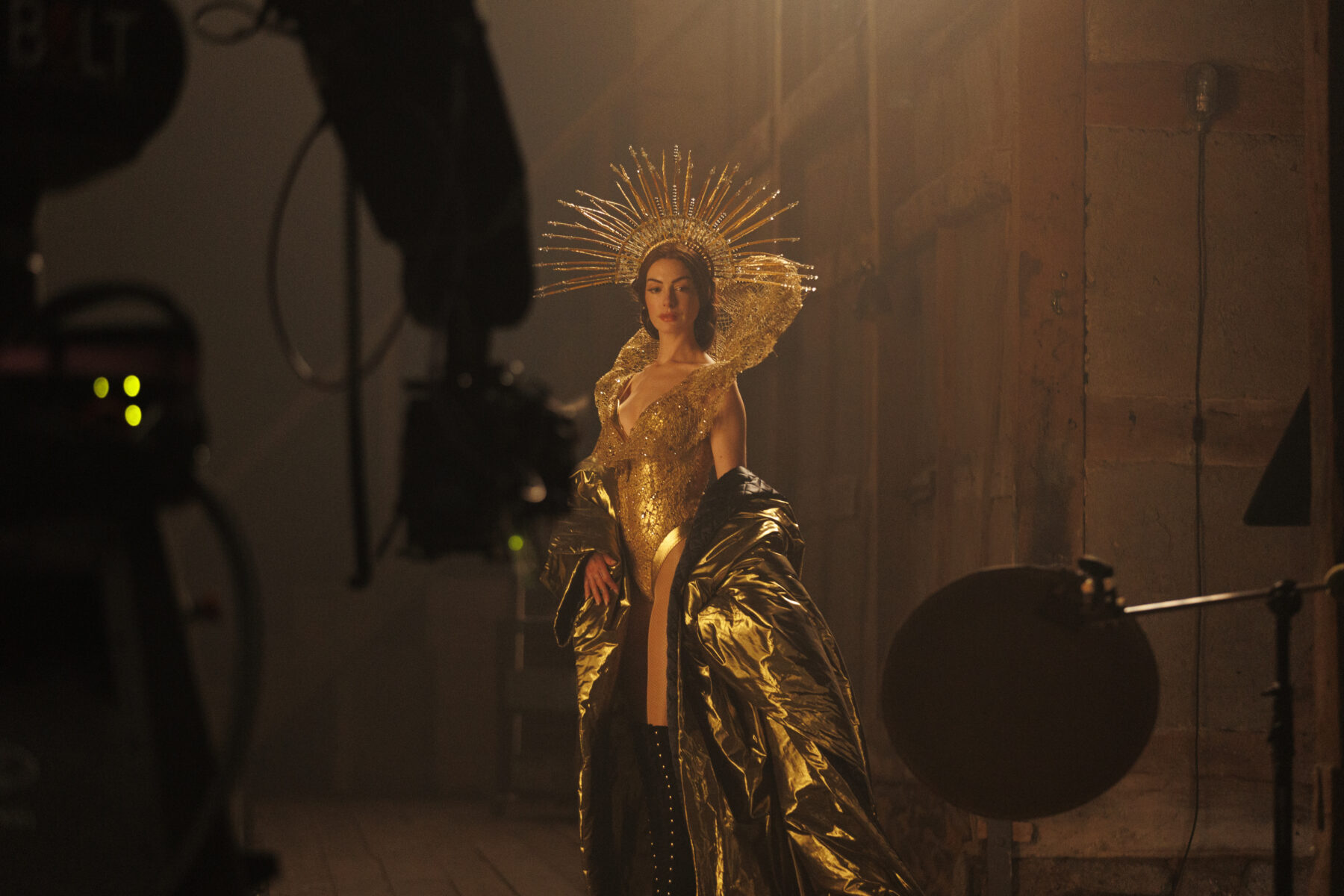
Coining your showbiz drama-meets-ghost story Mother Mary – after its central eponymous pop star character, no less – is bound to ruffle some feathers. But for David Lowery, the filmmaker behind A24’s latest cultural juggernaut, forces beyond reason guided him, even if it might piss off a few of his “very Catholic” family members. “It began with her name,” the 45-year-old Wisconsinite recalls, sitting in a publicist’s office, gratefully guzzling coffee. He only touched down in London three or so hours prior, but remains sharp of mind and wit, his brain buzzing behind a pair of piercing blue pupils. “It was born of the correlation between pop iconography and religious iconography. I was made very aware of it at a very young age when my parents forbade me from listening to Madonna.”
Lowery is the mind behind some of the most distinct, daring and divisive cinematic oeuvres from the past 15 years – from the 2021 twisted fantasy tale The Green Knight to 2017’s solemn thought-piece A Ghost Story and a reinterpretation of a classic in 2023’s Peter Pan & Wendy. His films have a habit of splitting opinion and opening conversations – but none quite to the magnitude of his latest outing.
The auteur has a self-confessed fascination – perhaps borderline obsession – with pop music, and the superstars at its apex. It’s a subject he always wanted to tackle, a thematic magnum opus that required time, patience and collaboration to concoct. It’s a daunting task: to sketch out a pop star from scratch, shading them in with hues from a kaleidoscope of artists, resulting in an ending mosaic that feels “intimately familiar and yet completely original.” But in this, Lowery has proved a master painter – his completed pièce de résistance culminating in his film’s titular character, Mother Mary. A pop phenomenon making her grand comeback – re-entering the limelight after a mysterious incident 15 years ago and an ensuing period of anonymity ever since – in need of a dress that only her ex-stylist and estranged spiritual flame, Sam (played with baroque flamboyancy by Michaela Coel), can make.
For Mary, Lowery needed an actor who could hold the weight of what being a pop star represents, while having the technical proficiency to feel like a genuine musical world beater, and the emotional depth to understand the character’s strife amid her success. The choice was obvious. “If I had written this movie about an actor and not a pop star, I would have been writing it about Anne Hathaway,” the writer-director says knowingly. He’s not wrong; from soaring triumph in her early career to a period of stagnation away from the spotlight, to now being poised for the mother of all renaissances this year, Hathaway’s pathway mirrors that of her on-screen muse remarkably closely.
Not only is she the leading lady in Lowery’s latest film – in UK cinemas now – Hathaway will also be seen leading The Devil Wears Prada 2, the long-awaited sequel to the actor’s much-loved 2006 breakout, in cinemas on 1st May. And, if that’s not enough, this summer she’ll star opposite Ewan McGregor in It Follows director David Robert Mitchell’s new adventure, The End of Oak Street, and amid the biggest cast of the year (Damon, Holland, Pattinson, Zendaya, etc) in the biggest film of the year, Christopher Nolan’s savagely anticipated, The Odyssey.
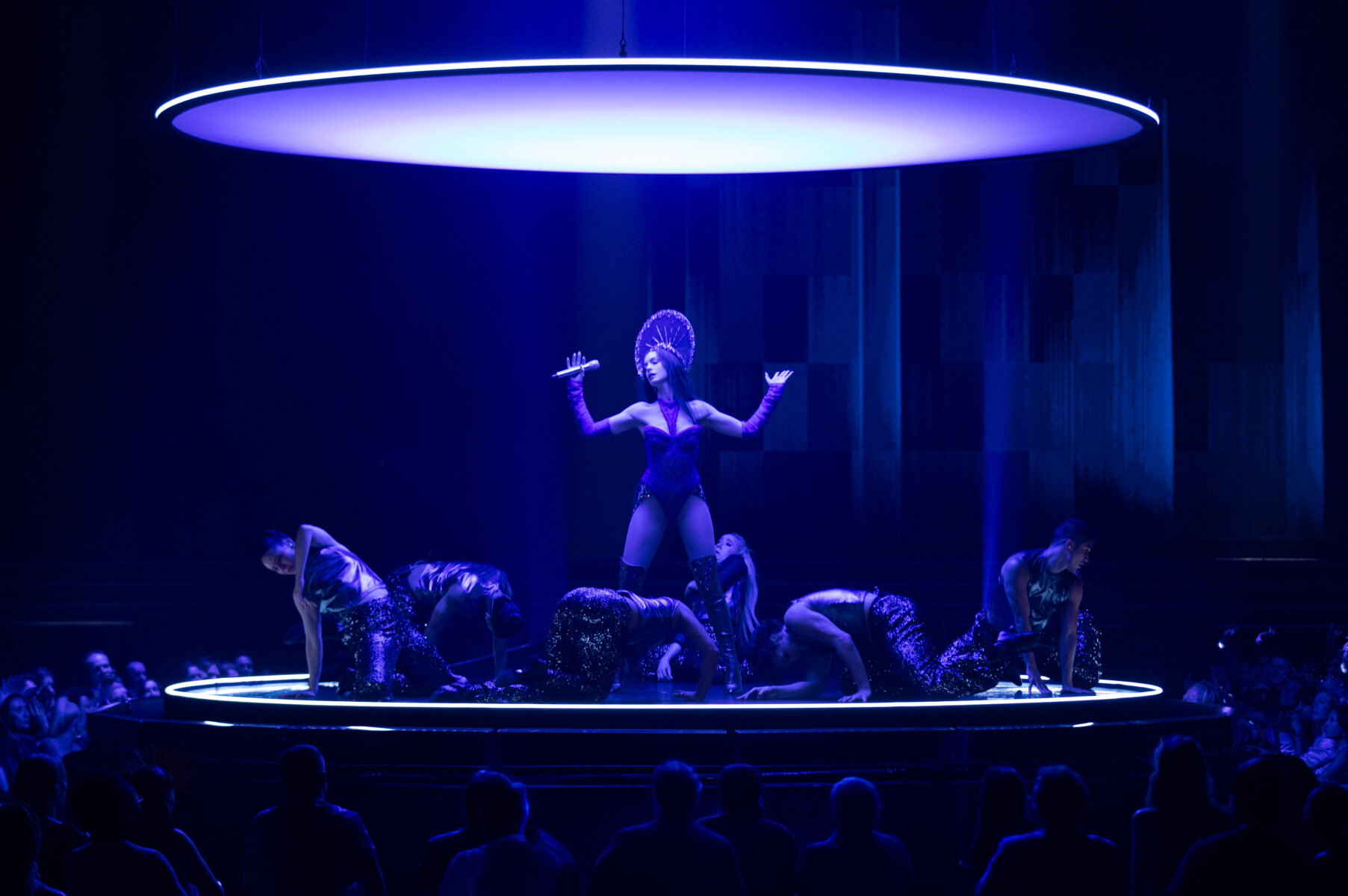
Hathaway depicts Mary with the kind of complexity that only someone who understands their character on a fundamental, esoteric level could. She performs with dominance and beauty in front of arena crowds, yet feels timid and in need of validation in the presence of her counterpart, Sam. The original music written to accompany the visual spectacle pays dividends in this; Lowery enlisted a trifecta of pop’s quintessential songsmiths for the task in Charli xcx (on board since pre-BRAT), Jack Antonoff, and FKA twigs, the latter of whom also stars in the film in an eccentric supporting role.
Days before the film was released, A24 threw a listening party at the new Spotify Listening Lounge in central London, giving a handful of industry professionals the opportunity to hear the music in full, followed by a conversation between Lowery and Edith Bowman. The recently opened space holds one of the finest sound systems in the city, and feels the ideal location to be immersed within the seven-pronged soundtrack, which was recorded intermittently across the filming process. In the movie, we often only hear a snippet or section of the songs, but taking them in as a mini album – a ‘Greatest Hits’ – elevates them tenfold. Lowery agrees – “We just did [a listening party] in New York too, and it was really special because I’ve spent so long in the movie that I have not had a chance to just listen to all the songs on their own. To get to hear them in their entirety for the first time in a long time was a real treat.”
Somewhere between a dialogue-driven melodrama about fame and collaboration, and a breathtaking gothic fantasy horror, Mother Mary is strange, polarising and provocative, leaving as much unsaid as spoken. Below, Lowery delves into the thought and filming processes behind his latest effort and reflects on his tenure to date.
Watch the trailer for Mother Mary…
Read the interview…
Looking at your filmography, you’ve plucked from so many genres and themes. Was something within music or a musical something that you’ve always wanted to tackle?
In a way. But one of the touchstones of my movies, I realised lately, is that they all have musical sequences in them. In fact, the key moment in many of my films involves characters performing a song. A lot of my movies include scenes where characters sing to one another as a way of communicating in a way that dialogue cannot. At a certain point in my screenplays, words no longer suffice, and the characters have to break into song. Even going back to [2013 debut full-length film] Ain’t Nobody Saints, there’s a scene where Ben Foster plays a song, and that was something we came up with while we were shooting because we just needed to reach an emotional apex that could not be achieved vis-a-vis dialogue. It’s a very efficient way to hit an emotional nail on the head.
From The Green Knight to A Ghost Story and The Old Man & the Gun, everything you’ve made has been so singular. How do you almost pick your next project? Do you plot far in advance or is it quite instinctual?
It’s a bit of both. I am very impatient and a multitasker, so I’m usually writing between one to three [scripts] at any given time. My excitement level about them ebbs and flows, but there’s always something. If I finish a screenplay, it’s usually because there’s something about it that means something to me. And so I will have those long-standing projects, but every now and then something spontaneous will come about, like A Ghost Story. That wasn’t premeditated or simmering on a low boil for a long time; it sort of burst out and demanded to be made. So in a case like that, it’s completely instinctual, I’m not overthinking at all – I’m having the idea and executing it. With other films, like The Old Man & the Gun, for example, that one was on a low simmer for a long time. I started working on it before Pete’s Dragon, and then made Pete’s Dragon, and then made A Ghost Story. Then by the time A Ghost Story was finished, I finally felt ready to make The Old Man & the Gun and had figured out what was important about the movie beyond the joy of working with Robert Redford. It took me a long time to figure out what was a way in which to make it personal. All my movies, when they get made, are at the right time. And it’s not necessarily what I imagine – the timeline sometimes is the inverse of what I think it’s going to be, but they always happen when they need to happen.
So what about with Mother Mary; was it a longstanding project that you spent years cultivating?
This one has been in the works for a long time. I started writing it while we were shooting The Green Knight and kept writing it while I was making Peter Pan and Wendy. And then, pretty much the second we finished filming Peter Pan & Wendy in January of 2022, I decided it was time. And within a few months, we were underway on Mother Mary. But it took three years of letting it percolate. The initial couple of pages that I wrote while we were shooting The Green Knight were very indicative of what the movie was going to be. But I changed a lot over those three years, and the movie, as a result, changed with me. It grew to uphold a different set of parameters from what I initially envisioned, and it became something far more all-encompassing than it was when writing the opening scene in Dublin back in 2019.
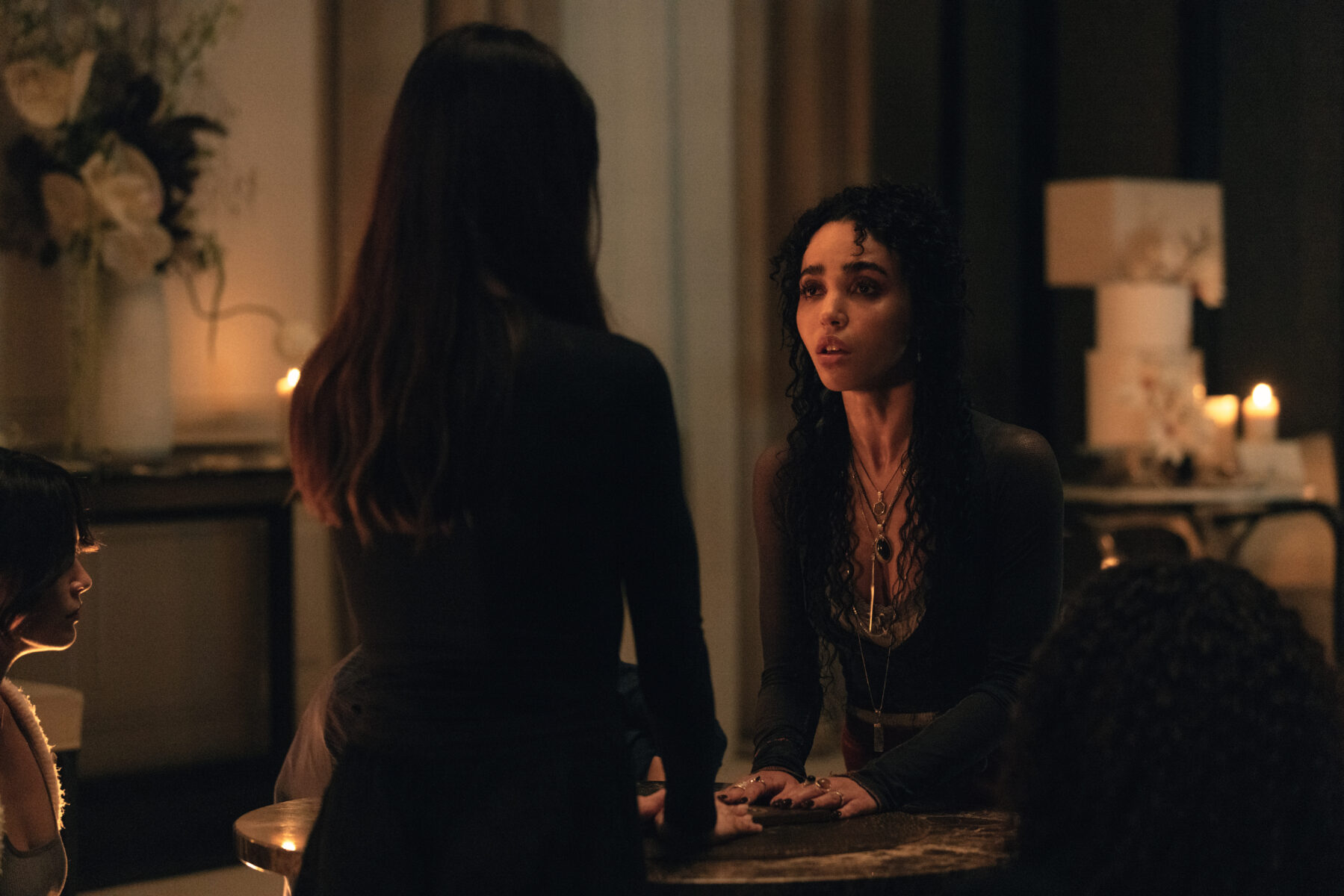
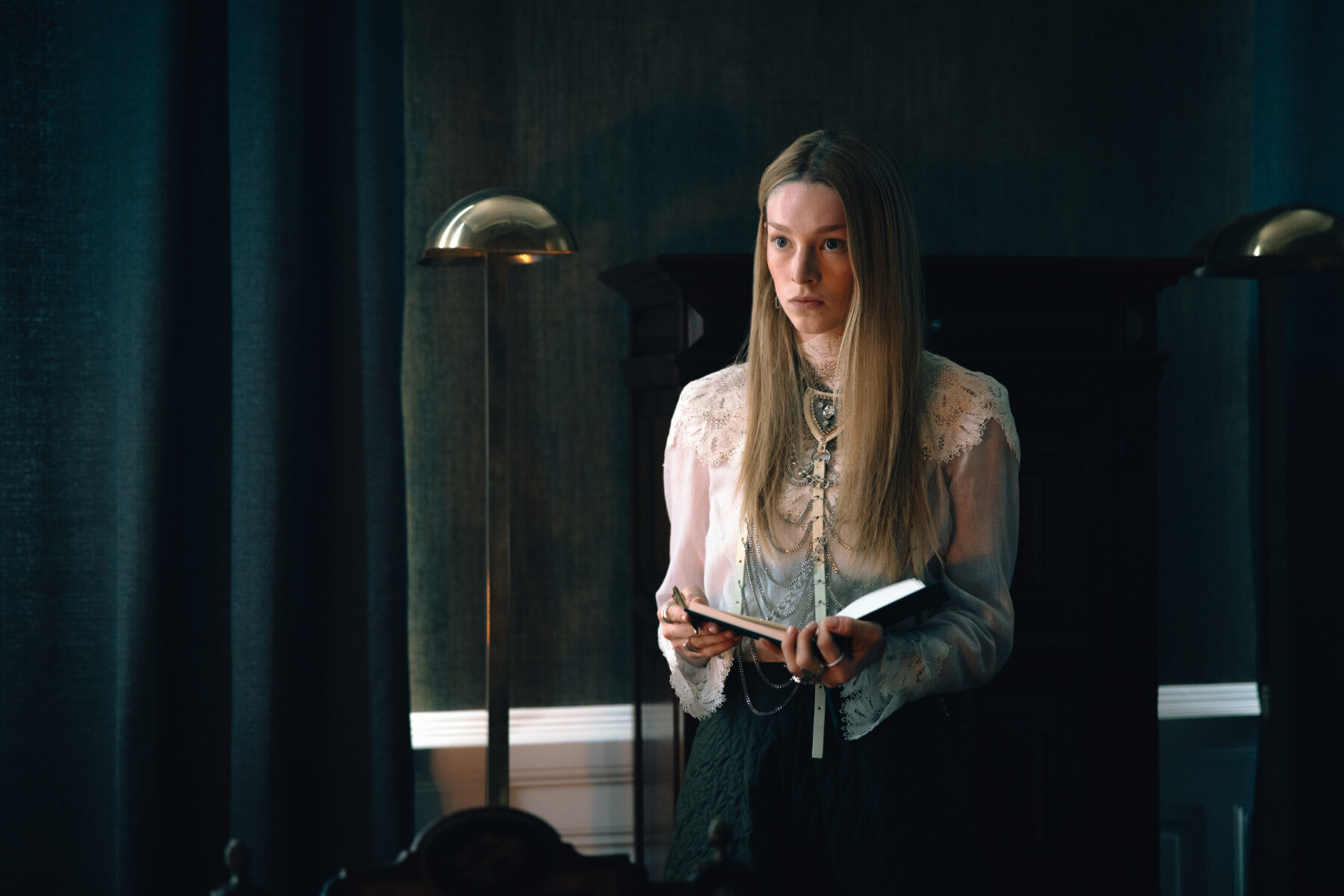
What was the genesis? The film begins as this melodramatic character piece between two old friends and then into this gothic, sombre, operatic fantasy, and then comes back full circle.
It was always those two characters, but their conversation was much more…I was about to say focused, but focused isn’t the right word. I think the film is fairly focused, but what they were focused on was more limited. I was initially writing a dialogue about the value of self-expression. The very first draft represented a lot of things that I was worried about at that point in my life – getting older, not having anything important to say, being unhappy doing what you love, and trying to find a way to reinvigorate oneself at a certain point in one’s career. But as I continued to write and as I grew as a person while making Peter Pan and Wendy, I realised that the script needed to go beyond that. The characters, at a certain point, ceased to be simply a mouthpiece for my own worries, my own woes; issues I put to bed relatively quickly. But then I was left with these two characters who had issues of their own, and I was really interested in going with them on that journey.
There’s a monologue that Sam gives around the middle of the movie about what Mary’s performance could be. And that was, in one iteration, going to be the end of the film. But when I got to that point in that draft, I realised there’s a lot more to unpack; this is not the ending of the movie; this is the midpoint of the movie. So everything got compressed, the whole script got compressed at that point, and I realised I had another two acts that I needed to write. But I didn’t know where they were gonna go, so it was just a long process of exploring with the two [characters].
The supernatural, overworldly aspects, how does that construe Mary and Sam’s story? What does it represent to the framework of the film as a whole?
I am really fascinated with the energy that can exist between two people. Between anybody, to be honest. You know, you and I are sharing an energetic exchange at the moment. When I’m collaborating with someone on set, we are exchanging energy. My wife and I have an energy channelling between us at all times. Energy in a very new age sense could be taken very literally. Or you can use it as a metaphor, whichever you prefer. But I do like the idea of, whatever that exchange is, being so profound that it feels palpable. It’s like a physical presence, which it feels like sometimes. When someone is foisting their negative energy upon you, it feels like a literal burden. So it’s only a short jump from there to taking that energy and representing it in visual terms. At the same time, I’d love for audiences to take it literally – I’d love for this movie to be a ghost story.
It’s a movie that is incredibly literal. The characters are constantly trying to figure out how best to put into words what they’re feeling. And as such, they’re describing what is going on in the movie repeatedly. But then at a certain point, words become insufficient. And at that point, one might say that the movie becomes open to interpretation. I’ve got my very specific interpretation of it. To me, it is crystal clear. I would never prescribe my own interpretation to an audience; I would have had the characters keep talking.
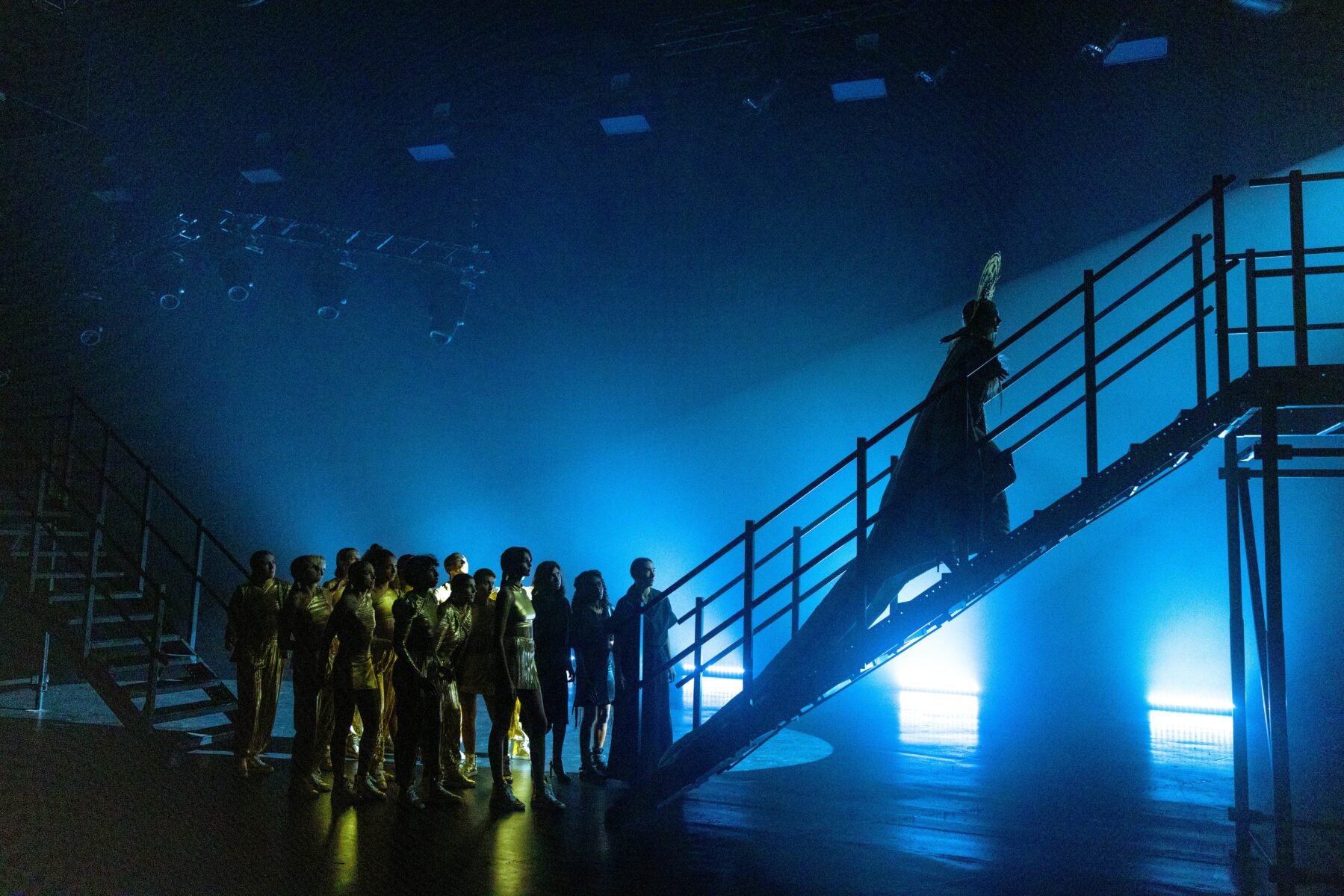
Let’s talk a little bit about Anne. When did she become attached to the project and why was she right for the anchoring, titular role?
She felt like an alternate dimension version of the character already. You can imagine if I had written this movie about an actor and not a pop star, I would have been writing it about Anne Hathaway. So there was an almost one-to-one level of representation in terms of who she is in culture and what she represents that was very applicable to the character of Mother Mary. But that was almost the icing on the cake. What was really important to me was that I have an actor who is willing to go the distance with this particular project, which not only is like requires a tremendous amount of of acting – so much of the movie is just a conversation that is very intense – but also who was excited to go on the journey to become this alternate version of herself, which is the pop star. I knew that Anne could sing, but I think we were both surprised at how much work it was, how much was required to learn to sing and dance the way she needed to for this movie.
You’ve spoken in other interviews about being inspired by Taylor Swift’s Reputation Tour, and there’s obvious shades of artists like Lady Gaga in Mother Mary. But what to you is this amalgam of pop stars that you’ve created?
I had always wanted to make something involving pop music. That was a longstanding goal of mine, as a fan of that genre of music and how it makes me feel. When I set out to write this, I knew right away that this was going to be my pop star movie. It took me a long time to figure out who that pop star was, because when you first start writing something like this, it’s easy to just start pulling references from other musicians. And I’m not a musician, so I’m an audience member, and in writing the script, I was trying to capture what [being a pop star] is. I captured the common ground amongst all of these different artists that I loved, the one ingredient that maybe was the through line through all of them.
When I wrote the script, I kept things very vague so that we didn’t have to define her until we had an actor on board to play her and musicians on board to write the music. But once all those ingredients started to come into play, it became very clear that this pop star needed to be a pop star unto herself. She needed to be unique and not a reflection of someone who actually exists. But at the same time, she needed to encompass aspects of so many pop stars from so many points in cultural history. This was a character that needed to have existed in the public eye for 20 years, so we had to understand how she would fit into the world in 2003, in the same way that we had to figure out how she would fit into the world in 2017 and what she’d been doing in those years in between. So it was really a fun challenge to try to create someone that felt intimately familiar and yet completely original at the same time.
Why was Michaela Coel’s character, Sam, a stylist specifically?
I really wanted to focus on the concept of collaboration and the way in which two people can collaborate to create something. It’s an incredibly intimate experience working with someone to create a singular work of art. And it’s a really paradoxical experience to create a work of art in which one of the two collaborators is going to be the forward-facing representation of that creation. Pop stars are really interesting in that they are their own art. When I make a movie, I’m putting all of myself into it and yet the movie is distinctly separate from me. It’s not me. But when a performer goes on stage, often under their own name, they are their own art. And the line between who they are on and off stage is very fluid. I thankfully don’t have that experience – I don’t think I would handle it very well. But some people are born to handle it beautifully. But they’re not doing it alone. There are always so many people helping them get to their pinnacle.
I felt that a costume designer, the person who is creating the look, is so instrumental in creating the public persona. Whether it’s a creative director, the costume designer, or every pop star has their own version of Sam. And yet they’re always in the shadows. They’re always in the background. The paradox of that dynamic is very rich and very meaningful. It was something that allowed me to peel back the layers of what it means to collaborate with someone in a way that I don’t know if any other art form would have. The designer is creating art and putting it on somebody else’s body, and that person subsumes their art and makes it their own, and it becomes part of their persona. And yet it’s still the designer’s work; they’ve made it themselves. There are so many layers to that.
The relationship between Mary and Sam, her stylist, is almost at times disciplinarian, cold. But also romantic. We don’t really know what the past entailed. Was that the point – you wanted to keep it quite vague while also full of fire and compassion?
We don’t know if it’s spiritual or physical or what, but there’s so much love in their relationship, and there are so many other layers as well. I always wanted the creative collaboration to be the endpoint that we arrive at. It’s two people coming together to create something new. And they’re reflecting on all the tension that’s emerged from all the things that they’ve created in the past. But it’s always about making something. There’s a Holy Trinity aspect to it in that there are three things: the two artists and the object that they create. And that object they create is a version of one of them, which is a really bizarre paradox, much in the same way that in the Catholic Church, the Holy Trinity is a really bizarre paradox that is very hard to wrap your head around. But that’s what is going on here. I felt that, while one can read into their relationship and assume a certain amount of backstory about the nature of their relationship, I didn’t want to let the movie end on that point. It always had to end on the thing that they created. And that is coming from a relationship that can be inclusive of love or sensuality or sexuality, but ultimately is creating something that is separate from that. So when we were deciding amongst ourselves how much backstory to put in the movie, how much information to give the audience, it was always known that the end goal was going to render all those questions, not irrelevant, but less important.
Words – Ben Tibbits
Photography – Frederic Batier & Eric Zachanowich