Wonderland
FINDING COMMUNITY IN THE MIDDLE OF THE OCEAN: A TRIP TO THE AZORES
One of the most obscurely located and sonically experimental live music events on the planet, Tremor Festival is a hidden gem kept quiet by the passing waves of the surrounding Atlantic Ocean. Ben Tibbits investigates what makes it special – bar its unlikely location.
I squint from the early evening sun that glistens through the window pane, and sigh excessively. I’m in a lounge at Lisbon Airport with nothing but the occasional surprisingly philosophical musing from the barman and my own jaded thoughts for company. A six-hour layover is tedious, but it has its perks. In today’s case: an excellent buffet spread, a picturesque eventide, and some time to consider the couple of days I have ahead, in – quite literally – the middle of the Atlantic Ocean.
Now I must admit, until a few months ago, the Azores were, to me, one of those places that you knew the name of, but didn’t really know where they were, what they were, or why they were significant. But after being invited to fly out to its enigmatic micro festival, Tremor, I dived into its history. An autonomous region of Portugal located some 1500km from Lisbon and roughly 4000km from the east coast of America, the archipelago is made up of nine volcanic islands; a remote nirvana with a plethora of wildlife and microclimates with a draw on sustainability. The Hawaii of Europe, it’s often coined. Aloha.
I’d be surprised if you’ve heard of Tremor, which takes place on the Azores’ biggest island, São Miguel. There’s no huge marketing campaign or boosted Instagram posts behind it, no mainstream artists on the line-up (although Angine de Poitrine, who I saw in a packed room in Montreal last year, are well on the way to being a cult favourite). The priority lies, rather than commercial gain or chasing relevance, in fostering community and celebrating Azorean culture, with locals very much ingrained in the fabric of the festival, whether through attendance, featuring on the bill, or holding dinner parties at their own homes (we’ll get to that). And so, with the promises of a compassionate, free-spirited and influencer-less party, a pantheon of boundary-pushing music, and a chance to investigate one of the most obscure festivals in some hidden nook on the atlas, I simply couldn’t resist.
As the clock approaches 10 pm, I waddle towards my gate and board the ever-so-slightly rickety plane. The flight itself, across hundreds of miles of nothing but ocean, is choppy and longer than you’d think, but eventually, we land safely in, and I find a friendly man waiting to drive me and a few other stragglers to our hotel, a simple and tasteful location a stone’s throw from the seafront. After a long day of travel, I call it a night.
The next day begins with a light breakfast and a few hours of work, before finally getting out and about for lunch with some of the other journalists. We frequent Tasca, a well-recommended local spot, which lives up to the hype, with the wine flowing and an entourage of small plates (mainly relating to fish, which makes sense for an island surrounded by water) proving delightful. We then stroll around for a while, taking in the quaint local architecture of the town, São Miguel’s capital, Ponta Delgada, before grabbing a few beers and making conversation with some gregarious Azorean residents.
After a quick freshen up, it’s time for the first real festival activity, and it’s an unusual one at that. For a small price additional to your festival ticket, you can book dinner, but not at a restaurant, instead at a nearby house, hosted by a local stranger. Several of the journalists have booked onto the same one, so, knowing very little but the location, we all pile into a taxi and get ready to enter the life of a random household.
We’re a little early, so the amiable middle-aged couple welcomes us in and politely escorts us to the garden while they finish setting up. It’s absolutely gorgeous out there, with a plethora of fruit trees, a myriad of flowers, and even some clucking chickens to entertain us. We meet some of the other guests – fellow festival goers who were also intrigued by the experience – and the mood is jovial as we’re asked to come back into the house.
The wine flows, and conversation springs off in every direction. Our hosts are warmly mannered and interesting people who know how to put on quite a spread, and the other guests, who have come from Switzerland, France, Canada, among other places, have absorbing stories about how they ended up at Tremor. A cynic would call them hippies. Those less judgmental can see them as spiritual individuals searching for an answer. Me? I see both sides.
After some entrees of cheese, meats and breads, we’re welcomed to the dinner table, around 20 of us, for some soup followed by fish, rice and salad. The mood and energy are high; it’s unlike anything I’ve ever done at a festival, simply stepping into the world of these gorgeous Azoreans and enjoying great company, hospitality, and local culinary delights.
Overall, it’s a joyous evening, one that illustrates that the boundaries we often put up against people we don’t know are nothing more than an invisible line of uncertainty and judgment. Empty preaching, I know, but talk to someone on the tube or something, I don’t know.
Waving farewell to new pals, the time has come to head back into town and take in some music. We arrive at a seafront venue that is brimming with punters, the music already well underway. The first music of the festival I take in is an act called Vaiapraia, fronted by the charismatic London-based Portuguese creative Rodrigo and sprawling across music styles but very much rooted in punk. It’s an untethered, raw, characterful performance which the burgeoning and lively crowd laps right up.


After some chatting, the next act I check out is George Silver, who I came across last year at another Portuguese festival, SQUARE, who is an experimental drummer and percussionist whose use of rhythm and dynamics to tell stories and challenge constructs is really quite mind-boggling. By this point, it’s rather late, so I take the short walk back to the hotel and settle down for the night.
After a slight oversleep, a scramble for breakfast, and some light work to be done, the early afternoon brings the next of the festival’s unique endeavours. It’s coined a ‘Soundwalk’. I envisioned a silent disco, but as a stroll in nature, but actually it’s a hike, and when you arrive at the end location, you are gifted with a concert. There are around 50 people partaking (there are several sessions morning and afternoon across a few days), and we hop on a bus and head out of the town centre, taking in the incredible scenery of São Miguel as we go.
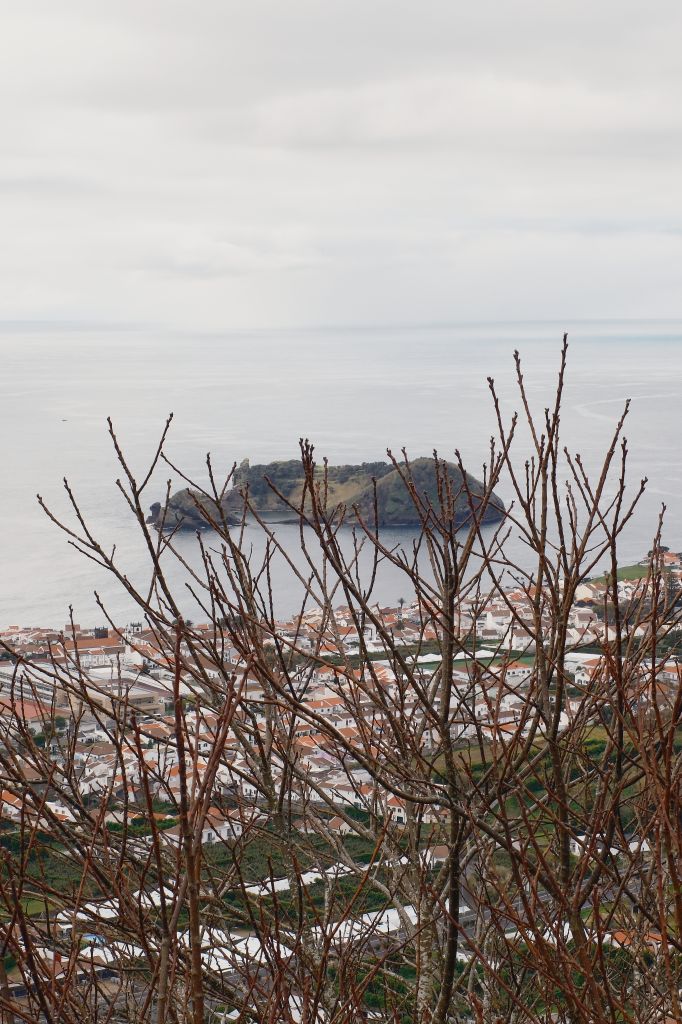
Arriving at what seems a random but actually I’m sure very considered spot, we begin walking. This hike is entirely uphill, and the sun is beaming down, but it’s not too strenuous, and our guide encourages regular pauses. There are farm animals around, birds I couldn’t begin to name, and the odd lizard. Also, fern and pine trees stood right next to each other. The array of nature here is very distinct.
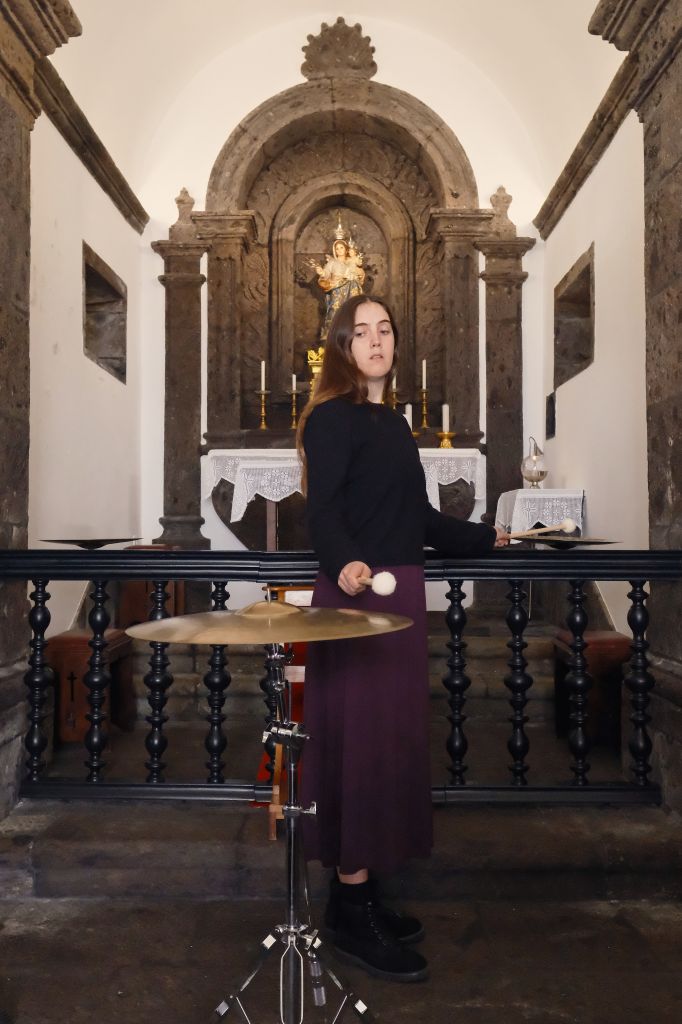
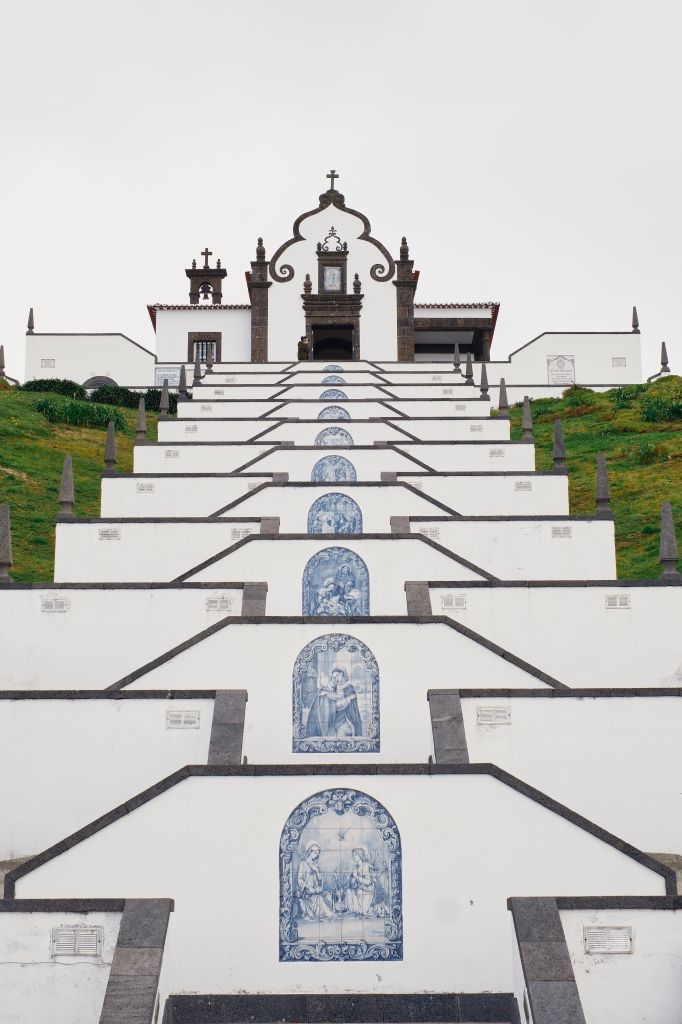
Eventually reaching the summit after an hour or so of walking, we drag our tiring feet up a winding set of stairs to a small chapel. The views are incredible, overlooking much of the island’s coast. Inside the chapel, Vera Morais, a Porto-born, Amsterdam-based singer, improviser and composer, awaits. Hers is an individualistic sonic art – she plays a shimmering percussive instrument that I don’t know the name of, while delivering a vocal performance that sprawls from ethereal melodic wailing to sharp, dissonant noises. It’s haunting but beautiful, challenging but compelling.
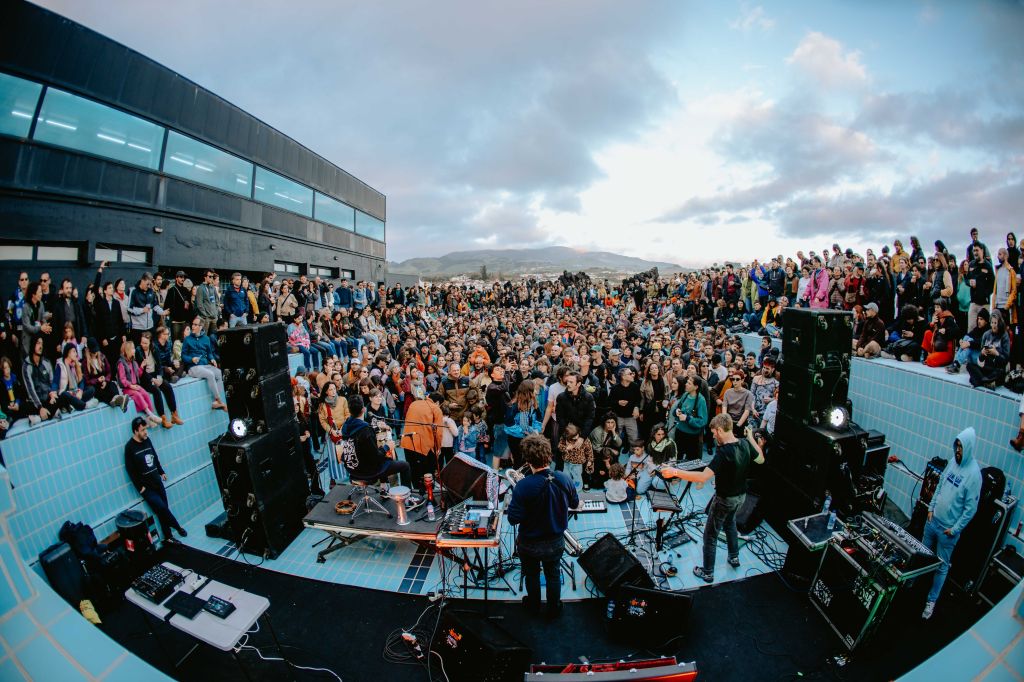
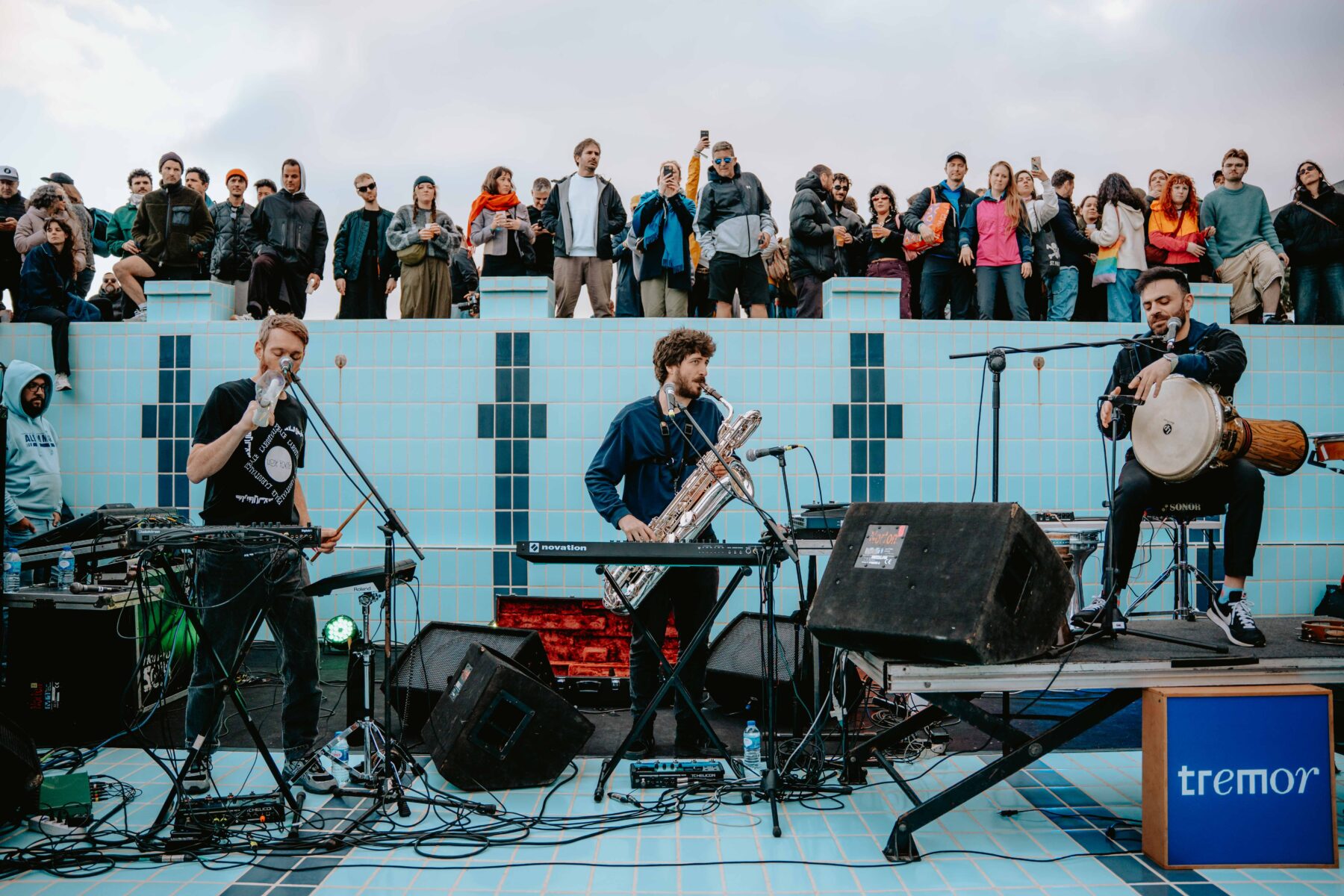
After a mosey back down the hill and a bus ride back, I grab a bite and a beer before once again getting on a bus for what’s next. Every evening of the festival has a ‘Secret Show’ – hidden acts playing at an unknown, unexpected location. After a 15 or so minute drive, we arrive at a smaller town and are led around a waterfront path to an empty swimming pool, where Belgian-Iraqi trio Use Knife are gearing up for a set.
It’s a wacky location, but it works incredibly well with the music on offer. The energy is celebratory, and tender as Use Knife offer a rousing set that is unlike anything you’ll hear – part psychedelic and experimental synth-led, part traditional Iraqi percussion and organic textures. An engrossing amalgamation of East and West.
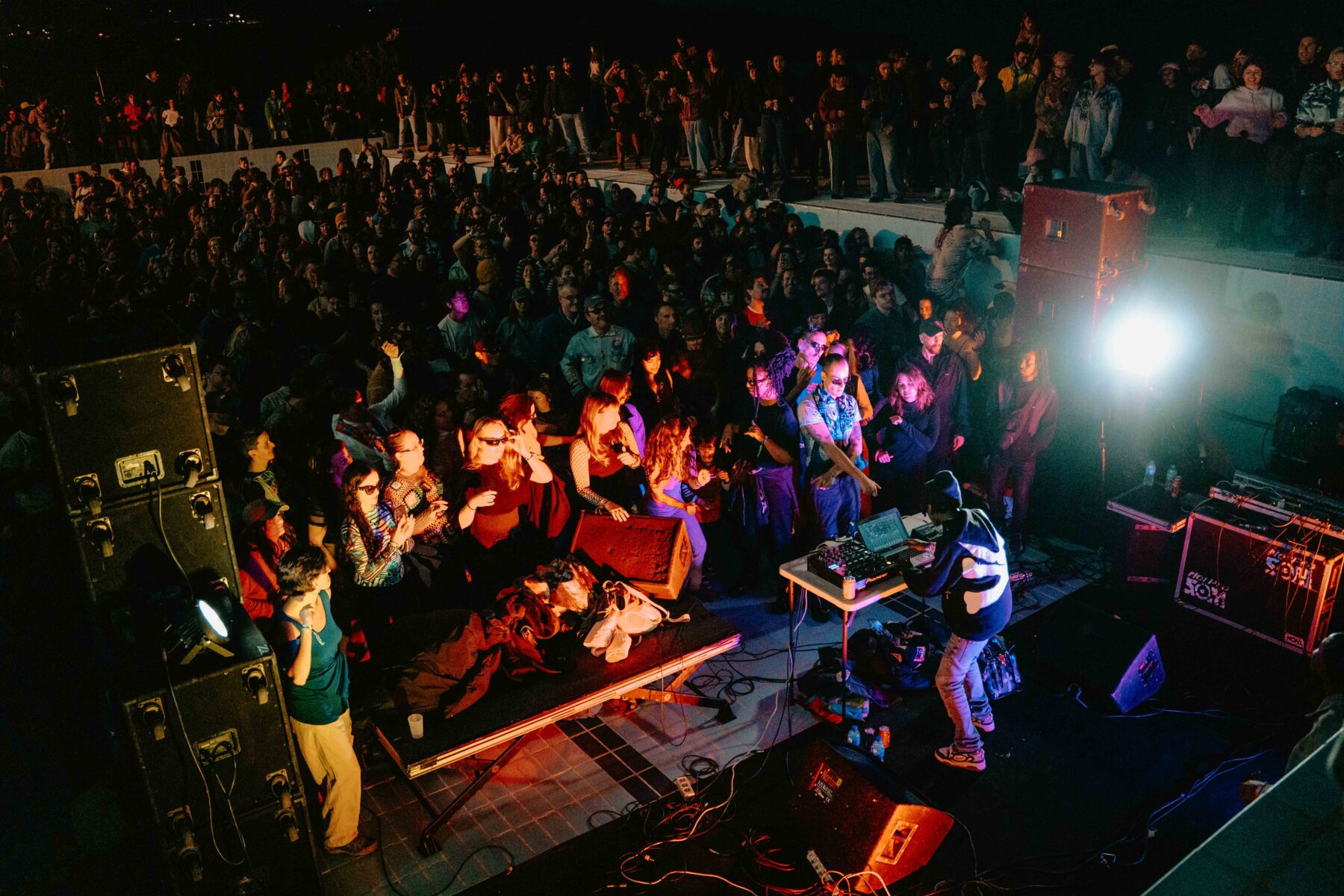
Following the trio, there’s a vivacious and thrilling performance from a talented spinner, Tanzania’s DJ Travella, who blends kuduro tendencies with mind-boggling rhythmic articulacy. His set really gets the crowd going, and as the sun goes down, the party kicks into gear. It’s a real high point. Check him out.
After an hour or so of pure electronic goodness, we’re back on the bus to Ponta Delgada, where I grab some dinner with the journalist crew. We opt for a Japanese place, and I have a margarita to accompany, which I’m surprised to find is blue when it arrives. I think it’s because of food colouring, for no reason except that the waiter is a groovy guy. He seemed very happy with himself. I’m happy for him.
It’s time for more music. First, aya, a Yorkshire-born, Hyperdub Records-signed polymath. Sadly, I was disappointed; musically, the maximalist, genre-defiant approach was fairly compelling, if a little indulgent. Her performance style and attitude to the crowd didn’t sit right with me, making a few off comments, including calling the crowd ‘shitheads’ at one point. I then check out the set from Arsenal Mikebe, a Ugandan percussion trio affiliated with the Nyege Nyege collective. The impressive showcase sees a pushing of traditional practice, a merging of acoustic rhythm, with electronic touches, told through a custom-built steel percussion system.


The clock is approaching midnight, and I’ve got bad news. The festival is still running for another two days, but I’ve got to make a move back to London tomorrow, as my brother is getting married on the weekend. So, with a day-long journey staring me in the face and a heavy heart, I pull a French exit. C’est la vie.
The next day is laboured with travel and reflection. Tremor for me was short and sweet, with its beautiful, remote location, a refreshing focus on community and sustainability, and plenty of music to be discovered. It’s the perfect week away for anyone who likes to think a little differently about this life business.
Grab your tickets for the 2027 edition here.
Words – Ben Tibbits