Wonderland
LUíSA SONZA WANTS YOU TO LISTEN TO BOSSA NOVA
On the heels of her first-ever Coachella performance and the debut of her fifth studio album, Brazilian singer-songwriter Luísa Sonza takes a breather to look back at her roots, honouring her country’s culture-defining genre. Linking up with bossa nova legends Toquinho and Roberto Menescal, she brings to life Bossa Sempre Nova, a full-length project reinterpreting classics.
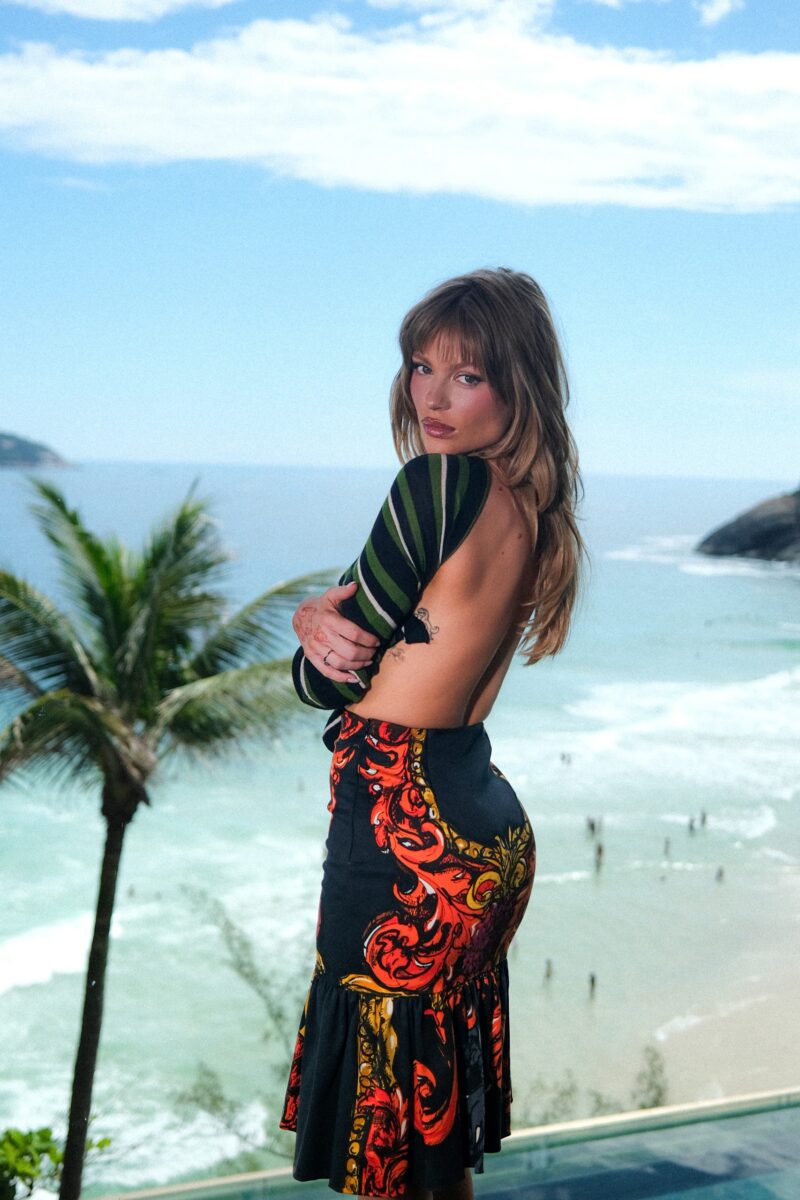
“If Luísa had been born eighty years ago, she’d have been creating bossa nova with us. At Nara Leão’s house.” For untrained – or simply non-Brazilian – ears, hearing legendary Brazilian composer and record producer Roberto Menescal draw a line between you and some of your country’s most revered musical masterminds based solely on your birth year might read as poetic nostalgia. But singer-songwriter Luísa Sonza is acutely aware of the weight behind a statement like that. Eighty years ago, at Nara Leão’s home in Rio de Janeiro, a group of bohemian artists were quietly birthing what would become one of the most influential musical movements in Brazil and the world. It was the late fifties, under the blazing sun and culturally charged shores of Copacabana, that bossa nova first slipped into existence.
A softer, stripped-back sonic language, bossa nova is a dialect of Brazil’s native samba, infused with the harmonic sophistication and intimacy of American jazz. It’s an ever-evolving, synesthesia-inducing sound that, within its first decades, became a global phenomenon. It’s no coincidence that when you think of Brazilian music, an elevator-like jukebox whisks you straight to 1962, to Antônio Carlos Jobim and Vinícius de Moraes’ “Garota de Ipanema” – later immortalised in English as “Girl from Ipanema” by Norman Gimbel. The genre, with its melancholic sweetness, became the blueprint for what we now recognise as the Brazilian sound. It’s as intrinsic to the nation’s DNA as football, pão de queijo, sprawling nature, and an almost obsessive relationship with showers. There is no being Brazilian without loving bossa nova – nor being a Brazilian artist untouched by it.
Luísa Sonza knows that all too well. After making international waves with her single “Chico”, from her 2024-shared third studio album Escândalo Íntimo – a bossa nova-tinged love story that placed her squarely in the eye of public scrutiny following the relationship’s dissolution – she found solace in a genre that had always lived within her musical identity, even if it hadn’t often taken centre stage. “That’s when I felt this urge to explore it further,” she tells me over Zoom, speaking from Brazil. International junkets rarely allow artists and journalists the intimacy and luxury of a one-on-one digital room. But Sonza and I couldn’t be in better company. To her right sits Menescal; to her left, Toquinho – two of the most enduring figures in Brazilian music.
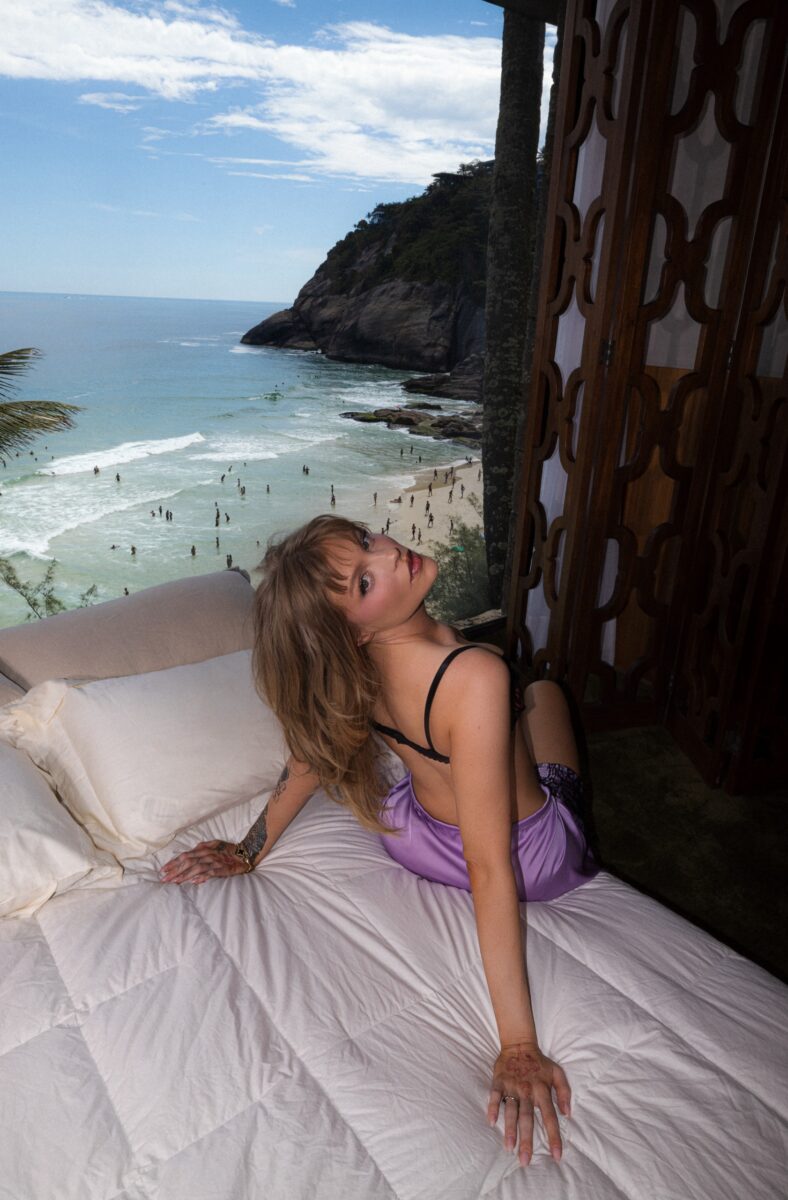
Across a career spanning more than a decade, Sonza has cemented herself as a triple threat – singer, songwriter, performer. At the core, her sound blends Brazilian pop and funk, but before fully stepping into her next chapter – marked by the release of her fifth album Brutal Paraíso, out now, and her biggest international show to date at Coachella – she chose to pause and look back. Not only to honour her long-standing relationship with bossa nova, but to do so alongside the very architects of its legacy.
And just like that, Sonza, Menescal and Toquinho made an album. The 15-track project is a body of covers, reimagining some of bossa nova’s most beloved classics – many originally written by Menescal and Toquinho – alongside an original composition by Sonza. “[To reach] a younger audience, one that may not yet be familiar with the music,” says Toquinho when speaking about the importance of the record. “Her voice brings fresh attention and new perspectives. It’s important that she’s doing this from the position she holds in Brazilian music today.”
On the heels of Bossa Sempre Nova (forever bossa nova, as it translates), the powerhouse trio sit down with Wonderland to discuss the project.
Listen to Bossa Sempre Nova…
Read the exclusive full interview…
Luísa, Toquinho, Menescal, it’s such a pleasure to speak with you. How did this album first come to life, how you first connected, and when you decided to turn it into a proper project?
Luísa Sonza: I think this album really began back with “Chico.” When I recorded it for Escândalo Íntimo, it had that soft bossa nova guitar base, and the lyrics were already inspired by bossa and MPB. From that moment on, I fell even more in love with [the genre]. I already loved it, of course, but I started researching it deeply, because people began asking questions about the genre, about why I’d made that song, all of that. And then people from the bossa nova world started reaching out to me. That’s when I felt this urge to explore it further. I first met Roberto Menescal, who is, quite literally, bossa nova embodied, backstage. One conversation led to another, and we decided to record an English version of “Chico” with him and his band. From there, we built a really lovely relationship.
Two years later, Douglas [Moda] – my producer since Doce22, we create everything together – we wanted to do a live session, re-recording some of my songs and a few covers, with bossa nova as the central theme, alongside Menescal. But as we started choosing songs and shaping the repertoire, the idea kept growing inside me. I realised I didn’t want just a session, I wanted to make a full album. Menescal was immediately on board. Then, while we were selecting songs, Douglas pointed out that many of them were by Toquinho. The choices came very much from a place of admiration; they were songs I personally loved.
At one point Douglas said, “Why don’t we invite Toquinho?” I was like, ‘wait, you have his contact?’ That already felt surreal. Menescal alone was incredible. Menescal and Toquinho felt almost impossible. But, long story short, I didn’t believe it until I met him in person, the three of us together.
That’s how the album came about, very naturally, very spontaneously. I think that’s what makes it feel so special and joyful.
And from your side, Toquinho, Menescal, what was that first contact like? What made you say yes?
Toquinho: For me, it was both a pleasure and a surprise. As Luísa said, the idea had already begun to take shape with Menescal. When Douglas called me, and I realised I had the time, and that they were giving me complete creative freedom, I said yes. I hadn’t even spoken to Luísa beforehand, so I felt slightly unsure at first. I wondered: will she like this? Does she lean more this way or that? I only really met her once the arrangements were already done, when she was in the studio recording with Menescal.
But when I saw how she was singing, the precision, the vocal quality, I became much more confident. It was a quick but intense connection. She was very clear about what she felt for the project and about her relationship with my music.
There was a real sense of harmony. When I returned a couple of days later to record, some tracks just with guitar, others with a simple Brazilian arrangement, I truly experienced her as a singer. And I realised she has a deep understanding not just of performance, but of studio technique, how to shape a take, how to collaborate creatively with the sound engineer, and a strong sense of what she wants.
The result reflects that: Menescal’s vast experience in bossa nova, my own sixty years in music, and Luísa’s knowledge, remarkable for someone so young, combined with her determination to get things right. She’s done something that, I believe, will endure and open many doors for her. It all stems from “Chico,” which already carried that bossa nova atmosphere. This was a natural evolution, and it became something strong, cohesive, and emotionally rich, even in its simplicity.
Roberto Menescal: I hardly have anything to add! Truly. Except to say that when Luísa started bringing in songs, I told her: “It might seem like I’m pushing my own music, or Toquinho’s – but I’m not.” She chose everything. Every single track.
And I’m very happy. The messages I’ve been receiving, from people I know and people I don’t, tell me the album has landed. It’s already resonating.
Toquinho: Just to add, this album has real global potential. Luísa had the vision to think beyond Brazil. Of course, it’s being beautifully promoted here, as it should be. But internationally, I believe it will open many doors. That’s one of its greatest strengths.
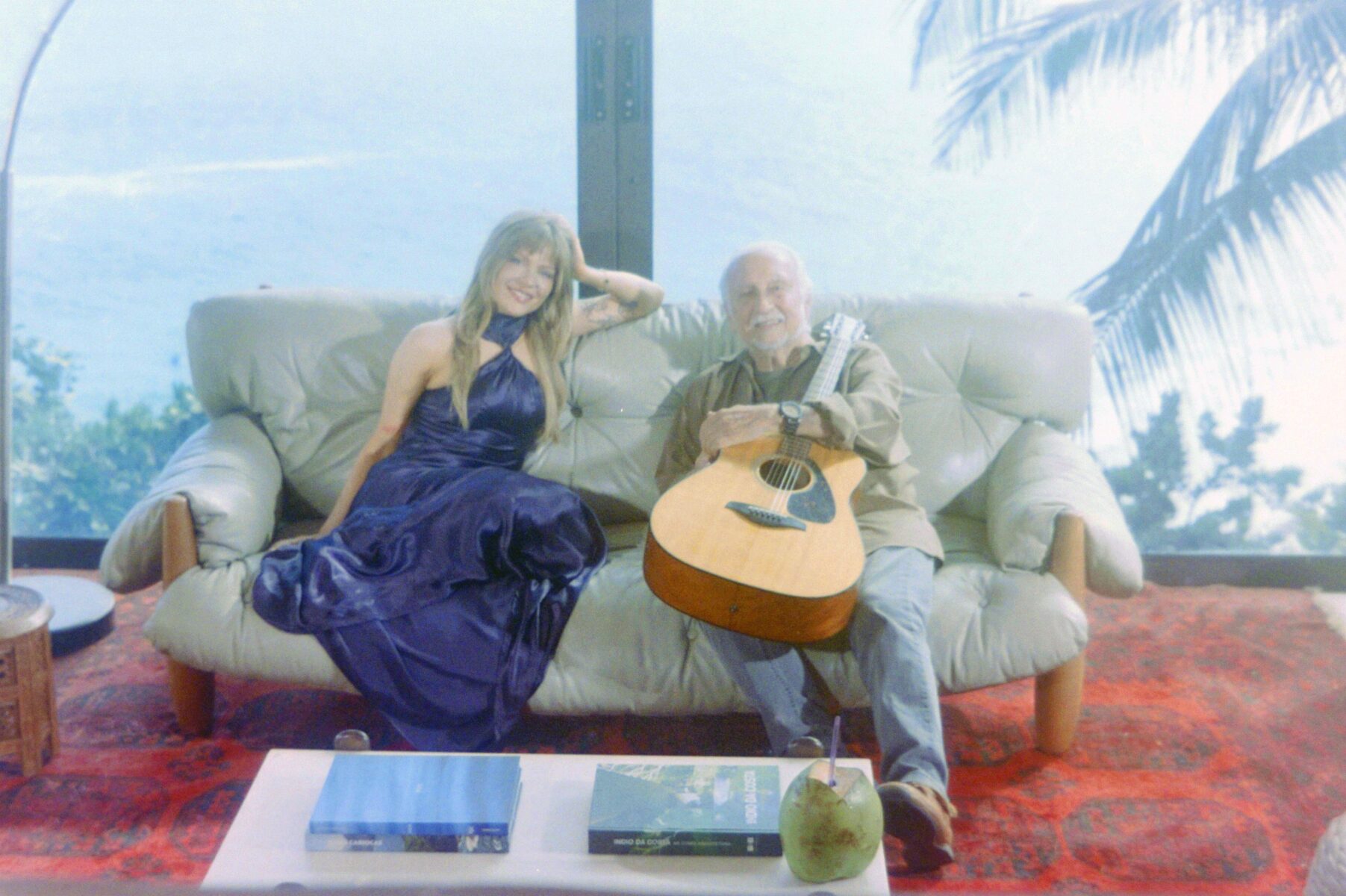
That actually leads perfectly into my next question. Brazil feels more in the global spotlight than ever. What does it mean to you to bring bossa nova into that space, something so essential to our cultural identity, potentially introducing it to new audiences?
LS: It means a lot. To me, as an artist, as a person, as a Brazilian. Especially in a year like this, with Coachella and [my career] expanding internationally. Having this album as a foundation, something that transcends time, it feels like the beginning of many things.
We made it with a genuine intention to respect bossa nova, its tradition, its originality, while also bringing in a pop sensibility, in the vocal tone and certain choices. I wouldn’t say “modernising” because bossa nova is already timeless, but rather introducing new perspectives from today, and from my own work.
To carry that into a year where Brazil is being seen in such a beautiful light, and to bring one of our most precious cultural forms, alongside two legends, it’s incredibly meaningful. It feels like an important step in my career and in how I want to represent Brazil on a stage like Coachella and beyond.
Toquinho: If I may add, Brazilian music, especially bossa nova, is already deeply respected abroad. But Luísa brings something new. She reaches a younger audience, one that may not yet be familiar with it. Her voice brings fresh attention and new perspectives. It’s important that she’s doing this from the position she holds in Brazilian music today, with such a strong following. It’s like a new plant growing, bringing new life and new eyes to both her work and Brazilian music as a whole.
RM: I was just thinking, if Luísa had been born eighty years ago, she’d have been creating bossa nova with us. At Nara Leão’s house.
LS: What a dream!
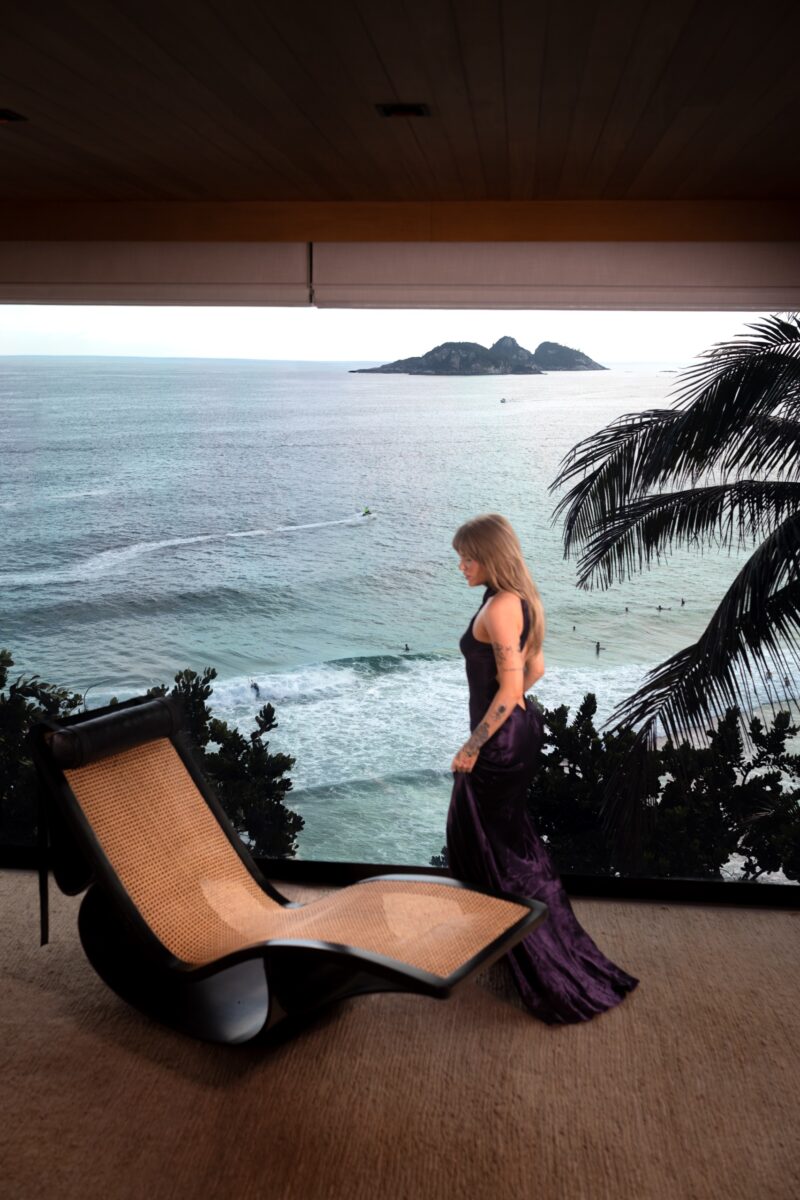
Luísa, you also have an original song on the album, sitting alongside such iconic compositions. How does that feel?
LS: That was the most intimidating part, at first. Not only was I writing among these giants, but the song itself wasn’t even intended as bossa nova. It was actually for my next album, written very casually during a session in Los Angeles.
But somehow, quietly, it found its place in this project. I sent it to Menescal a cappella; I was too shy to send it with a guitar! Douglas is always pushing me; he’s like the fifth Beatles, making things happen. He said, “Why not send it? It fits the album.” So I did.
At first, I wanted to refine the lyrics, to make them more elaborate, especially given the company they were in. But the song felt so natural, so comfortable as it was. Sometimes, a song doesn’t need to be complex to be beautiful. Once Menescal liked it, I thought – who am I to change it? What if I ruin it? So I left it as it was. And the result was wonderful.
I was honestly terrified of how it would be received, especially alongside such iconic re-recordings. But when I saw the response from critics and audiences, it was such a relief. Truly. I was so relieved people connected with it, because in my mind, it could have gone either way. It was written so quickly, so instinctively. I never imagined it would end up on an album like this. And yet it did. And I’m just really glad people embraced it.
Words – Sofia Ferreira
Photography – Pam Martims