{“@context”:”https://schema.org”,”@type”:”Article”,”image”:”https://car-images.bauersecure.com/wp-images/260272/nissan-propilot-3-tokyo-2.jpg”,”mainEntityOfPage”:{“@type”:”WebPage”,”@id”:”https://www.carmagazine.co.uk/car-news/tech/nissan-propilot-3-2026-tokyo/”},”url”:”https://www.carmagazine.co.uk/car-news/tech/nissan-propilot-3-2026-tokyo/”,”author”:{“@type”:”Person”,”name”:”Curtis Moldrich”,”description”:”Curtis Moldrich is CAR magazineu2019s Digital Editor and has worked for the brand for the past five years. As Digital Editor, heu2019s responsible for online strategy, including CARu2019s website, social media channels such as X (formerly Twitter) and Facebook, and he helps on wider platform strategy as CAR magazine branches out on to Apple Newsu002B, CAR VIP and other new ways to consume our content. If itu2019s online and involves CAR magazine, heu2019s got something to do with it. Curtis also contributes to the print edition of the magazine every month, sits on Bauer Media UKu2019s Diversity and Inclusion pillar group and co-founded the new automotive work experience program.nCurtis kicked off his journalism career doing freelance work for technology brands such as CNET UK and Stuff, and moved to the Telegraph technology desk after completing his degree. He did a stint as staff writer at Dennis Publishingu2019s newly-formed Alphr title, where he covered consumer technology as well as motorsports, sim-racing and car reviews.nAt CAR, Curtisu2019s main goal is to recreate and build on all the kudos, respect and authority of the print magazine across our digital platforms. Heu2019s also keen to explore the opportunities online-only storytelling brings, and wants to put the brand in front of new audiences.nWhen heu2019s not writing about F1, testing hot hatches or analysing the latest EV platform news, Curtis is also a keen gamer, and uses iRacing with a VR-enabled set-up. He also continues to write about consumer tech for our sister site, Whatu2019s The Best.nOutside of his four-wheeled work commitments, Curtis owns a new Yamaha R7, which he sometimes writes about for MCN, and often photographs along with other motoring-based content on his popular Instagram page. You can follow Curtis on Instagram or Twitter u2013 and read his latest articles in the list below. He is also running an Audi S3 long-termer, and you can read about that here.”,”image”:{“@type”:”ImageObject”,”url”:”https://car-assets.bauersecure.com/wp-images/14235/curtisauthor2023.jpg”,”caption”:”Curtis Moldrich”},”sameAs”:[“https://www.linkedin.com/in/curtismoldrich/”,”https://x.com/khurtizz”,”https://www.instagram.com/khurtizz”],”url”:”https://www.carmagazine.co.uk/author/curtis-moldrich/”,”jobTitle”:”Digital Editor”,”knowsAbout”:”Automotive”,”worksFor”:{“@type”:”Organization”,”name”:”CAR magazine”}},”dateModified”:”2026-04-20T08:48:27+01:00″,”datePublished”:”2026-04-20T05:50:22+01:00″,”headline”:”We test Nissanu2019s AI-powered autonomous tech on the streets of Tokyo”,”publisher”:{“@type”:”Organization”,”name”:”Bauer Media”,”brand”:{“@type”:”Organization”,”name”:”Car Magazine”},”logo”:{“@type”:”ImageObject”,”url”:”https://car-assets.bauersecure.com/images/logos/car.200×88.png”}}}
We test Nissan’s AI-powered autonomous tech on the streets of Tokyo
Updated: Today 08:48
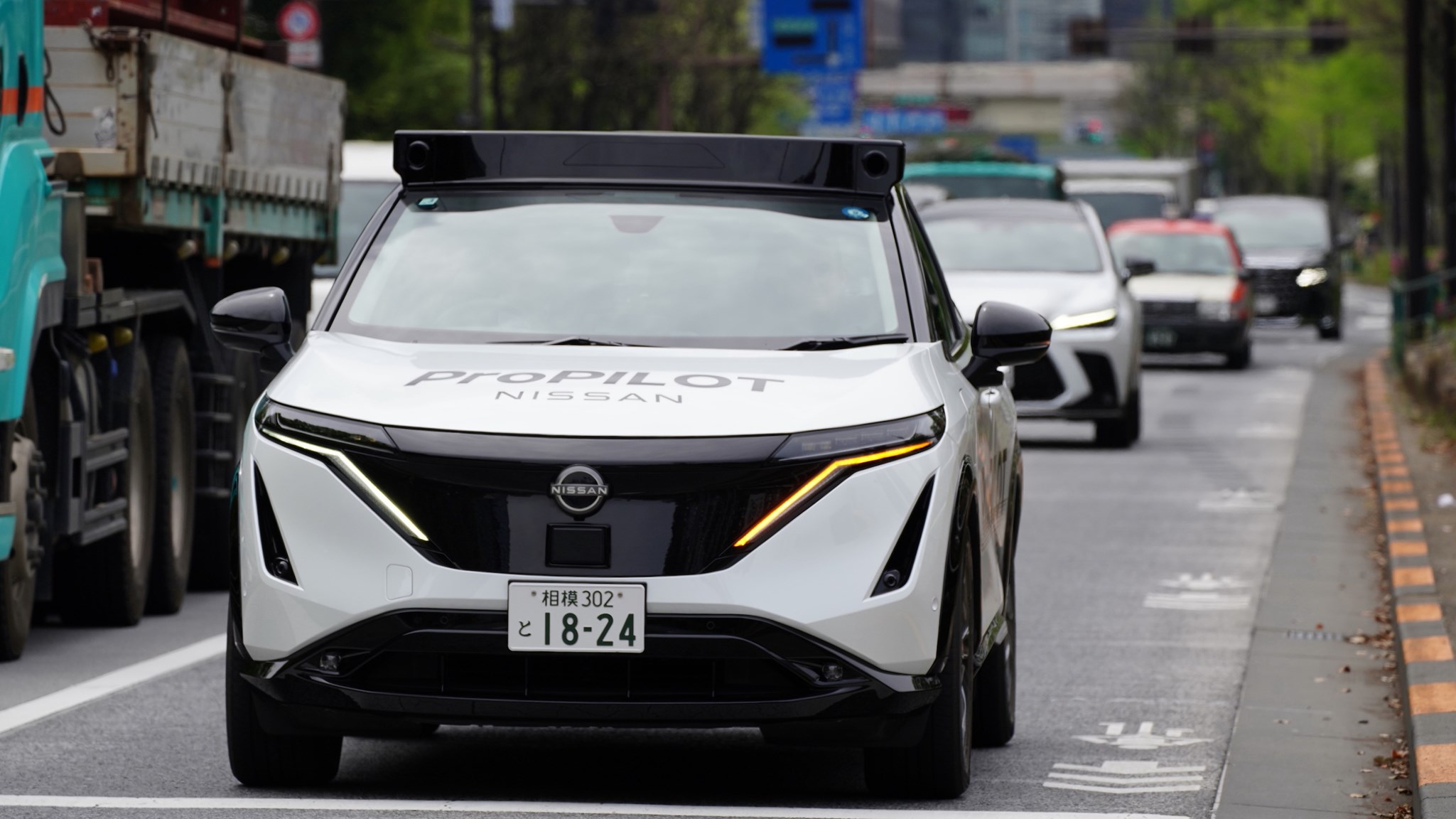
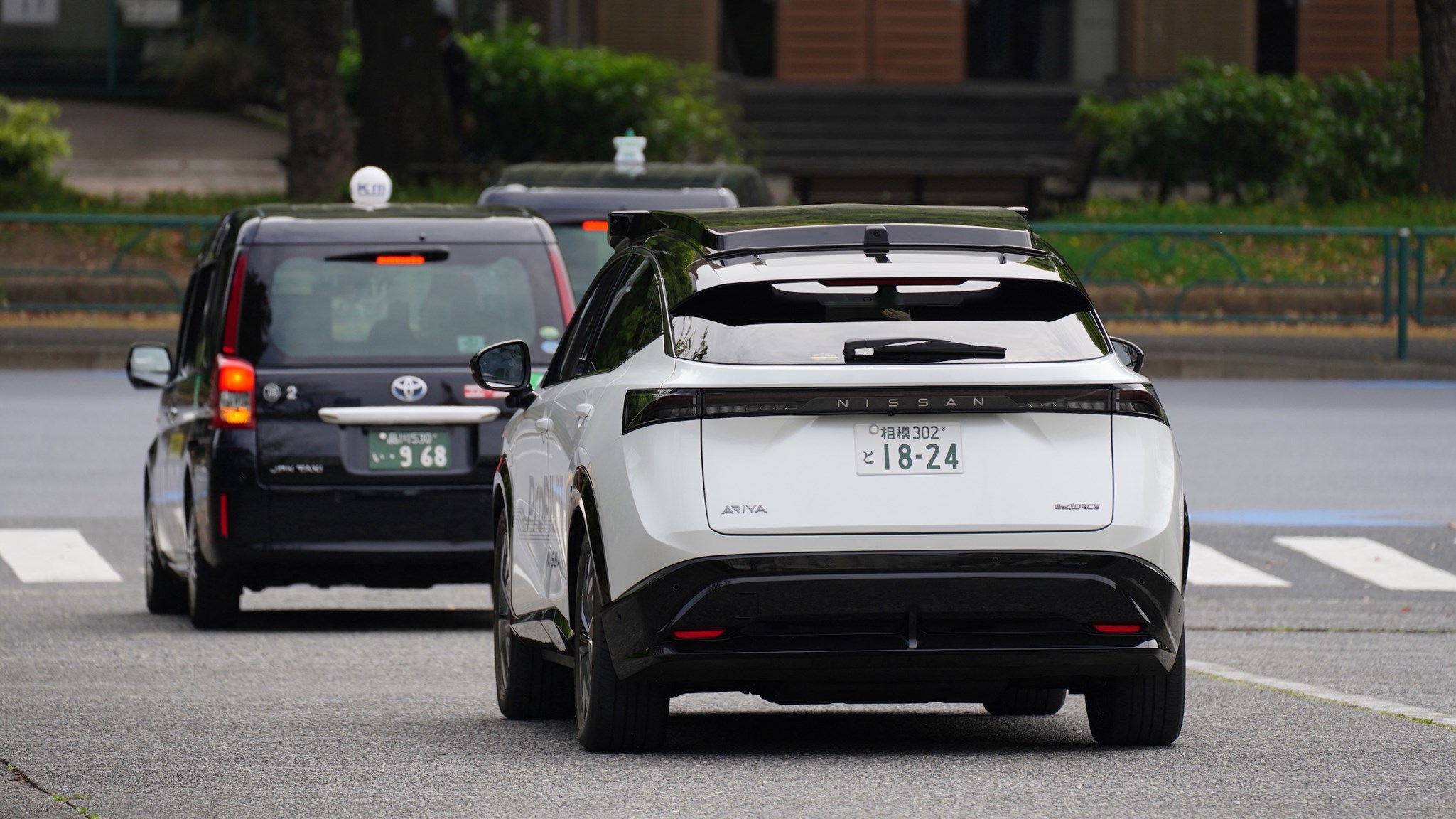
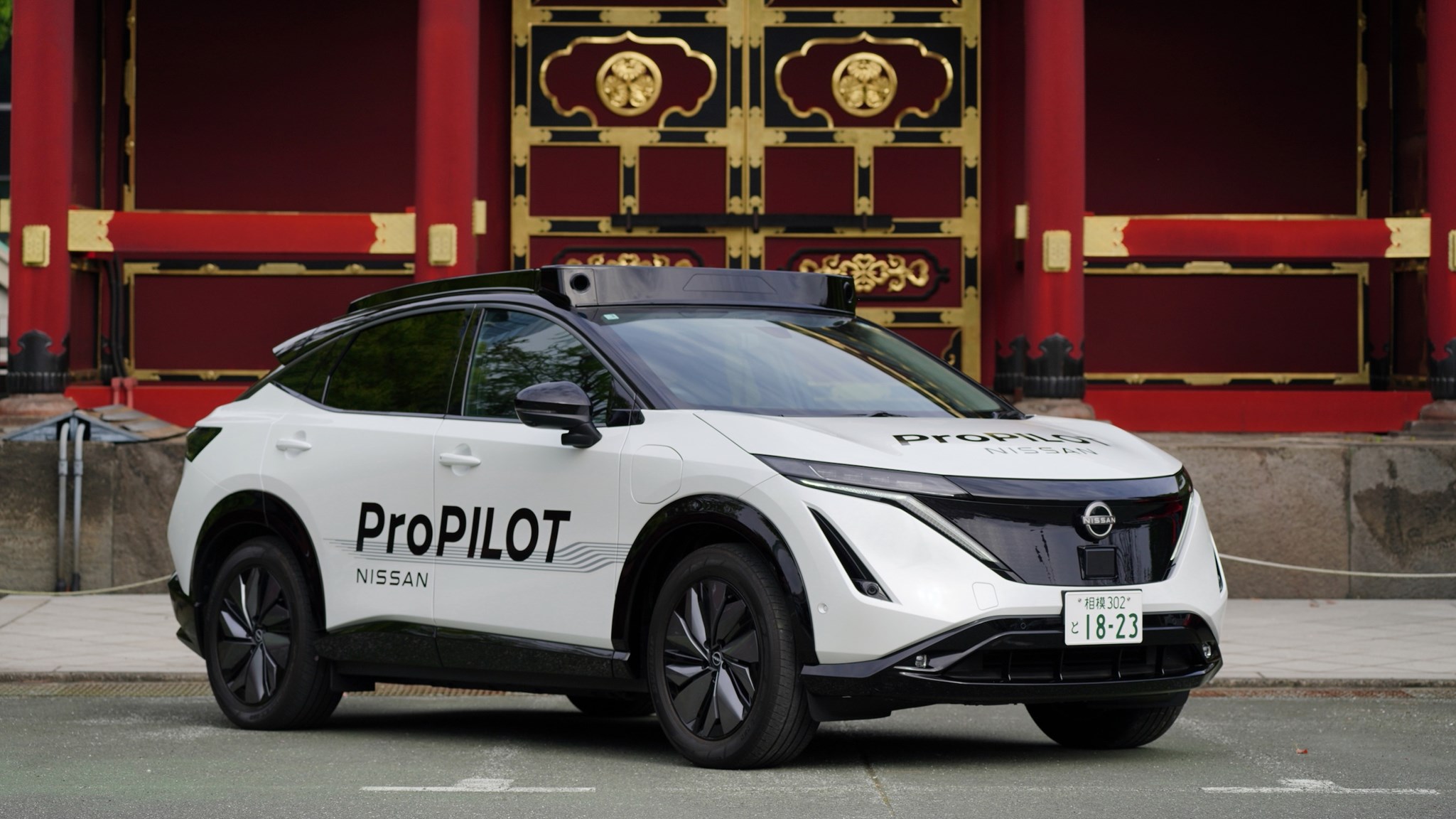
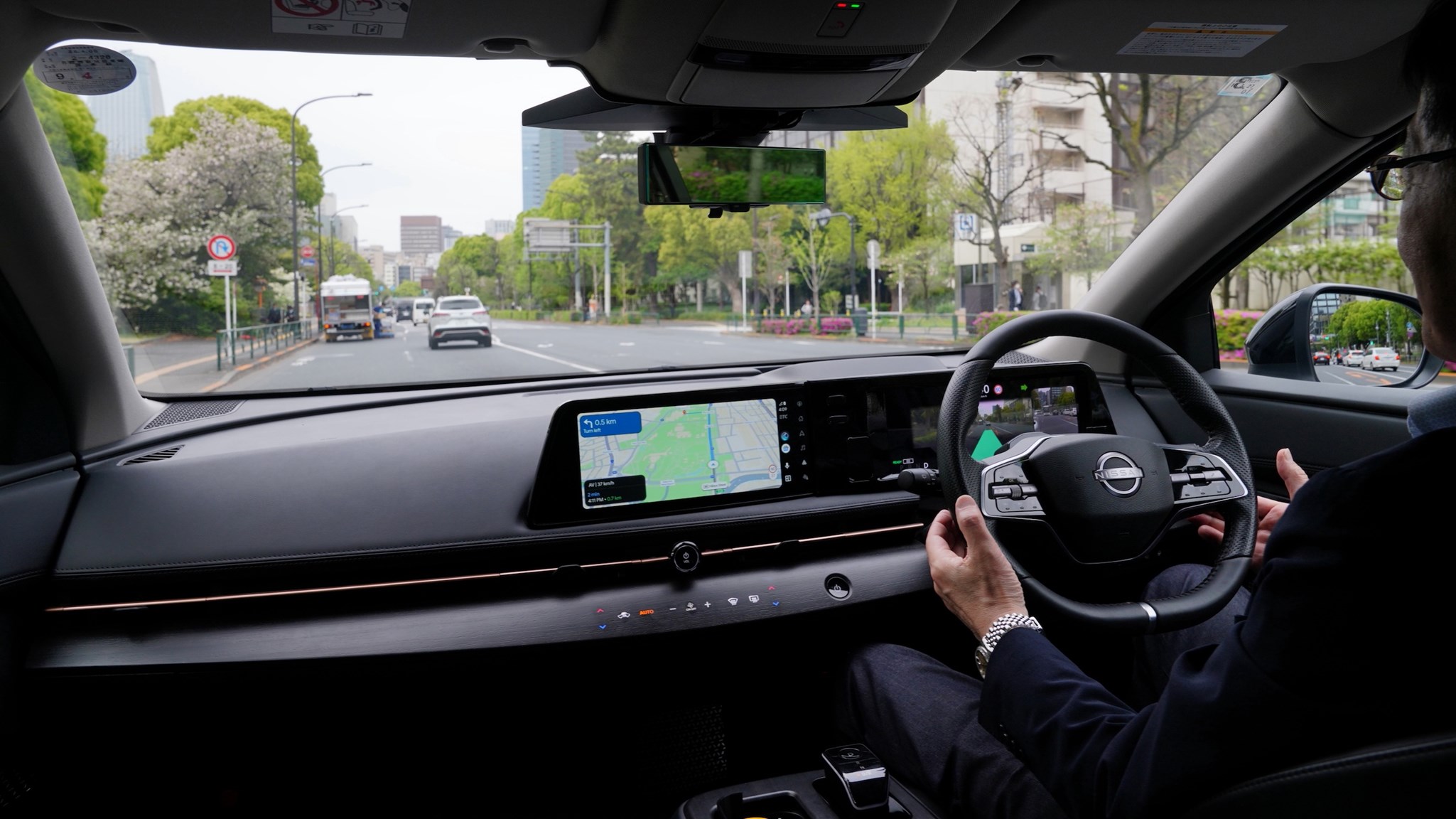
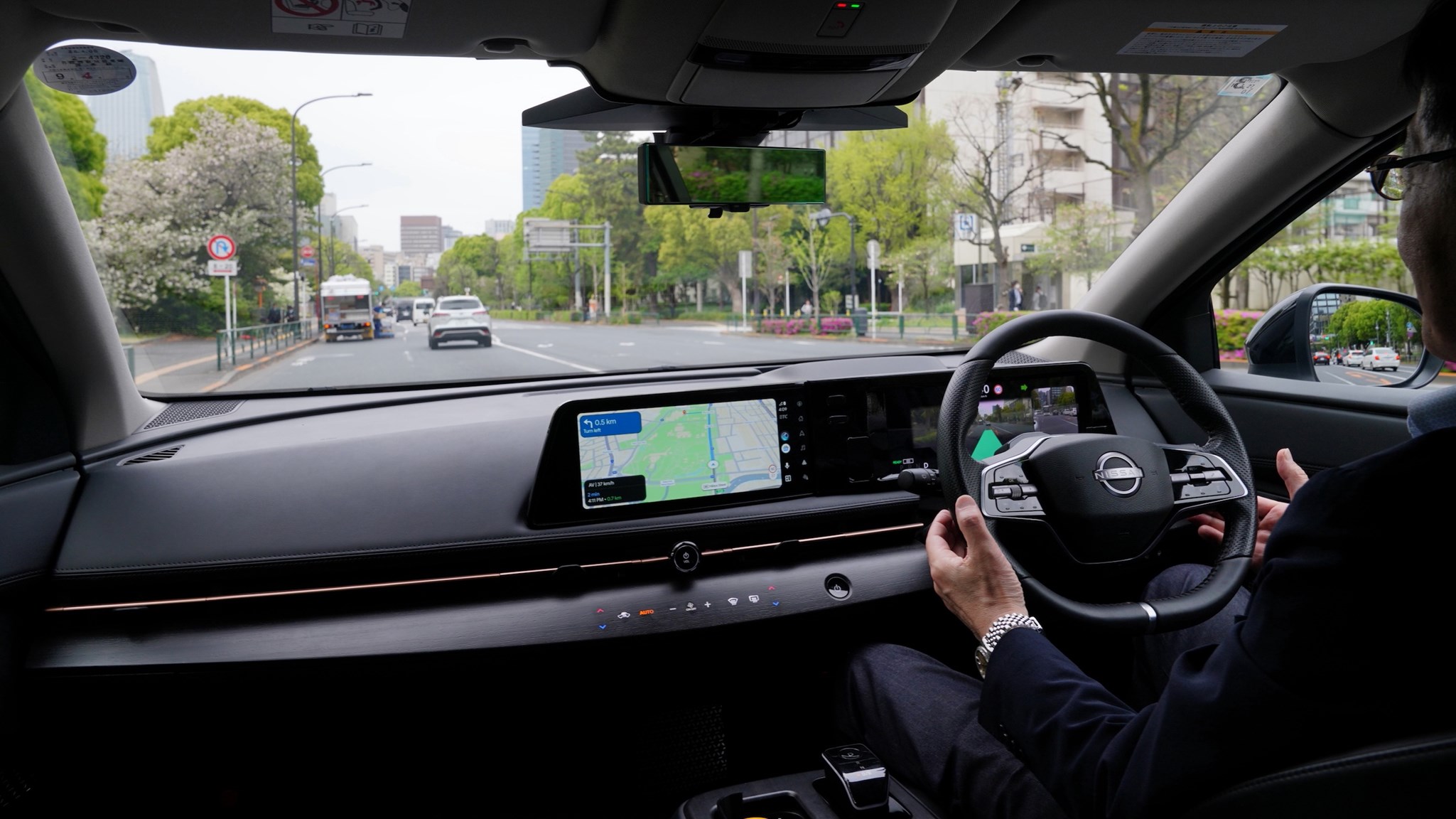
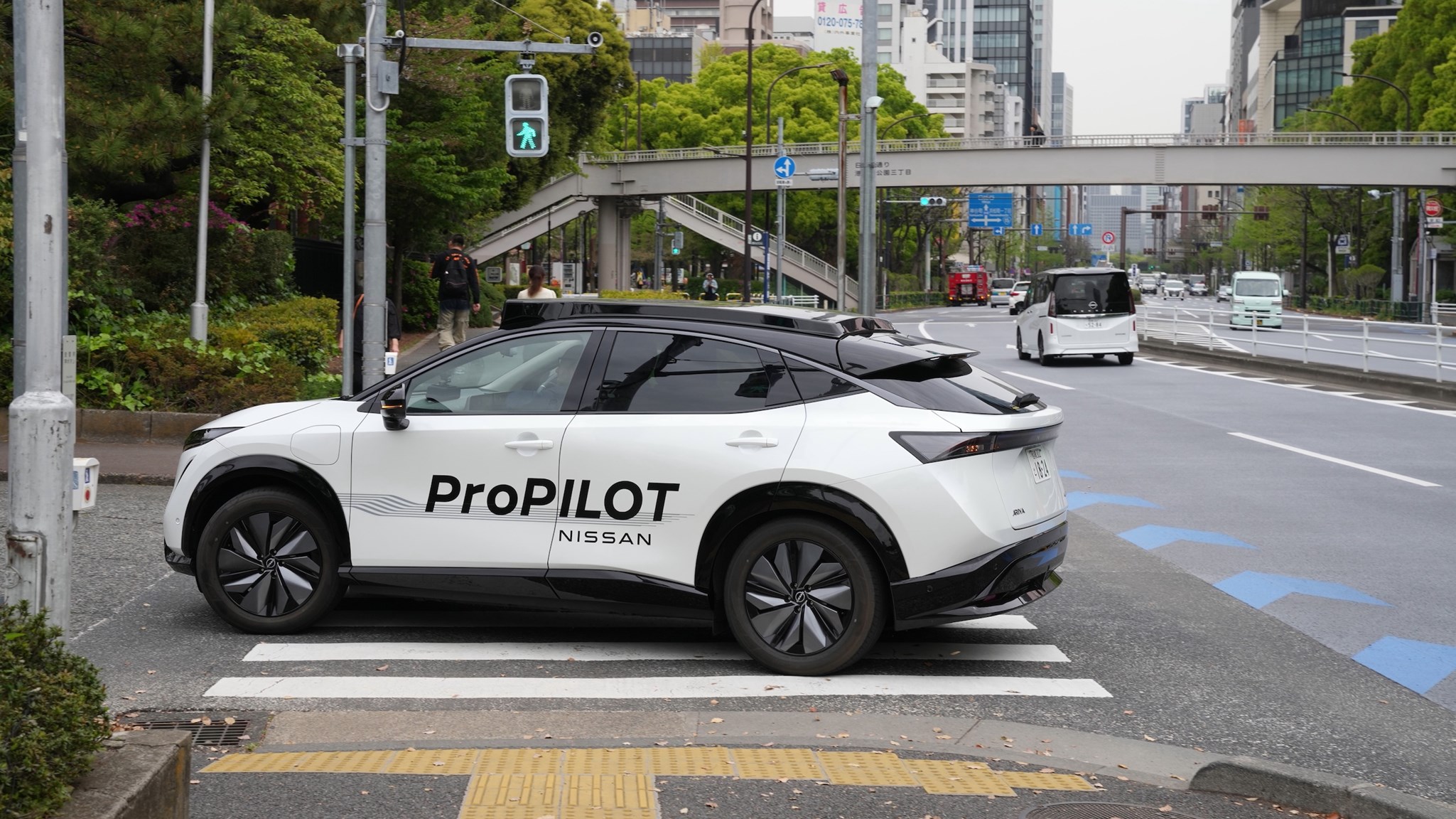
► We trial Nissan’s ProPilot 3…
► … in the heart of Tokyo
► Developed with Wayve
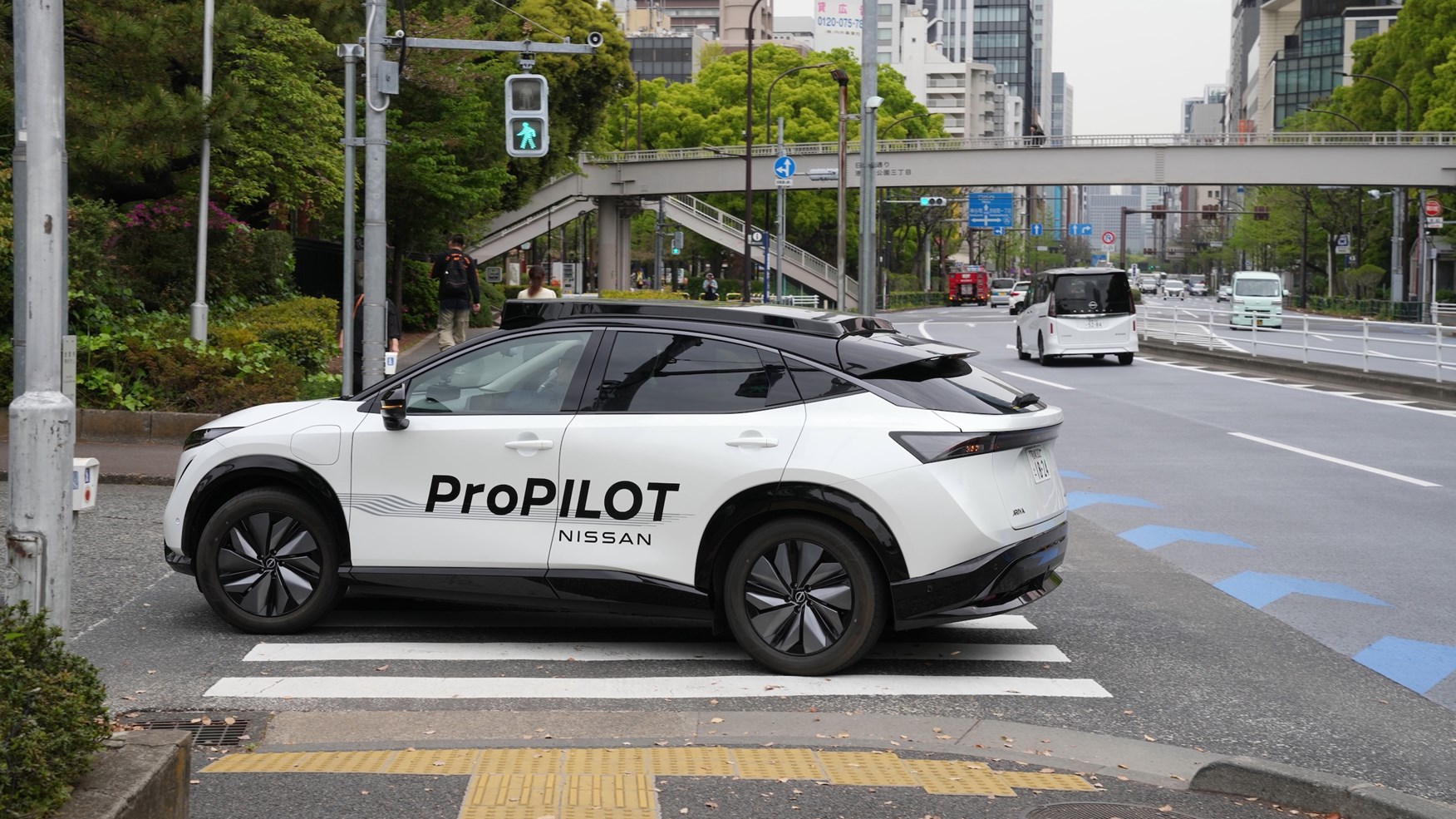
Driving in Tokyo makes London’s roads look relatively simple. Junctions are crammed with filter lights while pedestrians and cyclists swarm crossings. Throw in interwoven mesh of exits and overpasses and driving in the Japanese metropolis isn’t easy.
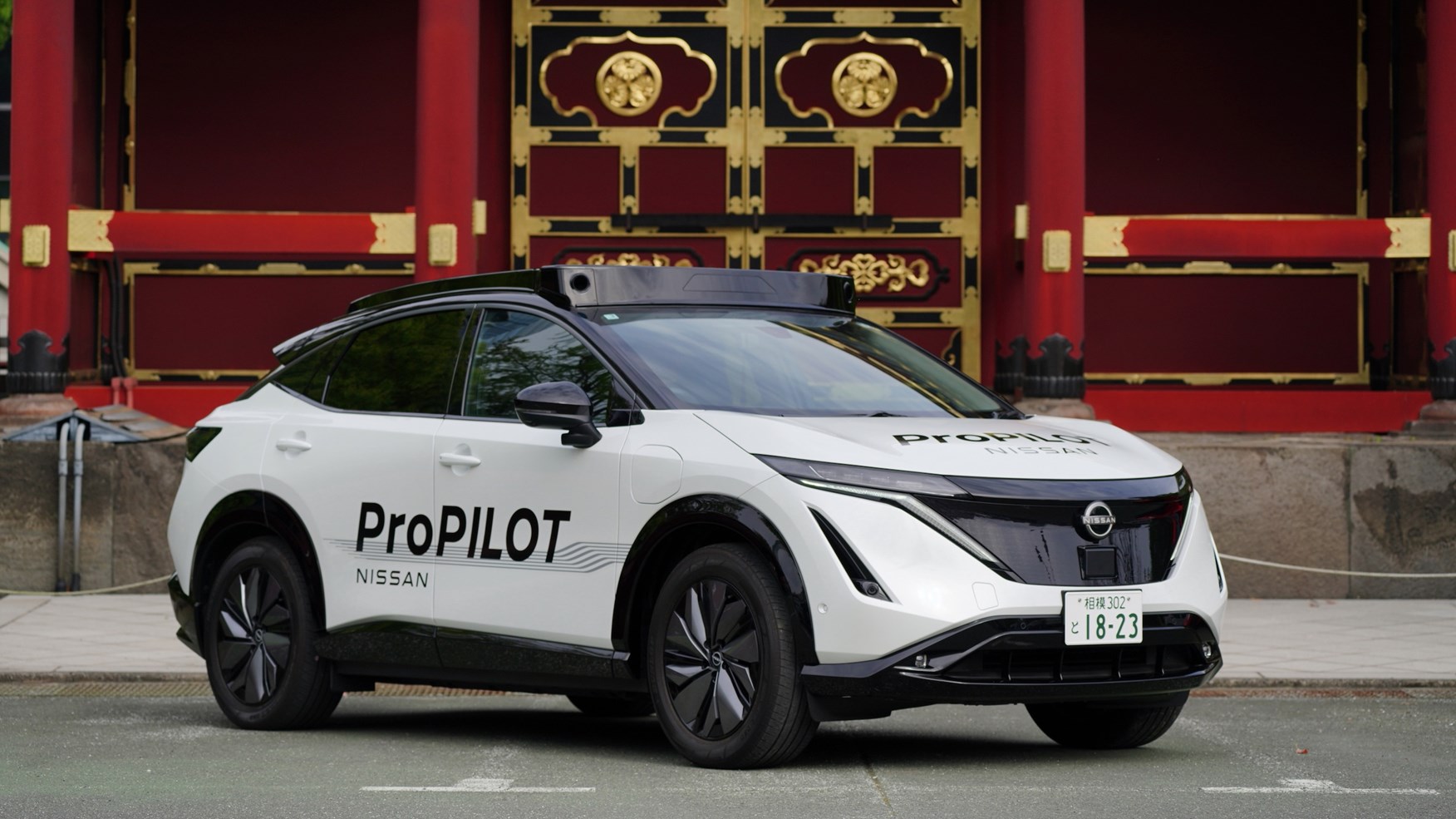
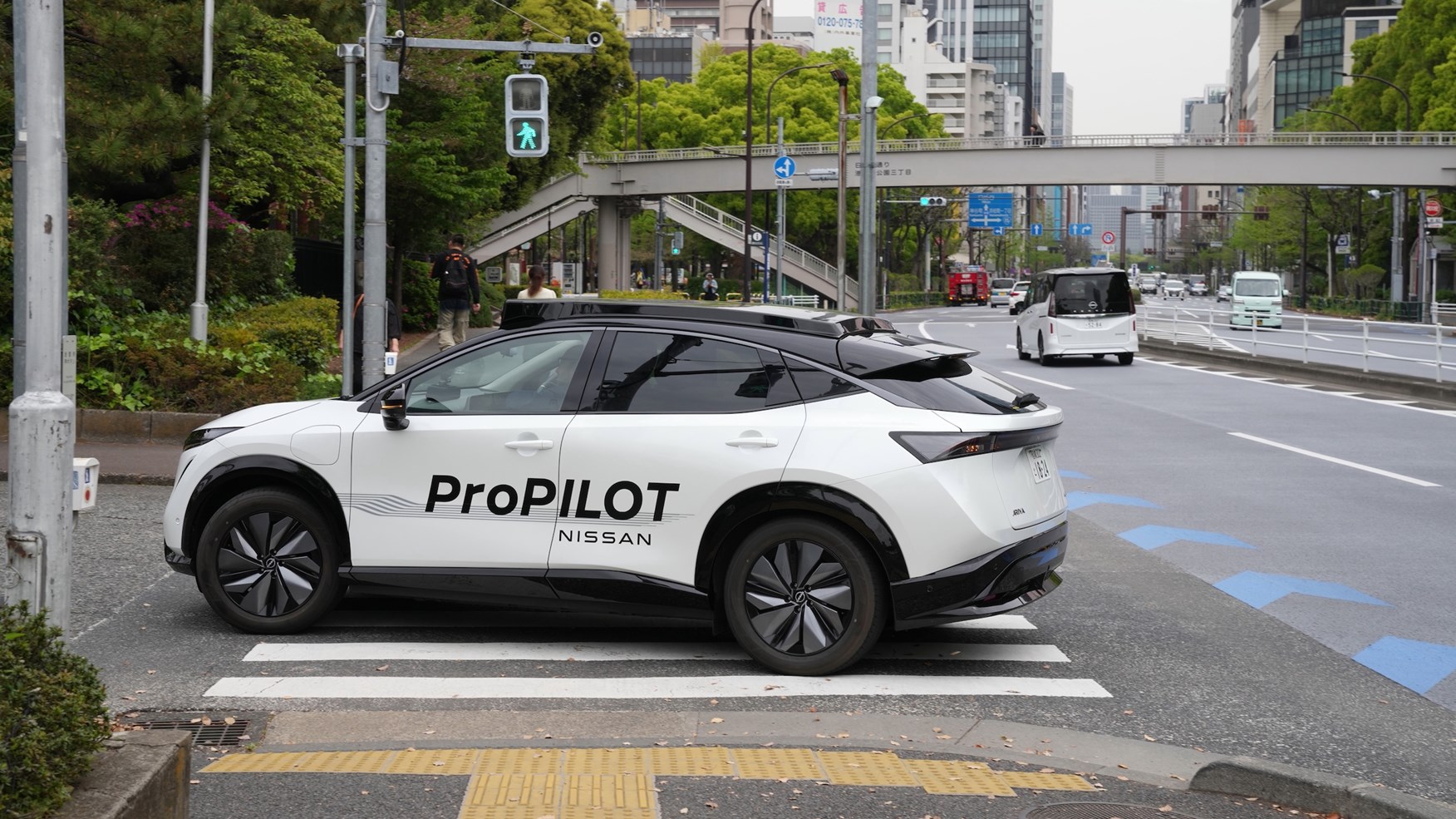
Right now, our Nissan Ariya is perched one on such junction near one of the capital’s busy crossings, waiting for a never-ending line of commuters before it can turn. But there’s no white-gloved taxi driver behind the wheel – this EV is running Nissan’s ProPilot 3 autonomous technology.
What is ProPilot 3?
We’ve seen Nissan’s ProPilot 2.0 in action before – but a few years ago and on the relatively Playmobil-esque streets of Milton Keynes. In the last two years, Nissan has stepped up the AI integration by partnering with British firm Wayve and the result is its most advanced system yet. ProPilot debuted in 2016 with the ability to do single lanes, and in 2019 ProPilot 2 moved the goalpost to multiple lane technology. The ProPilot 3 software we’re trying out here is expected to launch in 2027 and aims to be as good as a human driver.
Like this? Get more CAR delivered to your browser! Click here to add CAR Magazine as a preferred source on Google.
‘Honestly speaking, the highway was a very simple environment, but now we are driving into the very complex functions,’ Tetsuya Iijima, Nissan’s exec chief engineer of autonomous tech tells us before the 15km drive. ‘This means the next generation of ProPilot is equal to, or better than human driving capability.’
The Wayve software Nissan is using is constantly learning – but the key processes needed to get it as functional as a human were completed around four to five years ago.
The evolution of Wayve began by training foundation models with footage from taxi dash cams and other vehicles; and while not precise ‘it gives the AI brain a very high-level understanding of the world and right direction to move.’
After that Wayve used data from what Iijima calls ‘safety vehicle operators’ to polish things further. These are specially selected drivers that are careful and safe but also able to make process, so they don’t slow traffic.
Put all that learning together and HD maps aren’t needed; the AI can read and understand any condition it’s put in front of.
What about the hardware?
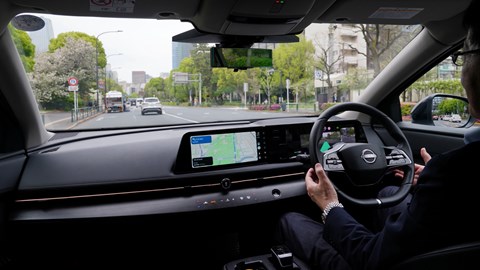
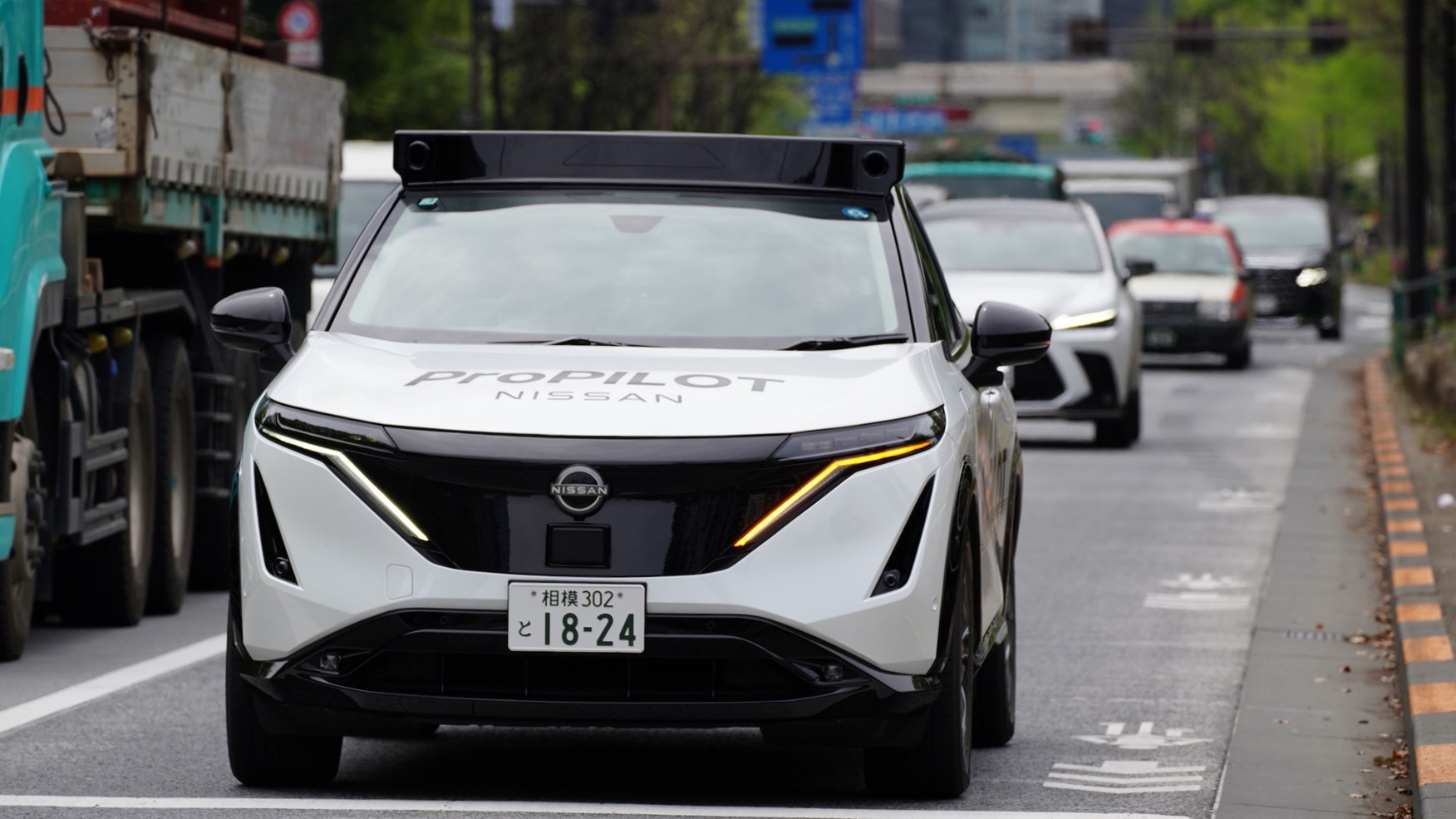
As is the case with humans, Nissan’s latest AI brain can’t work without relevant, reliable sensors. For that reason, the Ariya we’re testing has roof box of sorts which contains one Lidar, eleven cameras and five radars, all working in together to provide the best possible picture. Nissan isn’t currently disclosing where these sensors are from, nor the chips that must crunch their data – but we do at least know a Lidar is key to the formula.
‘Lidar goes beyond the reach of a camera, because as far as camera can see {AI works] beyond the reach of a camera, it doesn’t work.’ Iijima tells us, as our Ariya continues on its way, now indicating before working its way around a Kei car with hazards on. ‘Typical situation: in the United States, interstates are almost completely dark,’ he says. ‘Driving at 75 to 80mph, in that situation, the camera’s range is 40 to 50 meters. A camera is not enough.’
What’s it like to (not) drive?
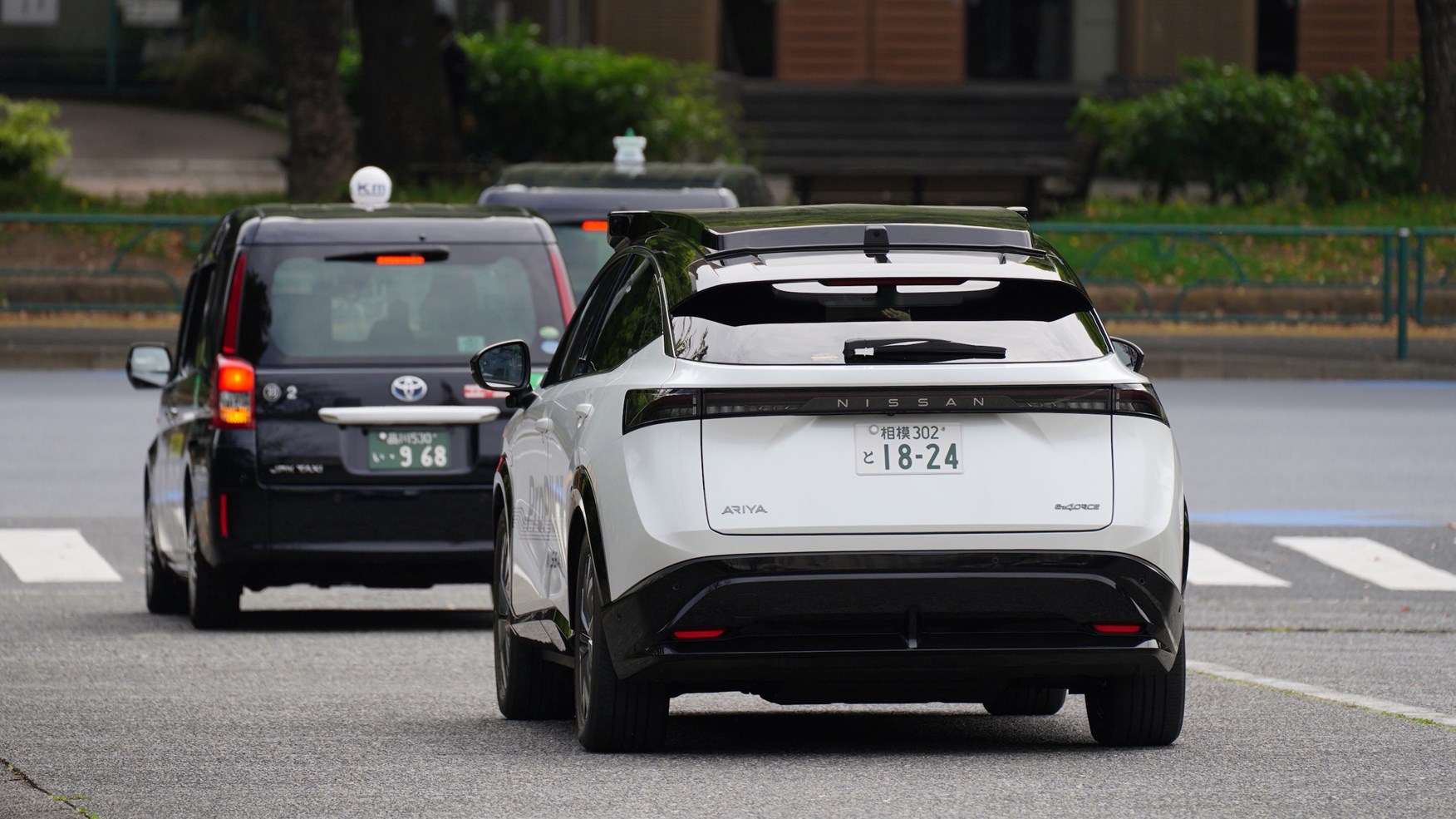
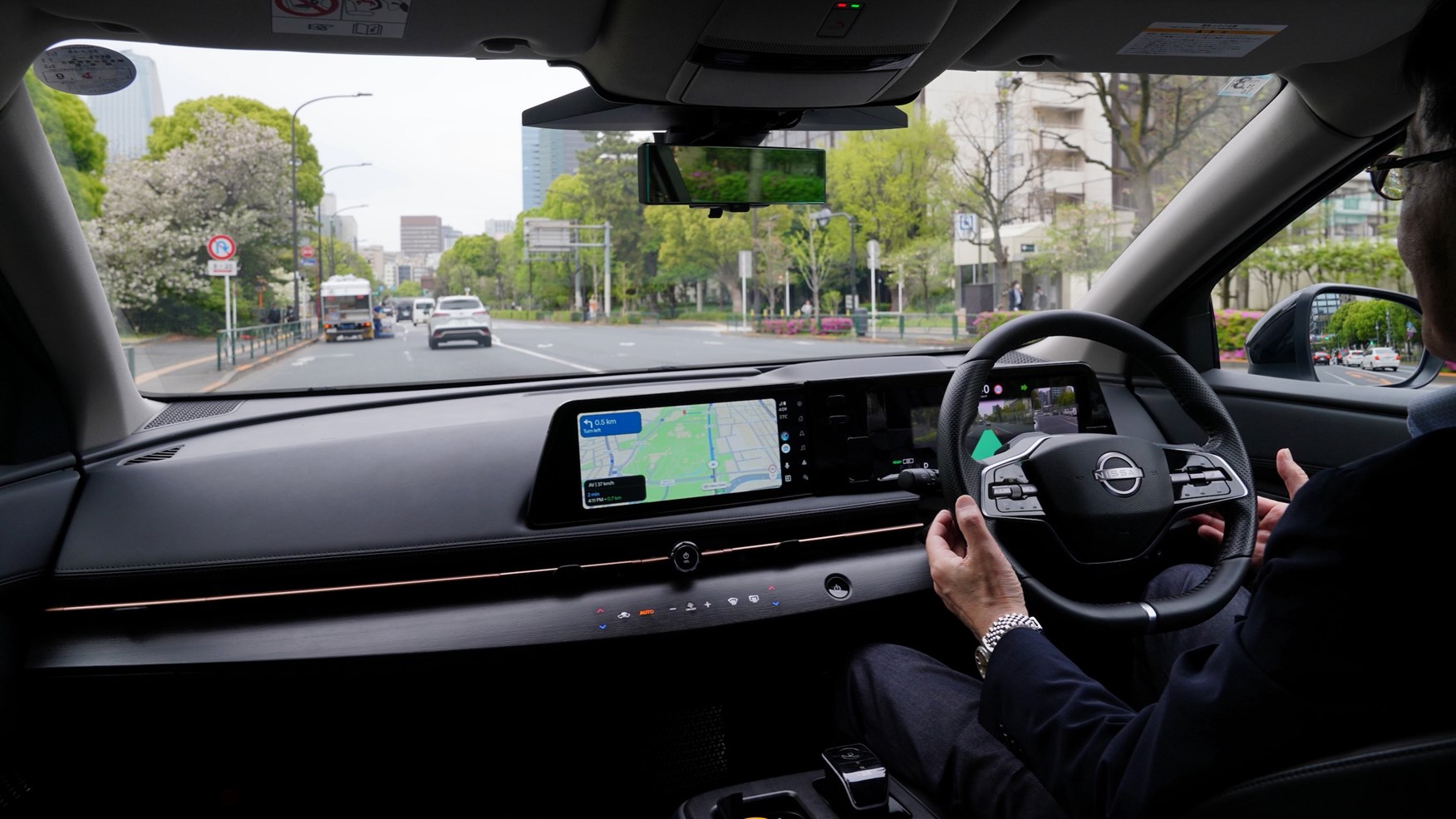
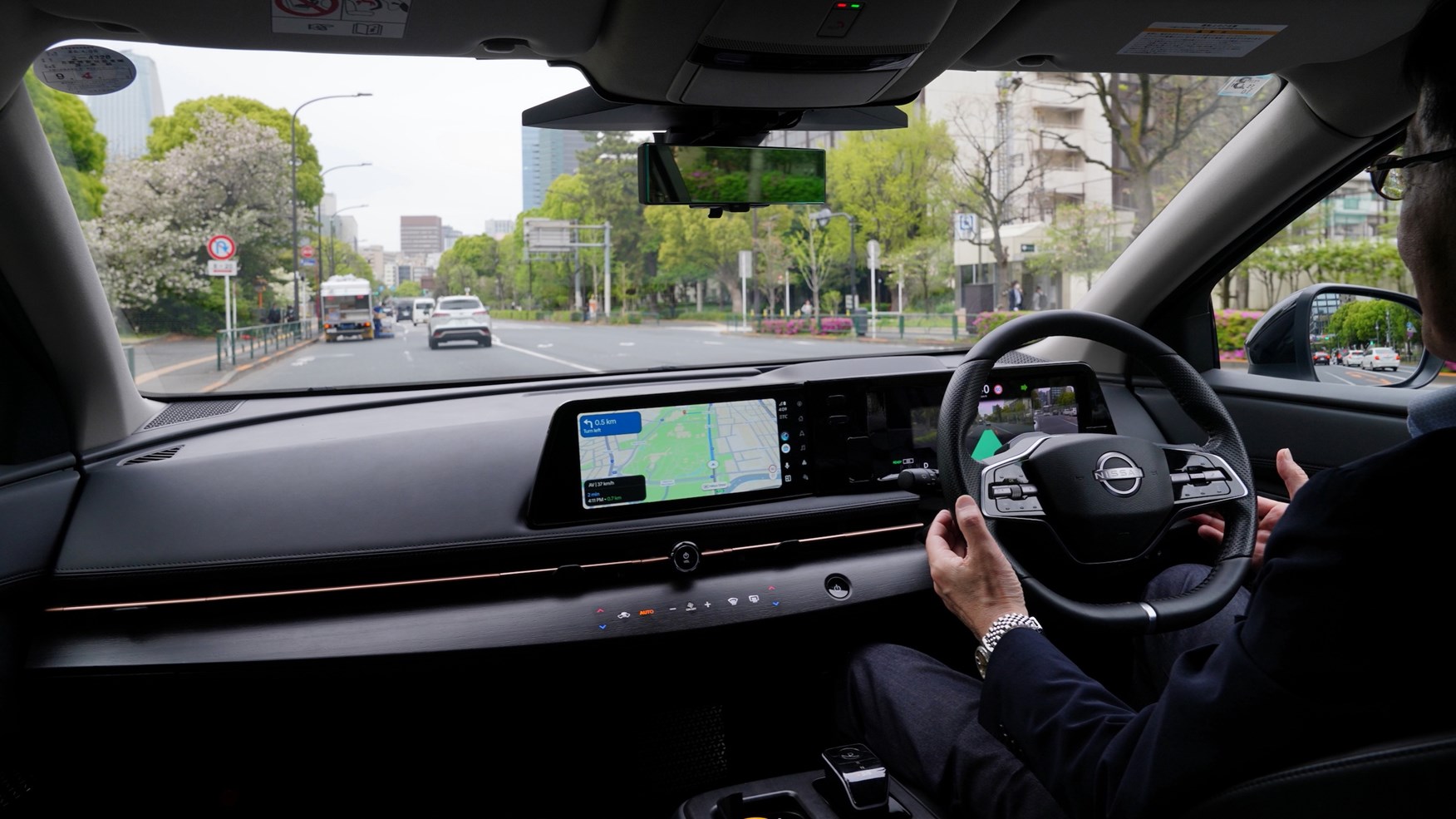
The conditions we’re driving in are nowhere near as precarious, but they are challenging. The Ariya consistently makes its way around traffic, stops at complex junctions and makes room for cyclists and other road users.
And if it works here, it works in rural areas too, due to their lack of motorists and an overall less cluttered, complex 3D environment. ‘Historically, these kinds of tests start from rural area,’ Iijima explains, ‘Because rural areas are easier.’
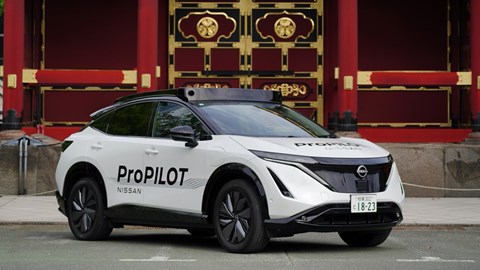
Its driving style can be considered ‘accommodating’ but I later learn there are at least three possible personalities on offer, each with varying levels of ‘assertiveness’. It’d be interesting to see how the two modes work.
The thinking is sound, then, but so is the overall style of driving. Acceleration is smooth and gradual while steering inputs are refined. This partly comes down to the forward-planning the ProPilot 3 system is doing, but also the inputs Nissan has tuned the system to make.
Early verdict
The weirdest thing? How quickly it begins to feel mundane. Less than halfway through the 20-minute journey, my attention beings to stray from the display that shows the Ariya’s autonomous thinking – and even from the wheel which has been moving itself throughout the journey. Instead, I find myself beginning to check my emails, glance at the time in the UK and think of headlines for this article.
Like solid state technology, full autonomous driving is perennially ‘around the corner,’ but it’s fair to say this 40-minute, 15km test has at least convinced me that it’s truly viable. Unlike solid-state battery technology though, autonomous tech must find a way past legality as well as scale. In the meantime, watch this space.
console.debug(‘taboola container loaded..’)
window._taboola = window._taboola || [];
_taboola.push({
mode: ‘thumbs-feed-1×1’,
container: ‘taboola-below-article-thumbnails-v3’,
placement: ‘Below Article Thumbnails V3’,
target_type: ‘mix’
});
var disqus_shortname = ‘carmagazine’;
var disqus_developer = 0;
var disqus_identifier = ‘article-wp-260272’;
(function () {
var dsq = document.createElement(‘script’);
dsq.type = ‘text/javascript’;
dsq.async = true;
dsq.src = ‘http://’ + disqus_shortname + ‘.disqus.com/embed.js’;
(document.getElementsByTagName(‘head’)[0] || document.getElementsByTagName(‘body’)[0]).appendChild(dsq);
var s = document.createElement(‘script’);
s.type = ‘text/javascript’;
s.async = true;
s.src = ‘http://’ + disqus_shortname + ‘.disqus.com/count.js’;
(document.getElementsByTagName(‘head’)[0] || document.getElementsByTagName(‘body’)[0]).appendChild(s);
})();Please enable JavaScript to view the comments powered by Disqus.