[analyse_image type=”featured” src=”https://velo-cdn.outsideonline.com/wp-content/uploads/2026/04/Allied-Echo-Cover-Final.jpg”]
Pros
- Incredibly light
- Overly capable on off-road terrain
- Balanced geometry that works for many types of riders and riding
Cons
- No compatibility with Shimano 2x Di2 groupsets
- Build specs are too gravel-oriented to meet the performance road targets
Specs
Size tested: 58cm
Weight: 17.2 pounds / 7.8kg with pedals
Price: $8,300 MSRP
Brand: Allied Cycle Works
Verdict
Allied has pushed the boundaries of what a modern road bike can be. I wanted to love it, but a few key aspects I found frustrating.
When the revamped Allied Echo debuted in 2021, it was a part of a wave of bikes that were broadly pitched as quiver killers.
The Echo could swing from a gravel bike to a road bike, they would argue, in just a flip of a chip on the fork and the dropout. By virtue of two small aluminum “flip-chips,” the bike would be tweaked to the needs of either tarmac, optimized around 30mm of tire clearance, and gravel, capping at 40mm.
Now, Allied is back with another Echo, and once again, the pitch is to create one bike that can do the function of gravel and road in one bike frame. Nevertheless, in 2026, that is an entirely different proposition. The flip-chips, after their five-year run, are out, and the bike has instead leaned into the larger volume of tires, for both gravel and road.
As Allied has rolled out the new Echo, what is clear is that the bike is still shooting for the same all-road status, but in a completely overhauled package. From the electronic-only groupset compatibility to maximum tire clearance of 45mm, it is a future-leaning modern road machine that has made leaps and bounds to be at the forefront of the category.
Yet, what category is that? Is it an all-road bike, or has it strayed too deep into gravel territory to be considered in the same vein as the likes of the BMC Roadmachine, Enve Fray, and Trek Domane?
When I got the bike a month ago, that was the question on my mind, and through riding it across different terrain and with different configurations, I found some answers.
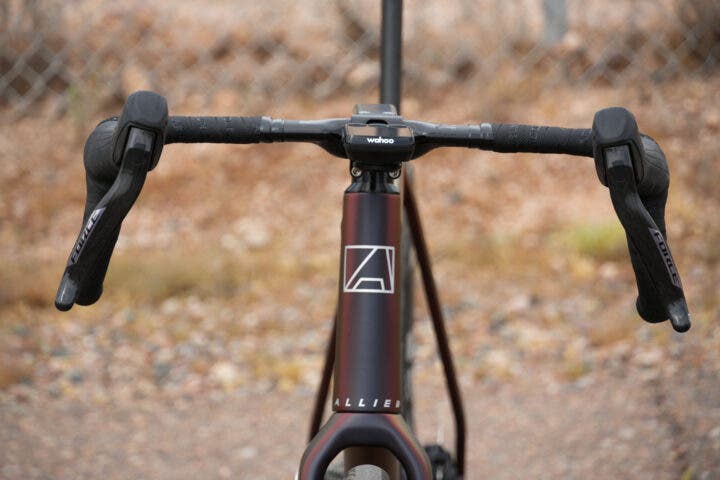
Quick hits: 8 key features of the Allied Echo
- A road bike built around endurance road and light gravel riding
- 17.2 pounds for a 58cm SRAM Force XPLR ready-to-ride bike, including pedals
- Tire clearance for 32–45mm tires, minimum clearance is a suggestion based on the bottom bracket drop
- 1x and 2x compatible, full builds come with 1x SRAM and a Wolf Tooth chain catcher
- Wireless electronic groupsets only, no ports for Shimano Di2 2x groupsets
- UDH compatible rear dropout
- Allied ST03 Integrated Stem for full internal routing through the steerer tube
- Sizes: 47, 52, 54, 56, 58, 61cm
Allied Echo frame details
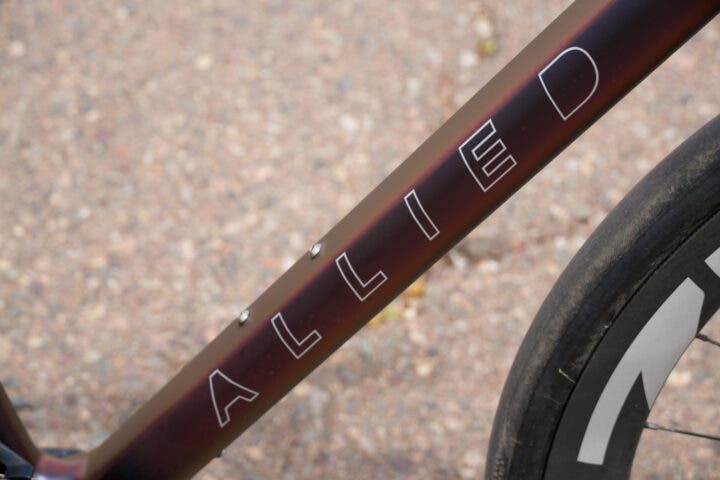
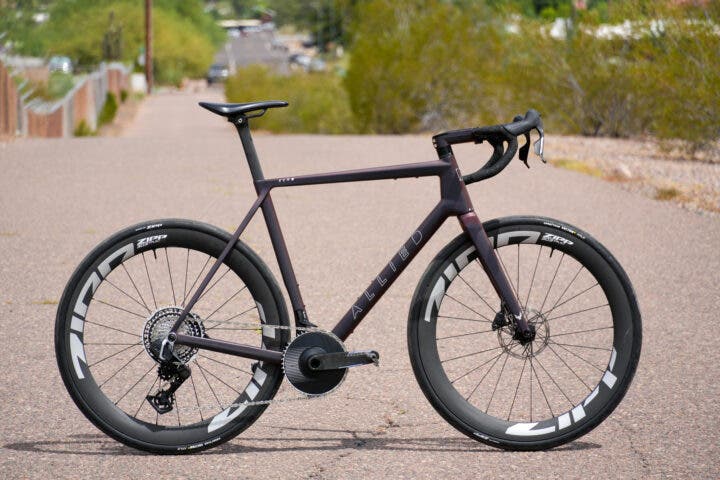
Right out of the box, one of the striking elements of the Echo was just how traditional the frame design is. In a world of dropped seat stays, aero shaping everywhere, and unorthodox lines of modern bike frames, the tall flat top tube and high seat stays are departures from many of the design conventions of 2026.
That isn’t to say the frame is retro. The stack is high, allowing for modern riding positions that have done away with aggressively slammed stems; the bottom bracket drop sits at 80mm, which is 5mm lower than the last version of the Echo in gravel mode; and the front end of the bike has been made slacker by extending the front center forward by a few millimeters. Yet, all of these are done in a package that looks very tall and very clean.
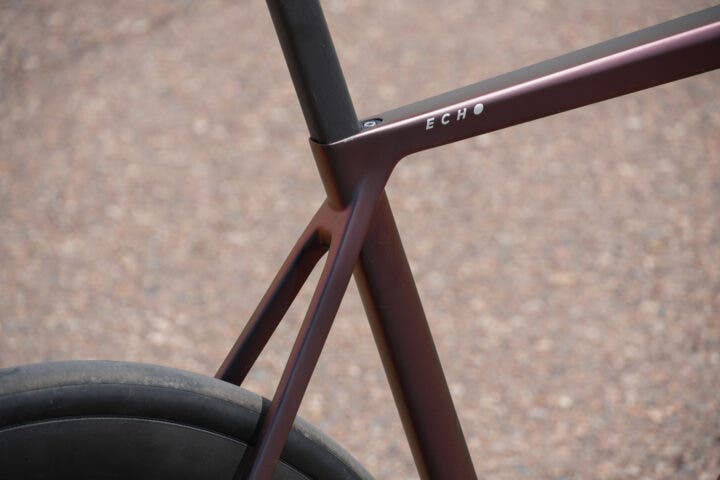
In true Allied fashion, the paint scheme only adds to that mix of a traditional frame shape with a modern twist. The frame I tested was iridescent, ranging from a dark, rich shade of purple to a light bronze under different light conditions. The tube shaping also had subtle lines, grooves, and foils that would accentuate the dynamic color scheme.
As an aesthetic object, Allied has crafted something with a very unique look in an exciting way.
Allied has made it clear: the Echo is a road bike, regardless of what the specs suggest
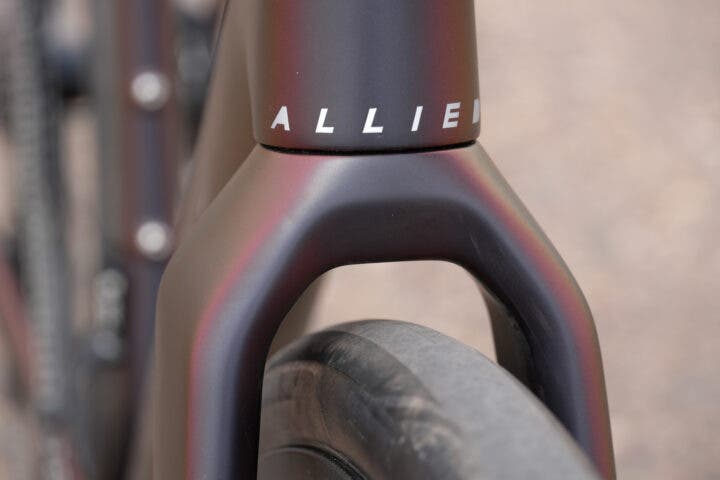
Allied has made it abundantly clear through its marketing that Echo is a road bike first, even if the clearance goes up to 45mm, and most bikes will come stock with a 40mm tire. Beyond the tire clearance, the rest of the frame design confirms that attitude. Instead of the numerous attachment points of a gravel bike, there are only two eyelets for each bottle mount on the frame, no internal storage hatch, no place for fenders, or top tube box.
One aspect I found opposed to the road bike attitude of the frame is the lack of compatibility with 2x Shimano Di2 drivetrains. It is no secret that SRAM has taken a huge step up in recent years in the off-road groupset game, and by most accounts, seems to be the predominant player in gravel and mountain bike drivetrains. On the road, that advantage is far less pronounced, if it exists at all. Shimano 2x road groupsets still are the preference of so many riders.
Likewise, it feels crucial that high-end road bikes still allow for Shimano 2x drivetrains that require a Di2 cable. The Echo, however, does not, even though it does allow for 2x wireless setups. Of course, Shimano’s new 1x Di2 GRX and XTR derailleurs would work just fine on the Echo, neither of those would align perfectly with Allied’s stated objective of making a modern road bike. Despite all of the movement towards 1x, there is still a large portion of the riding population — myself included — that continues to gravitate towards the efficiency and feel of Shimano 2x groupsets for road riding. It is a shame that the Echo doesn’t account for that perspective.
Building a road bike around 40mm tires
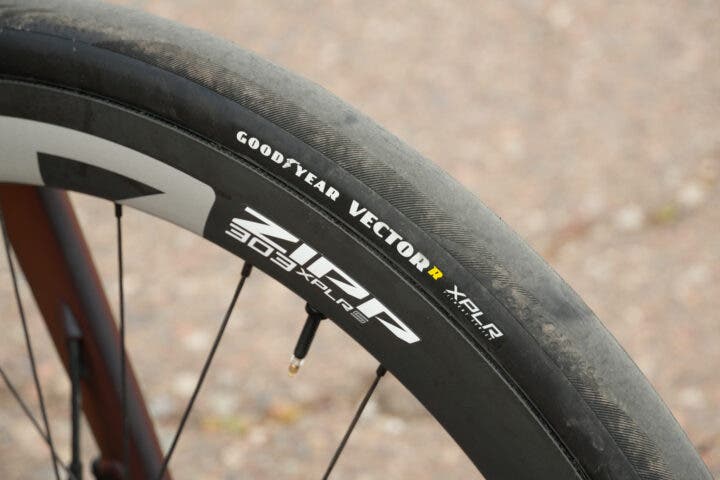
Away from the frame aesthetics, drivetrain compatibility, and the features of the Echo, the bike takes an undeniably aggressive approach to anticipate the direction road bikes are moving.
Instead of trying to hit the tire volume goals of endurance or all-road bikes of today, most of which sit in the 32-40mm tire range, Allied has gone further, shifting that range of volume tolerance much further to clearance figures between 35-45mm.
“Road riding has changed, and [the] Echo reflects that,” said Sam Pickman, director of product and engineering at Allied Cycle Works. “We kept performance at the center and expanded what the bike can handle. This is still a fast, precise road machine — it just goes further, across more surfaces, with more confidence.”
This move would have been downright preposterous just a few years ago, as there were so few quality, slick tires that ran larger than 32mm. That has now emphatically changed, as the industry meets the demand of the market. Instead of having a handful of options, the all-road width has become its own robust subcategory of tires full of intricacy, options, and, most importantly, speed. 40mm road tires might not be faster in terms of straight-line speed, but they certainly are much faster than they were, while retaining the comfort and traction benefits that wider tires provide.
All of this has led the Allied Echo to feel decisively less audacious than it would have even one year ago. Yet, I would argue they still deserve lots of credit for making that calculus early in the research and development process when it was a risk to build a road bike around a significantly underdeveloped tire category.
Geometrically, the bigger tire clearance has a few key downstream effects that also push the limits of the bike’s classification as a road bike. Longer, lower, slacker are the buzzwords that describe so much in bike geometry these days, but with the Echo, that is very much the case. It has a long wheelbase, a slacker front end, and a very low bottom bracket.
Interestingly, the Echo is not necessarily progressive. The reach figures for the Echo are all fairly conventional — 371mm for size 52, 377 for 54, and 384 for 56 — meaning long stems will be fairly standard. The length is instead found in the relatively shallow 71-72° headtube angle, 55mm fork offset, and 425mm chainstay length. The larger wheelbase, paired with a tall standover height, creates a frame that feels substantial, even though the reach and stack are not as pronounced as those of other all-road bikes.
The nuances of the bike’s sizing and the complexity of the internal cable system
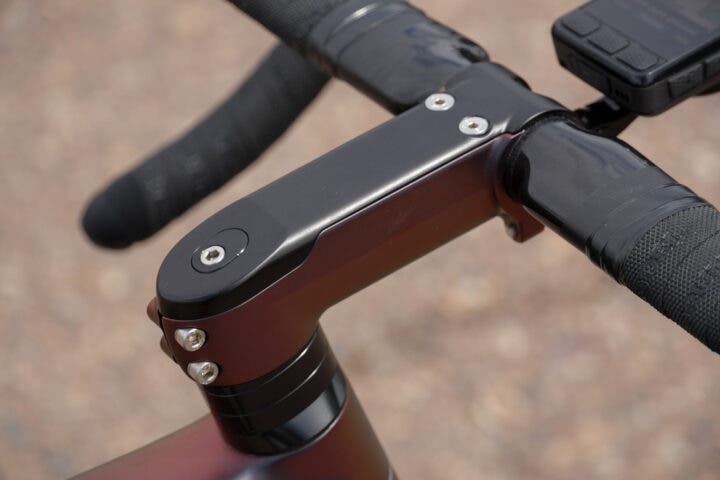
For many, this will mean the correct fit will have a bit less seat post exposed, perhaps a longer stem, and erring on the smaller bike size if you sit between frame sizes. I am typically between a 56 and a 58cm bike, and I would have benefited from riding a size 56 frame and not the 58cm bike I tested, especially since media bikes typically don’t have cut steerer tubes. There might be some downsides to using a stem longer than 100 mm, as that would slow already slow steering, but with the road as the designed use case, there is room to push out a little bit further compared to more progressive gravel bikes.
Nevertheless, even for customers, the initial sizing and configuration is going to be pretty crucial. If I could cut a steerer tube, the prospects of doing so on the Echo are extremely daunting, even for a seasoned at-home bike mechanic. The trials and tribulations of internal routing are well documented, yet Allied’s cockpit integration is even a cut above the rest in terms of its complexity.
Unlike the systems from Enve and FSA that bring the cables and hoses of the bike down through the headset in front of the steerer tube, Allied’s ST03 integrated stem system does not route the brake hoses through the stem. Instead, they travel over the top of the stem and into the steerer tube, while a top plate conceals and closes the entire system.
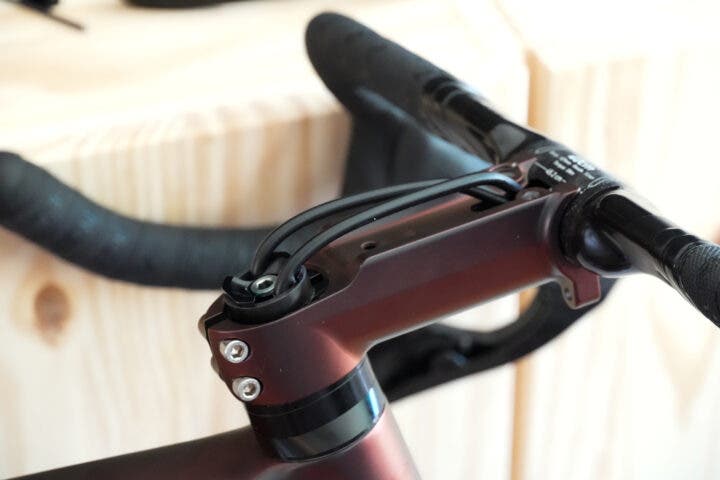
While this does allow for easier routing in some cases, there is only enough room for a few millimeters of spacer adjustments. To remove even half a centimeter of spacers would require disassembling the whole system, hydraulic hoses and all, to cut the steerer, since the top plate doesn’t allow for excess steerer height or slack in the hydraulic hoses.
Swapping stems, on the other hand, is much easier. Allied has configured its setup to allow for the hydraulic hoses to slip through the back of the stem when the screws are removed, allowing easy changes to the stem without major assembly. This will allow for changes to length and height, through playing with the length and angle of a different ST03 stem. It certainly is not the cheapest stem, but it will provide most of the flexibility needed to get the right fit.
Ultimately, this is splitting hairs — any integrated bike is going to be a chore to configure — but it is still worth noting early on that finding the right fit is worth spending time and money dialing in before you buy. One spacer of height adjustment is a bigger task than it is on other integrated systems.
Allied Echo geometry
| Size | 47 | 52 | 54 | 56 | 58 | 61 |
| Stack | 520 | 535 | 555 | 575 | 600 | 625 |
| Reach | 362 | 371 | 377 | 384 | 392 | 400 |
| Effective Top Tube | 511 | 524 | 536 | 554 | 570 | 585 |
| Seat Tube Length | 440 | 470 | 500 | 540 | 560 | 580 |
| Head Tube Length | 94 | 110 | 127 | 148 | 175 | 201 |
| Head Tube Angle | 71° | 71° | 72° | 72° | 72° | 72° |
| Seat Tube Angle | 74° | 74° | 74° | 73.5° | 73.5° | 73.5° |
| Bottom Bracket Drop | 80 | 80 | 80 | 80 | 80 | 80 |
| Chainstay Length | 425 | 425 | 425 | 425 | 425 | 425 |
| Fork Length | 390 | 390 | 390 | 390 | 390 | 390 |
| Wheelbase | 989 | 1003.2 | 1006.6 | 1020.1 | 1036.2 | 1052.3 |
| Standover Height | 715 | 740 | 768 | 801 | 822 | 843 |
| Fork Rake | 55 | 55 | 55 | 55 | 55 | 55 |
| Front Center | 572 | 586 | 589 | 603 | 619 | 635 |
Build details
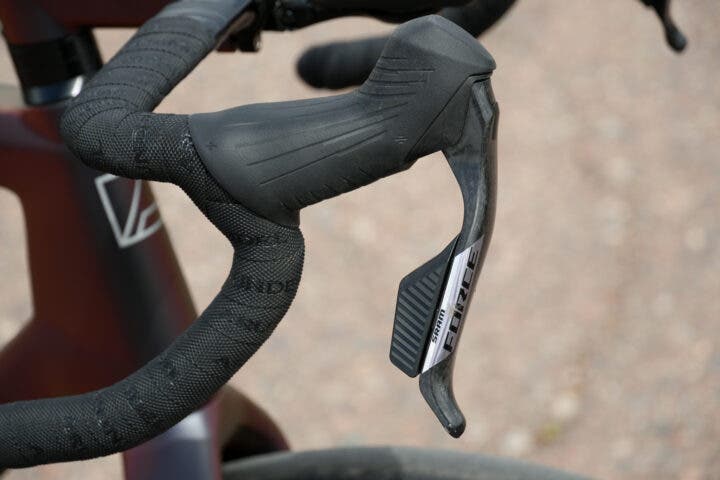
Component |
Specification |
| Drivetrain & Brakes | SRAM Force XPLR |
| Cassette | SRAM Force XPLR, 10-46t |
| Crankset | SRAM Force XPLR, 48T 170mm |
| Wheelset | Zipp 303 XPLR S |
| Tires | Good Year XPLR, 40mm |
| Cockpit | Allied ST03 Stem (100mm), Enve Gravel In-route Bars (400mm) |
| Seatpost & Saddle | Allied |
| Price | $8,300 MSRP |
Allied Echo ride experience
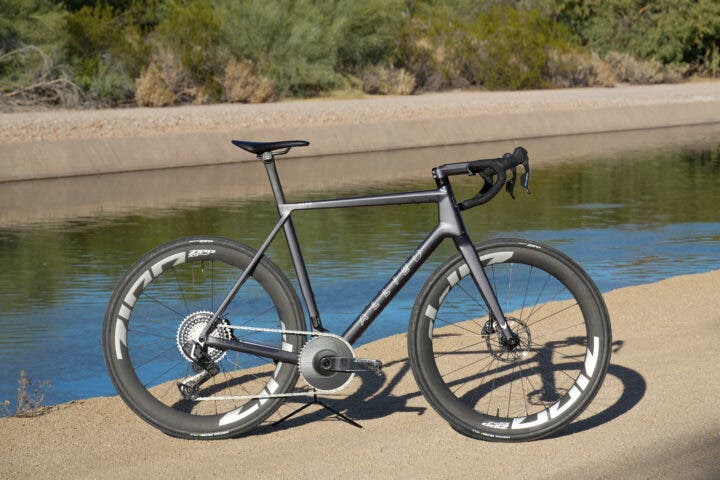
I’m going to cut to the chase: in the configuration I rode, I greatly preferred the Echo as a gravel bike to a road bike. From the first ride to the last, I was constantly seeking out dirt roads, smooth trails, and gravel paths, even when I was supposedly on a road ride.
When I got the bike, I expected the sensations to be the opposite. Whenever I get on an all-road or endurance road bike, I expect that the road will be the playground, and the dirt will be the addition. Or, to put it in the context of a meal, tarmac riding is the meat and potatoes, while the dirt will be the vegetables. Good, in the right context, without eating too much of them raw.
In the context of the Echo, the equation was flipped. The road miles felt like vegetables, spinach to get very specific. The bike was comfortable and light, but it lumbered. I felt like standing on the pedals was a commitment, and the steering was slow. Instead of the quick feedback from a normal road bike, I felt the size of the frame every time I went to accelerate out of a corner or up a short hill.
Unavoidably, the size of the bike and the height of the bars impacted this overall feeling of a lack of pace from the bike. It is impossible to feel the same type of sensations from a road bike if you are 2-3cm higher than normal, which I was, but there is also something to be said of the long front center of the bike, very low bottom bracket, and overall component setup.
I should mention that this lumbering quality is not the same as the bike lacking both stiffness and weight savings. At 17.2 pounds for a size 58 ready to ride, the bike is incredibly light. Pair that with the tall seatstays and robust tube shaping throughout, and the bike is stiff in the right ways as well. I kept coming back to those stats and feeling like it should translate to better road riding experiences. Yet, I never could shake the feeling that I decidedly wasn’t riding a road bike.
Was SRAM and Zipp XPLR the correct package for this bike?
 (Photo: Logan Jones-Wilkins/Velo)
Ultimately, a significant part of this disconnect comes not from the frame itself, but rather the groupset and wheelset. That is the difficult dance of these bike reviews: a bike frame can never be interpreted in a vacuum. It is part of a broad system where groupsets and wheelsets might be more important in dictating the overall sensations of the bike. In the case of the Echo, both the wheels and drivetrain were actively working against my interpretation of the bike as a road machine.
As I mentioned earlier, the bike was SRAM Rival-level build, complete with the wide and deep Zipp 303 XPLR S wheels. Once again, I’ll be direct: if you are looking for a road bike, do not get this spec list.
Both the SRAM Rival groupset and the Zipp wheels are great gravel products, and this is not a qualitative judgement of them as such, but with both limitations to the gear range and jumps between cogs in the drivetrain, and the remarkably wide platform of the XPLR rims, it is not equivalent to a road groupset. The 48t chainring tried to make up the difference, but I ran out of gears in both directions during my riding, both on the steepest climbs and a few of the power downs on the tarmac around Phoenix.
Additionally, while the wheels were fast for 40mm tires, I have never felt the same nimble steering I expect on the road with a set of splayed 40mm slicks on the ultra-wide XPLR rims. I much prefer the feeling of tires on a more neutral, 25-28mm internal rim, even with 40mm tires. Yes, aerodynamically, I might be sacrificing a bit of drag at that 40mm width, but with a more road-oriented wheel, I could end up having a better system overall for 35mm tires, which I wouldn’t mind for my road riding.
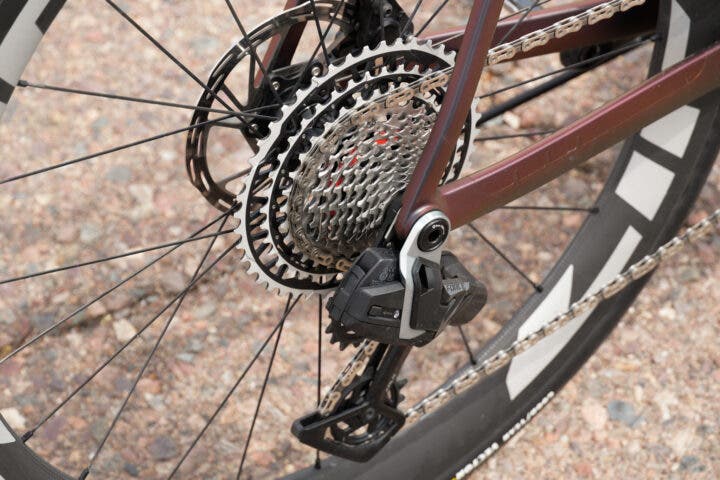
That being said, if you lived in a place with rougher roads or lots of smooth gravel, I could see the Zipp being a great wheel option. My bigger question I kept coming back to was, “How would this feel with Shimano 2x Di2?”
Personally, I find it a shame I cannot find out.
An undeniable underbiking king
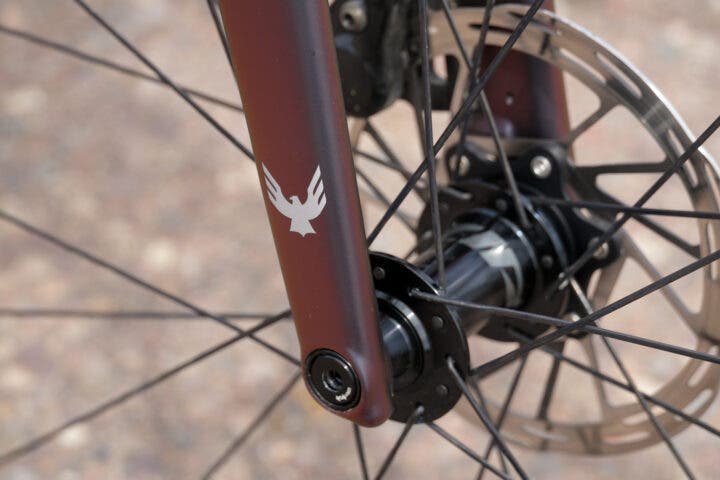
Nevertheless, to return to the frame, I found that the mix of weight, stiffness, and compliance added by 40mm Good Year Vector tires was genuinely fantastic every time I took the bike off-road.
Instead of lumbering, the bike felt incredibly active relative to other gravel bikes I had ridden on many of the same tame roads and trails. Climbing, especially, was a treat as the bike felt so snappy and featherweight in comparison to the heavier machines I normally stomp around the hinterland of the Sonoran Desert.
All of those aspects that made the bike feel a bit cumbersome on the road created a bike that is uniquely positioned to overperform off-road, with the long, low wheelbase and bottom bracket offering handling that inspired far more confidence and traction than I have felt on 40m slicks or 45mm semi-slicks ever before. It was truly exciting to feel a bike overperform at that width, especially as gravel bikes have (rightly so) jumped to bigger tires.
It was clear to me that while Allied was shooting for an uber-modern all-road bike, they had stumbled instead into something else that shades much closer to a gravel bike than I envisioned them going.
Conclusion
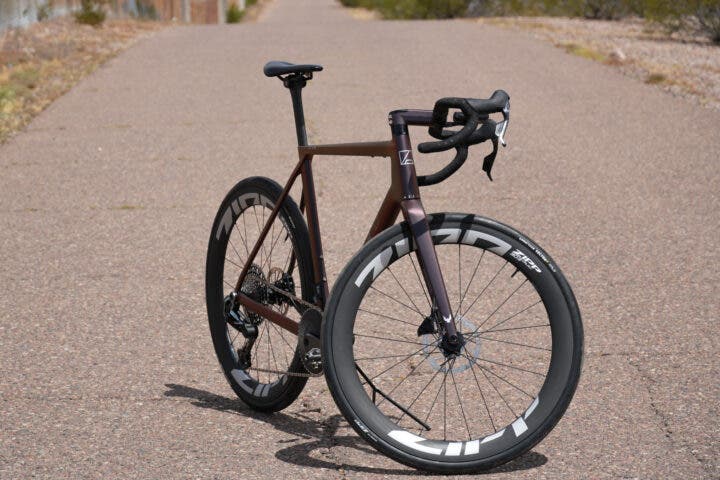
To put it in terms of comparisons: this bike is much more a peer of the Cervelo Aspero 5 than it is the Enve Fray. Despite its own marketing, with the new Echo, in a vacuum, I would say Allied has made another gravel bike.
I might be too swayed by the gravel riding I did. I also might be too hung up on the gravel wheels and gravel groupset that made it feel, well, like a gravel bike.
The frame itself had plenty of potential on the road. Through the confounding variables, it was great on the climbs, could handle rough and smooth pavement with the right mix of vertical compliance, and was a stable companion over light gravel. It is, undeniably, an interesting push forward for all-road bike tech and a bike I enjoyed riding.
I just know I could have loved it more and that quality was not too far away with a few key tweaks to what the Echo is.
[analyse_source url=”https://velo.outsideonline.com/gravel/gravel-gear/review-allied-echo-made-one-key-choice/”]