Wonderland
RADIO IS IN SAFE HANDS WITH SIAN ELERI
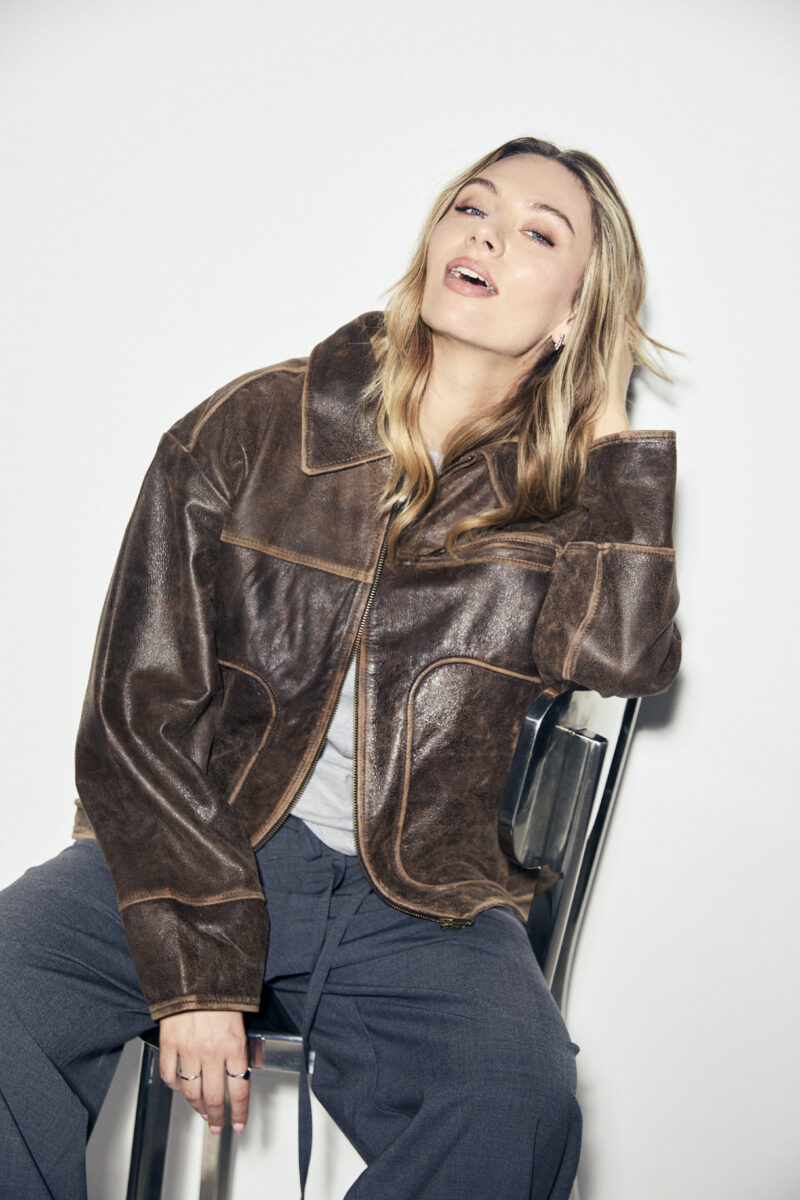
Who doesn’t love the radio? It’s the most ubiquitous of all entertainment, the most reliable of all companions. But have you ever thought about the voice behind the FM station? Meet Sian Eleri, BBC Radio 1’s next big thing.
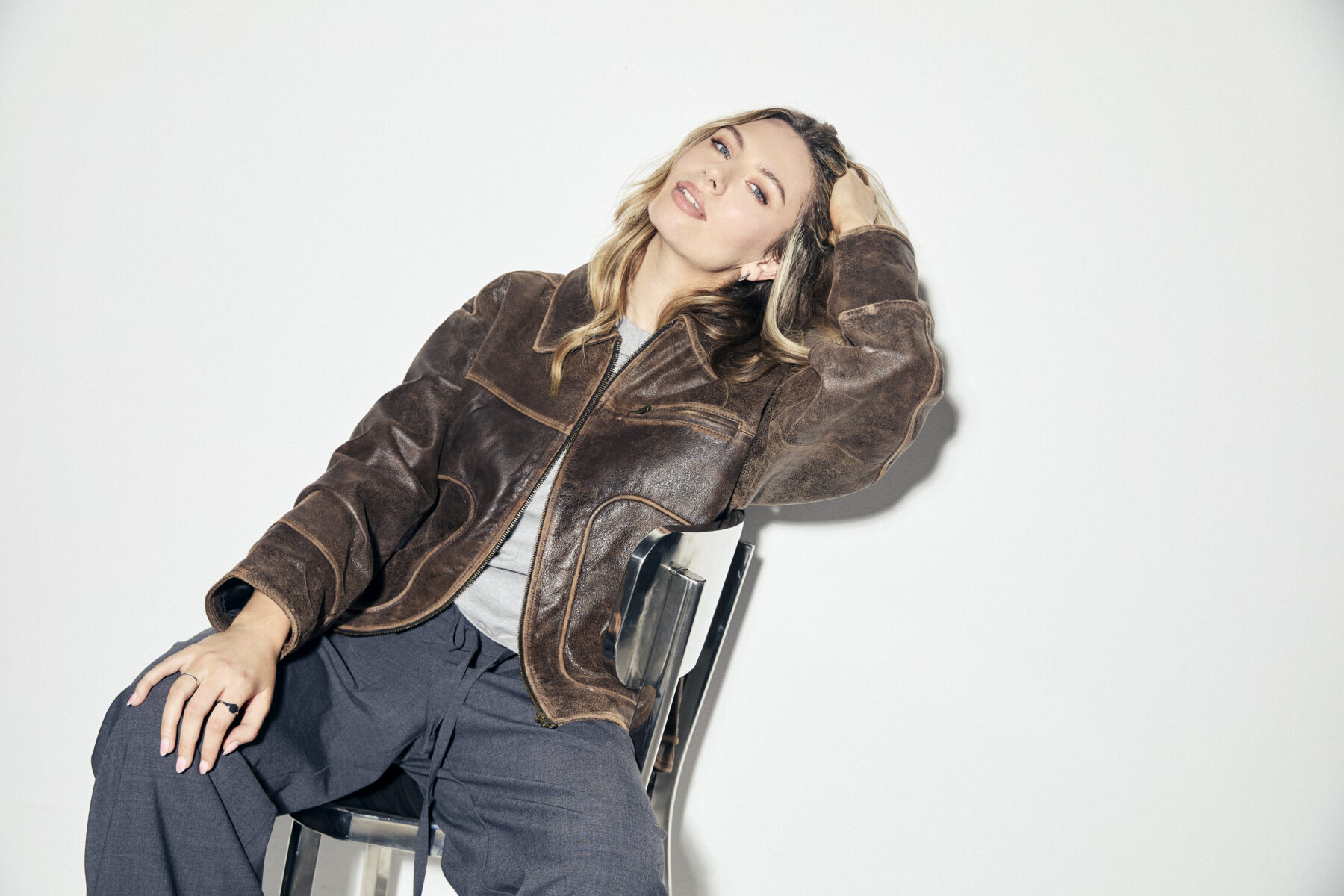
Whether through your car speaker or headphones, a cafe or a shop, you’ve probably heard Sian Eleri talk – and probably about music. Hers is a unique tone. Unquestionably Welsh, yet sharper and saltier (thanks to her origins in the north west of the nation), coruscating and characterful. It’s a timbre that’s trusted and reassuring, the voice of the best friend that you didn’t know you had and definitely didn’t know you needed. But that’s radio. And that’s Eleri.
It’s a scorching Saturday afternoon in Austin, Texas. South by South West has been raging on for days; the American showcase festival is playing host to a kaleidoscope of the most colourful of new wave musical talent, with line-ups sprawling through genres and styles like card tables at a Las Vegas casino. It makes sense for any decent high roller to be here, dripping the dealer dry, indulging in its prosperity.
Right now, though, Eleri and I are taking a breather from the pantheon of live shows. We’re sitting in an empty swimming pool; as in – it was once a swimming pool, but now there’s no water inside it (probably for the best given the frozen margaritas that are being consumed), and in place of the liquid, there are tables to sit at, drink, eat at and to be merry. The latter is a befitting adjective to define the 31-year-old presenter who keeps me company, whose CV is almost as undeniable as her manner.
Radio was always something close to Eleri’s heart, ingrained in her childhood, but for the unassuming Welsh girl from the quiet seaside small town of Caernarfon, it never felt like an attainable vision. Yet with a boatload of hard work and a couple of nudges in the right direction, she landed her dream job and hasn’t looked back since.
Eleri is BBC Radio 1’s next big thing, the presenter of three shows at the station – Future Artists, Power Down Playlist and Chillest Show – in addition to being host of a weekly show for the British Council-backed Selector Radio. That’s not to mention being a mainstay on the Mercury Prize judging panel for three consecutive years, as well as hosting her nation’s version of The Voice, Y Llais. All ventures point in a similar direction – celebrating and illuminating the next generation of artistic talent.
Radio is an entertainment medium that has continued to flourish, despite the challenges of the changing, increasingly social-media-driven industry. And Eleri is a crucial cog in the future of the British landscape. “Radio is evergreen,” she smiles fondly, the expression in her voice outlining the passion with which she treats her craft. “It’s a connection that you can’t necessarily replicate anywhere else.”
There is something comforting and collective about being in the presence of a radio presenter – as I find out during a natter with one of the best in the business. Keep scrolling…
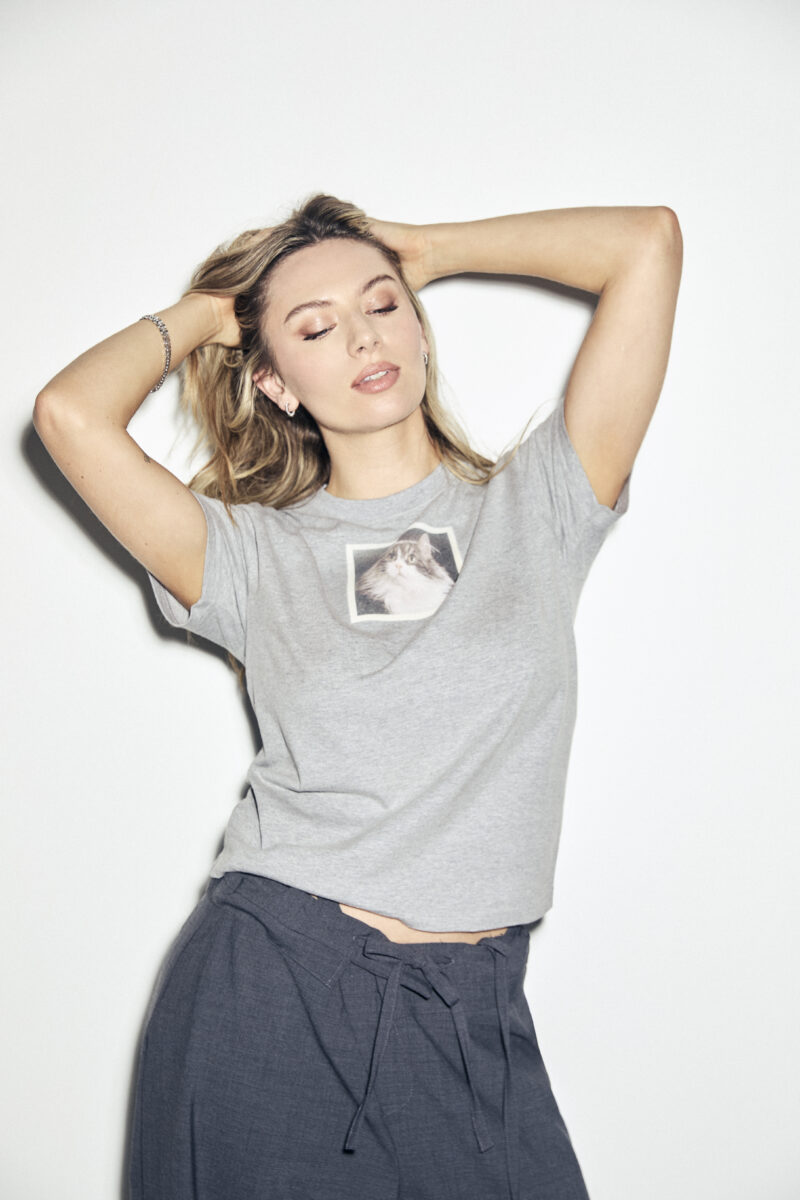
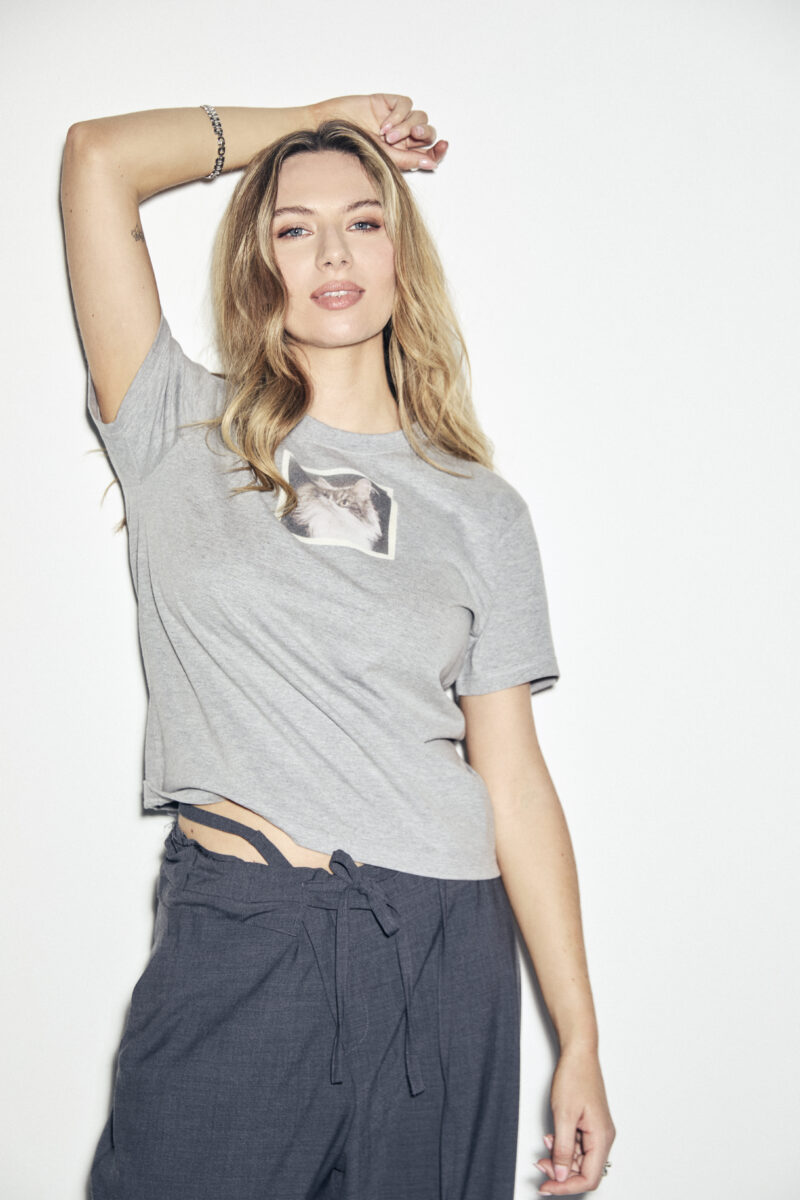
How did you first get into radio?
I always wanted to do it, but it never felt like a feasible career path. I can remember when Radio 1 Big Weekend came to Bangor, which is my neck of the woods, about five or six miles from Caernarfon, where I grew up. And I remember hearing about people like Fearne Cotton in a hotel that we knew about, and I was a big Fearne fan. And all these artists that I listened to every single week, who I couldn’t believe were on my home turf. But I never considered it because it just felt so high in the sky. It wasn’t until I got to uni to study journalism, and did student radio for a bit and loved it, that I thought, ‘Well, I like music, and I like people, so why don’t I try and combine the two?’ So I went freelance for a few years in production before getting into presenting. Ironically, my first presenting gig full-time was on Radio 1. I never had my own show before. I was covering a lot on Radio Cymru, the Welsh language station, but I didn’t have my own show until the Chiller Show.
Who was the person that gave you your break?
I would say there are a couple of people. One of them is [radio presenter] Huw Stevens. A producer of his messaged me on Facebook years ago, after seeing that I did a student radio show in Leeds. He asked me to do a new music feature on [Stevens’] show, which was crazy, so I did that for a couple of years. I’d go through music blogs online and pick out some favourite releases and talk about them.
The Radio 1 thing came around initially a year before they ever offered any positions for anyone new. It was at a networking event for BBC Introducing that was targeting musicians more than wannabe broadcasters. But there was a guy called Jacob Rickard there, and he was a producer at Radio 1 at the time. I remember seeing his name on the list of people who were attending, and I just asked him, ‘I want to work where you work, how do I get a job where you are?’ And he was lovely and let me see the inner workings. Then, a year later, they did this scheme for the first time, called the Christmas Presenter search, back in 2019. I applied and got it. It just so happened that Jacob was the one who was listening to demos, and he recognised my voice and thought, ‘Oh, I know her, she cornered me at an event once begging me for a job.’ And he ended up producing that Christmas show that I did, and then a year later, I got the job full-time. So yeah, Huw and Jacob!
Radio is something that has reinvented itself and survived despite the tidal wave of social media. The BBC shows are so ingrained in British society, and with platforms like NTS and Rinse FM doing well, it feels like a flourishing time for it. How do you think that radio has managed to maintain itself and continue to rise in relevance?
Just like print media, it’s always had this looming threat of, ‘Oh, you’re going to become irrelevant or prehistoric.’ But ultimately, the beauty of radio, in particular, is that it’s an intimate medium between you and one other person. That’s what I’ve always admired about my favourite radio DJs – the ones that make you feel like it’s just the two of you, or that it’s a little gang of you. Some people are extraordinary at doing that. Greg James is obviously outstanding at it. Someone like Jack Saunders is great at making you feel like you’re part of something big and exciting.
Especially now with social media, we can so easily feel disenfranchised or fragmented, or we can be on our phone and genuinely feel so down by just looking at it, doomscrolling. So radio and being in the presence of a presenter are so comforting. Particularly after something like Covid, where we couldn’t connect as easily, the radio was the one way that you felt like someone was in the room with you. It was so good at tackling things like loneliness. It was personally an enormous crux for me during COVID, when I didn’t have any jobs, and I was pretty unemployed at that point because I was freelancing. So I think people recognise how special it is. I definitely do – it’s always been there for me, and I don’t see that changing. I hope it doesn’t change, and if it does, it changes for the better.
What do you think is the biggest challenge for radio in the contemporary world?
I think sometimes it can feel challenging to reach new audiences. I’m someone who has always been immersed in radio, waking up at the crack of dawn before my family to listen to Chris Moyles or to stay in the car in my mam and dad’s driveway after swimming lessons so I could hear what Zane Lowe had to say. So it’s easy for me to say that it’s always been a part of my life. But I think it’s about reaching people that maybe don’t necessarily have it in their lives or that it’s an afterthought for, you know? It’s that kind of balance all the time, isn’t it, where we all kind of hate social media but we also need it at the same time.
How do we show the importance of radio to the next generation?
I have faith. With Gen Alpha, it’s an interesting one because it feels a lot of the time that it’s very oversaturated, and you’re constantly having content thrown at you, and it’s overwhelming. Even the idea of sitting down after work and being like, ‘Right, what should I watch on telly now? Here’s a million films!’ So I’m not entirely sure what the solution is. But you’d like to think that the parents of Gen Alpha are millennials, and if they’re listening to the radio in the car, then great, the kids are in the car. So that is a way where it’s got a kind of a cross-generational appeal. Also, we’re getting in really exciting artists, particularly on Radio 1, where we’re trying to reach the younger generation and get in these new artists first. That’s what I love about doing Future Artists in particular as a show, where it’s literally my job to file through hundreds of artists every single week and find who has the potential. Radio can be seen as a real channel for discovering artists. And as a listener, you can take the credit in finding it yourself. I want people to feel that way if they listen to any of the shows I do, they can add it to their own playlist, show it off to their mates, go to the gigs and then before you know it, they’re the next big thing.
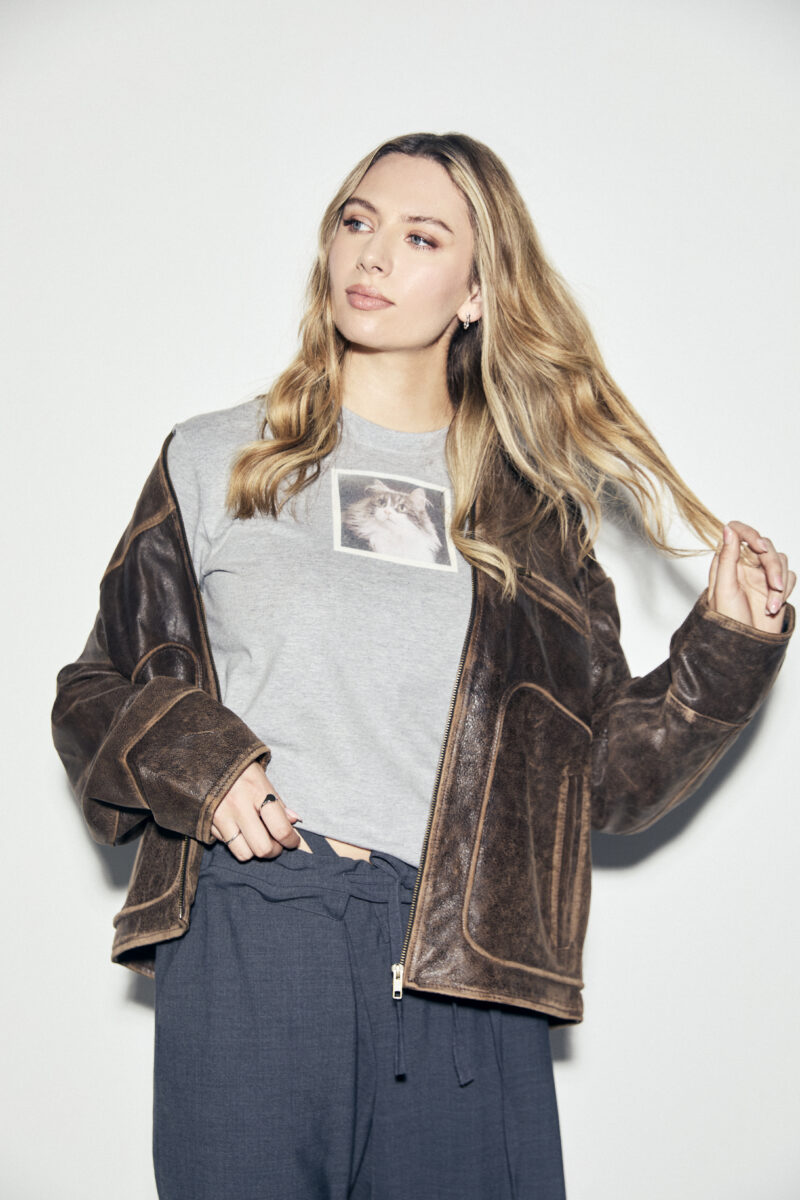
Your role as a judge for the Mercury Prize shows that. It’s what an award should be, and what an award should represent. Every album deserves to be there because it’s one of the best albums of the year.
I’ve [been a judge for the Mercury Prize] for three years now. It’s a lot of work, but it’s great work. I can’t tell you much about how it works, but you listen to every album that’s been submitted, and anyone can submit an album. There’s usually a couple of hundred. And obviously, if you’re listening to music all the time, now and again you’re like, ‘Oh yeah, I’m definitely going to put that down as part of my selection.’ But yeah, it’s an amazing process, and I love the Mercurys for the same reasons you do. Everyone is on a level playing field. I think of last year with someone like Pulp, for example, going up against Jacob Alon, who’s completely new. We only discovered [Jacob] here at South by Southwest last year because they were on the Scotland showcase. And look how things are going with them. It’s great that you have artists who have been around for decades considered in the same league as someone who was at the very infancy of what is going to be a very long career for someone like Jacob. It’s that one award you can sense that everyone wants in the world.
Who’s the Welsh artist that we should be listening to right now?
We saw Panic Shack yesterday on the British Music Embassy stage. I’m here with Selector Radio, which is part of the British Council, and we’re putting on a showcase for a couple of nights alongside BBC Introducing. [Panic Shack] are great gals, and it’s very empowering music as a woman. Even after their set, I was like, ‘I just love being a girl so much.’ They make me feel so proud to be a woman. And you feel really seen listening to their music.
Finally, what are your aims for the future? What would you love to do with where you are, your position?
Honestly, longevity is the biggest thing for me. Because sometimes everything can feel really fickle and scary and you’re trying to always fight for relevancy. That’s not just in presenting, it’s in music in general. So I’m hoping that over time I can build trust and a sense of community that you can only really get on the radio in an intimate setting, and you can share with people about how you’re feeling, and they can share with you how they’re feeling. The Chillest Show is a great example of that – people are really open, and it’s amazing to see that people trust us with that kind of information about their lives. And it’s all soundtracked by great music that I get to put together every single week. I love that show, there’s not another show like it.
So longevity is a big thing for me. But I can’t give you a five-year plan, things change all the time. I want to do more documentaries. I’m working on one right now, which I can’t currently talk about, but it’s in the works for BBC Three. Also, I’m putting it out in the universe, which is why I’m telling you – I really want to present TV at Glastonbury. It feels scary to say something you want to do in case it never happens, but I’ve done radio at Glastonbury for Radio 1, doing Billie Eilish coverage as a solo DJ, and it was incredible. So I’d like to do the telly for that, we’ll see if I play my cards right. Then you’re in the same league as people that I’ve idolised my whole life. Your Jo Whiley’s, Lauren Laverne’s, Clara Amfo’s, Jack Saunders’. If I can ever be considered in the same wheelhouse as them, then amazing.
Words – @tibbitsben
Photos – @davidreissphotography
Glam – @gina_blondell
Styling – @natashaelizabeth