{“@context”:”https://schema.org”,”@type”:”Article”,”image”:”https://car-images.bauersecure.com/wp-images/186259/vw_schafer_081.jpg”,”mainEntityOfPage”:{“@type”:”WebPage”,”@id”:”https://www.carmagazine.co.uk/car-news/industry-news/volkswagen/thomas-schafer/”},”url”:”https://www.carmagazine.co.uk/car-news/industry-news/volkswagen/thomas-schafer/”,”author”:{“@type”:”Person”,”name”:”Jake Groves”,”description”:”Jake Groves is CARu2019s News Editor, and has been part of the CAR team since April 2017. As well as managing the news content thatu2019s published on CARu2019s website, Jake also helps to build the news-based content in the Agenda section of CARu2019s monthly print magazine u2013 planning how new cars, big industry stories and exclusive scoops can be crafted into the pages of CAR.nnnnJake has been a car enthusiast even before he could walk, pointing out car models on the street while still in a pushchair. Growing up, Jake has always been around cars, attending motor shows with family, amassing a vast collection of toy cars u2013 even managing to steer some his parentsu2019 cars and drive a Ferrari 355 (on private land!) before he was legally allowed to have a licence.nnnnHe knew from being a teenager that he wanted to write about cars and the automotive industry, so he went to Sunderland University (the same university CAR contributor Chris Chilton went to, among other members of the automotive media) to study journalism through an NCTJ-accredited course from 2011. During his final year in 2014, he even created his own car magazine from scratch u2013 which you can still read right here u2013 and achieved a 2:1 Batcheloru2019s Degree.nnnnJake then cut his teeth working for Dennis Publishingu2019s automotive titles Carbuyer and Auto Express for two years; time at the former taught him how to drive a website content system like he stole it, and the latter refined his news writing skills.nnnnAt CAR, itu2019s his job to know whatu2019s happening at all times in the automotive industry, react to breaking news stories and direct CARu2019s team as to how to approach news content both in print and online. He interviews industry executives to either get the scoop or help flesh out a story happening in the automotive world around us, attends press conferences and events to get the story from on the ground and investigates the latest technologies being developed for and by the car industry.nnnnJake writes mostly about new car reveals, wider industry stories and articles surrounding electric cars. On top of that, heu2019s written countless drive reviews for CAR u2013 both in print and online u2013 as well as on our companion site, Parkers. Heu2019s also the custodian of the CAR newsletter, keeping you up to date with everything thatu2019s happened in the world of CAR.nnnnWhen heu2019s not driving, Jake is a big gamer. As well as hammering racing games, Jake spends a lot of his time on role-playing games and gets his real geek on with simulation games like city builders on the PC. When heu2019s not in the digital universe, heu2019s usually seen building the latest Lego kit or buying a new pair of trainers u2013 even if his house is rapidly running out of space to fit any more of either.nnnnOn social media, Jakeu2019s Instagram profile is filled with all of the cars heu2019s been lucky enough to drive over the years, and you can follow him on X (nu00E9e Twitter). Read Jakeu2019s latest articles below.”,”image”:{“@type”:”ImageObject”,”url”:”https://car-assets.bauersecure.com/wp-images/14234/jg5.jpg”,”caption”:”Jake Groves”},”sameAs”:[“https://www.linkedin.com/in/jake-groves-06181b40/”,”https://x.com/_jakegroves”,”https://www.instagram.com/_jakegroves/”],”url”:”https://www.carmagazine.co.uk/author/jake-groves/”,”alumniOf”:{“@type”:”EducationalOrganization”,”name”:”University of Sunderland”},”email”:”jake.groves@carmagazine.co.uk”,”jobTitle”:”News Editor”,”knowsAbout”:”Automotive,Car news,Car reviews,Car features,Car technology”},”dateModified”:”2026-04-13T10:17:27+01:00″,”datePublished”:”2026-04-13T10:17:27+01:00″,”headline”:”VW boss Thomas Schu00E4feru0027s five steps to getting the brand back on track”,”publisher”:{“@type”:”Organization”,”name”:”Bauer Media”,”brand”:{“@type”:”Organization”,”name”:”Car Magazine”},”logo”:{“@type”:”ImageObject”,”url”:”https://car-assets.bauersecure.com/images/logos/car.200×88.png”}}}
VW boss Thomas Schäfer’s five steps to getting the brand back on track
Published: Today 10:17

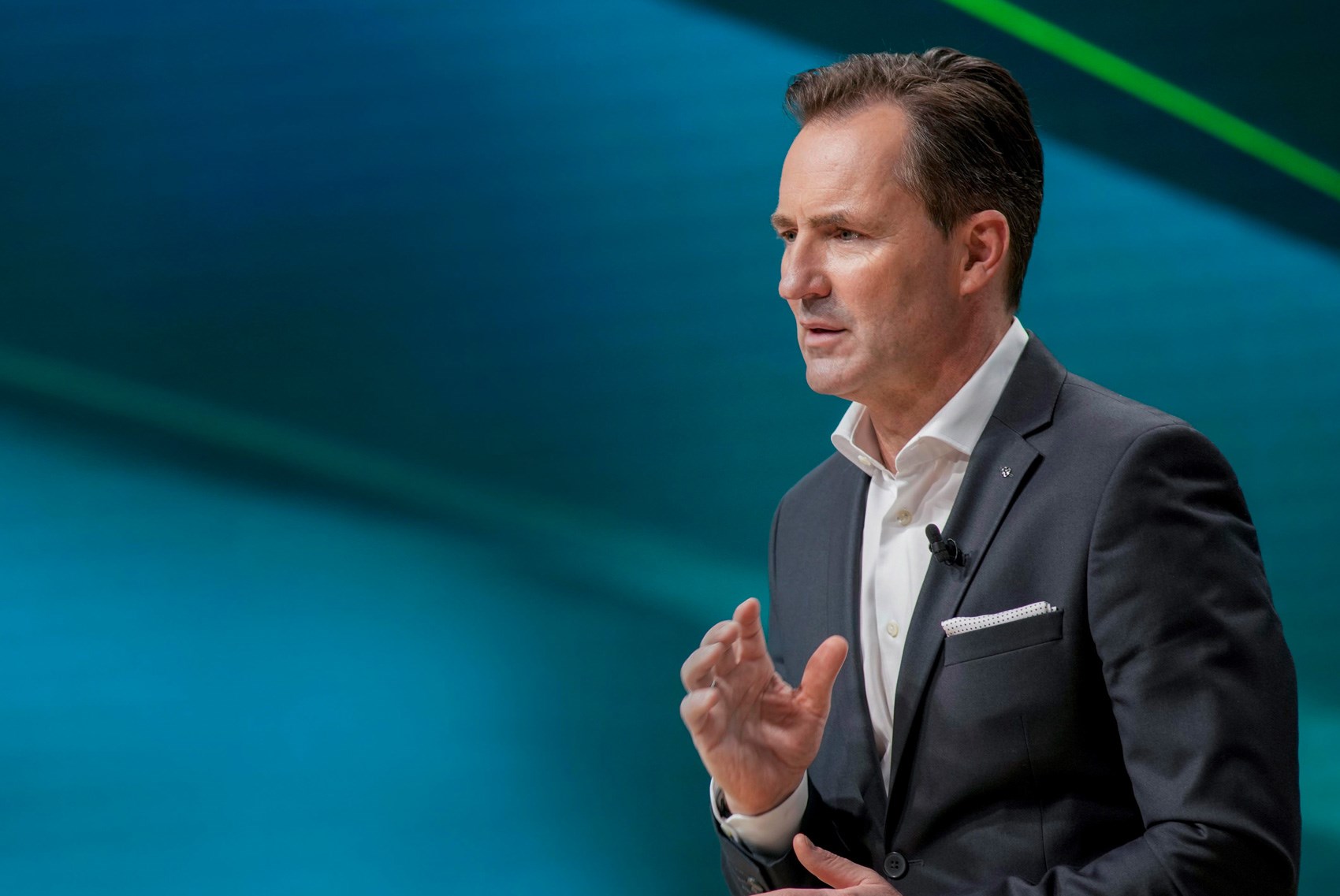
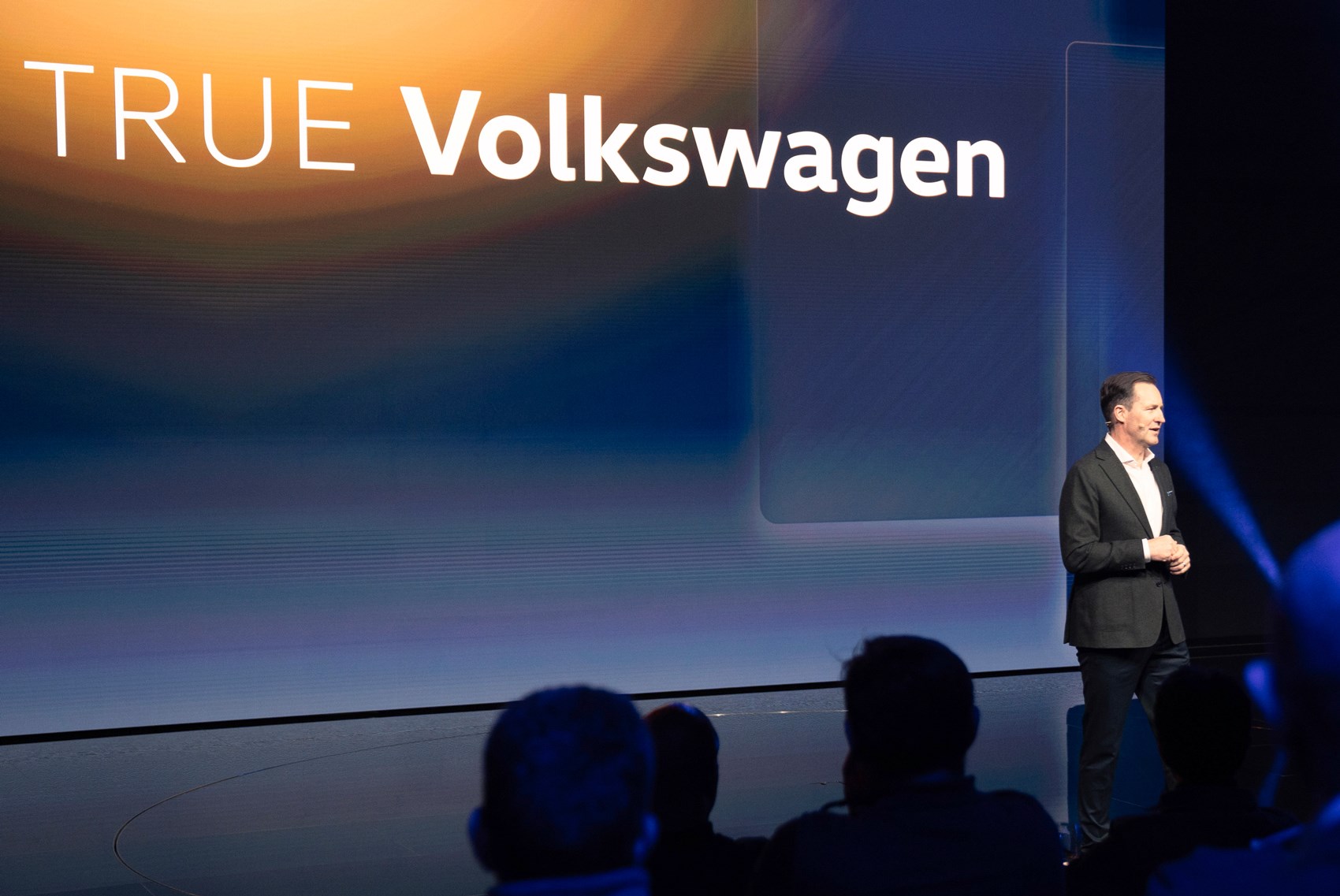
► VW boss unveils ‘True Volkswagen’ plan
► Five steps to VW greatness again
► More buttons, real names and better quality
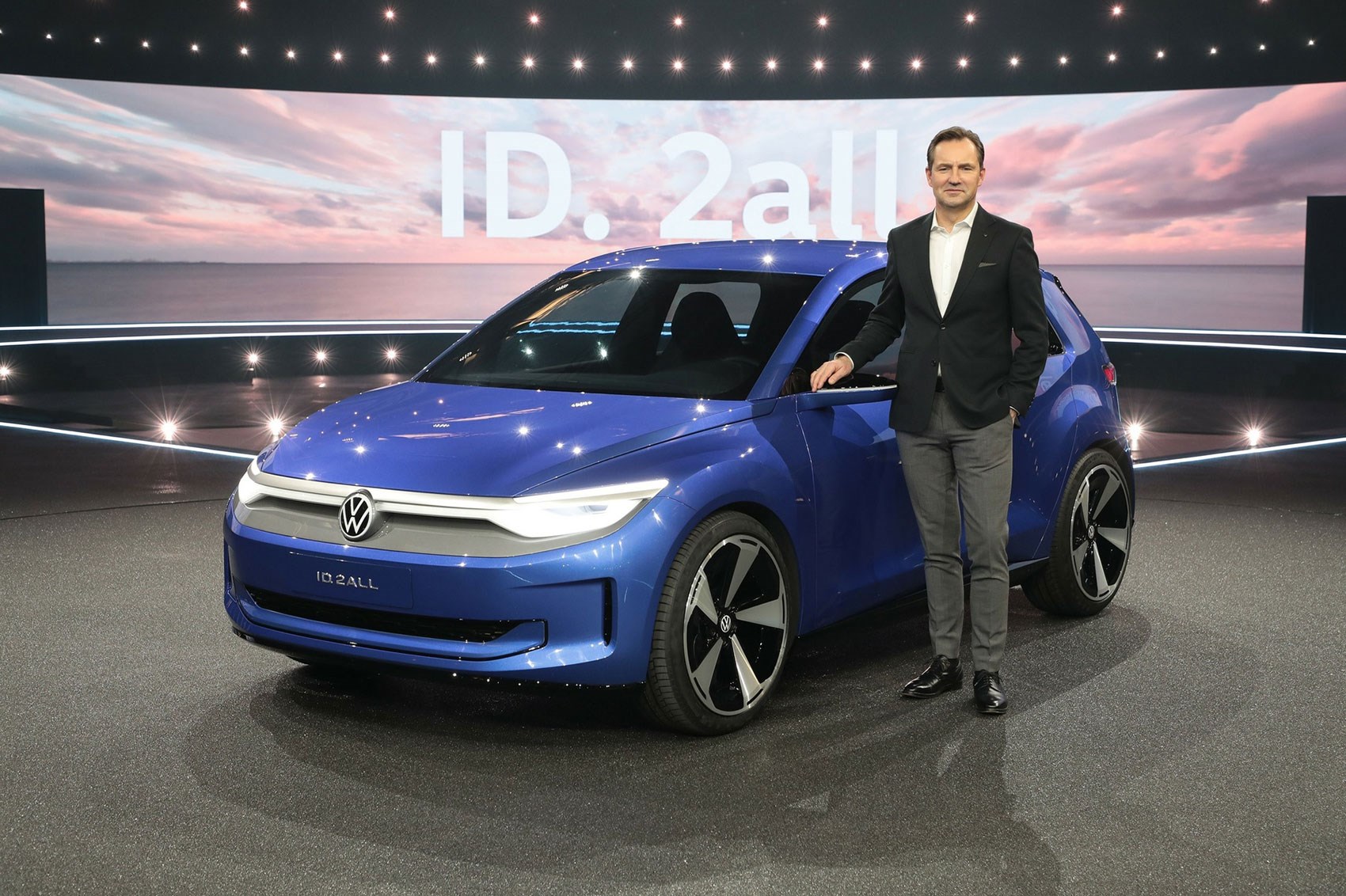
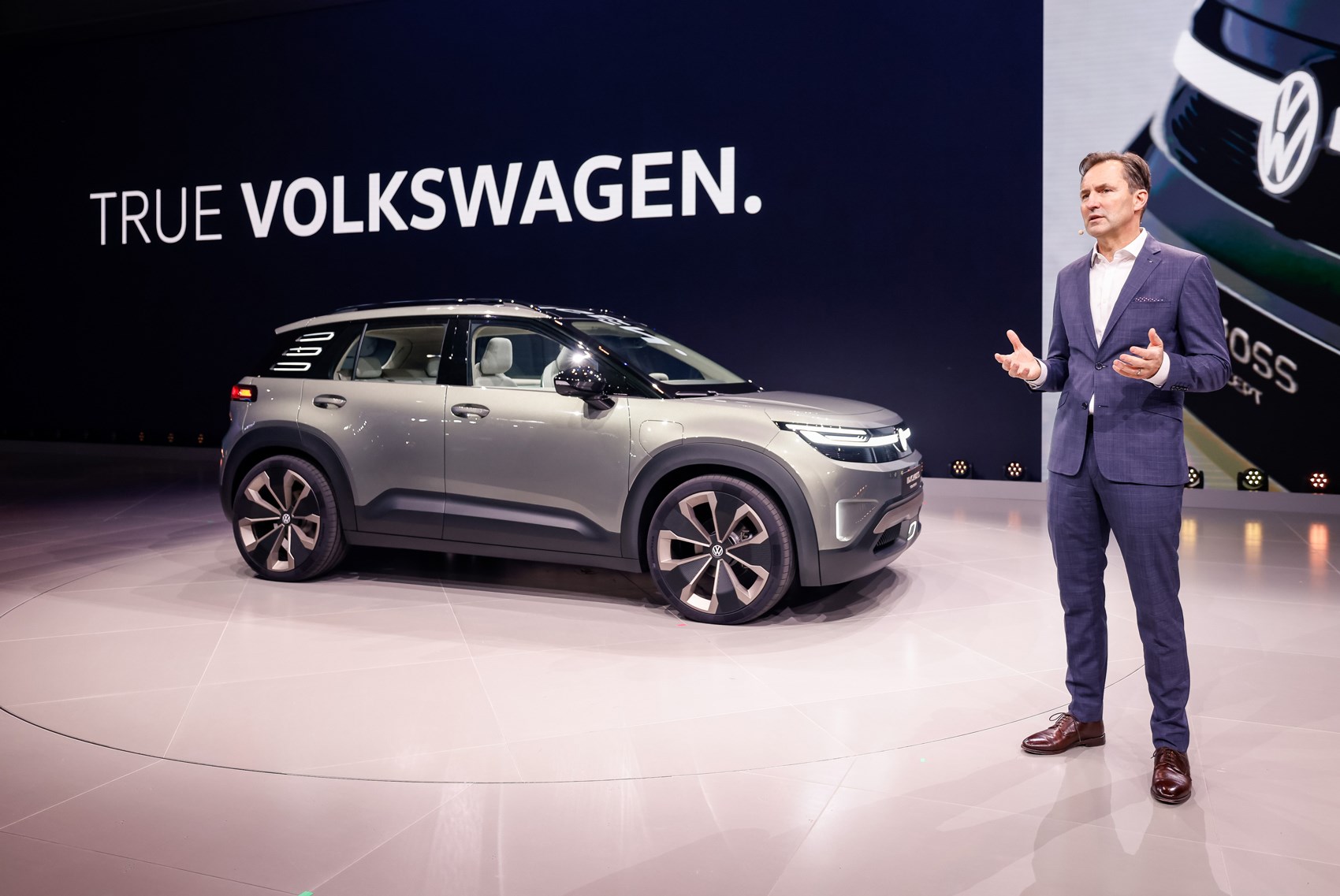
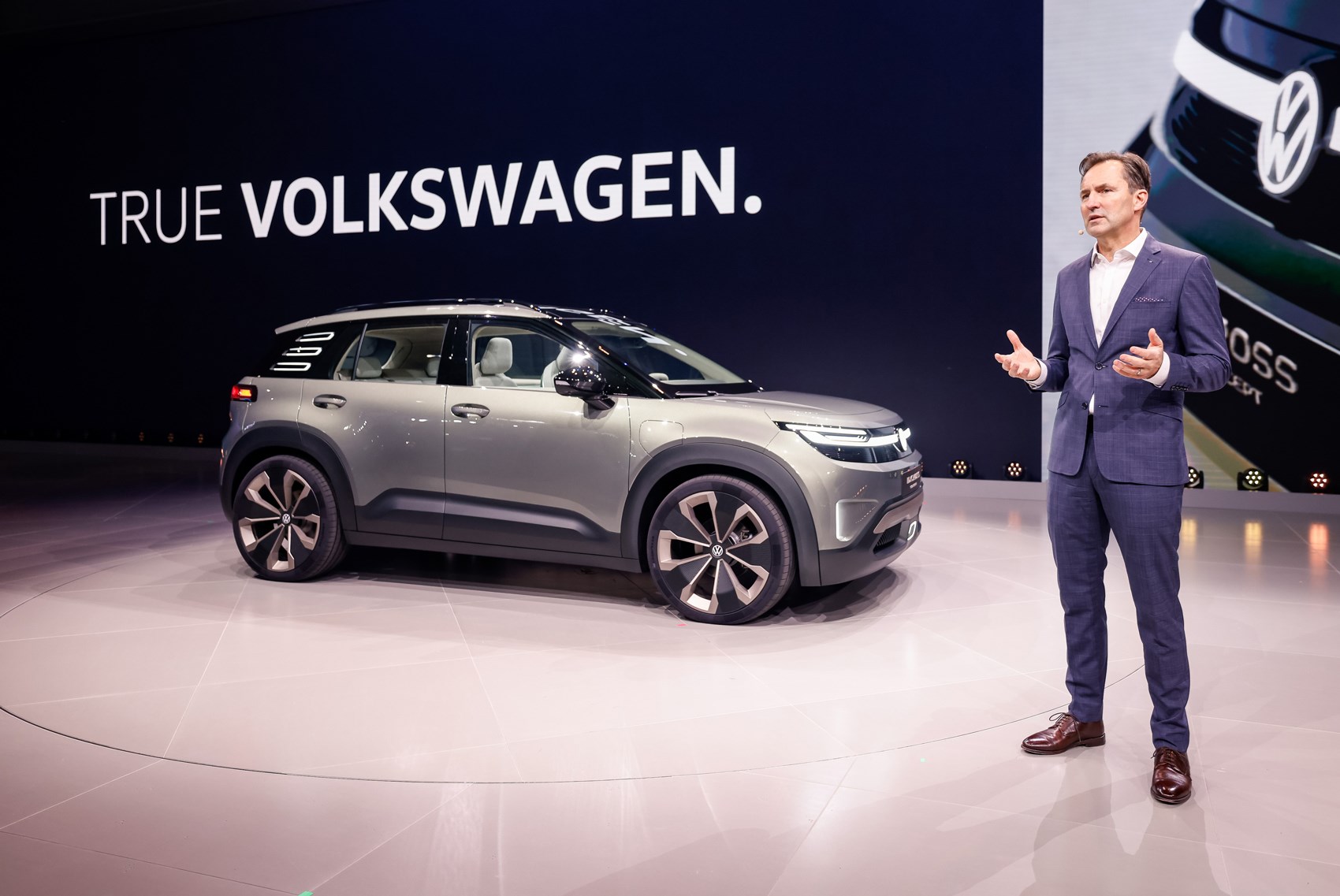
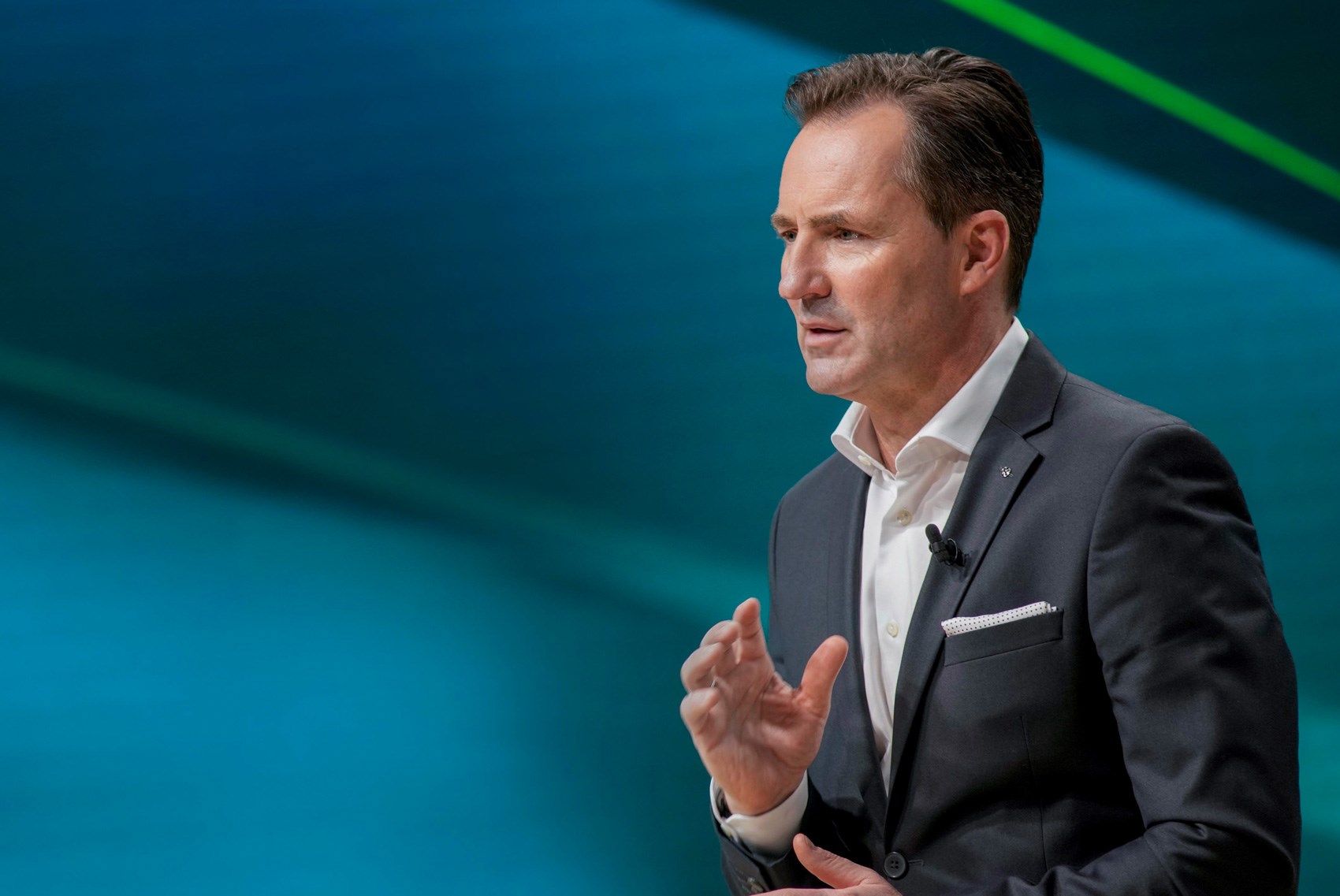
‘It was clear to me from the beginning that we were actually losing our core.’ Pretty strong words from the boss of one of the world’s biggest car makers – Thomas Schäfer, CEO of Volkswagen.
For the announcement of the True Volkswagen program, Schäfer tells the story of how he became CEO of the brand – and it made for ‘a serious headache.’ He admits that some of that will be because, when he took on the role almost four years ago, he had Covid. But he admits that ‘you immediately see where things are not working’ when he took the job and knew some serious changes were needed.
The brand has been in a wobbly place for some time. It’s had to commit to electric while balancing combustion and hybrid models in various markets, for example. It’s made some strange decisions about how it names its cars and how it’s designed interiors – both of which have largely blown up in its face and harmed sales. In 2025, it had to close a factory in Germany for the first time in the company’s history. And, on top of all that, it’s the headline brand within a wider VW Group that had its profits halved in the same year.
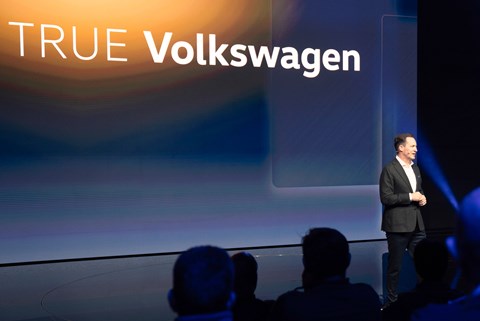
‘But a brand doesn’t change overnight,’ says Schäfer. ‘It’s through small decisions and through things we do every day.’ Indeed, Schäfer has spent the last four years of his career unpicking bad decisions and course-correcting the Volkswagen brand. It’s not been easy, with the boss saying he and his team have had ‘quite a journey – geopolitics, supply chains, competition and so on. But, more importantly, we had to change ourselves and create a new mindset.
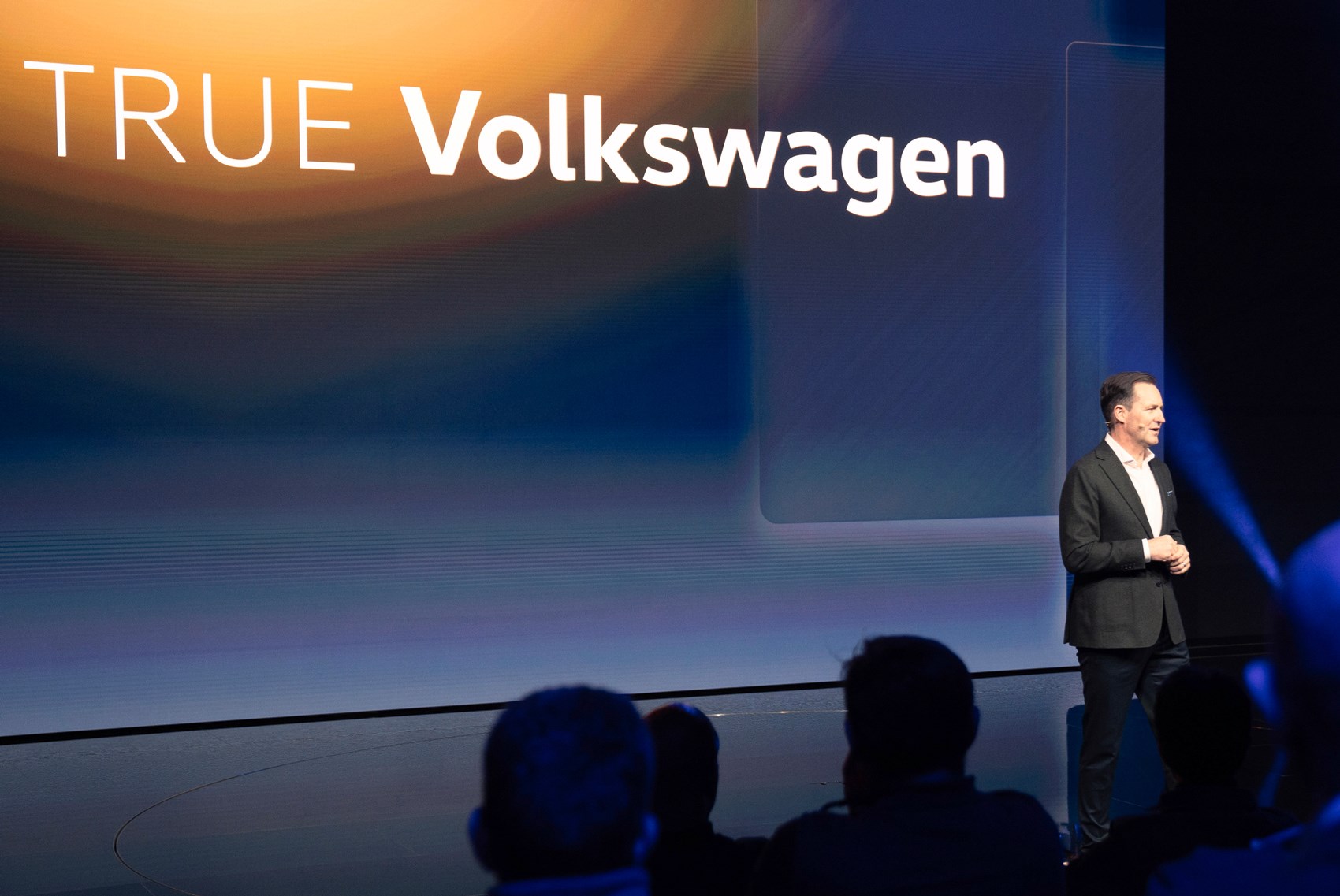
‘We’ve had one clear goal: to build real Volkswagens again, he adds. ‘Cars that carry the spirit of the brand and ones that feel like real Volkswagens.’ Which is effectively what this ‘True Volkswagen’ program is all about: bringing back VW to the heartland of what makes the brand a success. We’ve noticed that plan seems to have five distinct steps, so let’s go through them.
Step one: bring back buttons and real names
The ID.3 was criticised largely in two main areas: its poor-quality interior and its rather soulless name. Volkswagen had, for a long time, been a brand that still made models that had real names that meant things to people: Golf, Polo, Scirocco and so on. By contrast, ID.3 removed the warmth from VW’s new-era electric car that Schäfer felt was needed to help it succeed.
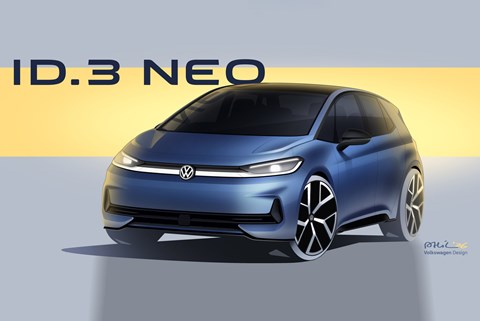
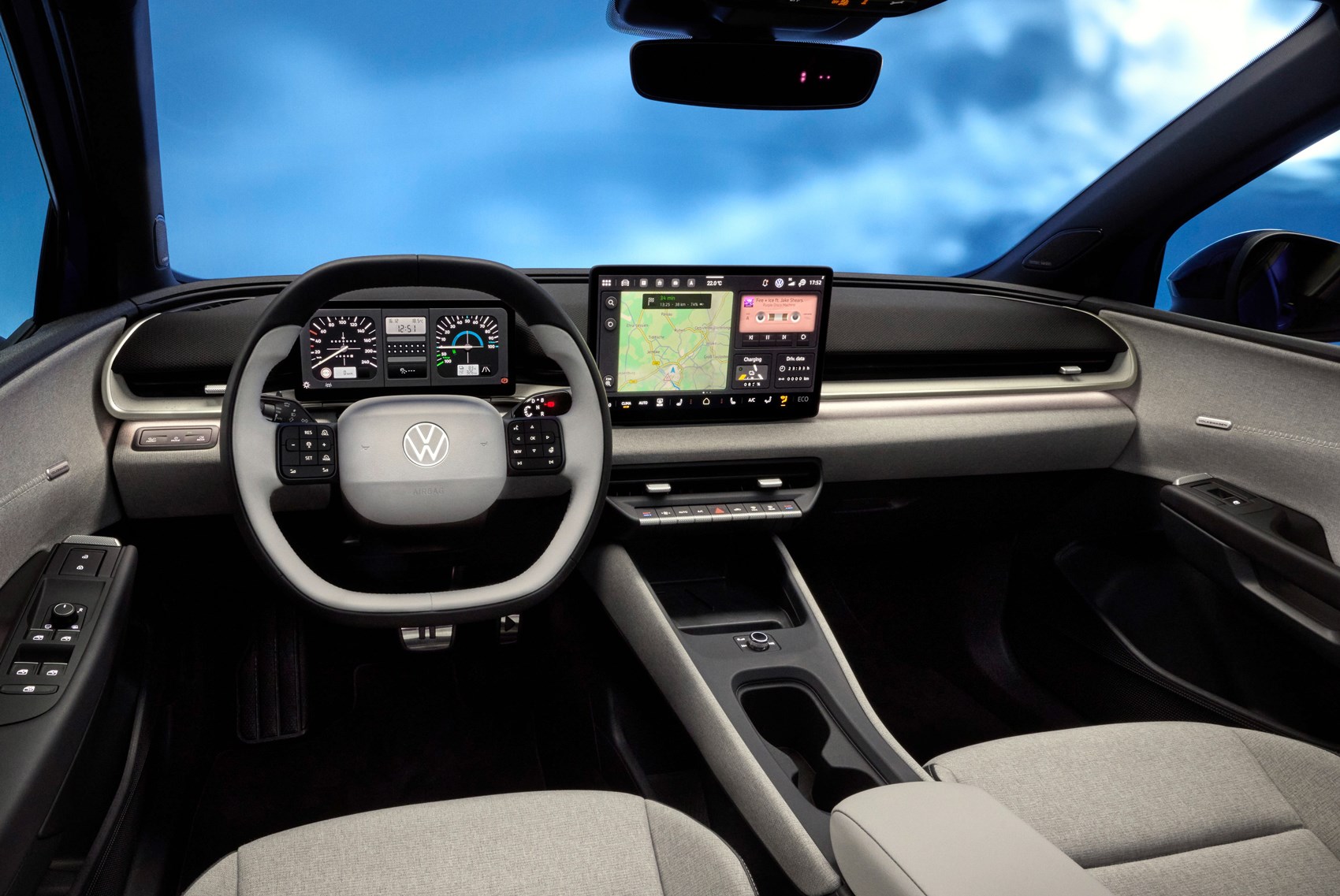
The bigger problem, though, was the interior. For years, VWs had always been a leader in the mainstream market as a brand that could make a car’s interior feel solid and dependable; as much as people bemoaned the Mk4 Golf GTI as being too stodgey, the regular hatch was lauded as an example to the rest of the world on how to make a high-quality cabin. But the ID.3’s interior felt too hollow and low-quality in places where it mattered, cheapening the brand’s image.
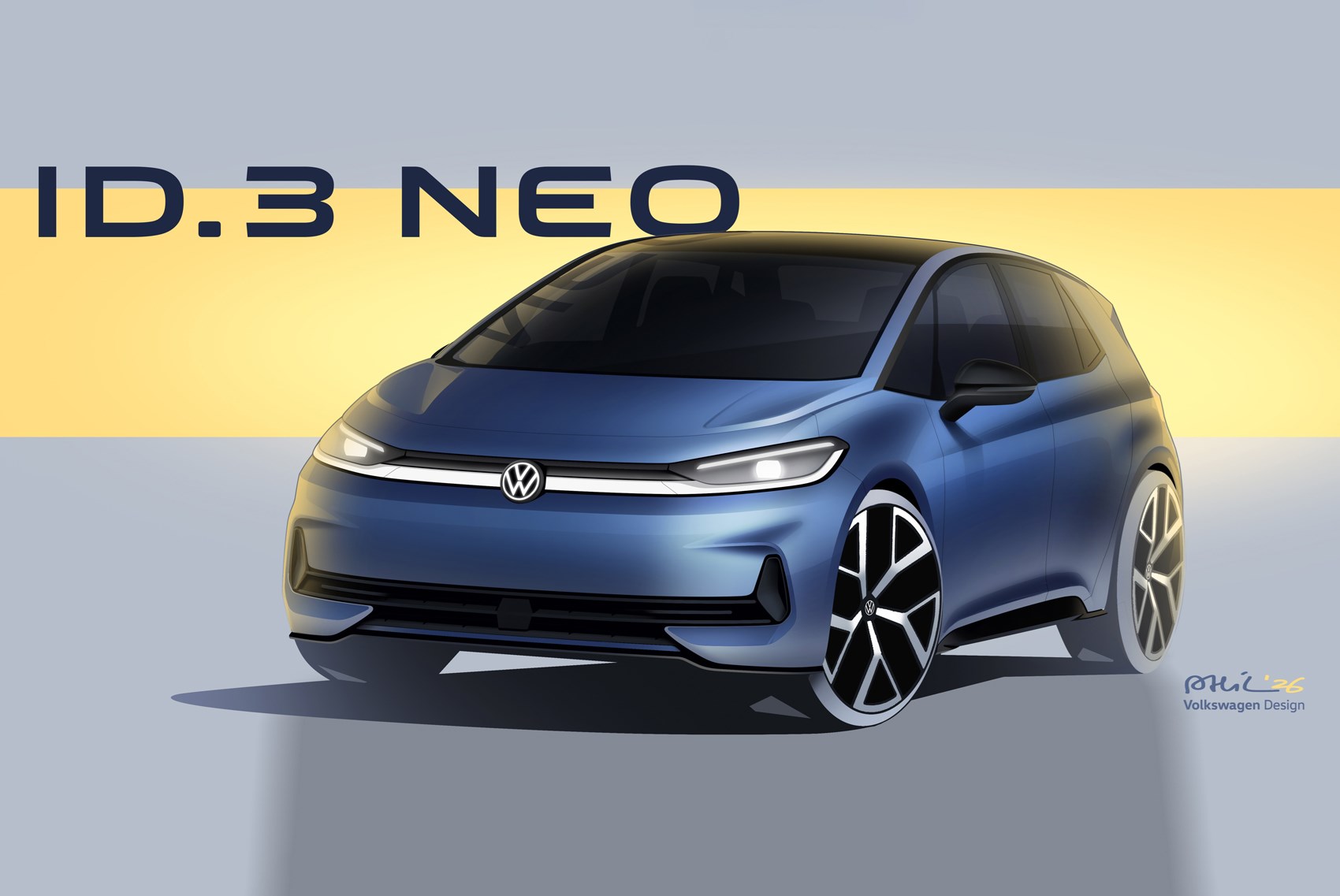
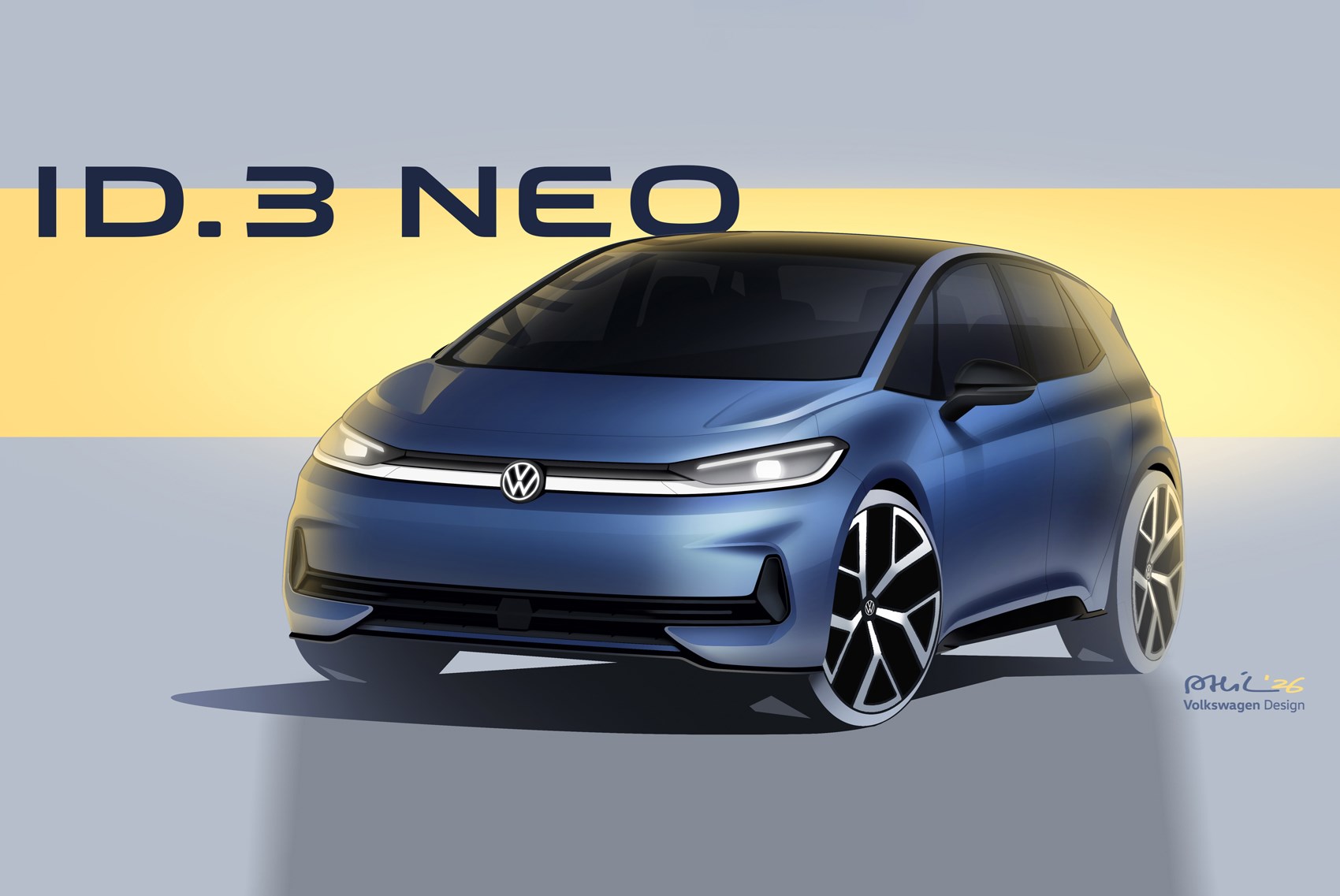
Both of these criticisms will soon be fixed. While the updated ID.3 (named Neo) keeps its fax machine name, the interior is said to be significantly overhauled. Other names will remain in place, with the ID. Tiguan tagline expected to replace the ID.4 after Schäfer confirmed a return to real names for all its cars at the 2025 Munich motor show.
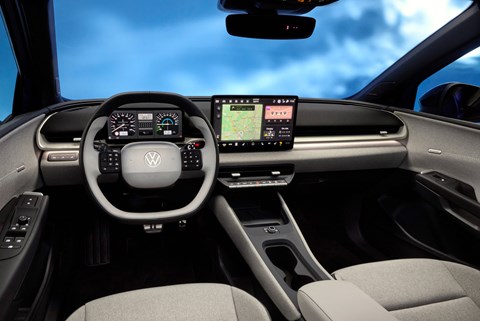
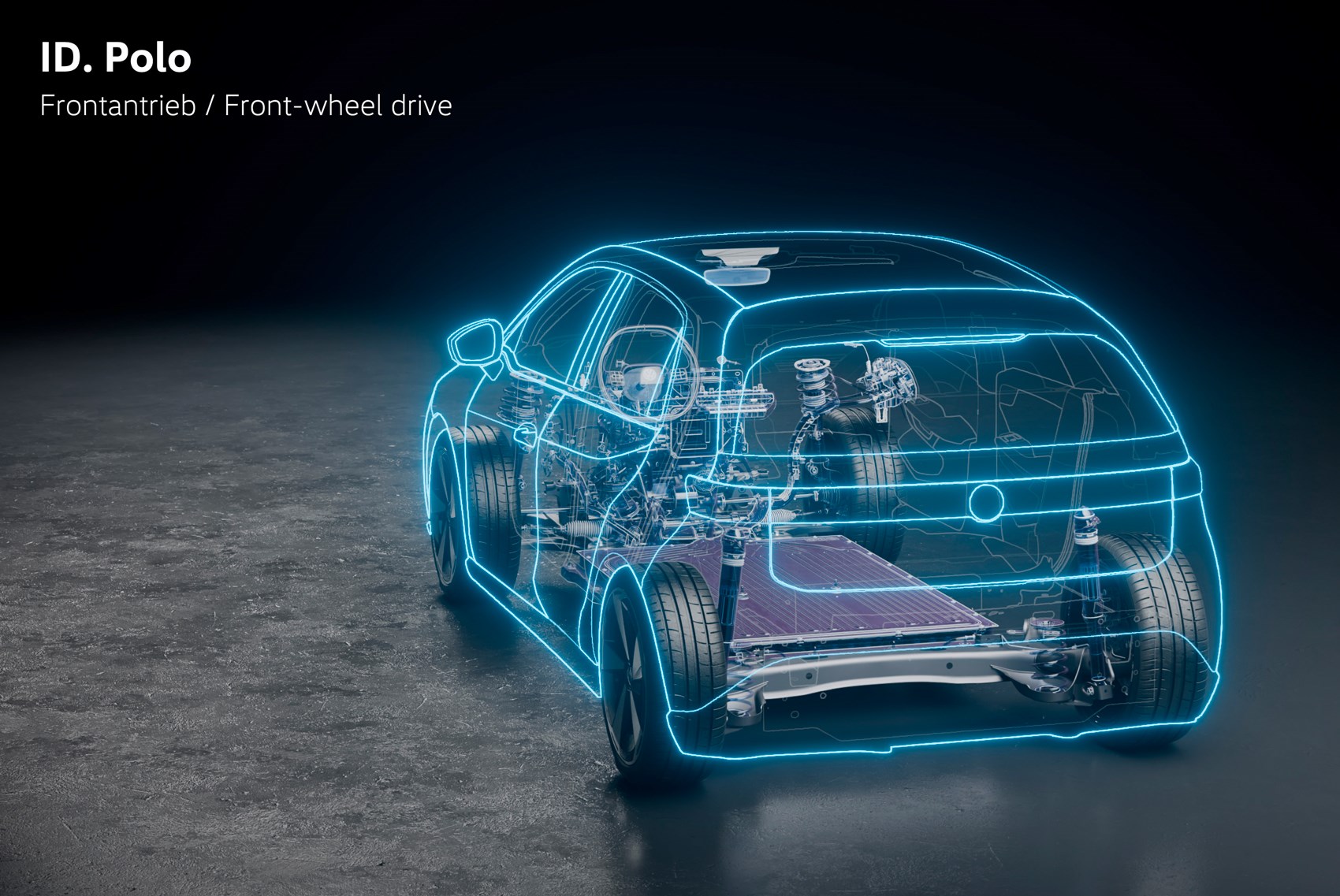
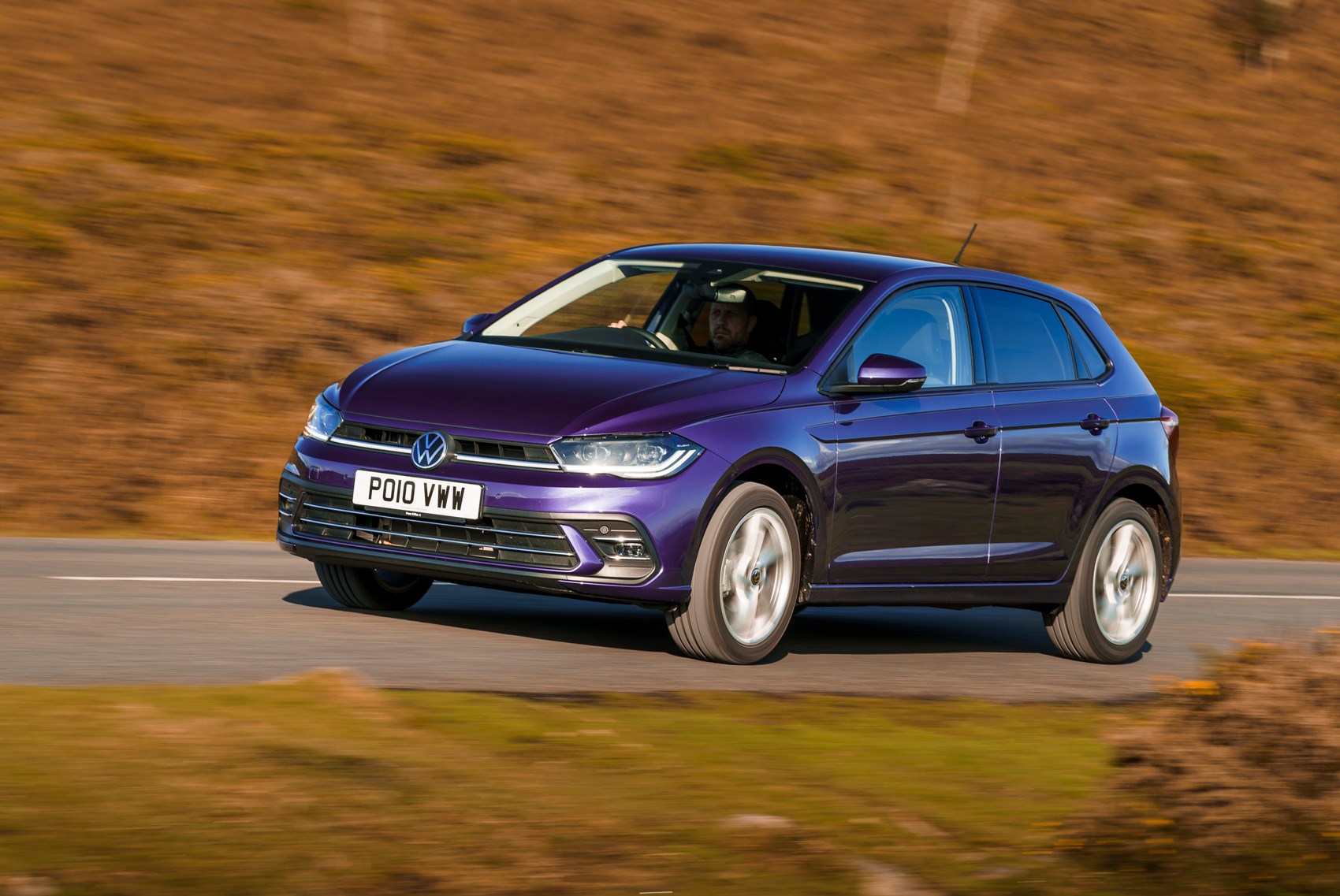
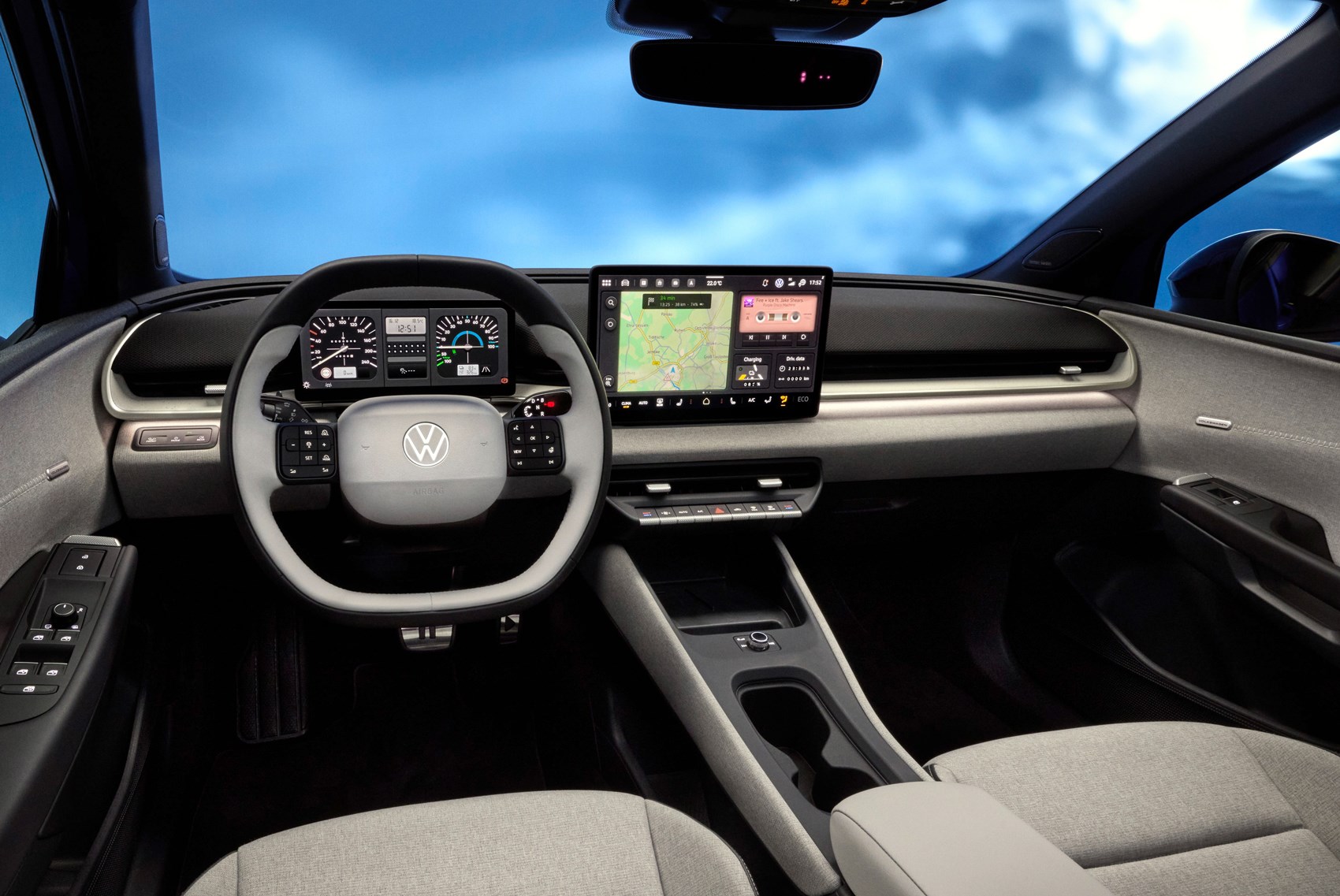
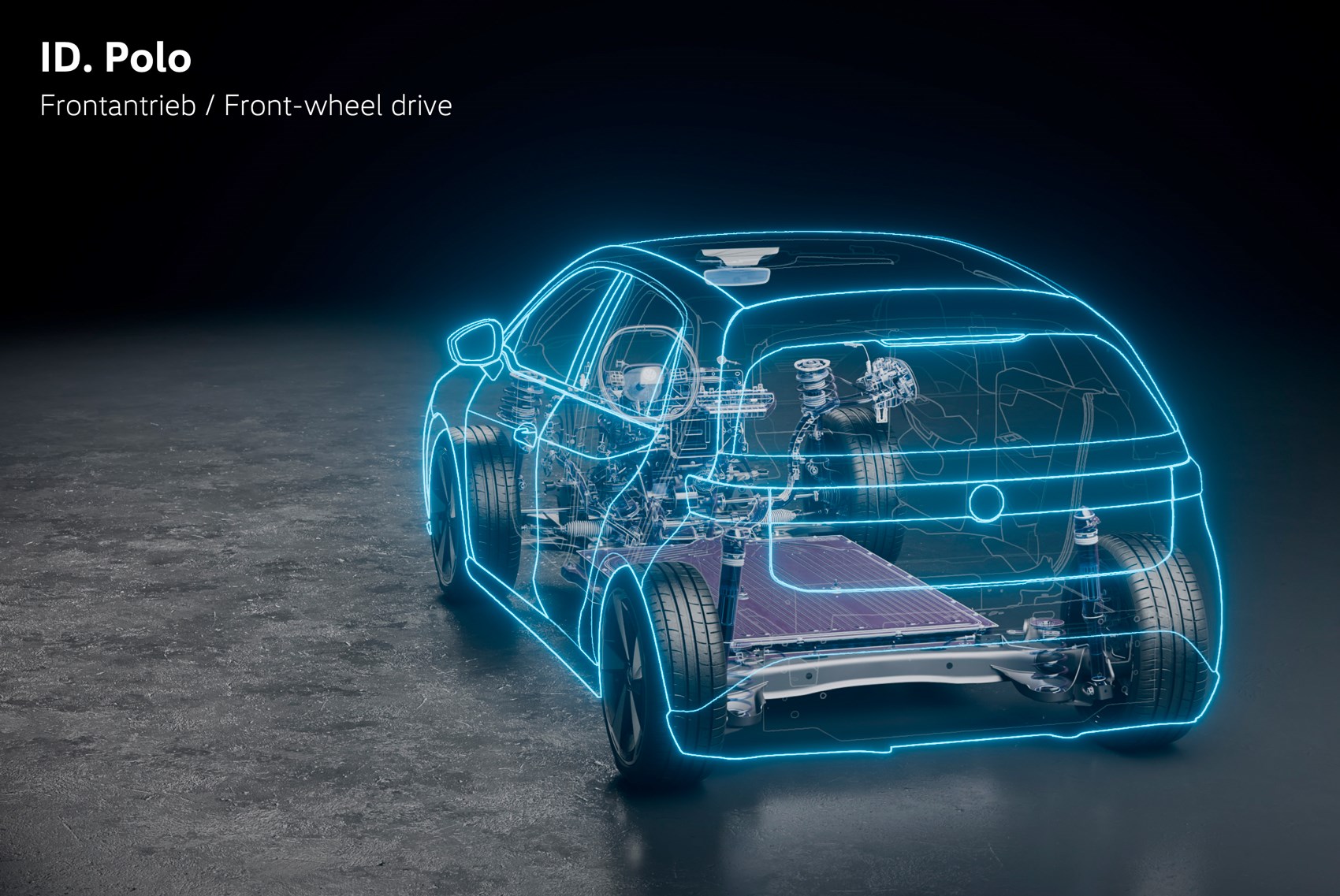
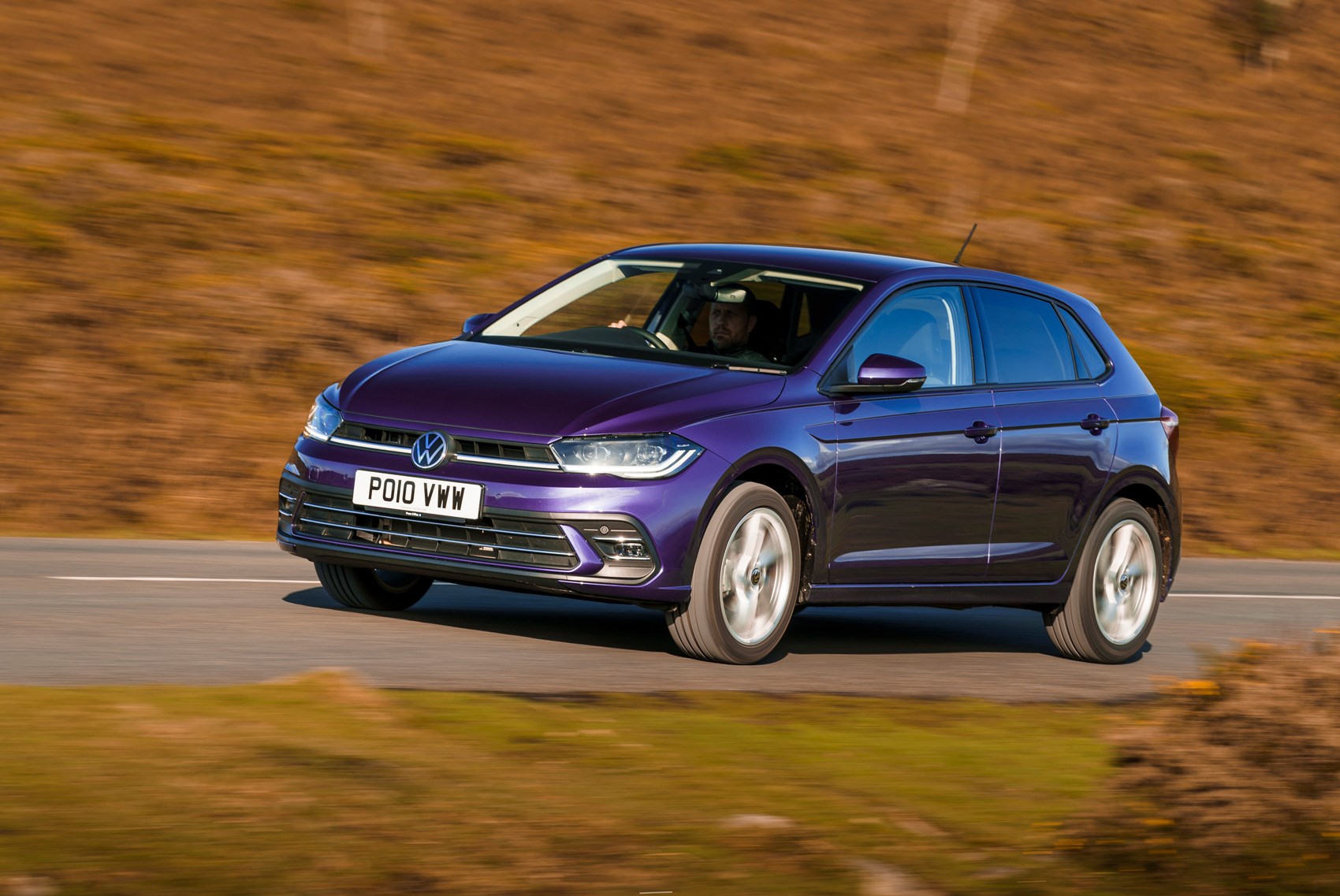
More importantly, though, we’ve already seen the interior of the ID. Polo (pictured above) that launches later in the year, and it comes with far more physical buttons for climate controls and driver aids. Hurrah.
Step two: focus on ‘people, not features’
Those are Schäfer’s exact words. ‘Before we start developing a car, we actually ask ourselves: ‘who is actually going to drive this car?’’, he says before providing an example of a nurse who works shifts and looks after her kids.
‘Our teams did something new where they made comics of her life with her using her car, and something clicked within them. That changed everything in the way we would do development faster, more focused and much closer to reality.’
Step three: become ‘master of the matrix’ again
Other than British Leyland, the Volkswagen Group is perhaps best known for how much it part and platform-shares between its brands. The VW Polo is also a Skoda Fabia and Seat Ibiza, for example, while the Golf has long spread itself across multiple body styles and brands over decades.
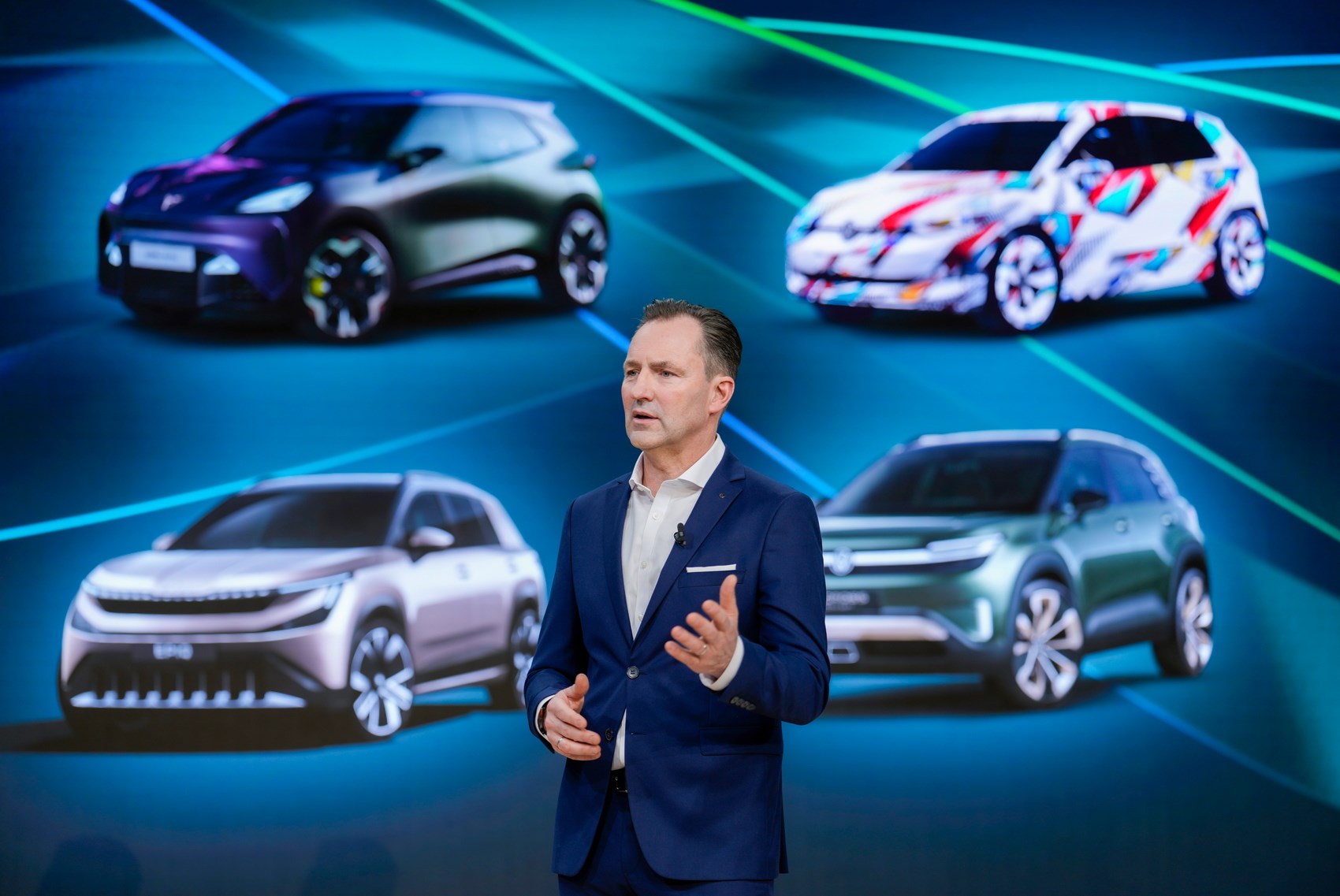
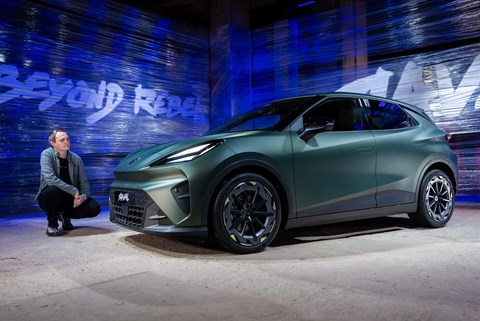
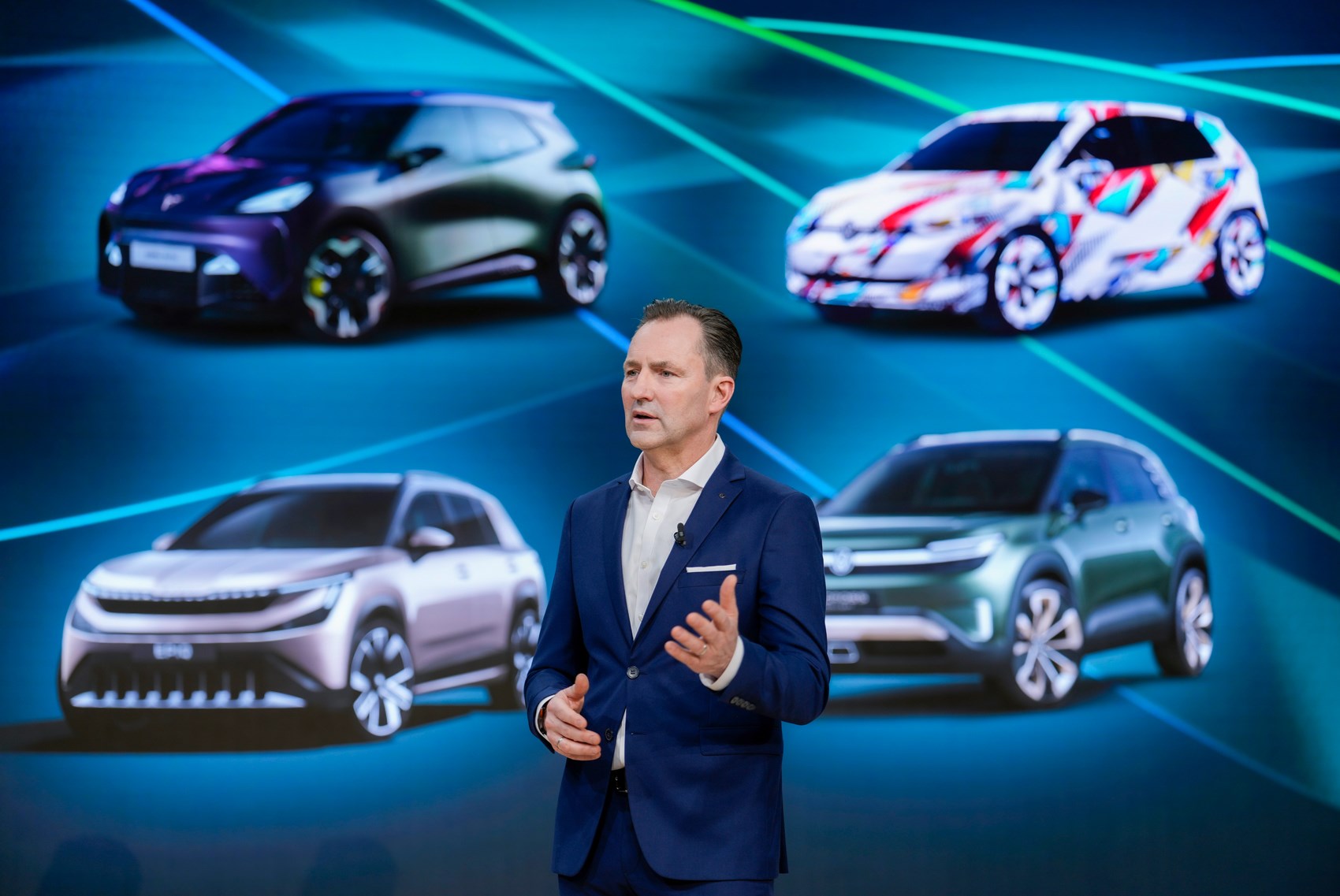
The reasserted aim with True Volkswagen is to ‘bring technology from higher segments and make it accessible to the lower ones,’ in Schäfer’s words, and keep leaning on the huge scale of the Group to maximise what can be done with one platform. Schäfer claims the the brand and Group are doing that again with MEB Plus – the front-driven electric car platform that starts with cars like the VW ID. Polo and the recently revealed Cupra Raval (pictured below). It’s said to be better packaged than the original MEB architecture and improves the tech on board.
‘The advantages of our platforms hasn’t only been about scale, though,’ Schäfer tells us. ‘It’s the flexibility of MQB, and now MEB Plus [which is also used by Cupra for the Raval and the new Skoda Epiq] and the upcoming SSP [Scalable Systems Platform].
‘Because of our size, we have historically had quite sizable R&D operations that are very cost efficient in places like Mexico and Brazil, or at Skoda and Seat,’ he adds. ‘But we have been using them somewhat inefficiently because everybody has been working for themselves. We are changing that.’
Step four: keep Andy Mindt cranking out design hits
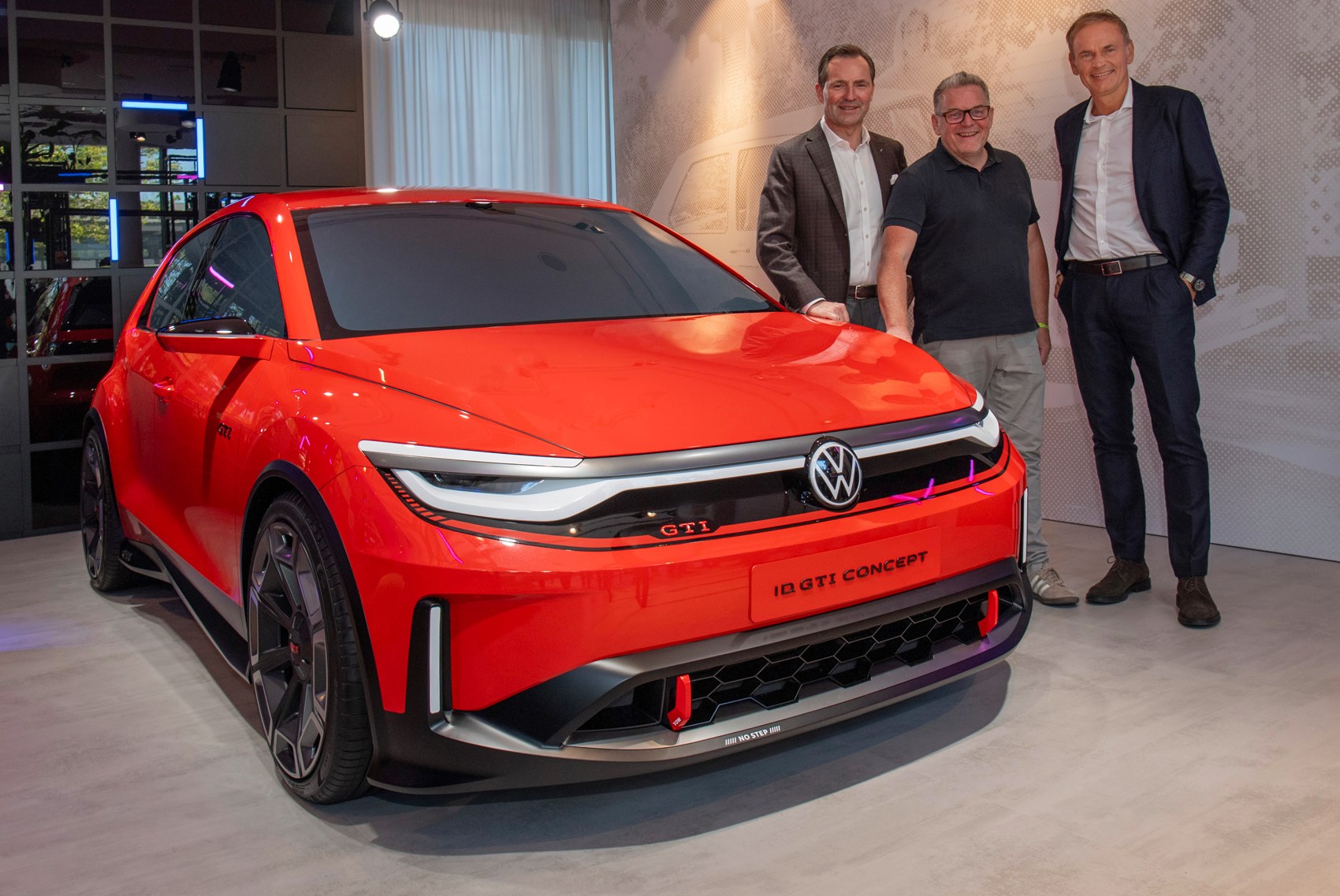
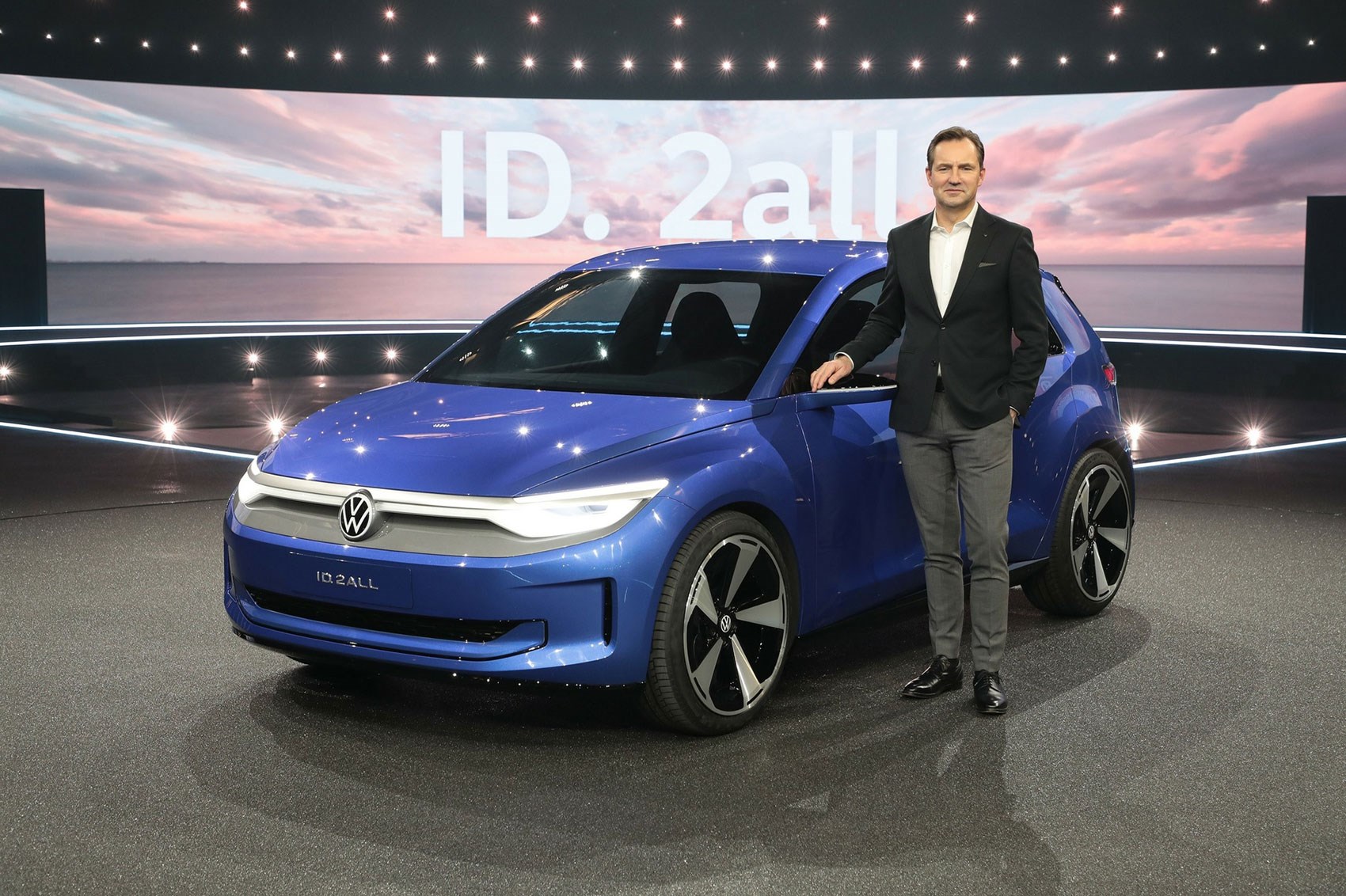
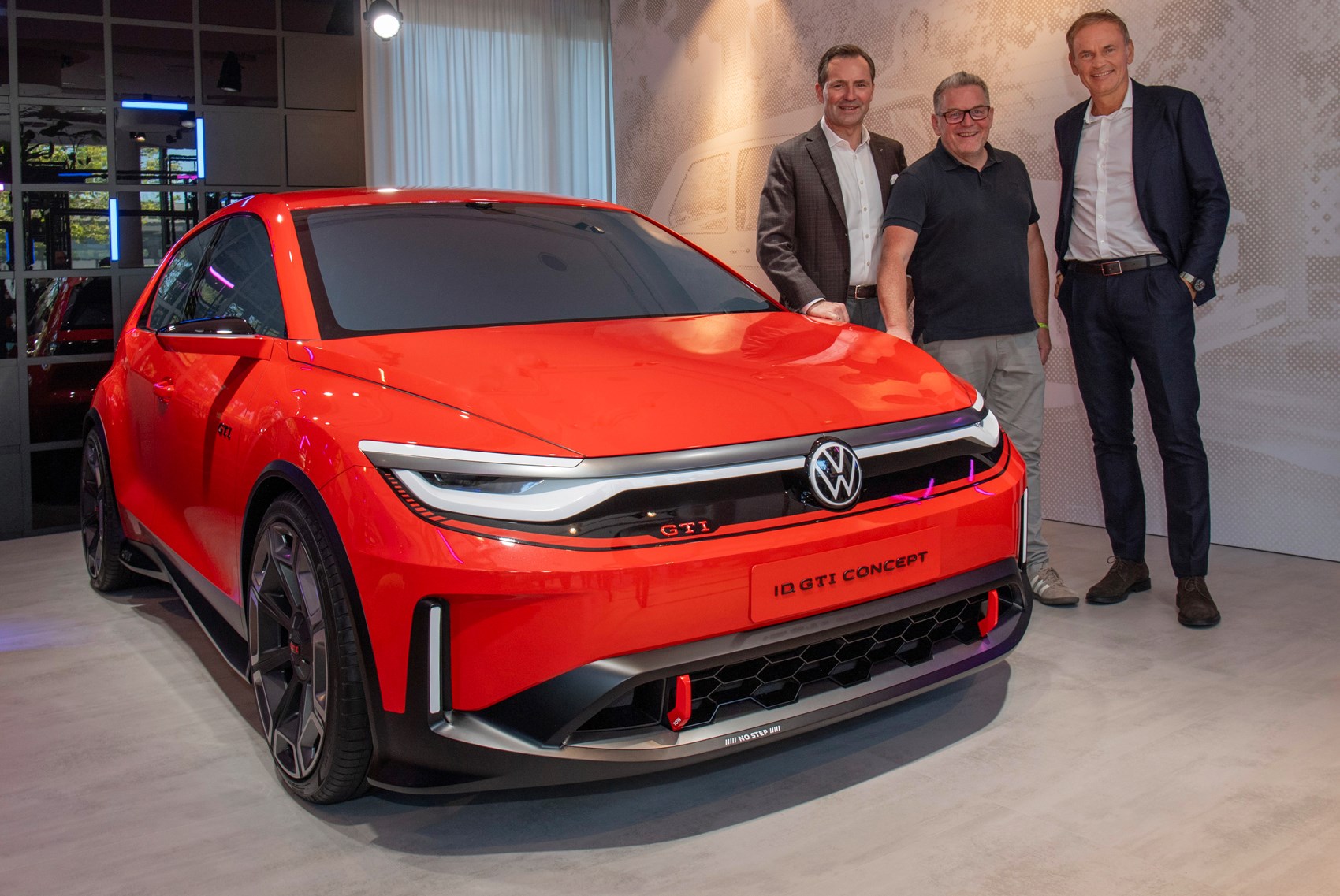
Perhaps one of the car industry’s biggest bromances is the one between Schäfer and VW design head Andreas Mindt (pictured below, middle), with Thomas speaking highly of the enthusiastic head of design and how he envisioned VW’s significant course correction.
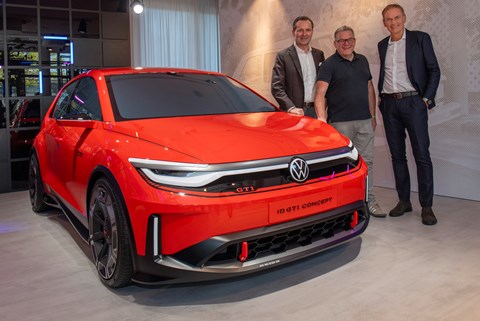
‘I remember my first design meetings that I had regularly on a Monday evening,’ says Schäfer. ‘Those early meetings were, shall we say… frustrating, because I kept thinking: ‘oh my God, this is not Volkswagen!’ And then, in December of 2022, I met Andy Mindt and my life changed in the first conversation we had.’ Schäfer tells of how Mindt quickly sketched how VWs should look like and how he interpreted the brand, and Thomas was hooked.
Mindt and his team are the creative vision behind the ID. Polo, upcoming ID. Cross SUV as well as the ID. Every1 concept car that previews a circa-£15,000 city car due from 2028. These cars are all clean looking, tidy and feel like premium products – even in segments that don’t command a premium price.
Subhead: Step five: don’t f*** up the Golf again
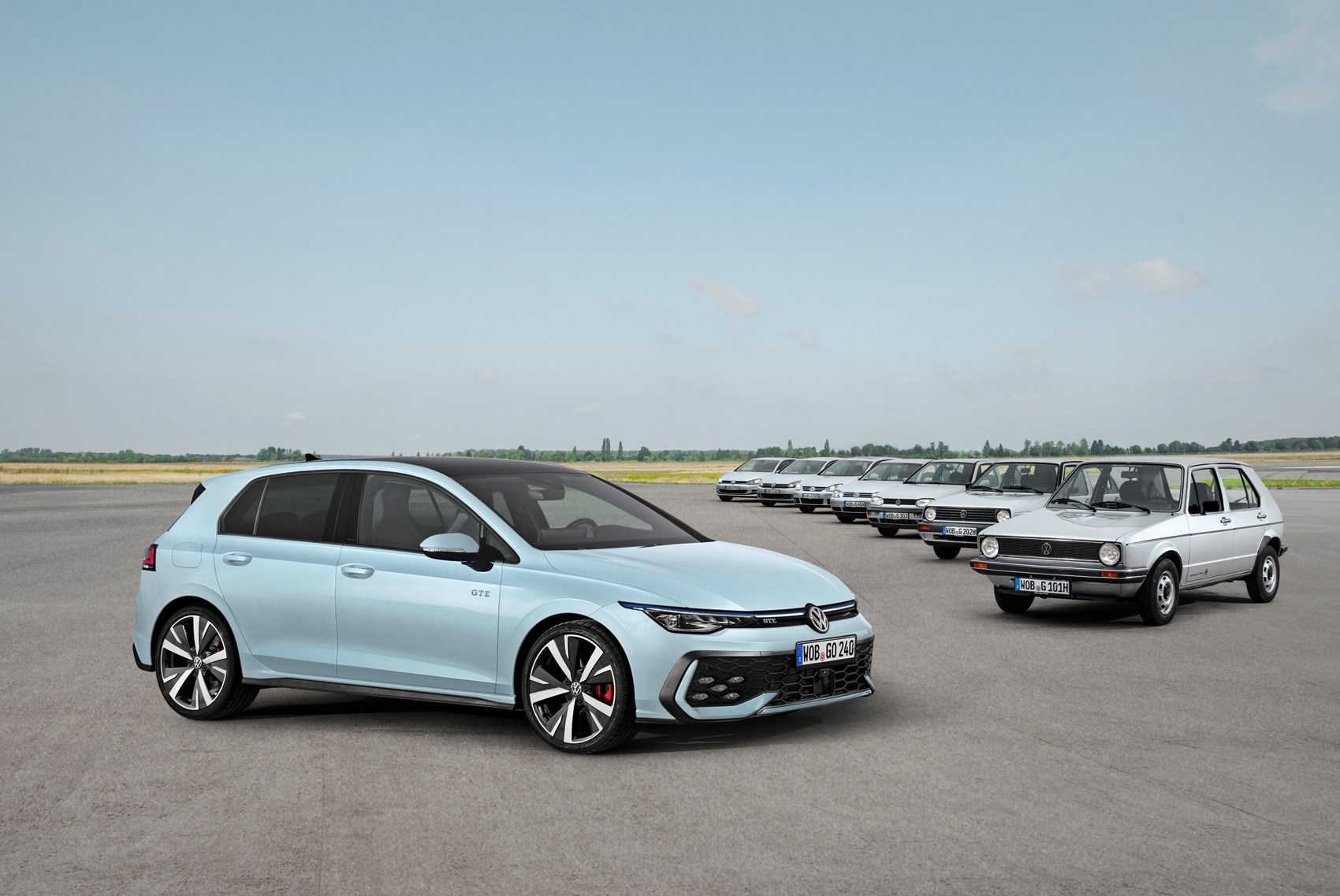
The Golf over its more-than-50-year history has not had a perfect record by any stretch. But, when the Mk8 arrived sporting a similarly fiddly and low-quality interior to the ID.3, it felt like the perennial hatch was at its lowest ebb yet. Both Mindt and Schäfer are in the middle of making sure that never happens again.
As we write this, the brand is in the middle of shaping the design of its Mk9 Golf, which reportedly isn’t due until at least 2028 and has the whole car industry waiting for VW to make its move.
Is Schäfer worried? ‘Not at all,’ he smirks. ‘We have this debate frequently, we look at design models and the ideas of the design team and it’s usually quite fun. For the Golf, the first shot that I saw… I was already saying ‘wow’. And we actually showed it to our management team in December in Berlin.
‘It’s difficult, right? Because the Golf has to be a proper Volkswagen but you don’t want it to look retro. But with this one, I’m already thinking: ‘yes, wow, cool.’
console.debug(‘taboola container loaded..’)
window._taboola = window._taboola || [];
_taboola.push({
mode: ‘thumbs-feed-1×1’,
container: ‘taboola-below-article-thumbnails-v3’,
placement: ‘Below Article Thumbnails V3’,
target_type: ‘mix’
});


var disqus_shortname = ‘carmagazine’;
var disqus_developer = 0;
var disqus_identifier = ‘article-wp-186259’;
(function () {
var dsq = document.createElement(‘script’);
dsq.type = ‘text/javascript’;
dsq.async = true;
dsq.src = ‘http://’ + disqus_shortname + ‘.disqus.com/embed.js’;
(document.getElementsByTagName(‘head’)[0] || document.getElementsByTagName(‘body’)[0]).appendChild(dsq);
var s = document.createElement(‘script’);
s.type = ‘text/javascript’;
s.async = true;
s.src = ‘http://’ + disqus_shortname + ‘.disqus.com/count.js’;
(document.getElementsByTagName(‘head’)[0] || document.getElementsByTagName(‘body’)[0]).appendChild(s);
})();Please enable JavaScript to view the comments powered by Disqus.