[analyse_image type=”featured” src=”https://velo-cdn.outsideonline.com/wp-content/uploads/2026/04/GettyImages-2209919781.jpg”]
Best together, or better apart? That’s the question many professional riders, pro teams and race fans are asking themselves about Paris-Roubaix Women.
For the first time since its introduction in 2021, the race will be held on the same day as the men’s event. Previously a Saturday contest, organizers ASO are running the two races on one day, with the women’s race due to reach the Roubaix velodrome two hours after the men.
Good thing? Bad thing? The debate is swirling, and the jury is out.
ASO is, of course, billing it as a plus.
“If we look at TV audiences, we were already reaching around two million viewers at peak, which was strong,” race director Franck Perque told CyclismActu. “By following the men’s race, with a later finish around 18:20, we expect that number to grow. People will stay in front of their TVs.”
That may be the case, but television coverage is actually part of the controversy. Why is that? Let’s dive in.
‘Not so nice that we get probably less than 90 minutes’
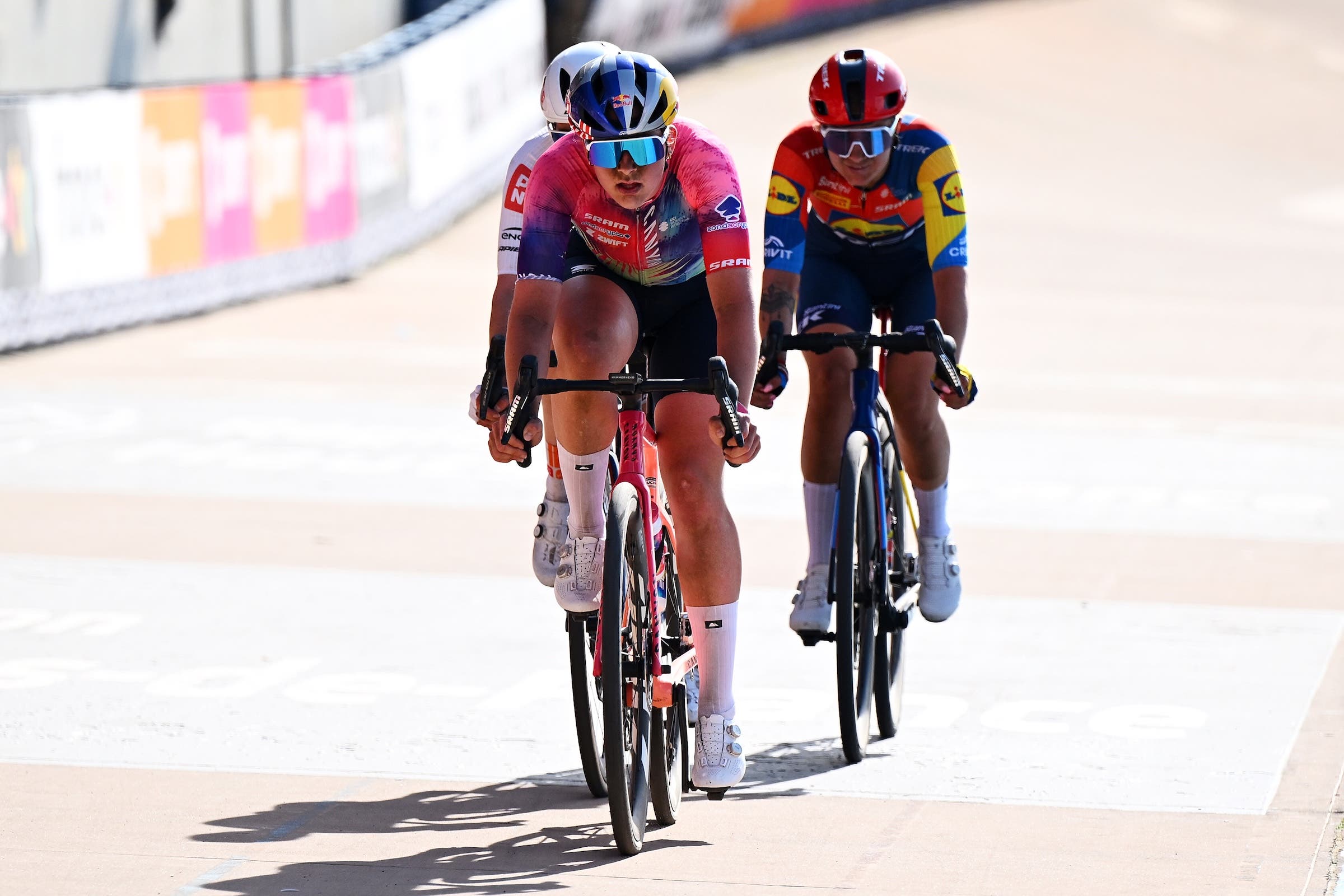
Last year’s race featured plenty of drama, with defending champion Lotte Kopecky showing ominous form as the kilometers ticked down, yet running out of steam just when the key moves were playing out. Instead Pauline Ferrand-Prévot kicked clear and fended off all those behind to win in the famous velodrome.
Almost four months later she went on to win the Tour de France Femmes, delighting home fans.
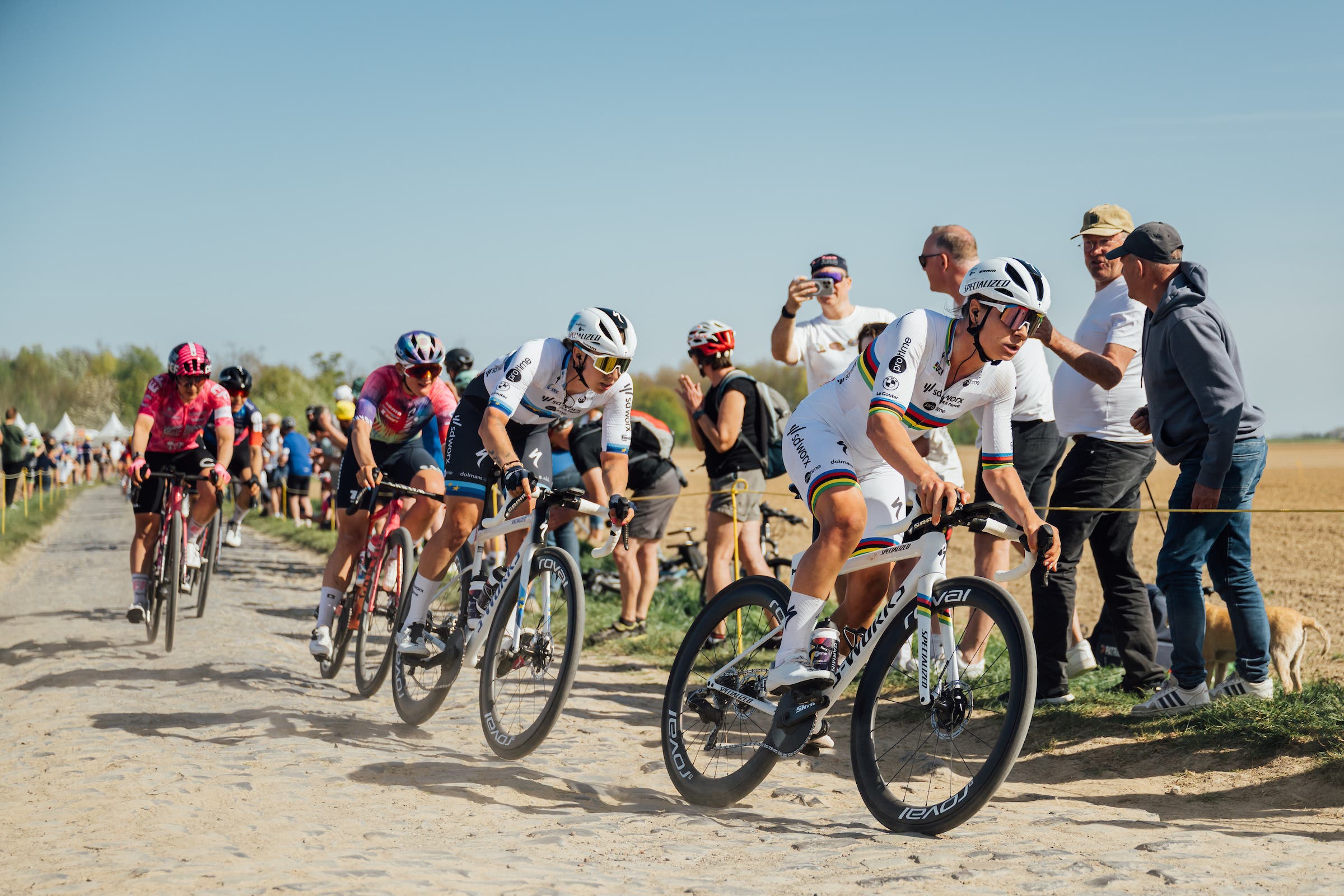
Much of that 2025 Roubaix was viewable on TV. This time around, only the last 90 minutes or so will be watchable.
That’s down to the timing of the two races, and to the host provider filming it.
“It is live TV coverage, it is said that we get more viewership if we go after the men,” EF Education Oatly directeur sportif Carmen Small told Velo on Saturday. “I get it.
“But it is really hard because we had the full race [on TV] in the last years. And really when we enter the cobbled sectors, it is game on. The race is there from that beginning and it is very dynamic and exciting to watch. And later in the race it is exciting, but also at the same time it is difficult because the race already has unfolded, and is then going into the final.
“So it is not so nice that we only get probably less than 90 minutes. That is probably the biggest thing.”
Those concerns were echoed by the Cycling Alliance, which issued a post on social media on Saturday appealing for a rethink.
“With @parisroubaix_femmes happening tomorrow, the news of reduced television coverage lands at exactly the wrong moment,” it stated. “The women’s race will receive less than 90 minutes of coverage, half of what was broadcast last year.
“This is one of the biggest races on the calendar. A race that has quickly become a defining showcase for women’s cycling. And yet, just as momentum continues to build, visibility is being pulled back. Progress in this sport is not guaranteed. It needs to be protected.”
‘Super-electric crowds’
That concern aside, there are some positives to the move to Sunday. The decision by Zwift not to extend its sponsorship of the race may have been a factor in forcing the change. But, whether or not that was actually the case, Small believes that ASO is likely acting in good faith.
“I think they are trying to do the right thing, of course,” she said. “Any change is going to be very difficult for teams, because it is a change. Change is hard. And so when we have had it one way for a few years, then of course we always look at the negative because people are negative and we want to find the problems in things.
“So I think rather we [should] try to be a little bit positive, because I do think it is in a good way that they are trying to change. [They are trying] to always benefit the sport.”
ASO has run the Tour de France Femmes avec Zwift since 2022 and has worked hard, building the race from what was originally a one day event called La Course by Tour de France to a nine day contest last year.
Some query the far lower prize money and also argue the race could be longer again than that nine-day slot. But others applaud the Tour organizers, which is now making up for a long and frustrating wait for equality in the sport.
Canyon-SRAM Zondacrypto rider Tiffany Cromwell sees both sides to the change this year.
“To be honest, I would say it is probably a mixture of both pro and cons,” she said on Saturday. “For me as a rider for sure there’s probably going to be super electric crowds. So from that point of view it will be pretty cool.”
More crowds, more danger?
Cromwell has ridden four out of the past five editions of the race, only missing out on 2025. She is therefore well placed to assess where things are at.
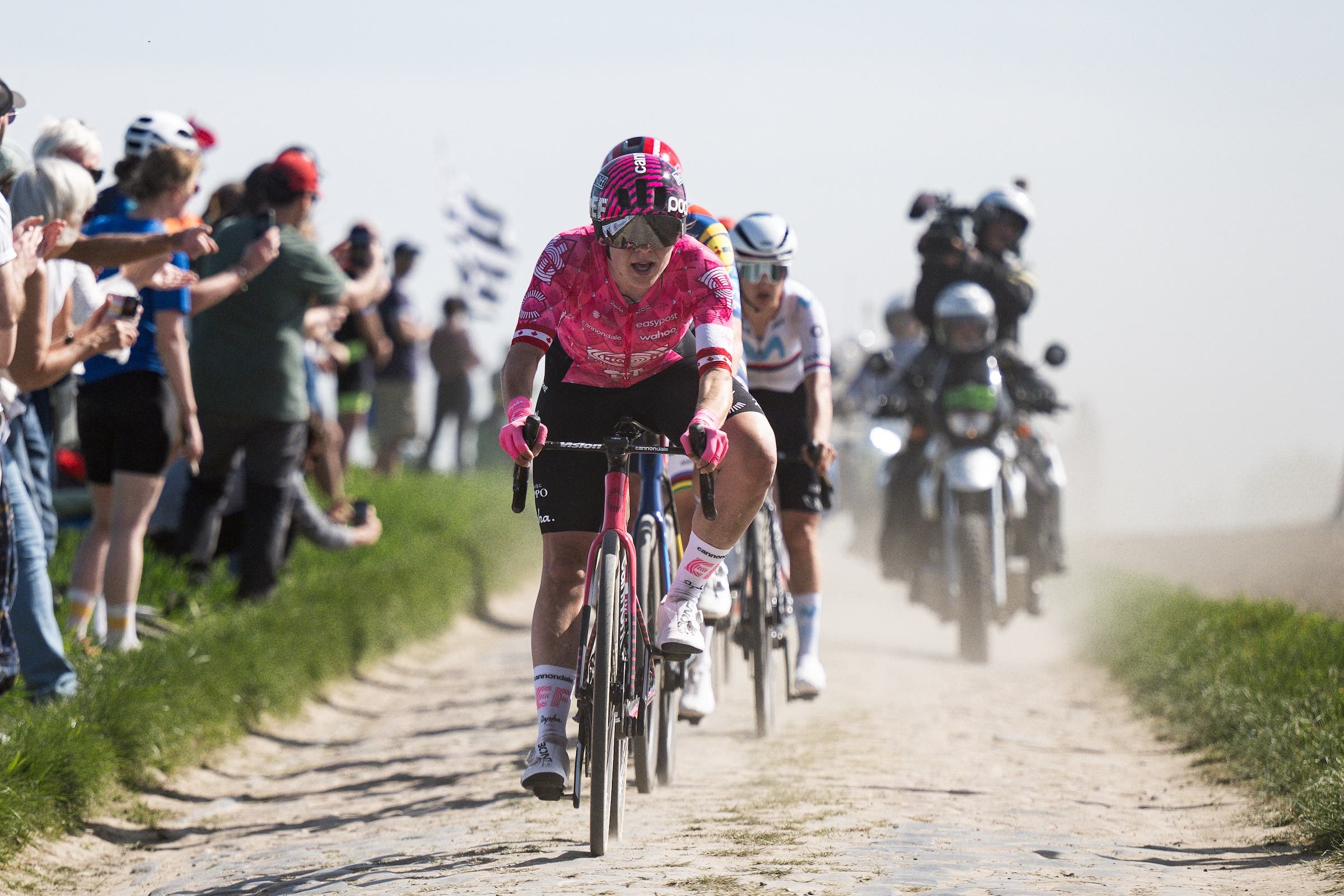
“In previous editions we had good crowds, definitely more on the biggest sectors,” the Canyon-SRAM Zondacrypo rider said on Saturday. “But I think it is going to be even more hectic because I’d imagine people will stay for the entire day.
“From a racing point of view that is always more fun. For sure we will have to be a little more cautious – later in the day, people more drunk, or just more people on sections where you are trying to ride which aren’t on the cobbles. There’s probably a high risk of a crash.”
She said the risk of crashes would be exacerbated if there is any rain, pointing out that the women’s race will be last of four on Sunday, meaning any churning up of mud would hit them most.
“We even saw that in year one in our race when Lizzie [Deignan] went solo and then she had the advantage of the cleaner lines than the peloton were dealing with,” she pointed out. “More mud gets kicked up as more people go on the cobbles.”
Cromwell believes there will be a boost in spectators. Small is keeping an open mind.
“It will be nice to have a lot of fans out. But it will be interesting to see. Because imagine you are out there pretty early. I mean, I saw all the campers lined up, like 100 of them in one section, so I think they are not going to go anywhere. But I will be curious if there are some other people leaving because it is a long day.
“You will have the under 23 and the junior race already gone through, so for sure there will be spectators out there. But we had a lot of spectators on Saturday last year.
“So I am curious what happens on that side. I mean, viewership for the TV, for sure we will have more. But I don’t know out on the side of the road. I mean, maybe you don’t notice it so much [she laughs], it is pretty crazy going through there.”
In contrast, Picnic Post NL rider Lucie Fityus will definitely notice if there are more spectators.
“Last year on Flanders, going up the Kwaremont, I’ll never forget that feeling of just people so many deep either side of you screaming at you, shouting at you. The atmosphere is incredible,” she told Road.cc. “You are at the end of the race, you are at the end of your tether and you are absolutely buried so deep.
“And really that is one of the main things that gets you going. That roar of emotion, the roar of the crowds adds that extra boost.”
Other complications: personnel and information
What is worth considering is that moving the women’s race to Sunday doesn’t just affect the riders. There are also repercussions for their teams, something that will make the most unpredictable race of the year even harder to control.
Punctures and crashes are a huge part of Roubaix each year, and team support is vital at each cobbled sector. There are a maze of back roads to navigate to get to each sector in time, and having two big races overlapping is really going to challenge them.
“It is really hard on the teams who share the resources with the men’s squads,” Small told Velo. “We are very much one team, which is fantastic. It is a great organisation, I have been part of other women’s teams and it is not necessarily like that.
“But it stretches us really thin as a team. That is hard on teams, to make it one day with everybody racing. And that’s even more so for this specific race, because of the demands. To get everyone to every sector requires a lot of manpower.
“We have a great team and we are super good in the way we are set up, but still it is just a lot of people. And not every team has the resources that we have, so I can imagine other teams are spread really thin.”
Picnic PostNL DS and coach Callum Ferguson notes a different challenge for the teams, something caused by the truncated coverage.
“To have only an hour and a half TV coverage is not the best,” he told Road.cc. “And especially for us in the car, it is so messy. It is a race where you don’t actually get so much information from Radio Tour, to be honest. And with the TV, especially if you are in the front group, to see if a rider is there or not can be really beneficial.”
Learning from Flanders
There will likely be plenty of analysis after the race to determine how successful or not the move has been. ASO will have its view and is already hailing the new schedule as a plus. Riders and teams will form their own opinions and perhaps push for changes or refinements.
Fityus believes a rejigging of things may be needed for Roubaix.
“I would propose to maybe don’t put three races on the same day. Don’t put the under 23s on,” she said. “Maybe put the men’s and women’s races on the same day and space them out a little bit better so people can watch both races.
“Put one race earlier and one race later. I mean, Flanders seems to manage it somehow. I know we don’t go from the exact beginning of Flanders but people I think get more than a half of Flanders on TV.
“And if they can do it, why can’t Roubaix do it?”
Her points are well made, and definitely worth consideration.
[analyse_source url=”https://velo.outsideonline.com/road/road-racing/womens-paris-roubaix-move-step-backwards/”]