Wonderland
SNAIL MAIL FINDS MEANING IN THE SPIRAL
One of the defining indie rock voices of her generation, Lindsey Jordan – aka Snail Mail – is a savant of sad girl serenity. Sharing her third record, Ricochet, she tells Wonderland about being bold, taking stock, and breaking free.
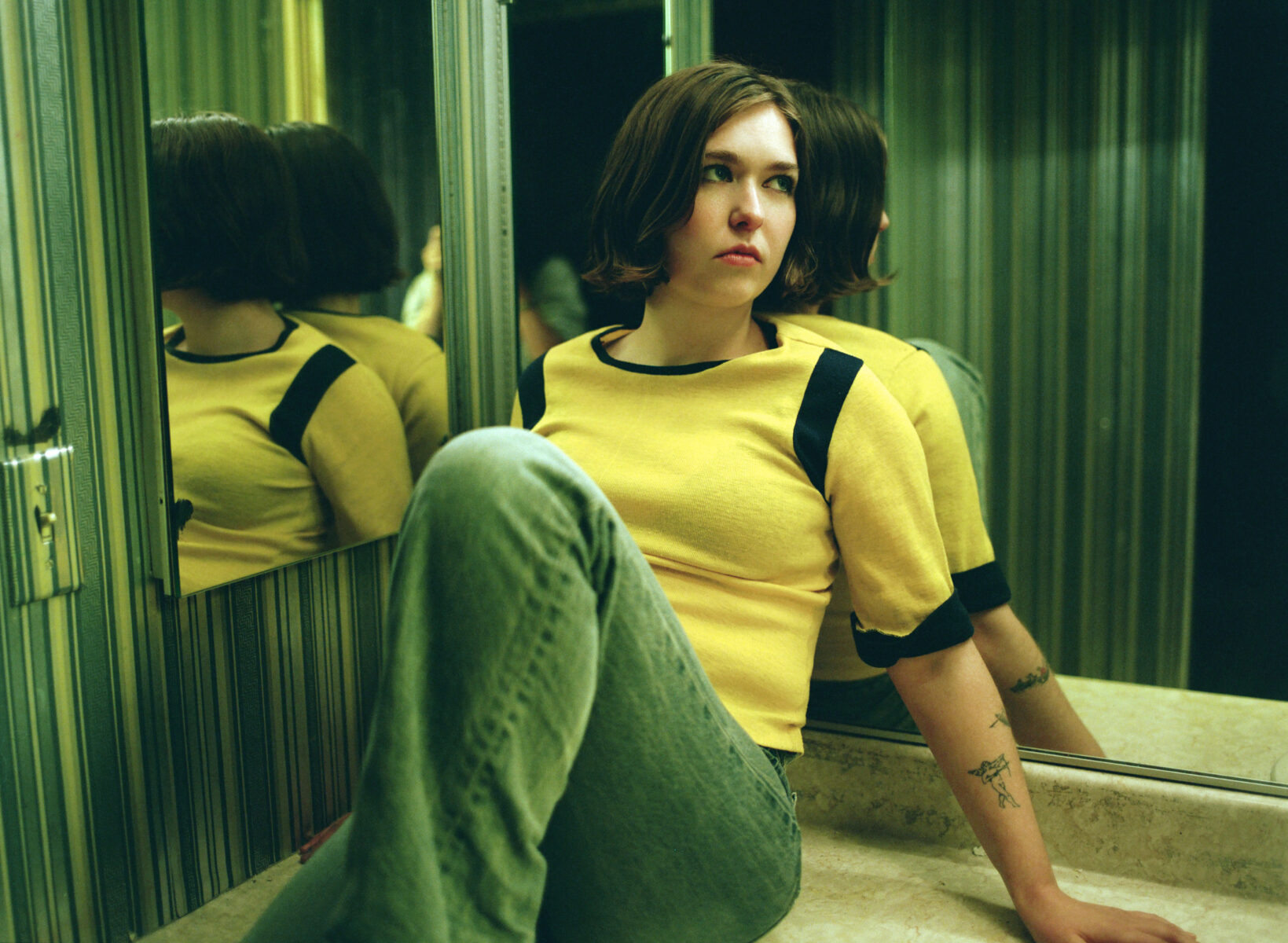
There’s a moment early on Ricochet – Snail Mail’s long-awaited third album – where Lindsey Jordan sings, “Battalions of angels marching from on high / Say ‘above us, it’s just sky’.” It’s a line that feels quietly seismic. Not because it offers answers, but because it refuses them. It lingers in that uncomfortable, liminal space between belief and doubt, hope and dread—the exact terrain Jordan has spent the past few years navigating.
Five years on from Valentine, Ricochet arrives as both a return and a rupture. Yes, the guitars are still there – big, luminous, unmistakably hers – but they’re now wrapped in sweeping arrangements, unusual textures, and a vocal performance that feels newly unguarded. If her early work captured the volatility of young love, this record widens the lens. Time, mortality, and the fragile architecture of connection sit at its core. It’s existential, yes – but never detached. If anything, it’s her most emotionally present work to date.
When we speak, Jordan is both excited and visibly processing what it means to finally release the record. “It’s really exciting,” she says, pausing slightly, as if weighing the word. “But I think I’ll feel less nervous when I’m done representing it… Sometimes I get nervous to talk about it, just because I care so much about the record.”
That tension – between pride and pressure- runs through Ricochet just as much as its lyrics. For Jordan, the process of making the album was anything but straightforward. “I knew it was going to take me a long time again,” she admits. “But I definitely thought it would take me less time than it did.”
Where Lush and Valentine traced the contours of intimacy and heartbreak, Ricochet feels like a deliberate step away from relationship-centric writing. That shift wasn’t accidental. “I definitely went into it knowing that I wanted to switch up the subject matter,” Jordan explains. “After finishing Valentine, I was kind of feeling pigeonholed… I don’t think I would have been proud of it lyrically if I just relied on my laurels.”
Those “laurels,” as she calls them, no longer felt present – no longer hers to write from. In their place came something more abstract, more destabilising: a fixation on mortality.
It wasn’t a gentle arrival. A viewing of Charlie Kaufman’s Synecdoche, New York triggered something deeper, something already latent. “I grew up pretty Catholic,” she says. “And I developed pretty intense OCD around heaven and hell… and then I watched this movie, and it just irritated a specific part of my brain.”
What followed was a period of intrusive, looping thoughts about death – persistent and overwhelming. “It was just like all I could think about,” she recalls. “I’d be enjoying time with my friends or my parents, and then suddenly I’d have to leave the room.”
It’s this internal conflict that Ricochet wrestles with – not to resolve, but to understand. Tracks like “Nowhere” capture that dissociative pull, Jordan singing, “Numb myself out / What else should we do?” while hovering between presence and escape. Elsewhere, “Cruise” leans into the temptation of disappearance –“I can leave my body and float away”—before undercutting it with a return to reality.
“I would love to address this,” she says of writing about death, “but it took me a long time to figure out what my point of view was going to be… I didn’t want to come off like I thought I knew better than anybody else.”
That hesitation is key. Ricochet doesn’t preach – it questions. Even its most striking lines are delivered with uncertainty. Jordan laughs softly when I mention the opening lyric, “Above us, it’s just sky,” admitting she still feels uneasy about it.
“I even feel nervous talking about it right now,” she says. “It’s so sensitive… it almost feels like I’m making a scene of something that’s just a concept for me.” And yet, it’s precisely that vulnerability—the willingness to sit in not knowing – that gives the record its emotional weight.
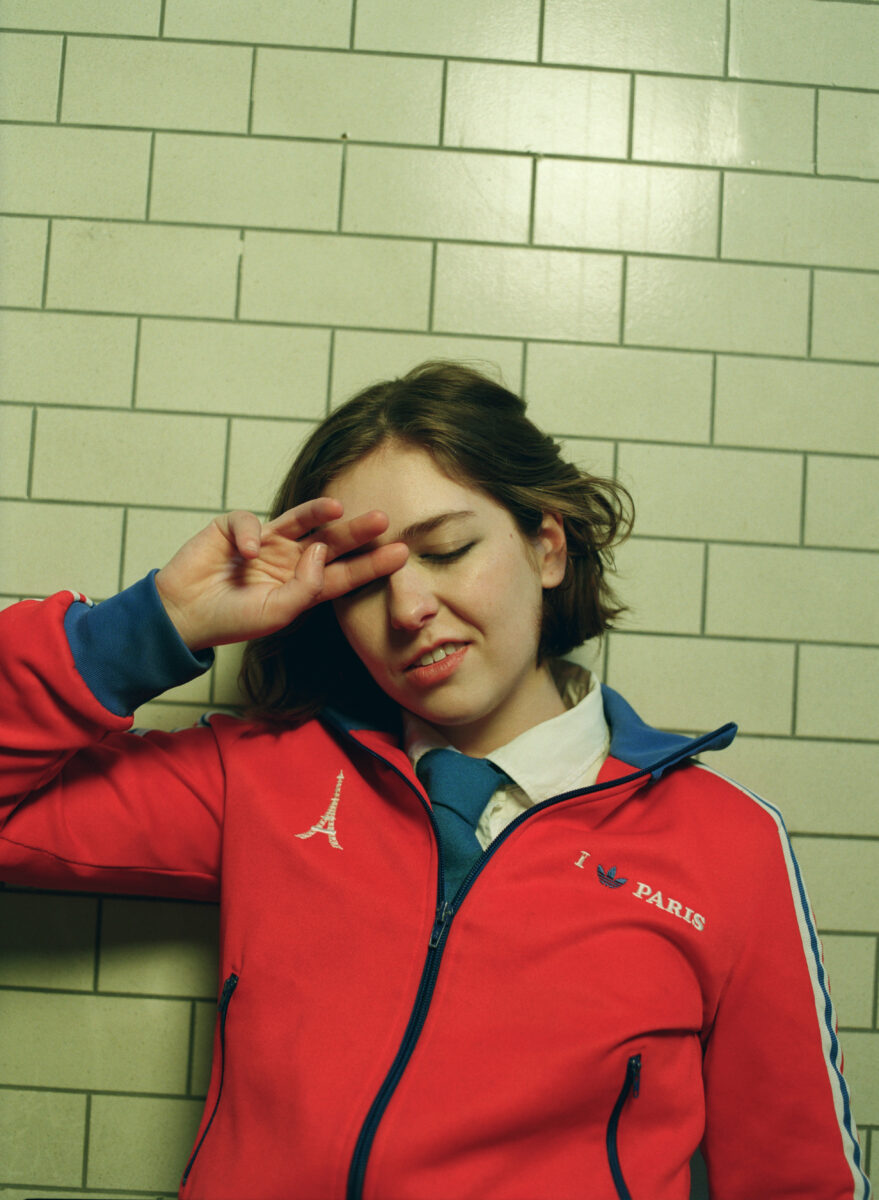
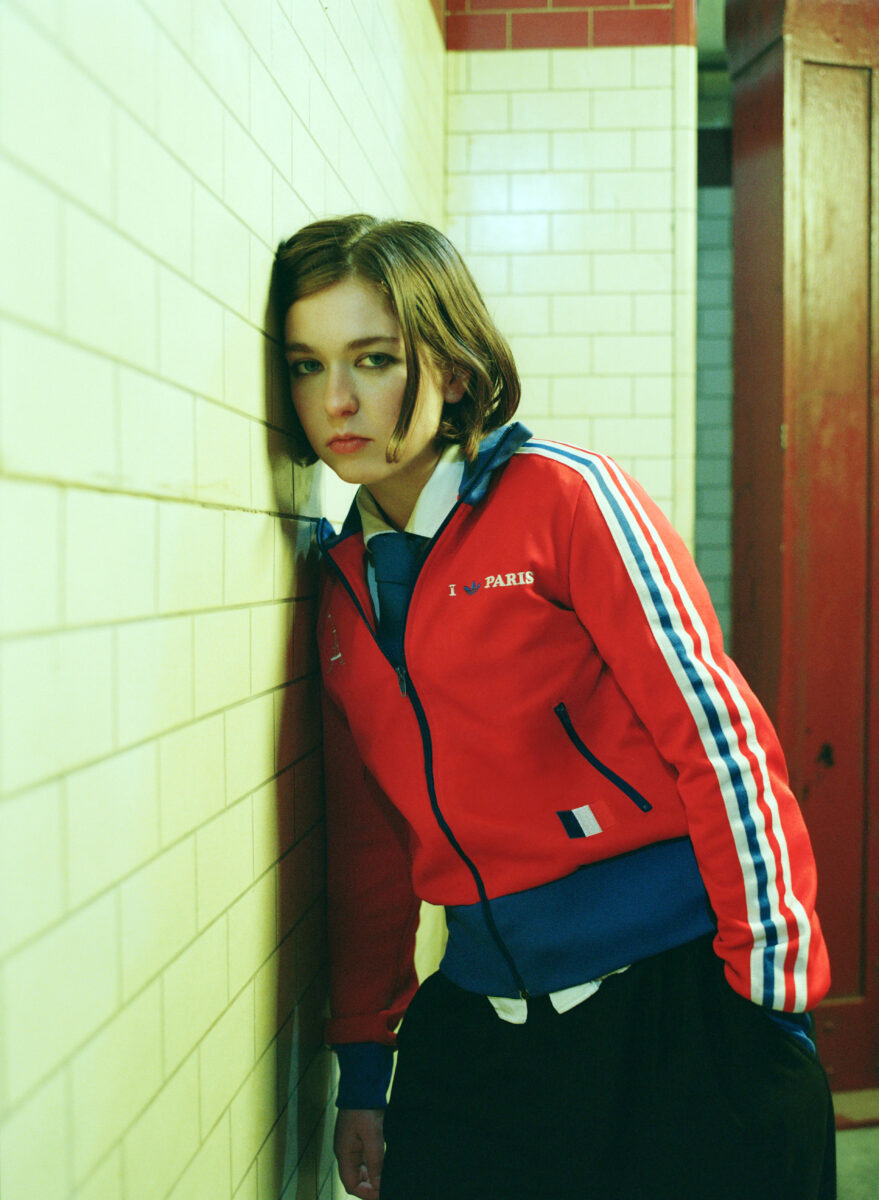
One of the most striking aspects of Ricochet is how cohesive it feels—not just sonically, but structurally. It unfolds like a complete body of work, each track feeding into the next. That cohesion, it turns out, came from an unusual creative approach. “I wrote all of the music first,” Jordan explains. “Including all the vocal melodies and arranging everything… and then I filled in the lyrics all at once.”
It’s a method born from necessity. “It takes me a lot more time and consideration to make great melodies than it does trying to connect things lyrically,” she says. “So I gave myself more time to do the one.” The result is an album where the emotional architecture is embedded in the music itself. Tracks like “Tractor Beam” feel inherently hopeful, even before the lyrics land. “I knew that one would have a hopeful element,” she says. “So it was easier when I got to fill in the blanks.”
Still, the process wasn’t without its struggles. Some songs refused to settle. “”Agony Freak” – I was changing the lyrics up until the very last moment,” she admits. “I could not get the chorus to sound satisfying… I literally went back into the studio after we were done.”
Others lingered unfinished for years. “My Maker” and “Ricochet” were two instrumentals I started really early,” she says. “I was so hyped on the riff that it was intimidating to add to it.”
That push and pull – between instinct and overthinking – mirrors the album’s broader themes. Even as Jordan sought control, uncertainty crept in. But this time, she resisted the urge to scrap everything. Instead, she embraced a more fluid, collage-like approach—what she jokingly calls “Frankensteining” parts together. It allowed her to build a world rather than chase perfection.
That sense of intentionality extended beyond the songwriting into the way Ricochet was made. Rather than following the traditional industry ladder – bigger studios, bigger producers – Jordan went in the opposite direction.
“I’ve never seen anyone disrupt the ladder,” she says. “It’s like you go to this producer, then this studio… and I’ve always felt like that adds unnecessary pressure.” Instead, she worked with a close friend, Aron Kobayashi Ritch, recording in a small, independent studio near her home in North Carolina.
“We used one mic the whole time,” she says. “It felt like going to a friend’s house.” The decision was as much emotional as it was practical. “I hate being away from my house,” she laughs. “But also, I wanted to take the pressure out of the pressure cooker.”
It worked. The sessions were collaborative, relaxed, and deeply personal. “He was as interested in my decisions as I was in his,” she says. “I felt like an equal voice.” That intimacy carries through the record. Despite its expanded sound – strings, layered guitars, orchestral flourishes – it never feels overproduced. There’s a clarity to it, a sense that every choice was made with care rather than expectation.
If Ricochet is about mortality, it’s also about what that awareness does to relationships. Not romantic ones, necessarily, but friendships – the quiet, slow drifting apart that comes with time. “Sometimes it’s devastating to be close with people,” Jordan reflects. “You wake up one day and realise you haven’t talked to somebody you care about in years.”
That ache runs through tracks like “Dead End”, where she sings, “Hours we’d spend / Parked at the dead end / You’re burned in my heart, old friend.” It’s nostalgia tinged with loss, the recognition that even the most formative connections aren’t immune to distance.
“I’ve aged out of thinking you’ll have everybody forever,” she says. “But I’m also talking to myself.”
There’s a self-awareness to it – an acknowledgement that detachment isn’t always imposed. Sometimes it’s chosen. For all its existential weight, Ricochet isn’t without light. In fact, its most powerful moments come from its refusal to stay in darkness. “I was trying to maintain curiosity and a touch of hope,” Jordan says. “That was the main thing.”
That hope surfaces in unexpected places – like the euphoric lift of “Light On Our Feet”, where she imagines a kind of weightlessness beyond time: “One day we won’t be around / We’ll find each other anew. “Even “Ricochet”, the album’s title track, carries a strange optimism. “If nothing matters / We can do whatever we want,” she sings—a line that reframes nihilism as freedom rather than despair.
It’s a subtle shift, but an important one. The album doesn’t resolve its questions—it learns to live with them. “I have to actively make myself not jaded,” Jordan says. “And find meaning in life and work and everything.” With the album’s release imminent, Jordan is already looking ahead to how Ricochet will translate live – and it sounds like her most ambitious show yet.
“We’ve got live cello, three-part harmonies… it’s definitely the grandest we’ve ever done it,” she says, excitement creeping into her voice. Still, she’s quick to balance that with her usual restraint. “I’ve been holding back bells and whistles… but this feels like the right moment.”
There’s a sense that Ricochet marks not just a new chapter, but a recalibration—of how she works, who she works with, and what she wants her music to be. “It’s going to be fucking sick,” she grins.
The cover of Ricochet features a spiral shell – an image that feels fitting for an album so preoccupied with cycles, time, and the slow process of understanding. For Jordan, the journey of making the record wasn’t about finding answers. It was about learning to sit with the questions.
“It was my way of making something of it all,” she says simply. And that’s what Ricochet ultimately is: not a conclusion, but a continuation. A record that turns inward, then outward again—each rotation offering a little more clarity, a little more acceptance. Or, as she sings on “Reverie”: “Life is so worth living now… the planet looks so small.”
In the end, the world keeps spinning. And maybe that’s enough.
Listen to Ricochet…
Words – Josh Crowe
Photography – Daria Kobayashi Ritch