[analyse_image type=”featured” src=”https://velo-cdn.outsideonline.com/wp-content/uploads/2026/04/Z8A_8192.jpg”]
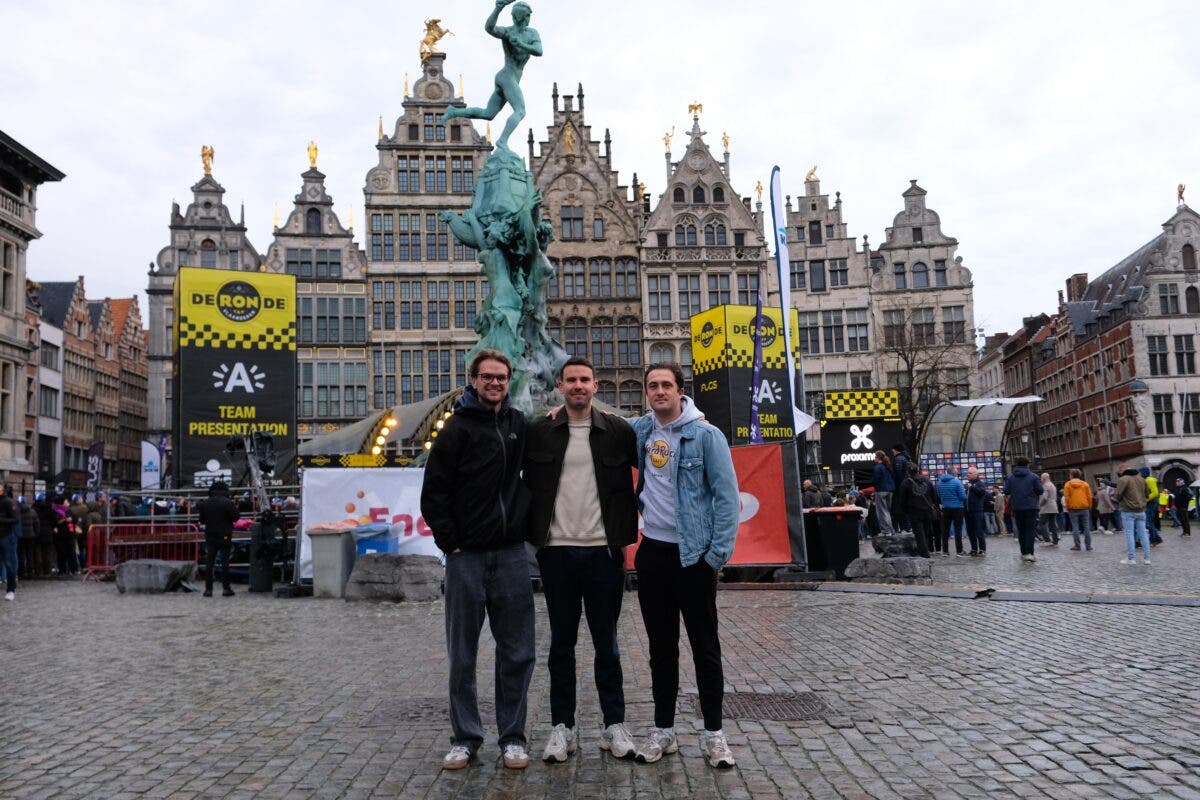
It’s barely a two-kilometer walk from the main train station of Antwerp to its town square. One wouldn’t normally expect to encounter many others during that walk on the early morning of Easter Sunday, but the opposite rings true. A constant flow of people walking towards Antwerp’s historical center suggests that something is going on.
Not just something, but an event that is among one of the highlights of the year for many people from Flanders: the Tour of Flanders – De Ronde van Vlaanderen. It is an unofficial national holiday for northern Belgium. Reason enough that even well before 8 in the morning, there are already a few hundred people waiting for the team presentation.
De Ronde, as people affectionately call it here, is the culmination of the Flemish classics. It is rather interesting to consider that after a month with some of the most important races of the year, the absolute most prestigious of its kind is yet to come.
Races like Omloop het Nieuwsblad or the E3 Saxo Classic can already make a pro cyclist’s career a success, but the Tour of Flanders is something else. It’s on a completely different level.
Merely describing De Ronde as one of the biggest cycling races of the year does it a disservice. It is a treasure of the local culture and a day which is celebrated by many in Flanders, if not everyone.
A tradition passed from one generation to the next
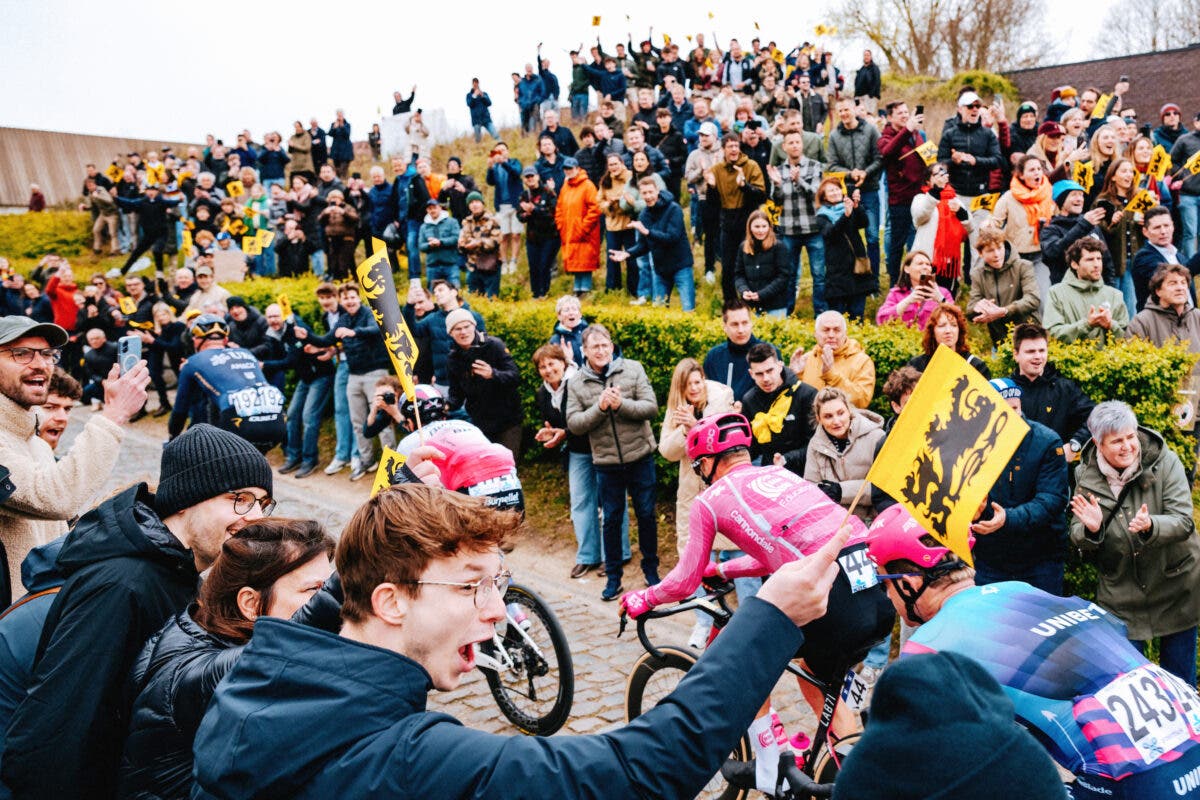
“It’s something we grow up with. Early in the morning, the TV would already be on for the broadcast of the Tour of Flanders. And then we’d watch the race the entire day, with the rest of the family,” says Glenn, an Antwerp local who is out at the start to see the riders take off for 278 kilometers through Flanders.
“Also in my household, the television would always be on if there was cycling, and I’ve only learned to appreciate it more and more as I grow older,” his friend Thomas adds.
The most fanatical racing fans will choose to follow the race from home as it simply allows them to follow the action best, but many people will cheer the riders on from the roadside. This year alone, around 1 million people were expected to be out on the roads – out of a total of 7 million Flemish citizens.
When you live in Flanders, you simply know what De Ronde is, even if you’re not into cycling.
And if you don’t watch the race – which is highly unlikely – you’ll hear about it somehow. From family, friends, on social media, or on television. In a region where cycling is by far the number-one sport, no one can avoid the most popular race.
Many Flemings confirm that cycling is something they simply grew up with. It was always there, says Julie, who is out at the finish with her son Miel.
“There would be so much chatter about cycling at home, that from a young age I heard about it a lot. As a child I would go to all the races with my father, so his love for cycling transferred to me. And now he loves it too,” she says as she points to her son.
The same goes for father and daughter Peter and Ellen.
“It is passed on from generation to generation. You would watch it with your grandfather, and I watched it with you,” Ellen says to her dad.
“We watch all the cobbled classics and we love them all. We too were actually wondering why Flanders is so much more important. Of course you see all the really big riders coming here, but the parcours is 90 percent the same from the other races,” says Peter.
“We have three hills, so we repeat those,” his daughter Ellen adds jokingly.
The Tour of Flanders: An event of the people
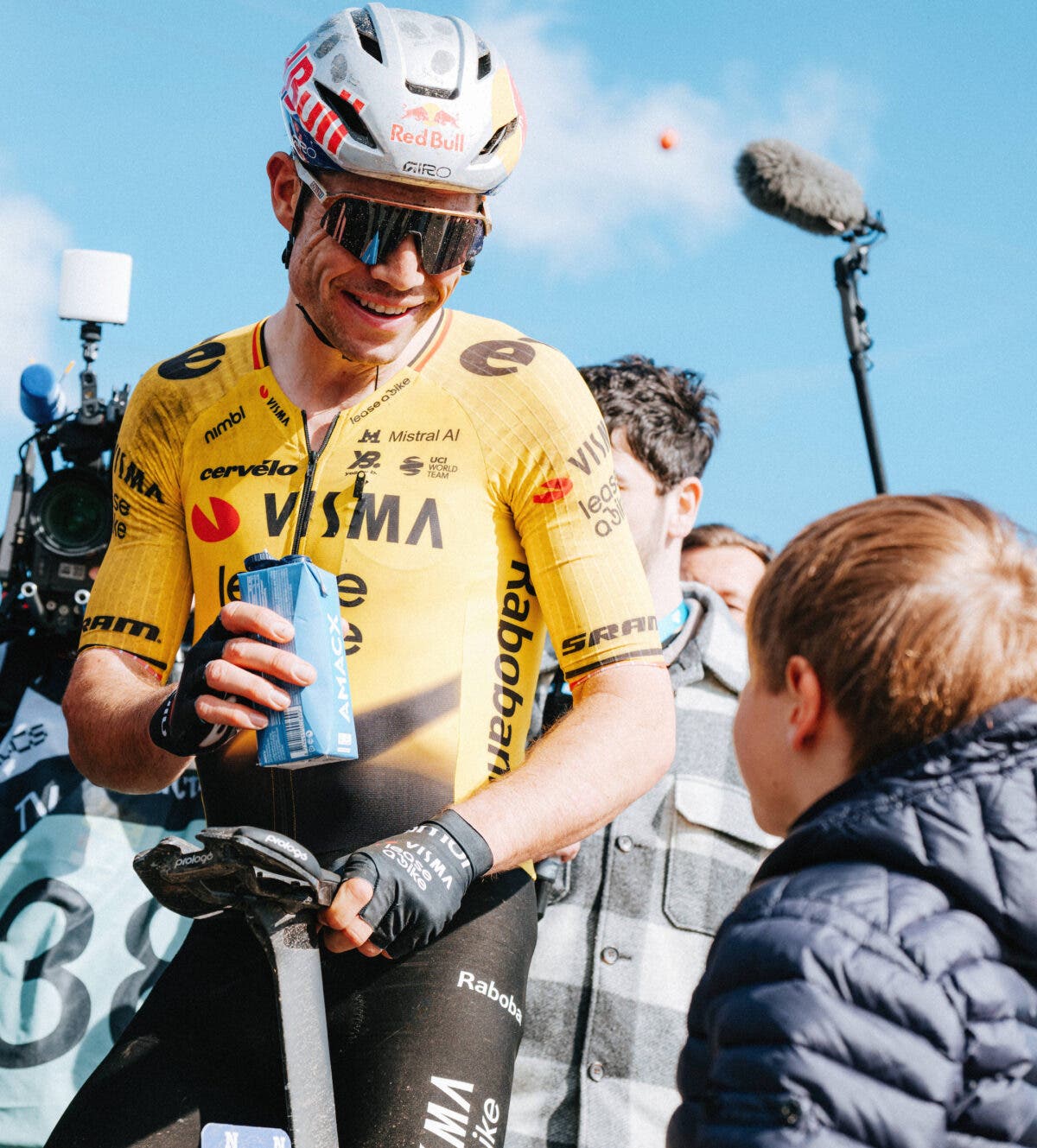
The race is loved by the Flemish supporters, but equally so by Flemish cyclists.
Historically, the Flandriens would dominate the race and often take the win, but the last Fleming to win was Tom Boonen in 2012. A 14-year drought for the locals is unseen.
Undoubtedly it is one of the reasons that whenever Wout van Aert passed through the pits of the starting area, a wave of sound would come from the audience. You needn’t look for Wout: the roars of support that follow him announce his arrival.
But even without the drought of Flemish wins, the Tour of Flanders is something Flemings dream of.
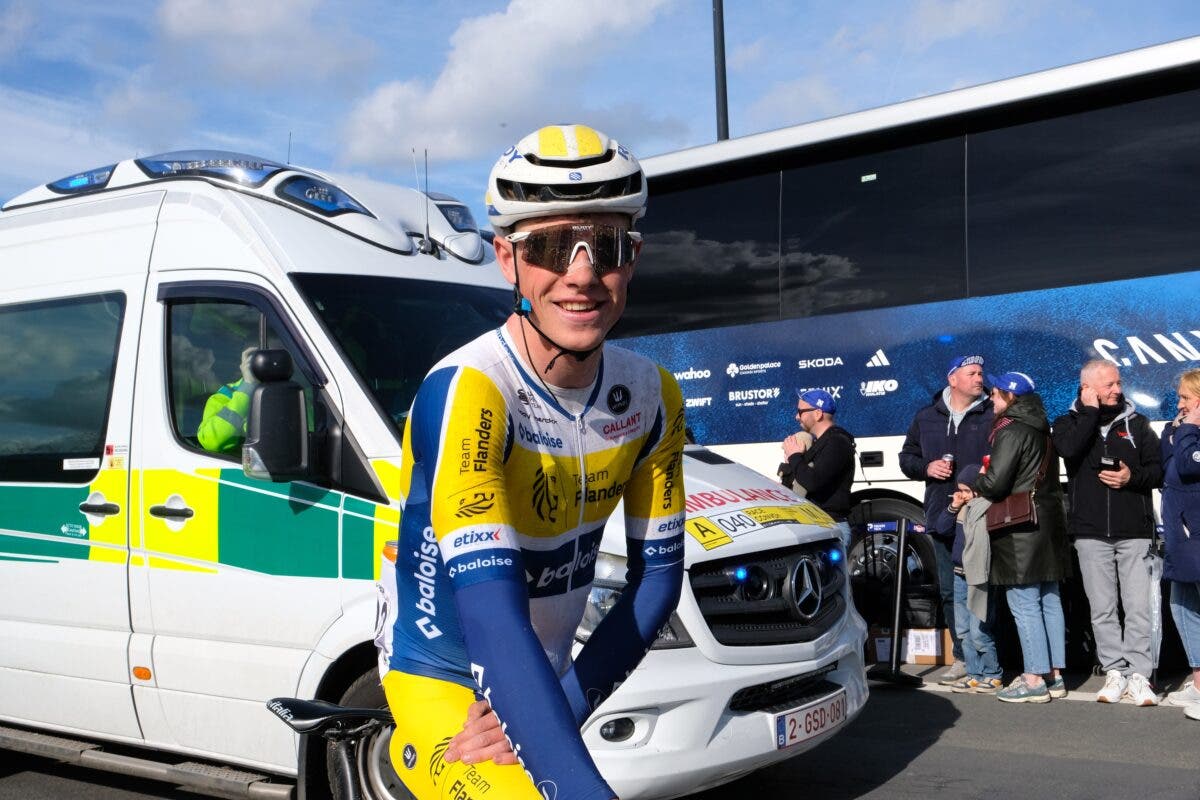
“Of course I woke up with a healthy bit of tension, because this is the biggest race of Flanders,” said debutant Milan Lanhove.
As a Flemish rider in a completely Flemish team, Flanders Baloise, it was set to be a special day for him.
“As a young boy, I would always go to see the races, and nowadays these are my training grounds, so it’s always been a dream to start here,” Lanhove, 22, says.
That love for the race is reflected everywhere, says motard Frank.
He’s been part of the race for dozens of years as one of the safety stewards, signaling the peloton in which direction to ride or what obstacles to look out for.
“Wherever we ride, we see people. Sometimes, on the hills, you’ll see six or seven rows of people,” he says. “It’s a wall of people effectively. And some of them will even cheer for us. The atmosphere is so special, there’s generally just so much joy.”
Cultural heritage: ‘De Ronde is De Ronde’
What exactly that makes the race so special is something that’s hard to pinpoint.
Everybody has their own reasons.
“I think it’s also the geography of the area. It’s such a beautiful place to ride a bike; it’s truly mythical,” says Julie.
“It is an entire people coming together,” Peter said.
“It’s hard to put into words, but there are so many reasons why De Ronde is so special,” Glenn explains.
“It is the biggest, it is drenched in history … It is unique. And it is a monument that’s close by our homes. That’s something special as well. Liege-Bastogne-Liege is also a monument but De Ronde … De Ronde is De Ronde,” Glenn continues.
However, there’s one overarching term that most people use to describe the day.
“It’s like a national holiday,” Glenn explained.
“Where the Dutch celebrate King’s Day, we celebrate the Tour of Flanders,” Julie describes the national festivity.
One thing is for sure: the Tour of Flanders is a day that unites the entirety of Flanders and all its inhabitants.
It is a day that millions of people in Flanders wake up with butterflies in their stomachs, knowing that something extraordinary is bound to happen. Knowing that history is bound to be written.
Whether you love road cycling or not, De Ronde is a holy day for a Fleming and a day to be a proud Fleming. It is an event most will have grown up with, and they will equally raise their children with. It is a perfect display of unique cultural heritage.
For one Fleming, his dream of racing Flanders came true that day.
Although at the end of the day, he seemed to be more occupied with his racing ambitions and chasing the next dream, analyzing the race like a seasoned pro.
“It was harder than I had expected, but it was a really nice day,” Lanhove says. “When the big guys attack, there’s not much more to it than just chasing.”
Still, a dream come true is a dream come true.
“The young kid who dreamt of this would have considered it a nice experience.”
[analyse_source url=”https://velo.outsideonline.com/road/road-culture/why-tour-of-flanders-belgiums-holiest-day/”]