Wonderland
ARLO PARKS FINDS HER AFTERGLOW
Under neon lights, sizzling synths and booming basses, Arlo Parks has found a new sound. With her third studio album, Ambiguous Desire, the singer-songwriter trades quiet introspection for the pulse of the dance floor.
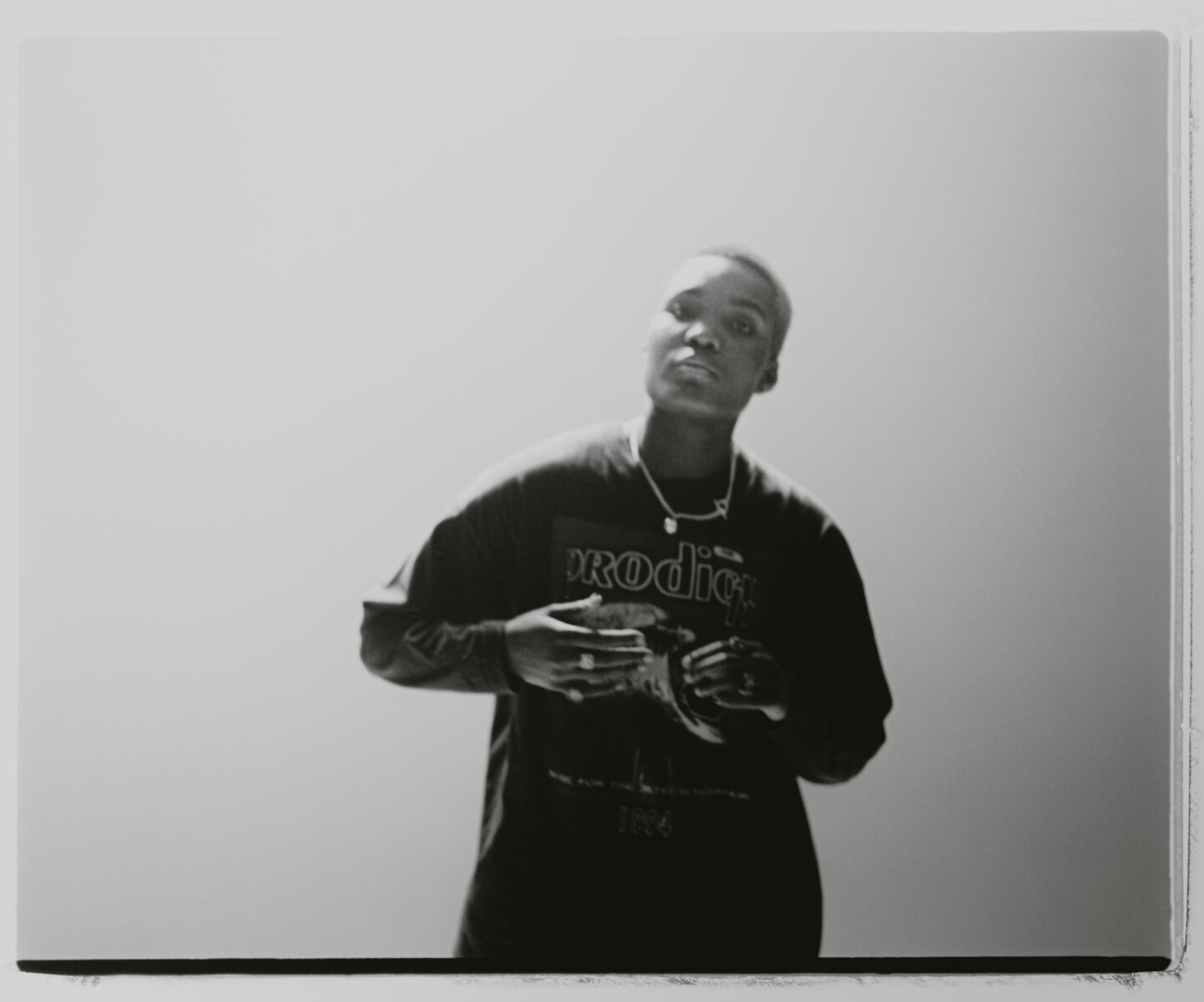
When I meet singer-songwriter Arlo Parks, albeit virtually, it’s over Zoom on a sunny Friday – one of the few we’ve had this year so far. Her voice twinkles and her smile is bright, as she joins me from the comfort of what looks to be a very cushty couch, set against white walls, with framed abstract art pieces hung upon them. However, the first time I actually ‘met’ her was when her hit single “Black Dog” from her debut album, Collapsed in Sunbeams, played like a broken record through my headphones. Penning dark, poignant lyrics against sweet melodies with airy vocals, she was a precursor to bedroom pop before it was established as such.
Against a backdrop where nightlife is constantly under threat, third spaces are fighting to survive, and it’s getting harder to keep the night young, Arlo may have cracked the code. Now, at 25, she’s launching herself into a new era that was born out of the experience of living – truly and fully. Ambiguous Desire, her third studio album releasing 3rd April via Transgressive Records, details this in all its boozy, booming, and bouncy finesse. Inspired by club nights and time spent in nocturnal spaces, which she felt like a late bloomer to, it’s like she’s discovering a forgotten part of her youth – rectifying missed opportunities.
Finding balance is central to this journey. The seesaw to both her life and career has become mostly level, leaving room for her to enjoy living, still, while becoming the artist she strives to be, which is how Ambiguous Desire was born. From her introduction on our call alone, it’s clear she’s found her flow, even if she has an Excel spreadsheet helping her do so: “I just got back from DJ practice, because I’m going to Berlin in a couple of days to play Rough Trade and do a couple other sets. But I got to see my best friend this morning for a coffee, so that was really nice,” she says.
Through Ambiguous Desire, Arlo tells the story of her party-filled excursions across three major music cities that are important to her: London, where Arlo was raised and came of age, Los Angeles, where she moved in 2022 and quietly rebuilt her life, and the city that never sleeps, New York. In LA, she partied away amongst the underground soirée of Midnight Lovers, a monthly party that spotlights DJs from around the world – British artist-producer Leon Vynehall, as well as Spanish and Brazilian DJs. “I like the fact that it feels like lots of different cultures being brought into one,” she says. Meanwhile, on the East Coast, she frequented the now-closed Black Flamingo, Nowadays, Basement and Bossa Nova Civic, sometimes finding herself at Brooklyn’s Under The K-Bridge.
“The geography is so different,” she muses on LA. “The way you move through it, the spaces where you’re listening to your demos – even just being in the sun and having access to nature.” She arrived there, having solidified who she was as a musician, and that assurance gave her a fresher freedom to explore her humanity with a new backdrop. Staying in one place for longer than she ever had before, she fell into a comfortable routine: gym, studio, explore, dinner, home. Day after day, that discipline permitted her to get weirder – a “soft place to land,” she says. “That weirdly gave me the courage to be experimental and wild in my creativity, and know I had a home to come back to.”
Still, London is the ghost that never leaves the room – it has that effect on people. Arlo speaks on the city and wider UK’s nightlife with a kind of protective pride, name-dropping Manchester’s Warehouse Project, Bristol’s trip-hop lineage, the deep roots of pirate radio, and the way clubs like fabric and Printworks become institutions through sheer persistence. “You know, London will always be home. I was so intentional about bringing London to this album,” she laughs. Hence, the pirate radio samples and the sounds straight from Mike Skinner’s The Streets – “that was so important to me.”
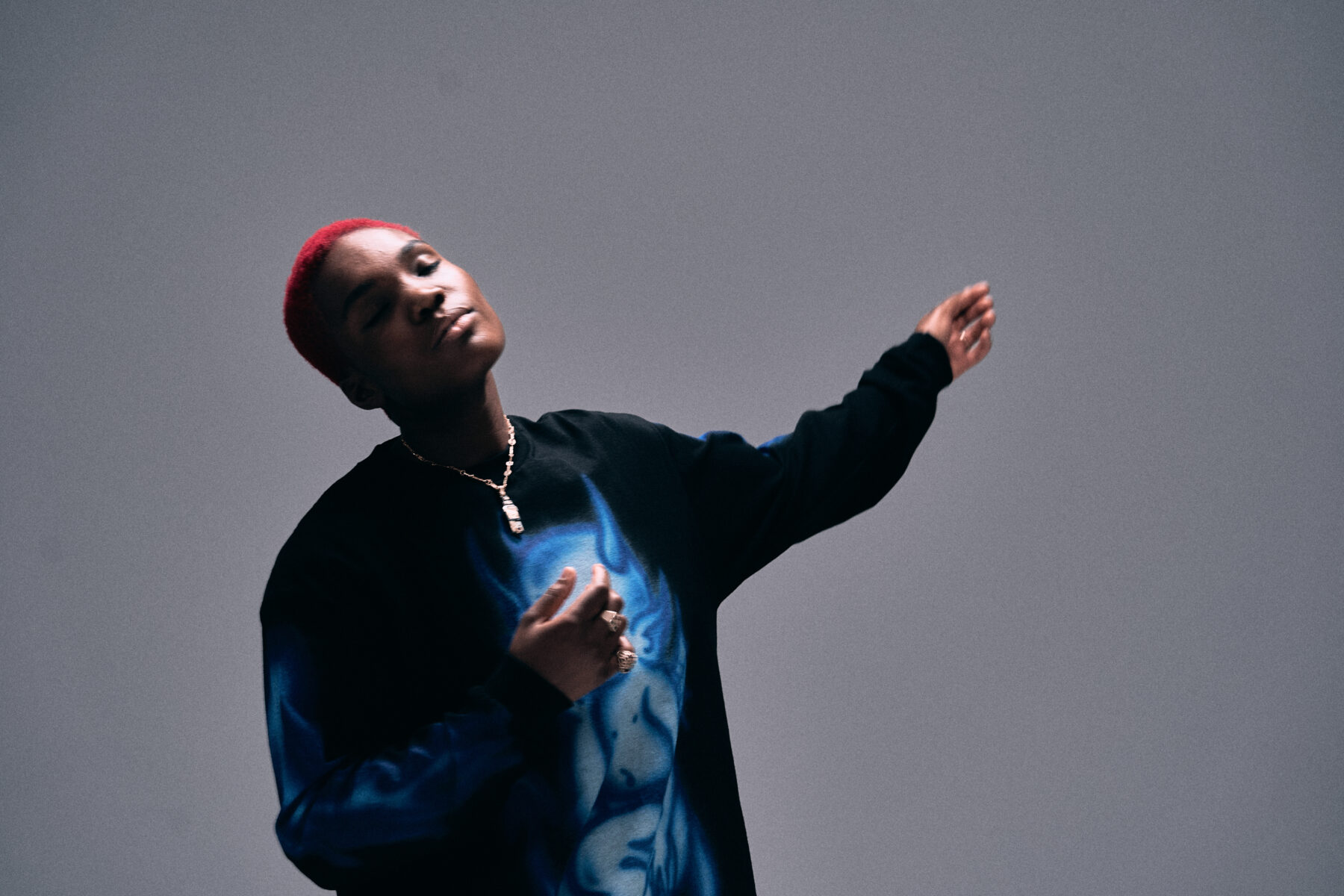
With “Senses”, the only feature on the album where she enlists the help of her peer and friend, South London-born musician Sampha, she shows just how vital that homegrown sound is. “He really understands the nuances of what it means to be alive, to love and to grieve – on a gut level. I’ve always felt that in him and in his music,” she says admiringly of the fellow Mercury Prize-winning Brit. “He’s also such a shapeshifter when it comes to genre; Process versus the Subtract stuff from the 2010s to this more recent, more afro-futurist experimental record.” And then, of course, there’s his voice – “it’s like a woodwind instrument or a cello, [there’s] something really ancient and incredible about it. So I’ve always looked up to him for those reasons and many more.”
By contrast, LA feels more fluid, more liminal. “It’s more DIY – warehouses and transitional spaces,” she explains. “There aren’t as many institutions. And the flavour of the DJs is different – in London, I love people like Joy Orbison or Loraine James, and I love garage. In LA, you get more house and funk and American traditions – going between the two gives you so much.”
Through this all, it wasn’t just the music reverberating through the dance floor that she found an affinity for, but the testimonials she got to witness and be a part of before the night even started. “I’ve had so many extra deep conversations – someone’s moving through a breakup, and everyone’s in the queue, and they’re like ‘It’s fine. You’re better than him, you’re better than this. You’ll find love.’ Those magic moments where everyone pipes up to support someone who’s going through something,” she says. Even under minimal lights, faces masked by darkness but lit by pure elation, “you really see a different side of people, and you see them at their most free and loose.” This is what she sought to emulate on Ambiguous Desire – and that’s what she inevitably succeeded in doing.
Naturally, she mixed all of these nuggets of inspiration into her own melting pot. “There were so many of these nocturnal spaces. I spent a lot of time just DJing at home, and it was very much an afternoon-into-evening thing,” she says, reminiscing on downtime spent eating tacos and playing Stevie Wonder. “It doesn’t have to be ‘till seven in the morning, raging techno. I think it’s more just about music and togetherness – and it can be for anyone.”
The record places emphasis on rhythm and percussion. “You could maybe draw a tie from a “Beams” to a “What If I Say It?” to a “Black Dog” with the drums that I’m using,” she says excitedly. “There’s also a sense of the verses and the pre-choruses maybe establishing the detail and the story, and then the chorus being this more universal sentiment that ties everything together. I gravitate to those structures and warmer guitar sounds and harmonies – and obviously, the tone of my voice.” It’s still Arlo, just with some new additions – a nod to the new sounds (electronic, techno, dub) she fell in love with.
On Ambiguous Desire, Arlo really let herself feel free, stretching her style to new expanses. “I think the choices are almost unconscious before they’re conscious,” she admits. During the making of the album, Arlo didn’t at first acknowledge that she was leaning into a more electronic direction, “because I had a lot more time once I did discover the world that it was operating in, we had a lot of time to fine-tune things. Maybe I would notice patterns. A lot of these songs have a drone in the background, or we add pads at the end, and add a few of those motifs in other songs, actively challenging what we’ve done before.”
Thematically, the album forms its own love story. Not necessarily your traditional romcom with a happy ending, but undoubtedly a sonic offering of a celebration of love’s breadth – and in this case, how that’s conveyed on the dancefloor. “I was really inspired by so many different forms of love and desire to connect,” she shares. “I was interested in this kind of collective love that you experience when you’re on the dance floor, where you feel like you’re connected to something bigger than you, and you’re sharing this experience that only lasts a few hours in this one specific space, and you feel this sense of kinship.” This is how Arlo’s music has always felt. She may be a ‘voice of a generation’ – as she’s been heralded by critics – but at the core, she is drawn to collectivity and connection.
“I immediately had a sense of belonging,” she says. “I’d always felt that there was something special about people coming together in a dark room, loud music through shows – playing shows and going to shows. I knew there was a magic there.” Being a background character in the “little private journeys” of fellow night-seekers and clubbers proved cathartic, allowing Arlo to feel a lack of judgment and self-consciousness. “A lot of it is embracing the yearning and the seeking, learning to be present and content, and that battle back and forth is something that I was exploring a lot in the record. I didn’t necessarily come to any solutions. It was more just writing around the question.”
In that questioning, she learnt how to let the story lead and when to step back and let the synths, pads and drum breaks carry the emotion. “My instinct is to say more,” she admits, with a slight laugh. “But some of the emotions felt beyond language. I needed to let the music describe the feeling.” It all comes back to that balance; giving way to “something really natural and automatic about the songs that made the record,” she says. “It never felt like I was forcing something that wasn’t working.” “2SIDED” came quickly in melody and story, even if the production took much longer to refine. “Flower”, the first song written for the record, unravelled on a calm Sunday with a friend, before she’d even admitted to herself she was making an album. Most of the tracks arrived of their own accord – early and quickly – and yet, the through-line is unmistakably Arlo.
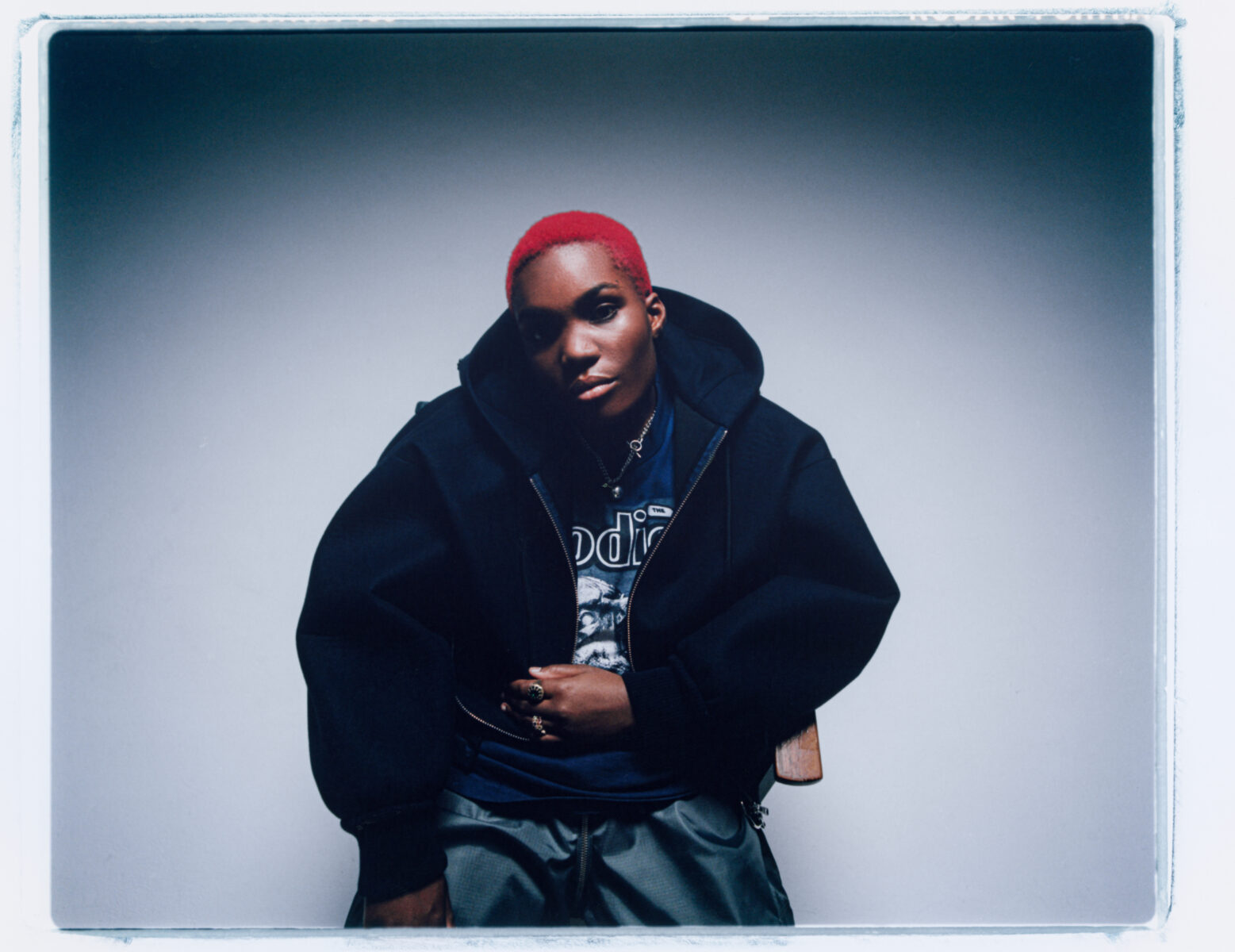
As the singer-songwriter gears up for the album’s tour, Arlo is figuring out how this story can be reimagined live. The traditional band set-up is evolving into something more reflective of this era: samplers, synths, triggers – honouring both the classic, naturalistic material and the new, club-leaning work. She’s thinking about lighting, subtly over spectacle, drawing from Wong Kar-wai films, Hype Williams visuals, Massive Attack and Underworld. All of this jumbled together to answer the question: How do you bring an album about nocturnal transformation to a stage in 2026 without losing its intimacy?
Ultimately, it comes back to her relationship with her fans. Since her debut, Arlo has been framed as an emblem of softness and emotional clarity – a poet for a generation that grew up online and burnt out young. But she’s never felt trapped by that early image. “I always wanted to be a career artist,” she says. “I trusted people would grow with me. I started when I was 17 – no one would want me to make that album over and over. The change has always felt natural.”
At shows, she’s found that the affection people associate with her records doesn’t evaporate just because the BPM has gone up. If anything, the shared catharsis has simply expanded. Recent under-200-cap events – DJ sets, record store in-stores, her brief run of Sonic Exploration nights, intimate shows across London, LA and NYC that she ran late last year – have only confirmed how much she values closeness. “Record shops feel like libraries,” she says. “Everyone’s welcome, everyone’s discovering. There’s a magic to being surrounded by physical objects made with so much care. And lifting up independent spaces is important – you have to bring people there to keep them alive.”
This new dawn is also about making sure she feels alive – from the studio to the stage, her idea of “living” has become quieter, but no less vivid. Reading, especially photography, “those chronicles of time,” and architecture books have her attention. Criterion, arthouse quirks. Long afternoons by lakes or the ocean. Obsessive food pilgrimages. Friends, laughter, sleep. Tiny moments of joy that keep the big nights in focus. “Living, for me, now is spending time with the people I love,” she says. “Nurturing all the different strands of my creativity – music, writing, maybe a screenplay, DJing – and just staying curious. Getting enough sleep. And trying to find some fun in the day somehow, even if it’s tiny.”
Ambiguous Desire isn’t a problem Arlo Parks is trying to solve but rather a state that she’s learning to live inside (or alongside): the wanting and the letting go, the rave and the ride home, the young teen who wrote poems alone in her room and the woman leading a crowd through the night. It’s not like she’s trying to close the gap – she’s simply filling the space in between.
Pre-save / listen to Ambiguous Desire here.
Words – Aswan Magumbe