[analyse_image type=”featured” src=”https://velo-cdn.outsideonline.com/wp-content/uploads/2024/06/Velo-10-1.jpg”]
The Life Time Grand Prix has announced a new pregnancy policy that protects athletes who become pregnant after they were selected for the series.
The policy stipulates that the athlete can withdraw from the series without penalty and will automatically receive a protected roster position in the Life Time Grand Prix the following year. When an athlete uses this policy, the Grand Prix will open an additional wild card spot for that season.
These changes were announced by Sarah Sturm, who is also the first athlete to use the policy, as the gravel racer from Colorado announced her pregnancy earlier this month. Sturm is a perennial contender at the Life Time Grand Prix events and has also been a vocal advocate for women in sports, and is viewed as a leader within the sport through her various creative and competitive projects.
“When I got pregnant, my first call was to the Life Time Grand Prix to figure out what to do,” Sturm said in the Instagram post announcing the policy. “This sparked a whole conversation, and with the hard work of the people at Life Time, we now have a pregnancy policy!
“This is a big deal for women in the Grand Prix and for women in sport.”
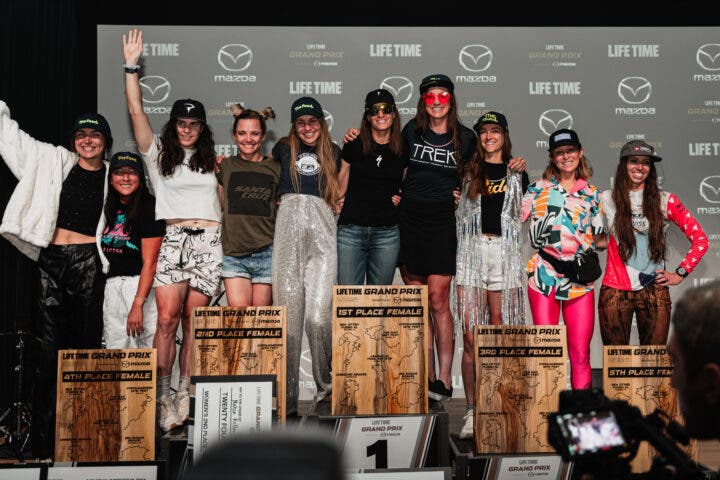
The Life Time Grand Prix will get underway next month at the Sea Otter Classic. Since Sturm uses the policy, there will now be four wild-card places up for grabs after Unbound Gravel instead of three spots. Sturm will also have to confirm her intent to compete by the deadline, where all athletes who have earned an automatic spot must report their intent to return. Additionally, the protected roster spot only applies to the next Life Time Grand Prix season.
“There is so much uncertainty as an athlete, especially as a female,” Sturm said. “This policy shows us respect and trust that we are capable of continuing our careers even after we have children. Of course, we know that’s possible as women, and now we have the support from the biggest off-road race series in America. It feels like a long way away, but I’ll see you in 2027 with one extra family member!”
This is a landmark move for the gravel world, as it is one of the few organizations that can use its leverage to provide institutional support to pregnancy. The vast majority of gravel privateers are independent contractors. Unlike true employees, independent contractors are not afforded the same guarantees and protections, especially for those who rely on athletic performances.
A stark example of this is the ongoing dispute in marathon running between Emma Bates and her former nutrition partner, UCan. Bates, who announced her pregnancy in December, has alleged that UCan dropped her from its athlete lineup because she was pregnant. The company denies this, claiming they decided to end the partnership in September, but Bates and her team have refuted that claim, saying they received an initial offer in December that was then changed.
While that particular case is still under dispute, it nevertheless provides insight into the challenges that come with female athletes who are on short-term deals and become pregnant. In gravel cycling, having the guarantee that the athlete will return to the biggest gravel races in the world should provide more leverage and incentives for companies to honor sponsorship throughout pregnancy and beyond.
[analyse_source url=”https://velo.outsideonline.com/gravel/gravel-racing/life-time-grand-prix-adopts-new-pregnancy-policy/”]