[analyse_image type=”featured” src=”https://velo-cdn.outsideonline.com/wp-content/uploads/2026/03/protein-2.jpg”]
Stop right there. Put down the protein bar. Step away from the bag of whey.
There’s a high chance that you, like many other endurance athletes, are getting protein wrong.
Riders and runners are either not getting enough protein or getting it from the wrong sources. And even if they check those two boxes, they’re probably munching the muscle-building good stuff at the wrong time.
“The thing that separates riders who get enough volume and variety of protein from those who don’t is typically whether they’re a pro or not,” said Dr. Sam Impey, a lead thinker in exercise metabolism.
“Getting adequate, varied protein can make a big difference in how fast an athlete progresses, or if they don’t. But most recreational riders don’t achieve those things,” Impey told Velo. “But getting it right only needs a little intentionality.”
Protein is strangely problematic for the endurance community.
It’s a strange state of affairs given riders and runners just devoured a whole new rulebook governing carbohydrates. Even more so given that high-protein diets fill every Instagram reel and YouTube ad, and even the dirtiest gas station snacks are getting “hi-protein” makeovers.
Do you want to stop training in vain?
Here what most endurance athletes get wrong about protein, and how to make it right.
But first: What is protein, and why you need more of it
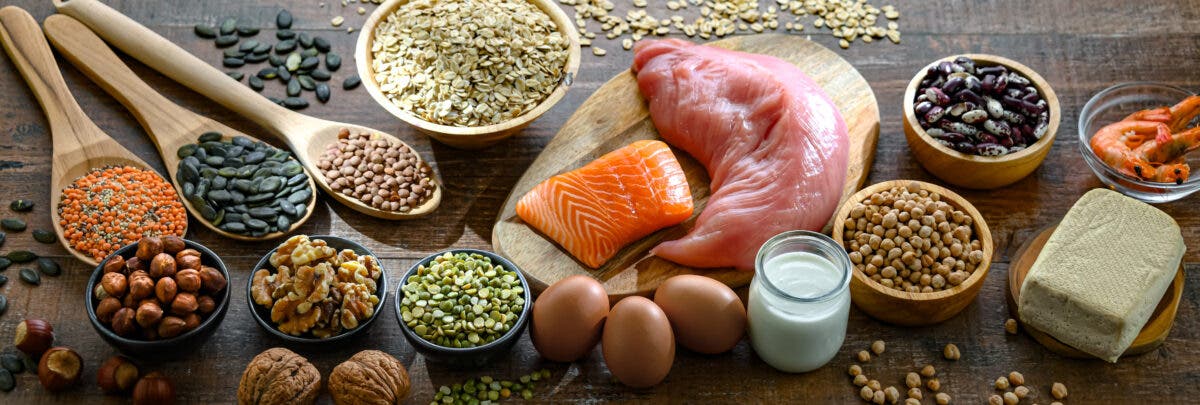
Excuse the overused sporting idioms, but if carbohydrates are fuel, proteins are building blocks.
This muscle-y macronutrient is made up of chains of amino acids that trigger repair and regeneration, and drive athletic progression. It also plays a key role in regulating hormones and enzymes, and in promoting immune function.
Without adequate protein, an athlete might as well not train. Even the easiest workout will cause muscle breakdown that needs to be repaired and built back stronger.
Of course, strength athletes have understood the importance of protein for decades. The weight room was built on a diet of steaks, shakes, and scores of eggs long before Arnold Schwarzenegger started doing bicep curls.
But across the sporting divide, cyclists and runners pushed the protein aside as they pounded another bowl of pasta. Meat, fish, eggs, and pulses were served sparingly due to a misplaced fear of muscle mass.
Those endurance fiends were leaving gains on the table. Literally.
A high-protein diet is as crucial for a spindly climber striving for 5w/kg as it is for a barn-door gym bro who can bench press a motor vehicle.
It supports the accelerated repair and regrowth demands of catabolic endurance sport and helps replace any amino acids burned for fuel by higher-volume athletes. At the pro level, the increasing popularity of year-round strength training has made it even more important.
A 2025 study published in Springer Sports Medicine confirmed the fact.
According to the paper, even a rider or runner training as little as seven hours per week needs around 1.8-2.0 grams of protein per kilo of body mass per day [approximately 1g per 0.9lb body weight].
That’s twice the 0.8g/kg daily allowance recommended to sedentary adults. This RDA figure was calculated using now-outdated methods decades ago, but it is still advised worldwide.
For context, a 70kg athlete who’s seeking “optimal” needs around 126g-140g protein per day. That’s the equivalent of 5 chicken breasts, 20 whole eggs, or, per the universal metric of endurance, 500g of peanut butter.
Mistake No. 1: Total daily intake
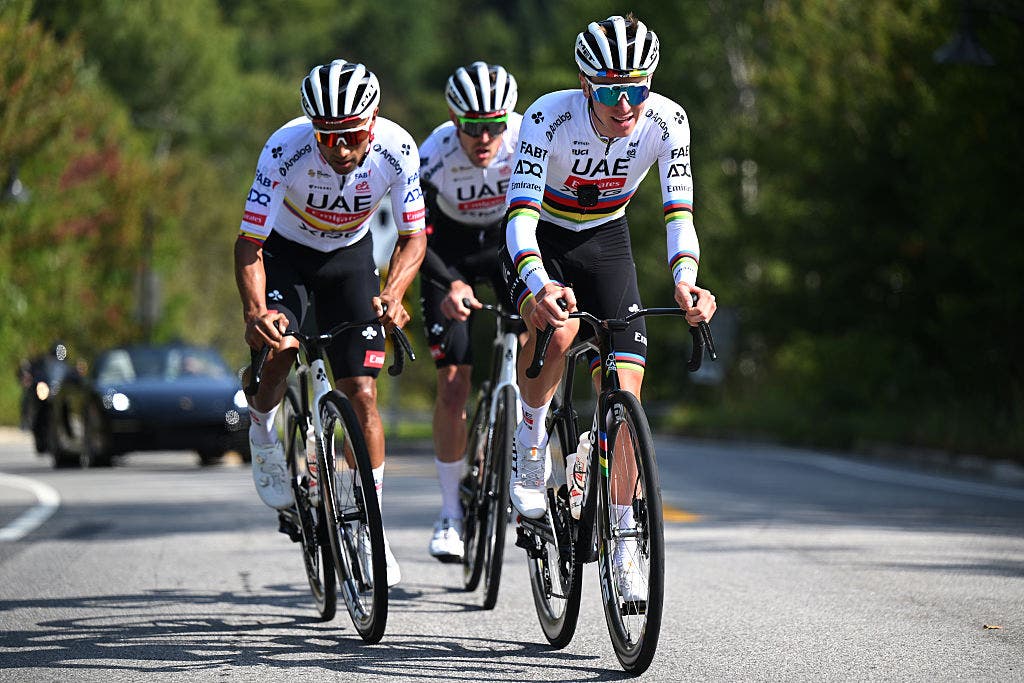
Nutrition experts like Impey regularly see amateur athletes wildly undershooting this protein target.
Impey worked with Science in Sport and the GreenEdge teams before he set up the Hexis nutrition app that’s being used throughout the WorldTour.
He’s got first-hand experience of both professional and amateur experience.
“It’s easy for a pro to hit this 2g/kg protein benchmark, but I rarely see it happen with amateurs, unless they consciously focus on it,” Impey said. “Or equally bad, many amateurs don’t get a full spectrum of amino acids because of a restrictive diet or one lacking variety. That will mean the body can’t effectively regenerate.
“But pros have access to nutritionists or technology to guide them. And when they’re eating 6 or 7,000 calories on a big training day, they end up at those protein numbers without thinking about it,” he said.
It’s easy to see how desk-jockey weekend warriors fall short of this muscle-building macronutrient. A very generic day of Western eating might not even break three figures of total protein.
Very stereotypical example of daily protein intake (don’t come at us, it’s not plant-based):
- Breakfast – muesli or granola and semi-skimmed milk: 10-15g
- Snack – fruit: 0g
- Lunch – deli-meat sandwich or salad: 15-20g
- Snack – yogurt: 5-10g
- Evening – meat or fish with carbs and veg: 30-40g
That’s a maximum of 85 grams of protein, weighted toward the back half of the day.
Even the addition of a post-workout recovery shake [more on that later…] might not get this athlete much beyond 110g for the day. For a 70kg rider, that’s 20 percent short of the recommendation.
Mistake No. 1b: Falling back on supplements before food
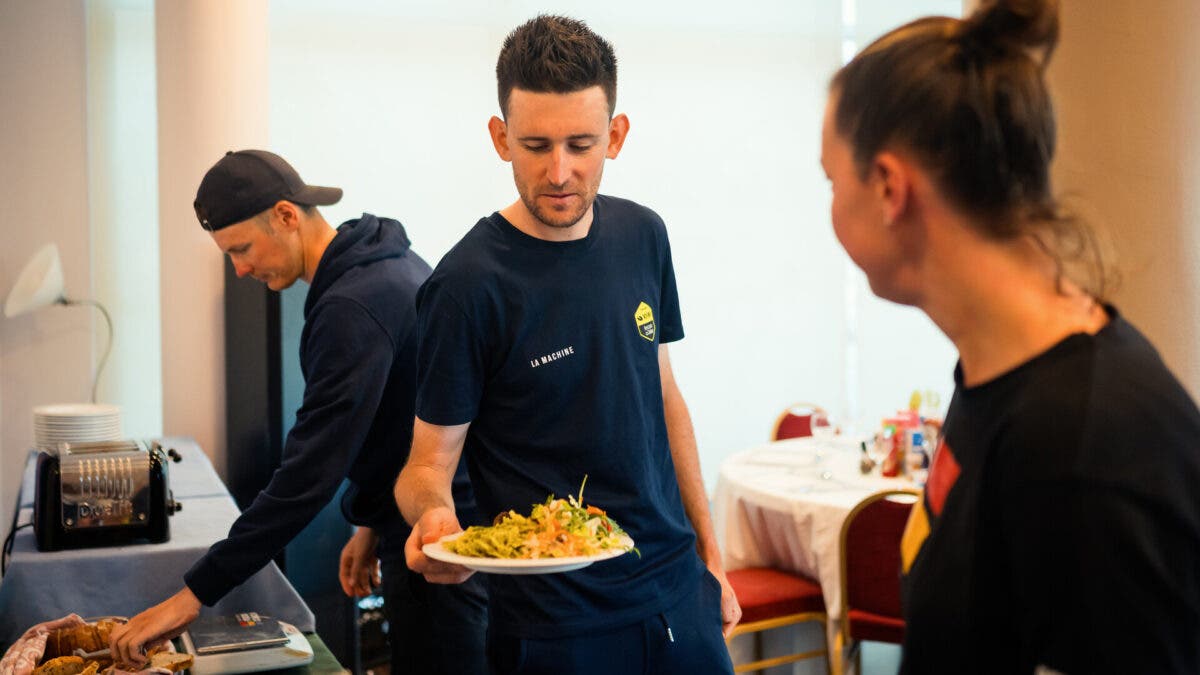
The solution for a lack of daily protein shouldn’t lie in a bag of whey powder or a chocolate bar pimped up as a “protein supplement” [Mars, Snickers, we see you].
Both Impey and Uno-X Mobility nutrition guru James Moran highlighted the importance of going to nutrient-rich real foods before pulling the ripcord on one-dimensional artificial alternatives.
“The first way to address protein should be to make sure a rider is getting a good portion, regularly,” Moran said. “I’d be looking to see if there’s enough good protein at breakfast and lunch, and not only at dinner, before I recommend a powder.
“Even when a rider is eating enough total calories, I commonly see big gaps in the early protein windows,” Moran told Velo. “Fixing those should always be the first step.”
A few simple, strategic switches will put an athlete in the protein green.
In the example above, eggs, pulses, and nuts are easy additions to breakfast and lunch. Likewise, substituting “cold cuts” with a chicken breast or a tin of tuna isn’t difficult.
And sadly, a ribeye the size of a frisbee every evening isn’t the optimal solution either.
Protein should be dosed small and frequent for maximum muscle synthesis. Recent studies have suggested the body can effectively metabolize huge single portions of protein, but the consensus remains that 25g-30g of protein every 3-4 hours is best.
Impey advocates for including protein from as many sources as possible – plant, dairy, fish, meat, etc – to ensure a full amino acid profile and promote prime muscular repair.
But of course, protein cannot be perfect. It’s better to supplement with a shake than to fall short on those days when “real life” gets in the way of optimization.
Mistake No. 2: Prioritizing protein and not carbs for recovery
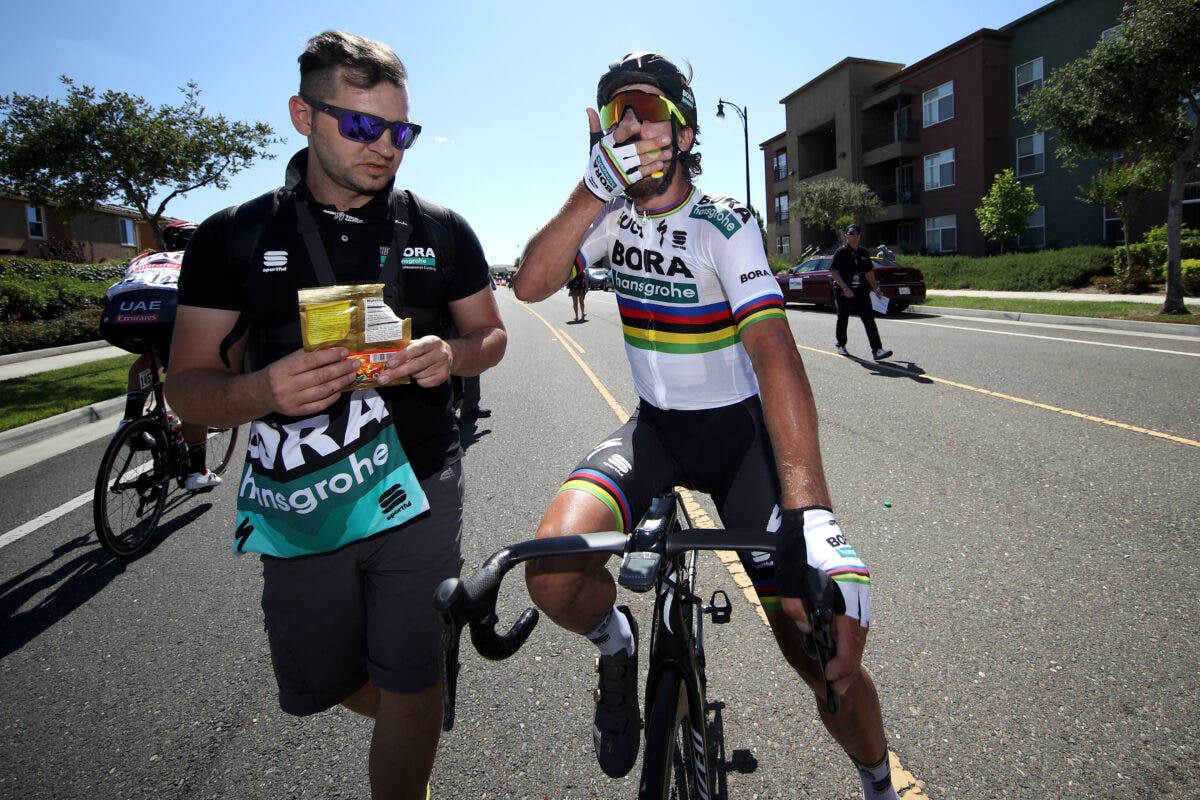
Yes, protein is for recovery, but it’s not always the priority.
If you closely watch the end of the world’s biggest bike races, you’ll notice one thing missing from the smorgasbord of snacks handed to riders by staffers.
Protein shakes.
Why? Because the “30-minute recovery window” of optimal protein uptake is a myth.
Restoring muscle glycogen is the top priority after a hard workout. The supposed 30-minute protein window is more like a set of French doors that open as wide as two hours.
“Recovery from a workout is carbohydrate and protein. Nor just protein,” Impey said. “If you’ve done a long or intense ride, you need to go to carbs first.
“Any protein you take when your body’s in such a glycogen-depleted state mostly just goes to the liver and is converted to glucose for fuel. It doesn’t go where it’s needed.”
For many athletes, this requires a pivot in thinking.
Riders have been trapped by the thinking that they need to pound protein powder the minute they clatter into the kitchen in their cleats. But in reality, they should be going crazy on candy like a kid left home alone.
“It’s not going to change recovery if you delay having protein by an hour or so. If you’re delaying it because you’re focusing on carbs, it will probably actually enhance your recovery,” Impey said.
“Your body is like a sponge at that point – glycogen replenishment is at its highest in the three or four hours after exercise.”
Protein drives daily repair and growth, but it doesn’t replace the thousands of kilojoules burned by a hard training jaunt.
That’s why whey doesn’t make it to the paddock of the Tour de France or Paris-Roubaix. Pros instead swallow bags of Haribo and swig sugary cherry juice while they fumble for the “stop” button on their head unit.
The protein comes later, typically as a buffet of lean meat and fish with pasta or rice.
Mistake No. 3: Cutting down on rest days
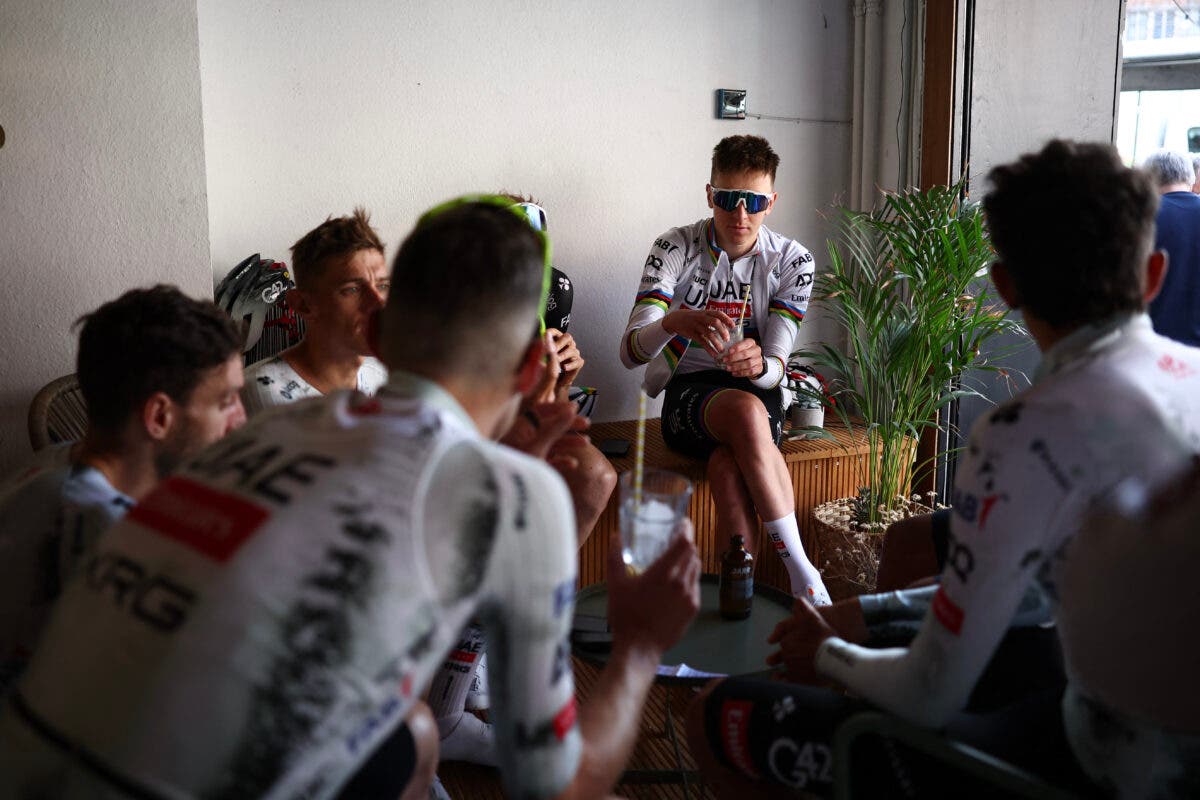
Cycling’s unfortunate preoccupation with weight has downstream effects on protein, particularly on rest days.
Endurance athletes often drastically cut their diet on days they don’t train. The notion that calories are not needed for energy or haven’t been “earned” by a workout reduces frequency and volume.
And as total daily intake goes down, protein goes with it.
Sure, riders like Jonas Abrahamsen don’t slam 7,000 calories on a rest day like they do when they’re training for six hours. However, protein remains high and becomes a larger slice of the day’s total pie.
“We keep protein intake stable all through the week,” said Uno-X nutritionist Moran. “If anything, overall protein might even be a touch higher on rest days to help with satiety for riders who aren’t eating huge plates of carbs.”
The 2025 study that makes 2g/kg the gold standard for endurance athletes suggests we should exceed that mark on rest days. It seems logical that the body goes full-send on repair when it’s not stressed by the catabolism of a workout, after all.
However, the concept should be applied with some caution.
“Two grams per kilo should be more than enough to facilitate recovery processes and help your body repair in an adaptive way,” Impey said. “The only time I’d suggest going beyond that is if you’re actively trying to add muscle mass, which is very rare in cyclists.”
Impey, Moran, and Tim Podlogar at Tudor Pro Cycling all suggested that more than 2g/kg of protein may be overkill and should be applied only in reference to athletic goals. And crucially, carbohydrate shouldn’t be sacrificed to make caloric “space.”
As Impey said, recovery and growth are about muscle-building proteins and energy-giving carbs.
The takeaway? Endurance athletes should eat protein like gym bros

The final point is perhaps obvious, but it’s worth repeating. A cyclist who eats a lot of protein but is burning more than 1,000 calories on even a casual coffee ride won’t get “swoll.”
If you want to look like Arnold, you’ve got to train like him, you’ve got to eat like him, and you need a sizeable net caloric surplus.
As with creatine, the belief that protein is only for bodybuilders is wildly outdated. In reality, this must-have macro is for any athlete who wants to ensure optimal recovery and progression.
So if anything, the takeaway should be that endurance athletes should be more like their gym bro brethren when it comes to protein. That’s to say, eat lots of it, at regular intervals, and preferably as whole foods.
[analyse_source url=”https://velo.outsideonline.com/road/road-training/endurance-athletes-getting-wrong-protein/”]