Wonderland
ANDREW SCOTT AND THE ART OF PASSING IT ON
Irish actor Andrew Scott has never been one to play it safe. If anything, his instincts lean in the opposite direction. His partnership with Redbreast, under the Unhidden initiative, feels like a natural extension of that ethos, encouraging emerging filmmakers to take similar creative risks.
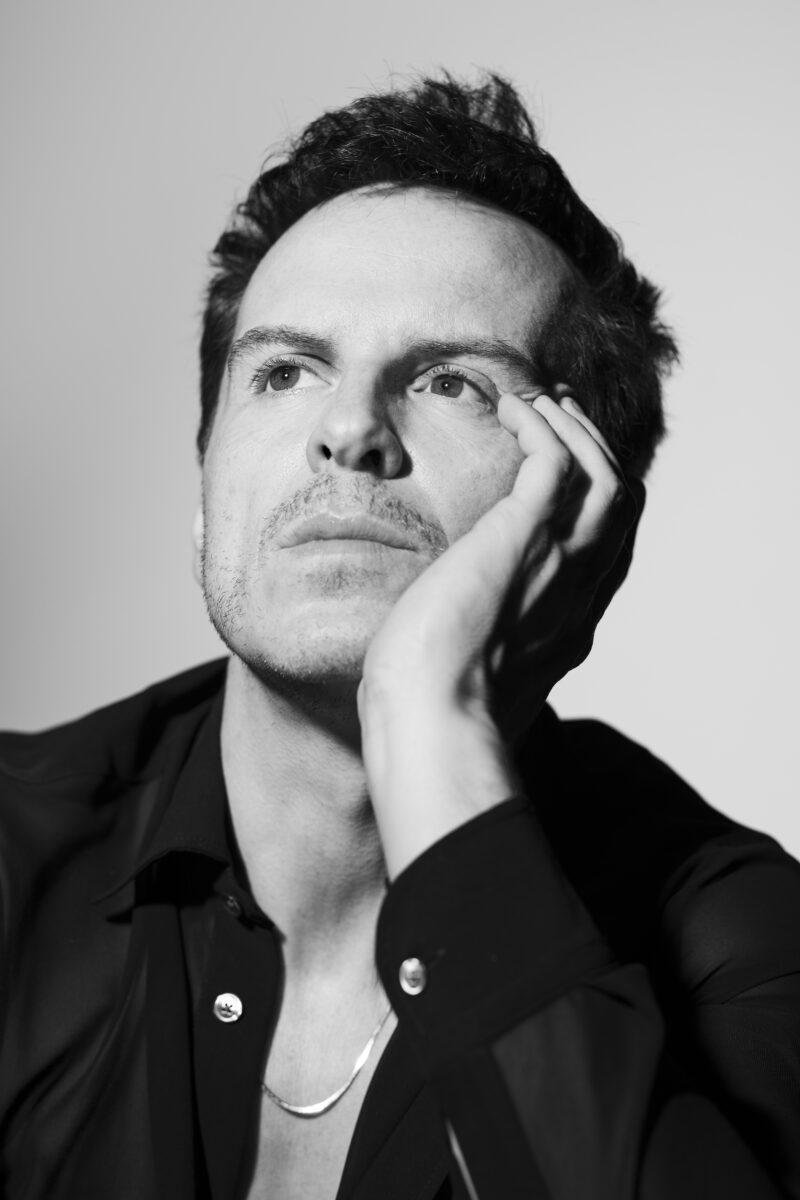
Andrew Scott’s role-picking resists neat categorisation. Scroll through the 49-year-old’s singular filmography, and it reads like a kind of pick-and-mix: precise, probing, and restlessly curious in its range. He earned the enduring sobriquet of ‘the hot priest’ for his scene-stealing turn in Fleabag, was a quiet delight in Pride, and elevated an already formidable ensemble in 1917.
More recently, he has revealed a deeper register of control and interiority as a leading man in Ripley, and co-led, opposite fellow Irish darling Paul Mescal, the intimate and devastating All of Us Strangers. He took a modest but exacting role in Wake Up Dead Man: A Knives Out Mystery, and delivered some of the most dexterous dialogue exchanges of 2025 alongside Ethan Hawke in Blue Moon.
He remains, unmistakably, a product of the theatre. After leaving Trinity College Dublin, he joined the city’s revered Abbey Theatre, grounding himself in a discipline that continues to inform the rigour of his screen work. His breakthrough came as the slithering Jim Moriarty opposite Benedict Cumberbatch in Sherlock, a modern reimagining that quickly came to define its era, earning him a BAFTA TV Award for Best Supporting Actor in 2012. Since the genesis of his career, his choices appear guided by an appetite for the unfamiliar and a refusal to repeat himself.
“I’m not overly concerned with what other people think I should be dealing with in my career,” he says, playful but precise. “And I’m proud of that. There’s lots of stuff that I’m not so good at, but one of the things that I can do is have a strong idea of what I’d like to do and what the purpose of being an actor is for me. And that’s to play lots of different things. For me, the most valuable thing has always been to have a lot of experiences.”
Lounging on a leather sofa in the oak-drenched Soho House in Austin, Texas, Scott makes a great conversational companion, full of smiles, charisma and – as ever – dressed astoundingly well in a cream white blazer and matching trousers. SXSW steamrolls outside; all lite beer, lightening-quick red carpets, and a pantheon of the next best musical acts from across the States and beyond.
It’s both of our first times at the famed music and film festival in the American deep south, and Scott seems just as excited as I am at being here. He loves the “communal thrill” of being surrounded by contemporaries, all striving to collectively discover. “There’s a kind of passion that is shared by people buzzing around with lanyards on the street corner,” he says with twinkling eyes. “And so you feel that. There’s the idea of something that has not yet been given birth to that you’re all there to witness. That’s kind of cool. It makes you feel interested in, of course, the band or the movie or whatever, but more than that, it’s that you’re doing it with a lot of inherently like-minded people. It sort of backs you up, and makes you think, ‘Wow, yeah, I’m not alone.’”
On the table between us sits a bottle of Redbreast. The esteemed Irish brand – the most awarded global whisky – is the reason for us both visiting the Texan capital. For him, the collaboration between actor and brand centres on Unhidden, an initiative designed to surface new filmmaking talent. A global call-out invited emerging directors to submit short films, narrowed to five finalists, each screened here in Austin before a live audience. Scott selects a winner, whose project he will executive produce.
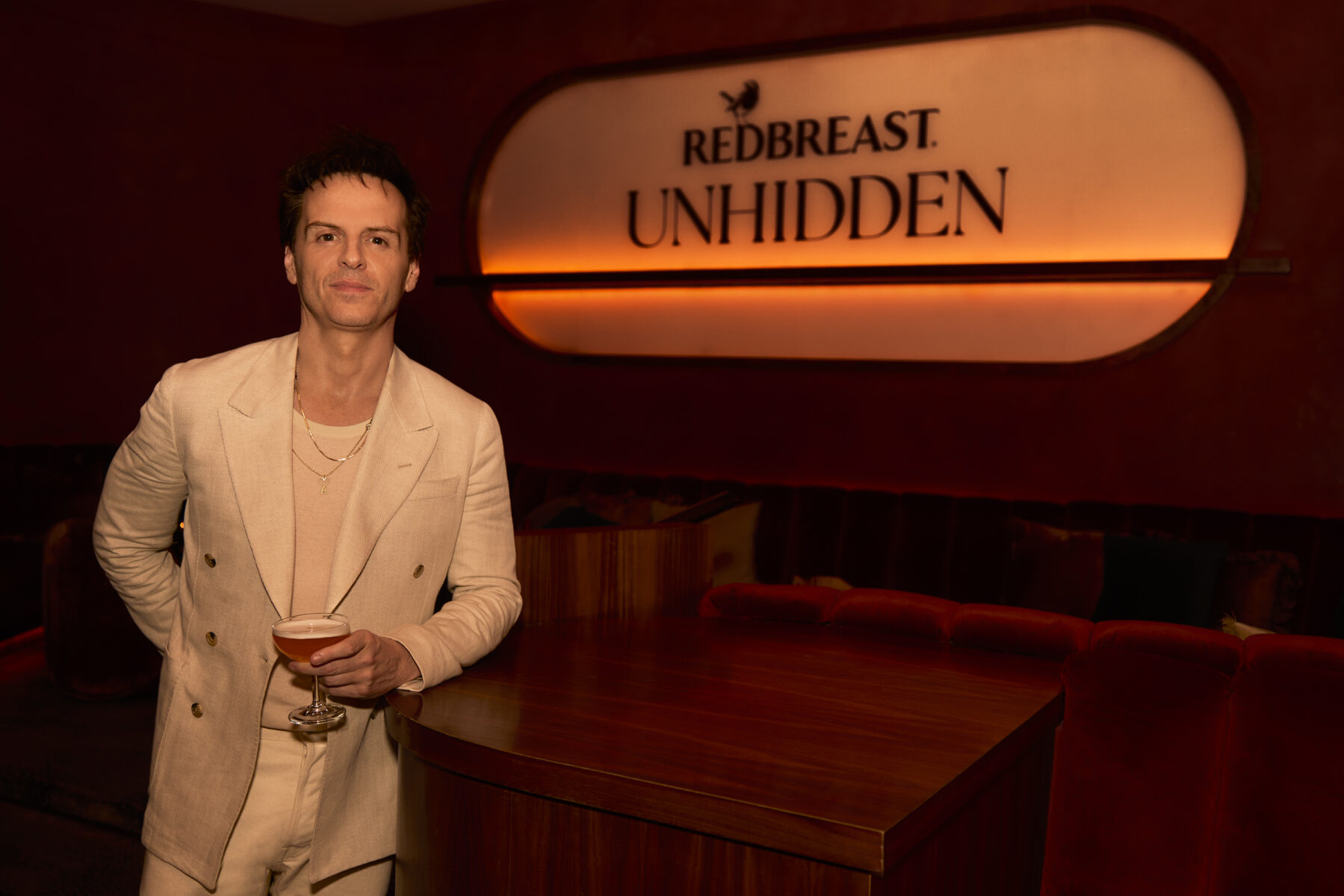
Of all the brand alignments available to him, this feels razor-sharp in its coherence. “That’s exactly right,” he agrees. “They had this incentive about uncovering new talent, and that just seemed like a really great idea. And so last year we started working together, and this year, we have selected five young filmmakers, and we are going to executive produce one of the films for the winning director. But yeah, it’s just a way of supporting emerging storytellers in a really cool way. And they’re just a great Irish brand. It’s a brand that I’m sort of proud of, you know?”
The shortlisted films form a loose, compelling constellation. Distinct in tone and geography, they share a confidence of ideology rather than a uniformity of subject matter. “It’s not necessarily the themes,” Scott notes, “it’s more the vision that they have, and the way that they can have a very singular way of telling their story. Whether that’s visually, through its humour or just an atmosphere that they’re able to create. Being able to do that in 10 or 15 minutes is a real skill, because it’s difficult to make a short film. Narratively, you’re obviously constrained a little bit. So it’s a rhythm thing, and the way they use the camera. And having the confidence to not copy other stuff – to be able to influence, but to have your own voice.”
The eventual winner, Pranav Bhasin, arrives with We Were Here, a quietly affecting mockumentary set in small-town India. Blending humour with a gentle, persistent inquiry into technology’s encroachment, the film follows three retired men grappling with the rise of digitalism. It is warm, lightly comic, and unexpectedly poignant in its questioning: how do we remain human amid this acceleration?
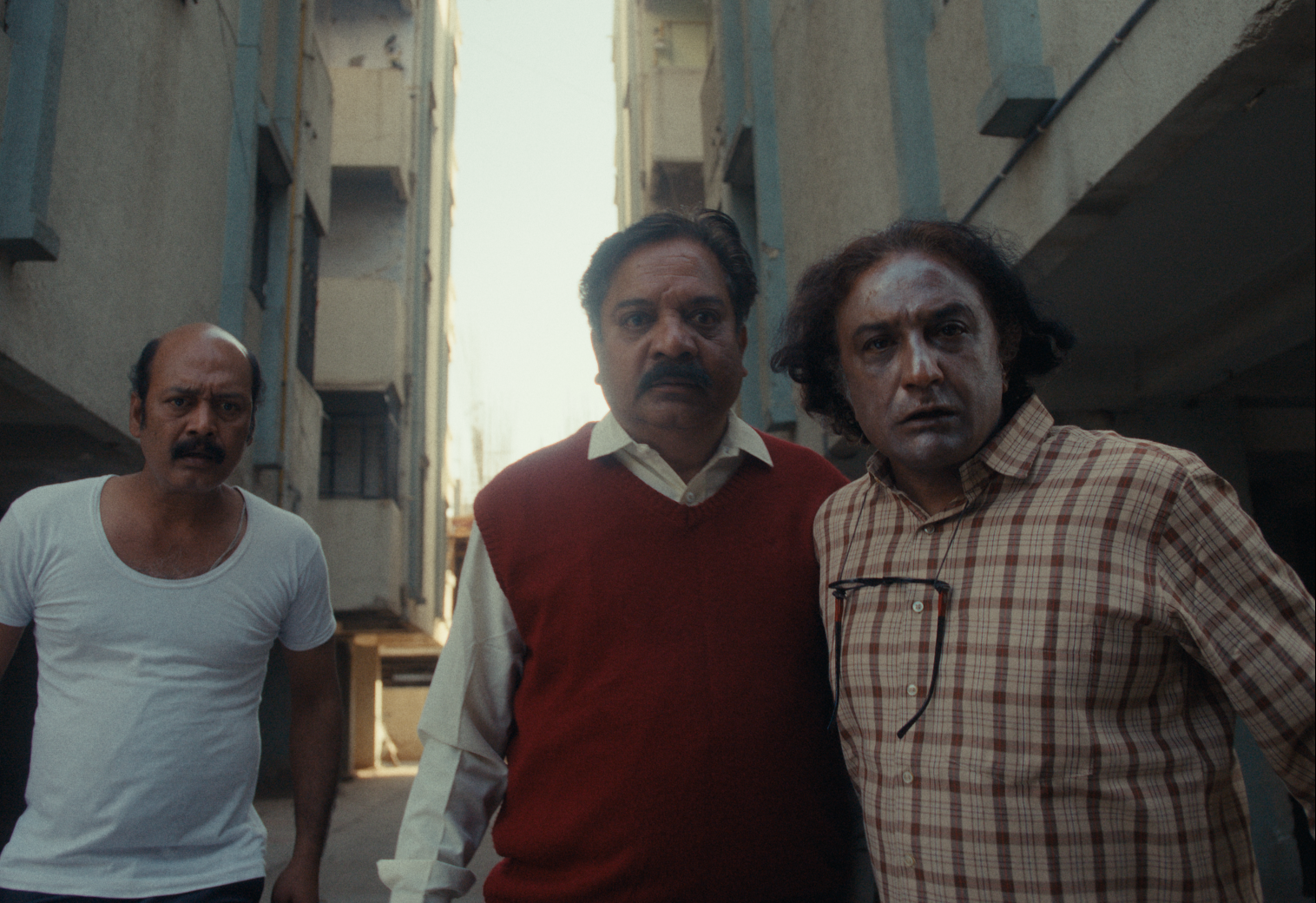
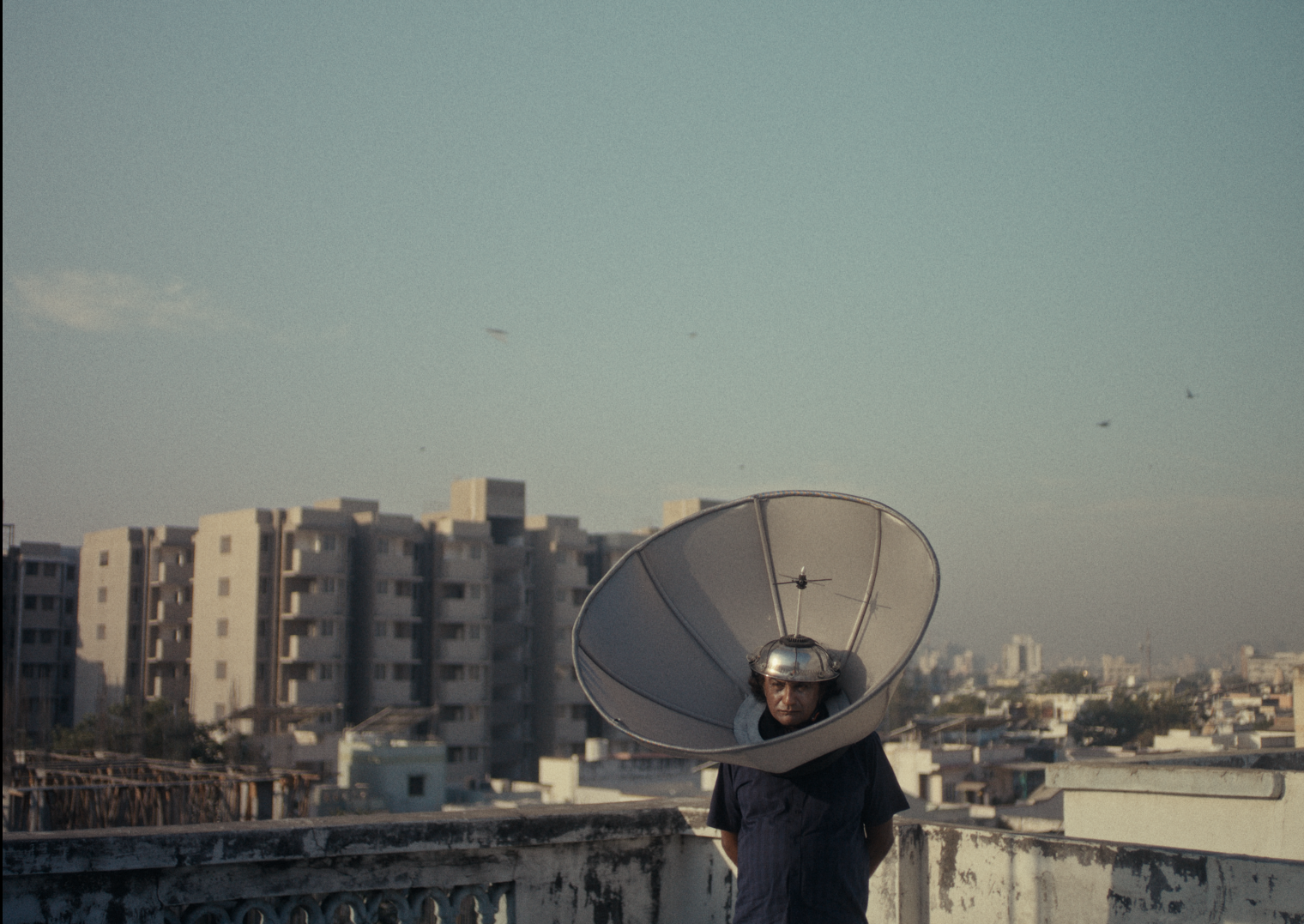
Bhasin’s journey to Austin was, fittingly, not without friction. A cancelled flight a few days before take off, rerouted into a 41-hour journey, a detail he recounts with humility and humour as he accepts the award. “I’m so grateful that Andrew Scott saw something in this,” he tells the crowd. The win brings not only recognition but the tangible backing of an actor now in a position to offer it. “Really, all five films were so beautiful, and we made such great friends at SXSW. When we last came to SXSW in 2023 with a music video, we’d never seen so much love for short films before we came here. And a friend of mine and I were talking, and we said that we’d be back here with a short film, and here we are with one.”
For Scott, mentorship remains deeply personal. “It’s about the people who say something to you for the first time when you’re really struggling,” he reflects. “Because when you’re a 17-year-old actor or artist, and you’re trying to work out the cloudiness in your head, and somebody says something to you like: ‘Do you know what I’ve noticed about you?’ or, ‘This is what helped me through the experience’ – those clouds tend to part. The influence of that is absolutely enormous. A lot of it can be quite pragmatic in some ways. But the best advice is not so much imparting what you have, but being able to have the generosity to be able to really see what the person needs themselves.”
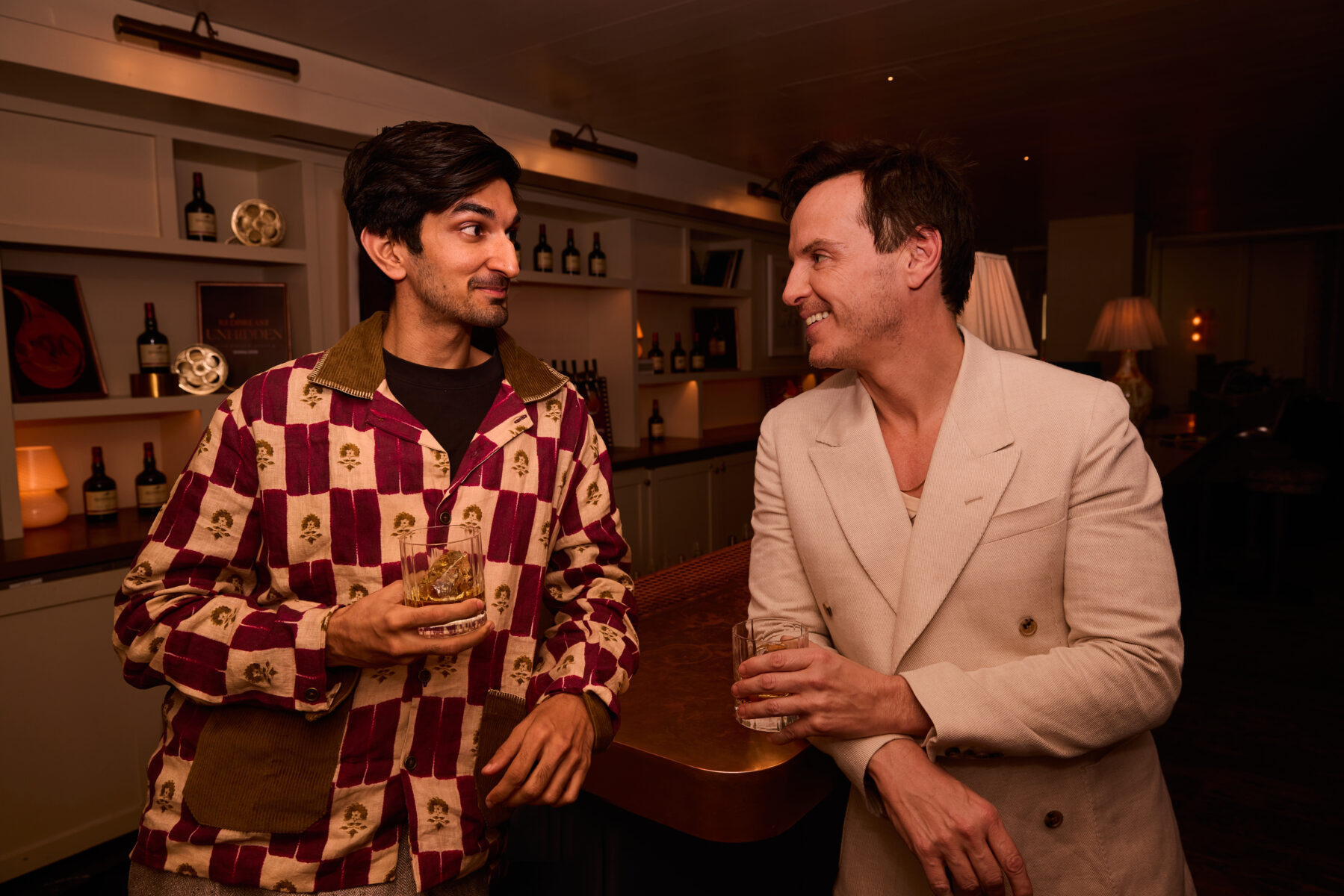
Maintaining his voracious appetite to seek new characters to devour, 2026 sees a plethora of projects in action for Scott. He’ll star as James Stagg, opposite Brendan Fraser and Kerry Condon, in Pressure, filmmaker Anthony Maras’ retelling of the preceding days of D-Day. And he’ll lead and produce the seemingly award-friendly Elsinore, a Simon Stone drama which depicts the inspiring story of the actor, Ian Charleson. It’s his first film as a producer, which, alongside his executive producer role for We Were Here, suggests a pivot – or rather an expansion – into cinematic medians beyond acting.
“Yeah, if I have the right story,” he admits on a growing interest in stepping behind the camera himself. “Elsinore, which we just finished, I feel incredibly passionate about the story and the script was incredible, and just being around that whole thing was amazing. But I realised that if you don’t feel really passionate about it, I’d imagine it would almost be even harder because it’s tough to get a film made.”
It is precisely that difficulty that lends initiatives like Unhidden their subtle significance. There is a certain, fitting irony in that. In backing Bhasin, Scott has helped usher a new voice into view, playing a tangible role in carrying a film from conception to completion. It’s a modest gesture, perhaps, but one that endures.
Find out more here.
Words – Ben Tibbits