[analyse_image type=”featured” src=”https://velo.outsideonline.com/wp-content/uploads/2026/03/roglahorizontal.jpg”]
It’s wrong to speak of Primož Roglič in the past tense.
The Slovenian remains one of cycling’s defining champions, a rider whose palmarès spans grand tours, Olympic gold, monuments, and nearly every major one-week stage race.
Yet as the 2026 season begins, Roglič is the forgotten man of the Big 4 era.
Rogla is still in the world’s elite, but the peloton is moving on.
The Red Bull-Bora-Hansgrohe star turns 37 in October, and his contract expires at the end of the year.
The Slovenian returns to racing this week after a long altitude block on Teide, enigmatic as ever.
“If you train and you’re alone, for sure you are not achieving your best,” Roglič said during the team’s camp. “If you compare yourself with the rest, then you can see where you are and what still needs to be done.”
Roglič is never one to over-complicate things.
But 2026 marks a crossroads for the rider who helped define cycling’s modern era.
Bridge between eras
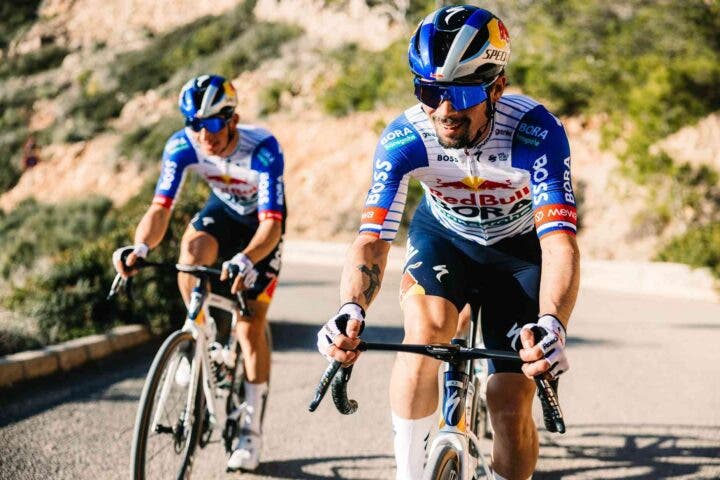
Few riders have shaped modern cycling quite like Roglič.
And he starts 2026 strangely under the radar and off the pulse of the peloton.
Roglič helped bridge and forge cycling’s modern eras. He emerged from the dominance of Team Sky and later Ineos Grenadiers and transformed Visma-Lease a Bike into the sport’s first modern “super team.”
Alongside Tadej Pogačar, Jonas Vingegaard, and Evenepoel, Roglič ushered in cycling’s “Big Four” era.
These days, it’s Pogačar 24-7, and buzz around Paul Seixas and a brash new generation nipping at his heels.
And now with the pavement shifting beneath his wheels, Roglič may become the first of that elite quartet to step away.
He opens his campaign this week at Tirreno-Adriatico without much fanfare, launching what could become the final major season of his career.
Roglič, however, isn’t sounding like he’s on a farewell tour. Monday’s TT opened Tirreno-Adriatico promisingly enough within the top 10.
“All of us start from zero and have to prove ourselves again. That’s the beauty of this sport,” Roglič told Wielerflits. “You have to show your worth again and again, whether you are a young rider or someone who has been around for years.”
Up next is Itzulia Basque Country and the Tour de Romandie in what could be one of his final clashes with compatriot and bête noire Tadej Pogačar.
The beauty and madness with Roglič is that no one knows what you’re going to get.
One last hill to climb
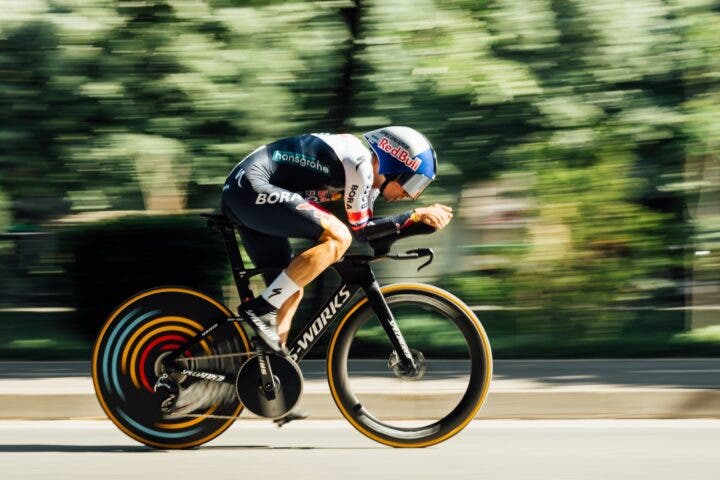
Roglič begins a season that could define the final chapter of one of cycling’s most unlikely careers.
Yes, the line that Roglič used to be a ski jumper has become one of cycling’s most worn insider jokes, but his unconventional rise remains truly remarkable.
Few athletes have successfully crossed over from a discipline as specialized and bizarre as ski jumping into the brutal endurance world of grand tour racing.
Even fewer have climbed all the way to the pinnacle of cycling’s rough and tumble hierarchy.
Roglič did win Olympic gold, but not on skis. He claimed it in the individual time trial in the 2020 Summer Games, another twist in a career built on improbable highs and gut-wrenching lows.
“I never expected it,” Roglič said on the Red Bull-Bora-Hansgrohe website. “Life is full of surprises.”
Fast-forward to 2026, and suddenly Roglič is no longer at the center of the conversation.
The arrival of Remco Evenepoel and the emergence of Florian Lipowitz have shifted the Red Bull’s gravitational center.
There’s no more talk of yellow jerseys. In fact, he’s not even penciled to race the 2026 Tour de France.
In trademark Roglič nonchalance, he seems to be taking it in stride.
“Of course, I always want to win,” he said before Tirreno. “But to be honest, I’m not so focused on results right now. The field is strong, and I’m mainly looking forward to racing against all these guys again.”
For Roglič, this season could provide one last run at history to cement his legacy, and that means a record fifth victory at the Vuelta a España.
A fifth Vuelta would give Roglič the outright record ahead of Roberto Heras and provide a fitting exclamation point for one of the peloton’s most wild and rollercoaster careers.
Peloton’s sphinx
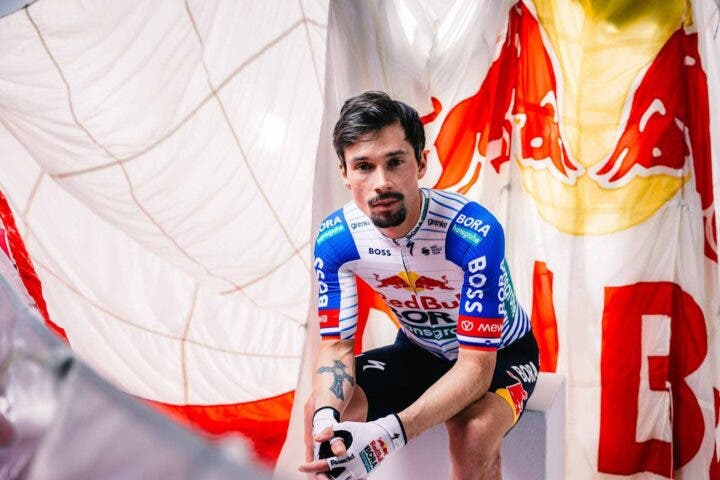
Roglič is sometimes hard to pin down because he’s so evasive in interviews.
Even the mighty Red Bull PR machine couldn’t extract much out of him in a story posted this week on the team’s website.
“When I’m just here at the camp, I’m just here. Same with the races,” he said of his off-season that included a rally car race and a guest spot at the Winter Olympic Games. “But in between, I like to discover.”
His Sphinx-like exterior is perhaps a mask to hide the intense and ambitious competitor that lies beneath.
He never won the Tour de France, despite coming heartbreakingly close in 2020.
That July afternoon at La Planche des Belles Filles saw Pogačar overturn Roglič’s race lead is one of the most dramatic and gutting reversals in Tour history.
At the time, Roglič could never have imagined it would prove to be his closest brush with the yellow jersey. In fact, eighth in 2025 was the only time he finished the Tour since that crushing loss.
Now, six years later, Roglič will surely pack a few more surprises before he’s done.
How will it end for rider who was the cornerstone of cycling’s Big Four era?
He could be like Alejandro Valverde, who aged like a vintage rioja, won road worlds at 38, and raced competitively until he was 42. Or he might walk away on a high in 2026 if he clinches a record fifth Vuelta.
With his trademark ski jumping winning salute on the podium, of course.
His legacy will always be much more than results, even if he’s not done yet.
[analyse_source url=”https://velo.outsideonline.com/road/road-racing/primoz-roglic-the-forgotten-man-of-cyclings-big-4-era/”]