Wonderland
A LOVE LETTER TO DAME TRACEY EMIN
Tracey Emin has spent four decades drawing from her own life to create some of the world’s most evocative contemporary art. As Tate Modern presents the largest exhibition of her work to date, Wonderland speaks to friends and fans Bella Freud, Orlando Bloom, Lulu Kennedy, Russell Tovey, and Katy Hessel about how her radical honesty has irrevocably shaped theirs too.
People love to argue whether life should inform art. But Dame Tracey Emin just gives them two fingers up. Candour, in her work, is never theoretical. It’s inhaled and exhaled like the plumes of a cigarette. “The most beautiful thing is honesty,” she has said, “even if it’s really painful to look at.” She’s spent a lifetime turning herself inside out for her art, and in doing so, has taught the rest of us how to feel more fully. 62-year-old Tracey Emin’s heart is her art.
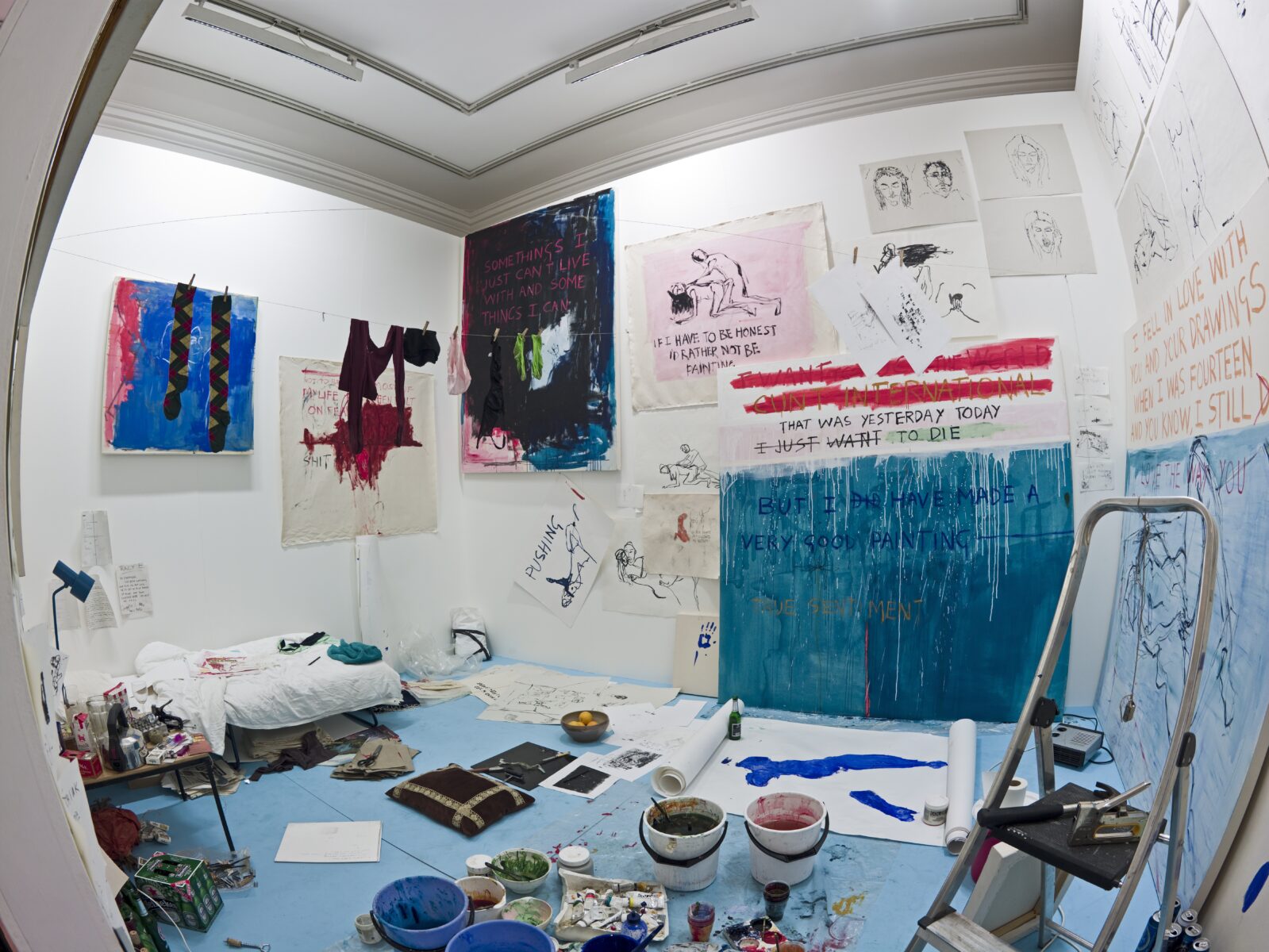
In 1999, she laid My Bed before the Turner Prize jury. The installation – vodka bottles empty, condoms scattered, period-stained garments, cigarettes afoot – was the aftermath of heartbreak and depression entangled. Shock, awe, disgust, delight: the critics debated while the world watched. Few could look away. The sheets had been pulled back on the female experience, and its intimate, messy, unglossed form had arrived in the museum.
“She’s changed how we understand women’s lives,” says art historian Katy Hessel, “and we take them seriously. By tackling subjects previously (and outrageously) deemed ‘taboo’ in the most direct ways, she’s gotten the world to sit up and listen. Her work is pure honesty, and gets us to see the woman’s perspective in situations that matter to real life. Her work is deeply personal, but because of this – the more universal it is, too.”
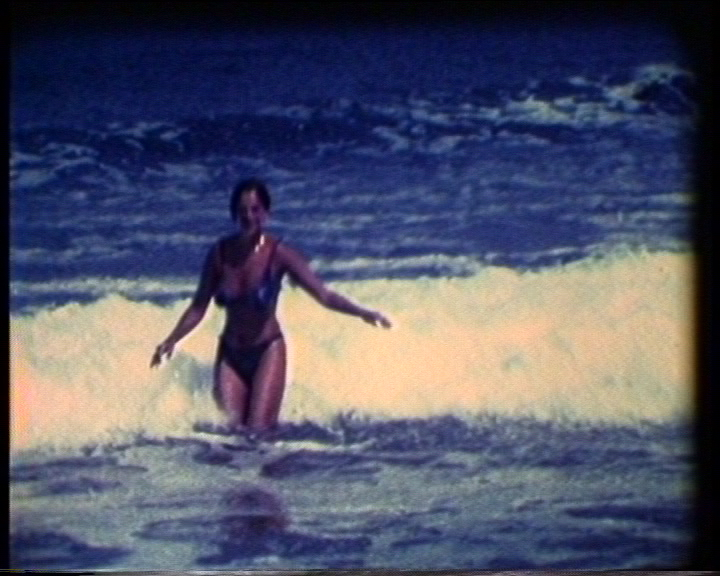
Tracey was born in London in 1963, and spent her early years in Margate on England’s southeast coast, living with her mother and twin brother. Her father, married to another woman, divided his time between two families. By the age of seven, economic hardship had cast its shadow when her father’s local hotel business collapsed. Trauma continued to mark her teenage years: at 13, she was raped, and at 18, she had an abortion. Later in life came a diagnosis of aggressive bladder cancer, surgery, and living with a stoma. Yet, through it all, she made art relentlessly. Pain became medium, and survival became practice.
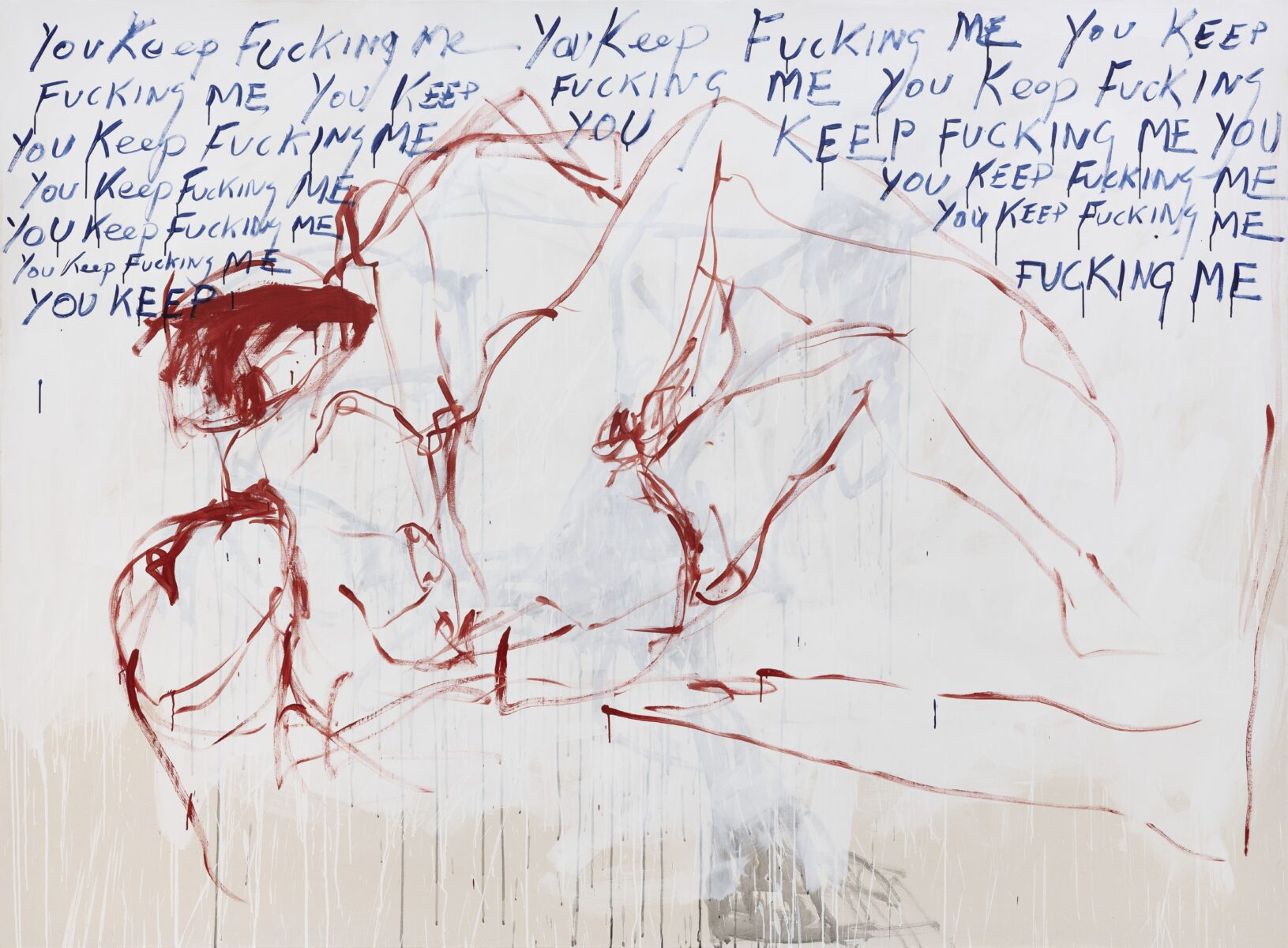
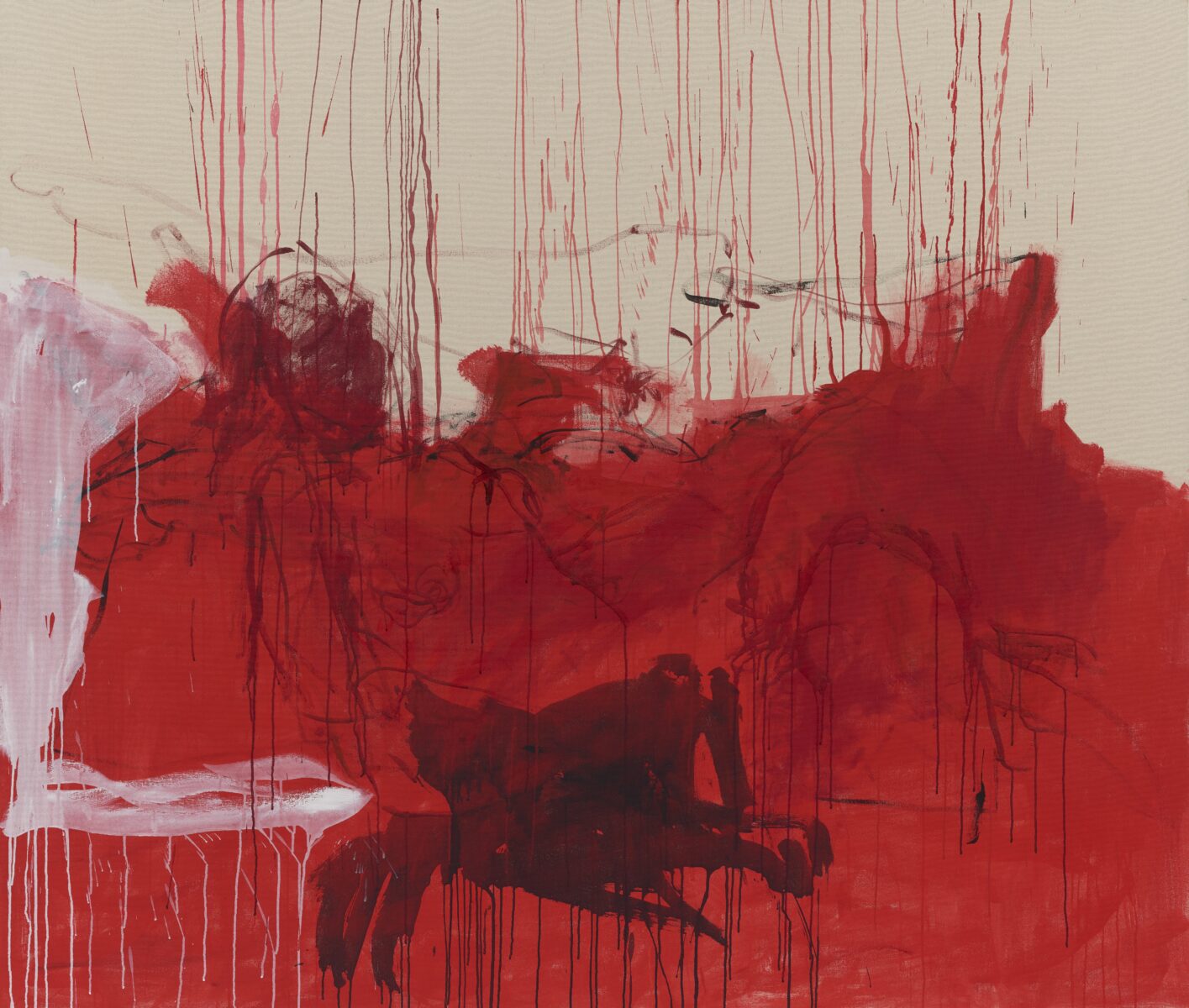
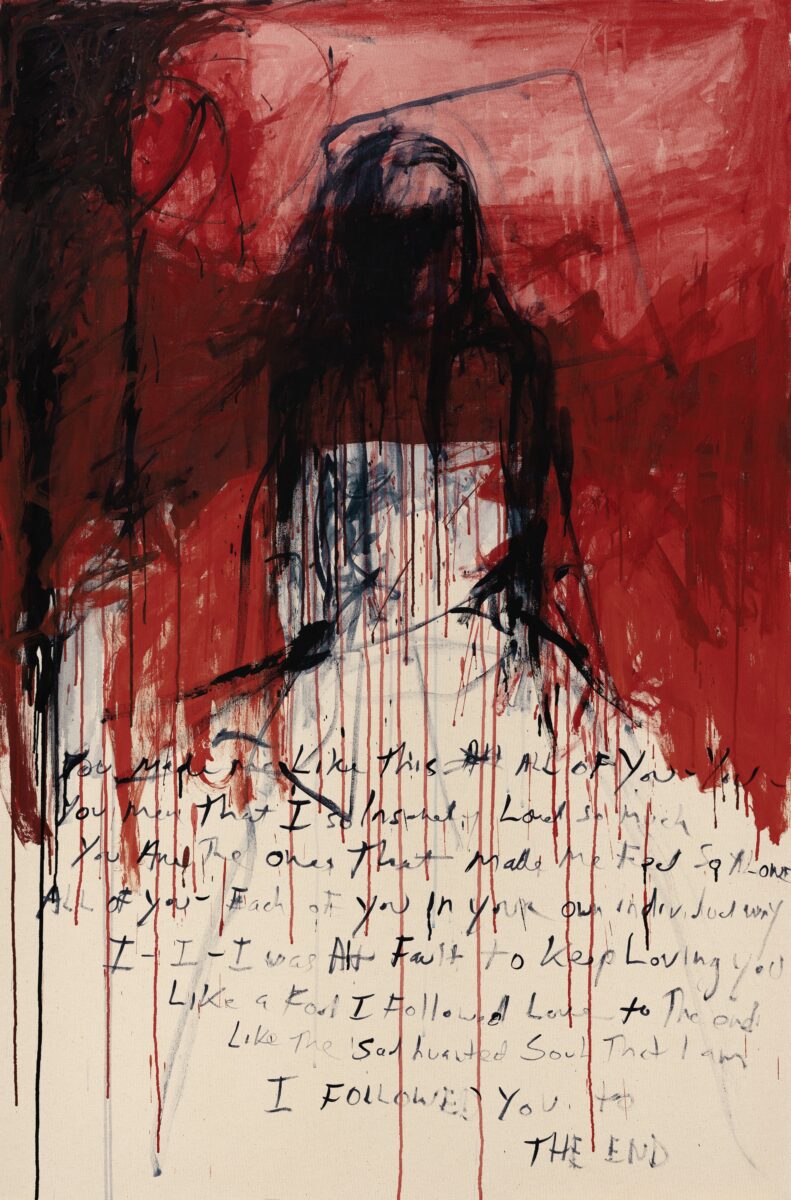
Her oeuvre is the innards of a living diary. Paintings, neon, quilts, sculpture, video, photography, textiles – all exist to bear witness. The female body is never decorative; it is a terrain of endurance and desire, anxiety and healing. Trauma, love, sexuality, self-reflection; these currents run through every piece, threading together what it is to be alive, to be human, to be a woman.
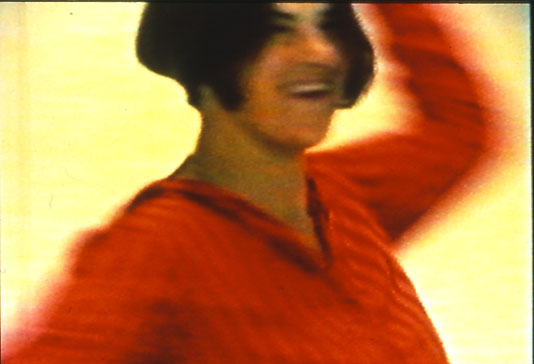
That same courage fills Tate Modern’s largest exhibition of her legacy to date, Tracey Emin: A Second Life, spanning over 90 works across painting, video, photography, sculpture and more. Tiny sketches from art school sit alongside a new bronze, Ascension 2024, which traces her evolving relationship with her body. Seminal pieces like The Bed and Why I Never Became A Dancer weave together her first life with what she calls post-surgery: her second. “A Second Life will be a benchmark for me,” she says. “A moment in my life when I can look back and go forward. A true celebration of living.”
Below, some of those who celebrate her the most, offer some musings and memories on Tracey Emin and her everlasting impact.
Bella Freud, Fashion Designer and Fashion Neurosis Podcast Host
Tell us about the first time you encountered Tracey Emin’s work. How did her work affect you at that moment?
I remember first seeing Tracey’s My Bed at the Tate. It seemed so simple yet ingenious. It was emotional, it brought up feelings about being a young woman and some of the mess that came with that. When I was younger I found a certain amount of chaos kept me feeling secure, the lack of clarity aligned with my indecisiveness. I had seen photographs of Tracey, in some of them she was naked. I was struck by her lack of self-consciousness and how beautiful she was.
If you could spend an entire day with her, where would you go, what would you do, and what would you want to talk about?
If I was spending a whole day with Tracey I would like to lie around on sofas, each of us with a cat to snuggle up with. We would talk about health, men, and how to make money. At a certain point a luxurious car would appear and drive us to Claridges where we would eat loads of oysters. Then Tracey would take me to see her favourite paintings at the National Gallery and tell me why she likes them.
Russell Tovey, Actor
“When I first discovered Tracey’s practice, it felt like an invitation posted directly to me, welcoming me into the world of art officially. Prior to this, imposter syndrome loomed large, but Tracey sounded like me, she used language like me, she was articulate in a way I understood, and she made work that affected me profoundly. I’d not felt that before with any living artist. She is the reason I knew art was going to change my life, she educated me to listen to my gut and follow my instincts, and I’ve proudly followed her line ever since.”
Katy Hessel, Art Historian and Author of The Story of Art without Men
Tell us about the first time you encountered Tracey Emin’s work. How did her work affect you at that moment?
As a kid growing up in London in the ‘90s, Emin’s work was all around me. I knew her bed, her tent, her neons. But it was learning about her Shop, with Sarah Lucas – open for 6 months in 1993 on an East London street that sold their art, hand-made items and t-shirts (and ended with a party on Emin’s birthday) – that inspired me most. I think it was her conviction to do it herself, in her way, on her terms – something that weaves throughout all her art and life. Emin has always just gone and done it, whether it’s her art or building an entire art school from scratch.
If you could spend an entire day with her, where would you go, what would you do, and what would you want to talk about?
It would exist in three different time zones. Morning would be spent in the early 1900s. Tracey often talks about her ancestors – Travellers who lived in forests from Warwickshire on her mother’s side, and her Turkish Cypriot family on her father’s. I’d love to be with her as she meets all the family she never got to meet. It would be fascinating and reveal so much. In the afternoon, I’d like to meet her when she was my age, 31, in 1994 (although it might have to be the night, too, as we’d probably have a lot of fun). I’d like to walk around London with her, with her showing me her favourite, or most meaningful, places. The evening would be spent in 20 or 30 years from now, drinking tea in Margate, having a conversation about her life. I think her best years are yet to come!
Orlando Bloom, Actor
“[We met] quite a while ago now, but we spent a wonderful day together. Tracey showed me her studio and what she was doing. We had a great lunch. I love Tracey’s great humour, her seriousness, and the way she engages with life. But more importantly, she shows us visually the real experience of being a woman. These are not superficial images of a woman from an outside perspective, or outside fantasies projected onto a woman, or from a man’s point of view. [Her art] is not objectified, it’s subjectified. Tracey lets us know what it’s like to be herself from her own point of view, and that’s what I think is so extraordinary about Tracey’s work. It’s not classical beauty. It’s messy beauty. It’s frustration, it’s exasperation. I also like the fact that she comes from Kent, where I come from, and we both have made it against the odds. Anyway, lots of love to Tracey.”
Lulu Kennedy, Founder of Fashion East
Tell us about the first time you encountered Tracey Emin’s work. How did her work affect you at that moment?
I have always been mesmerised by the film of Tracey dancing, and how she told the story behind the title “Why I Never Became a Dancer” so brutally honestly. That felt very powerful and new and needed. Then, when I saw “A Perfect Place to Grow”, I got totally enchanted with the film of her father that you watched one by one up a ladder through a little window of a little shed on stilts, and somehow, especially the potted plants placed on the floor next to the structure. The everydayness and smell of the plants, together with the intimacy and innocence of it all, really stayed with me. Every element resonated and brought back memories of my childhood and my own father. It felt like a blessing, a gift to see it in the flesh.
If you could spend an entire day with her, where would you go, what would you do, and what would you want to talk about?
I’d love her to take us to her favourite hot and sunny beach, wherever she fancied – I’m not fussy, and we could just chat, relax, and swim to our hearts content. That would be the most perfect day ever.
Tracey Emin: A Second Life is on display at Tate Modern 27 February – 31 August 2026
Words – Ella Bardsley