Wonderland
A MOMENT WITH RISH SHAH
Fresh from Sundance and a Picturehouse premiere, British actor Rish Shah speaks with Wonderland about stepping into Charli xcx’s mockumentary The Moment, the comedic thrills of playing an A&R, and helming the frenzy of BRAT summer forever.
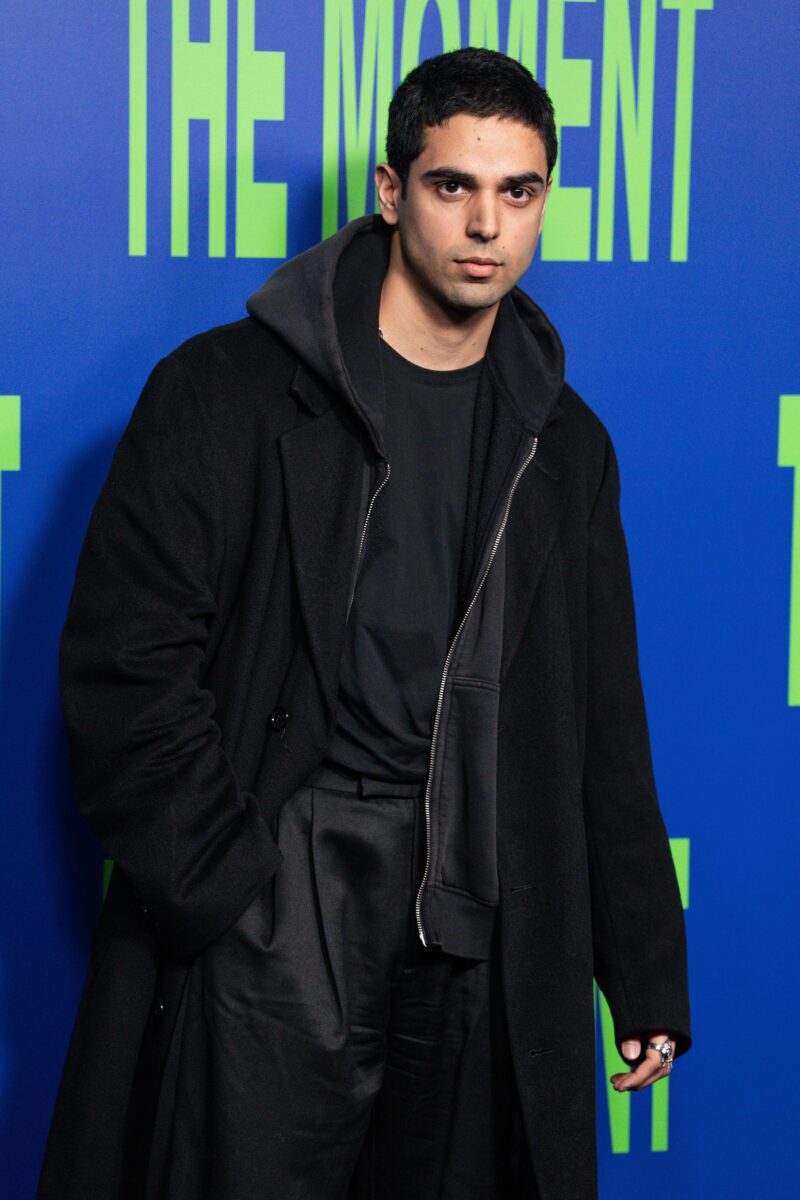
Having navigated intense character work in previous projects, Rish Shah is relishing the opportunity to finally embrace satire. Back in 2020, the budding young British Indian actor was kicked to the curb by the far-right in the harrowing Riz Ahmed, Aneil Karia-directed, Oscar-winning short The Long Goodbye. Since this early career milestone, he’s managed to capture the public’s attention with a myriad of dramatic appearances, from his breakout as Kamran in the Disney+ series Ms. Marvel to blue-haired alt-boy Russ in Netflix’s Do Revenge.
Teaming up with Benito Skinner, aka internet personality Benny Drama, Shah rose to even greater heights with a starring role in the Prime Video success Overcompensating. As mysterious freshman Miles Hari, he is the object of Benny’s affections, and it is through his relationship with Skinner that led to a meeting of the minds at Charli xcx’s Sweat tour with Troye Sivan. Finding a mutual friend in the cultural beacon behind the global BRAT phenomenon, Shah grabs the chance to show off his comedy chops in The Moment, arguably the pop culture event of the year.
He plays Jamie Singh, an awkward A&R at Atlantic Records in pursuit of greatness, for himself and for Charli xcx, the pop star, at the expense of commercial exploitation. Guiding a series of unfortunate events and mishaps, uncannily familiar to anyone affiliated with the modern music landscape, Jamie and fellow A&R Josh Campbell (Michael Workéyè) pitch the idea of a concert film to label exec Tammy Pitman (Rosanna Arquette). Taking the reins on creative is famed director Johannes Godwin (Alexander Skarsgård). The results are equal parts hilarious and horrific for everyone involved.
Operating in the This Is Spinal Tap orbit of first-time filmmaker Aidan Zamiri, Shah delivers a performance that is as transformative as it is grounded. Going blonde, he gets out of his comfort zone and is caught in the crossfire of Gaspar Noé transitions, Howard Stirling BRAT cards, Britpop needle drops, and product placements aplenty. Though absurd as it all is, Jamie cannot hide from his insecurities. It’s what makes him oddly relatable. “Whether I’ve been in those situations or not, I’ve certainly seen them,” says Shah. “Not even necessarily on set, but just in and around me in everyday life. Being a Londoner, or spending half my time in New York, you’re constantly surrounded by people and frictions and, yeah, hopefully just trying to replicate a bit of that.”
Away from the BRAT green glamour of red carpets, Q&A screenings, and after-parties, Rish Shah takes a breather with Wonderland to reflect on the making of The Moment, what to expect from Miles in Overcompensating season two, and finding laughter amid the chaos of a Charli xcx worldbuild.
Rish, thank you so much for chatting with us. I actually just rewatched The Long Goodbye after a trip to the cinema for Hamlet. Did you have any sense at the time when making it of just how resonant it would become?
Oh, thanks, that’s sweet to hear. I mean, hard to top that, but we’ve had some fun ones.
That was a crazy and such a poignant short, and it feels like so much more than a short. I filmed that on my birthday. I remember just thinking, God, what a beautiful blessing of a birthday gift. To be a little bit more than a fly on the wall on a production like this and see these two greats bringing this to life. Also, just feeling scared that this dystopian world that they were creating was very, very real. Sadly, that’s a reality where we’re now kind of living in, yeah, it’s terrifying. But nevertheless, just a privilege to have been a part of that, and really cool, actually. I want to watch it again!
I just bumped into Riz at Sundance, and I think, if I’m not mistaken, he came and saw The Moment, so that’s pretty cool.
Tell us all about the Sundance premiere of The Moment. Was it your first time attending?
Yeah, it was, and I’m sure you’ve heard that it was this iconic final Park City hurrah; it really felt that way. It was special, it was beautiful. I’d never been to Utah, the landscape is gorgeous, and it’s also a really relaxed festival, which I know everyone was telling me, but I didn’t quite realise until we were actually there. All in all, it was a really tame time, which I think was a nice way to kind of bring the movie into the world, actually, and to premiere it. But the audience response and the feedback within the room were exactly what you would have hoped for. I usually don’t like sitting through premieres, because of anxiety reasons, but this one was so worthwhile and really special and fun. The Eccles Theatre was just gorgeous, and everyone seemed so locked in.
We had a really fun after party as well, and people were just there celebrating everyone’s hard work. It was A. G. Cook DJing after, so that was pretty sick.
So you first connected with Charli around the Sweat tour. When you met, did she mention she was developing a film with Aidan Zamiri?
No, she really surprised me with this amazing opportunity. I had no idea she was even considering me. We just hit it off and had a really sincere and sweet conversation after her performance, and then we connected on a few levels.
I received a really lovely letter, and she basically just said that they’re creating this film. That was my first time then being introduced to Aiden as well after that. We were joking and saying we were pen pals for a little bit, because I’d written a letter back. We had Sean Price Williams, this amazing DP, I was in his directorial debut called The Sweet East. It was like a really nice reunion in that regard as well, because we had Sean coming in, myself, they’d seen me in The Sweet East and, obviously, Overcompensating.
It was a really funny thing because I remember when I first, like, actually text Charli, I sent a really stupid GIF, it’s a really deep reference of Tyra Banks pretending to write an email, but it’s empty or something. I’m trying to remember the name of the film. Anyways, then I sent it, and I was like, “hey, pen pal,” and then I sent it, and I was like, “why the fuck did I just send that to Charli?” But it was all sweet, you know, and it all worked out. I came into it off the bat, just feeling really invigorated and supported and confident.
Before stepping into The Moment, were you able to sit down and really talk through the character of Jamie with Charli?
Those early conversations about Jamie were essentially what they had told me, and Charli had told me, which was that there’s this real, nauseating Britishness to him. If I’m remembering correctly, verbatim almost, in what was the first description I’d seen about the character. You love to hate him a little bit. He’s a bit of a tool; he’s a little bit arrogant. Then, those early conversations with Aiden, as well, we spoke about trying to take up more space than he really needs to. Essentially, Jamie thinks this is his moment, and I’m trying to orchestrate this concert film, which I’ve pitched between Johannes and Tammy, my boss at the label, and I’m just money-grabbing, really.
He’s not an evil person, but I think he’s just one of those other suits, one of those guys who’s trying to be a bit more cool than he really is. Hence the blonde hair, that was all part of it, and larger costumes.
This world you’re portraying can be messy and full of workplace friction. I’m thinking especially of the confrontation with Charli’s creative and stage director Celeste, where you essentially let her go. Did you draw on your own personal experiences, or was it more about observation? How did you connect to Jamie emotionally?
You know what, I rarely have confrontations, and I’d like to think that’s because I’m a very malleable and adaptable and just relaxed person in the workplace. But naturally, there are things that do pop up sometimes where you can feel friction. Actually, as I’m getting older, I’m realising it’s okay to accept that friction. It’s okay to sit in that friction.
I think with that scene, all I was trying to really do was have a conversation with Celeste, and Hailey [Benton Gates] is so brilliant, her performance in the film, and I’m seeing her everywhere and she’s just phenomenal. But it was really easy to talk to her and realise, “okay, my character’s coming in from this, and we’re not seeing eye to eye.” We did a few different versions where Aiden really allowed us space to dial up the temperature in a few different takes. There were some where I’m being almost aggressive about it, and then there are others where I’m just like, “Look, you don’t understand, you’re just useless here.” I can’t describe where it’s placed in the edit, but it felt as though it was just a really natural thing.
Then you have someone like Jamie Demetriou lingering with his inability to kind of speak up as Tim there, and it just made the whole thing feel really real.
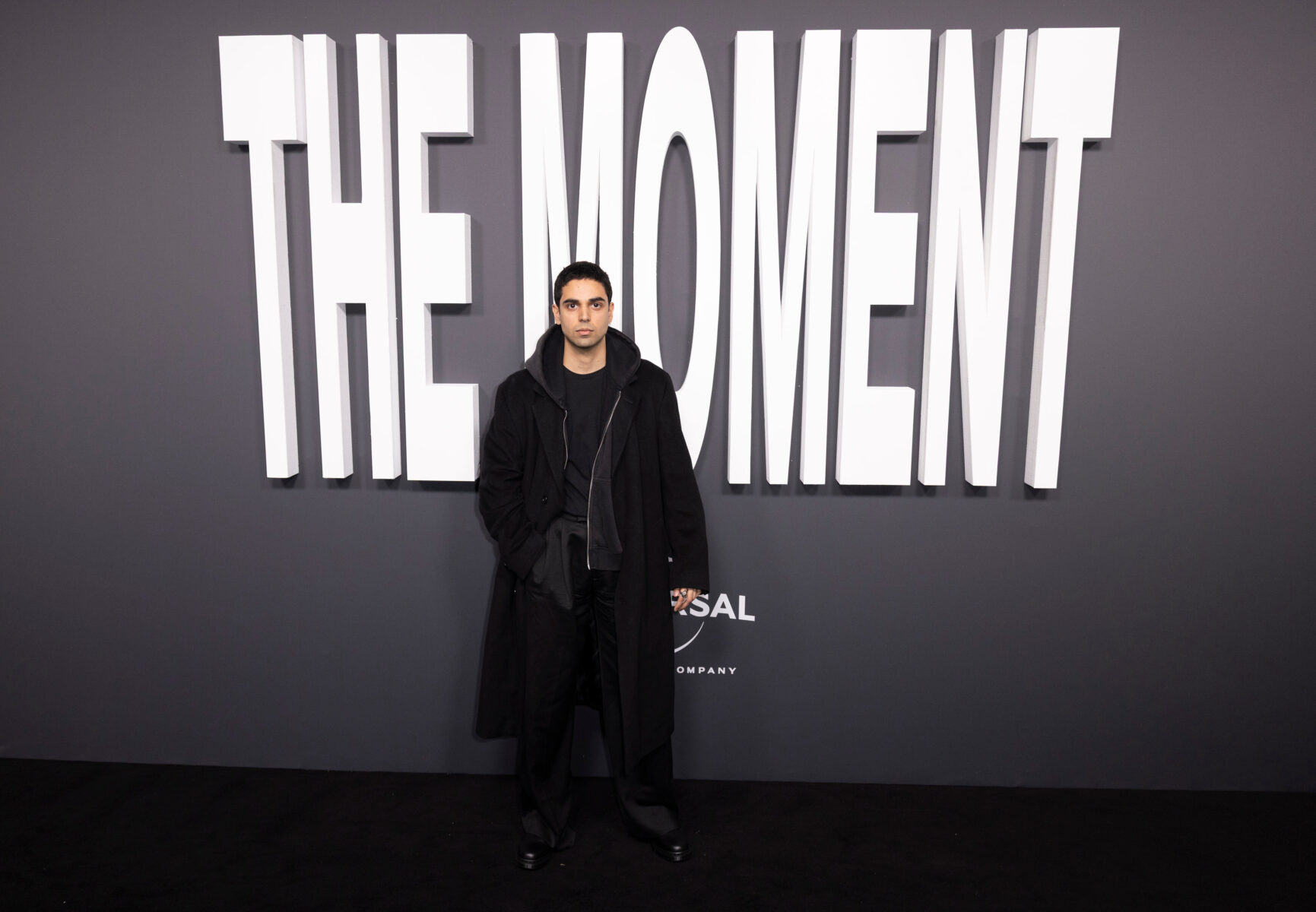
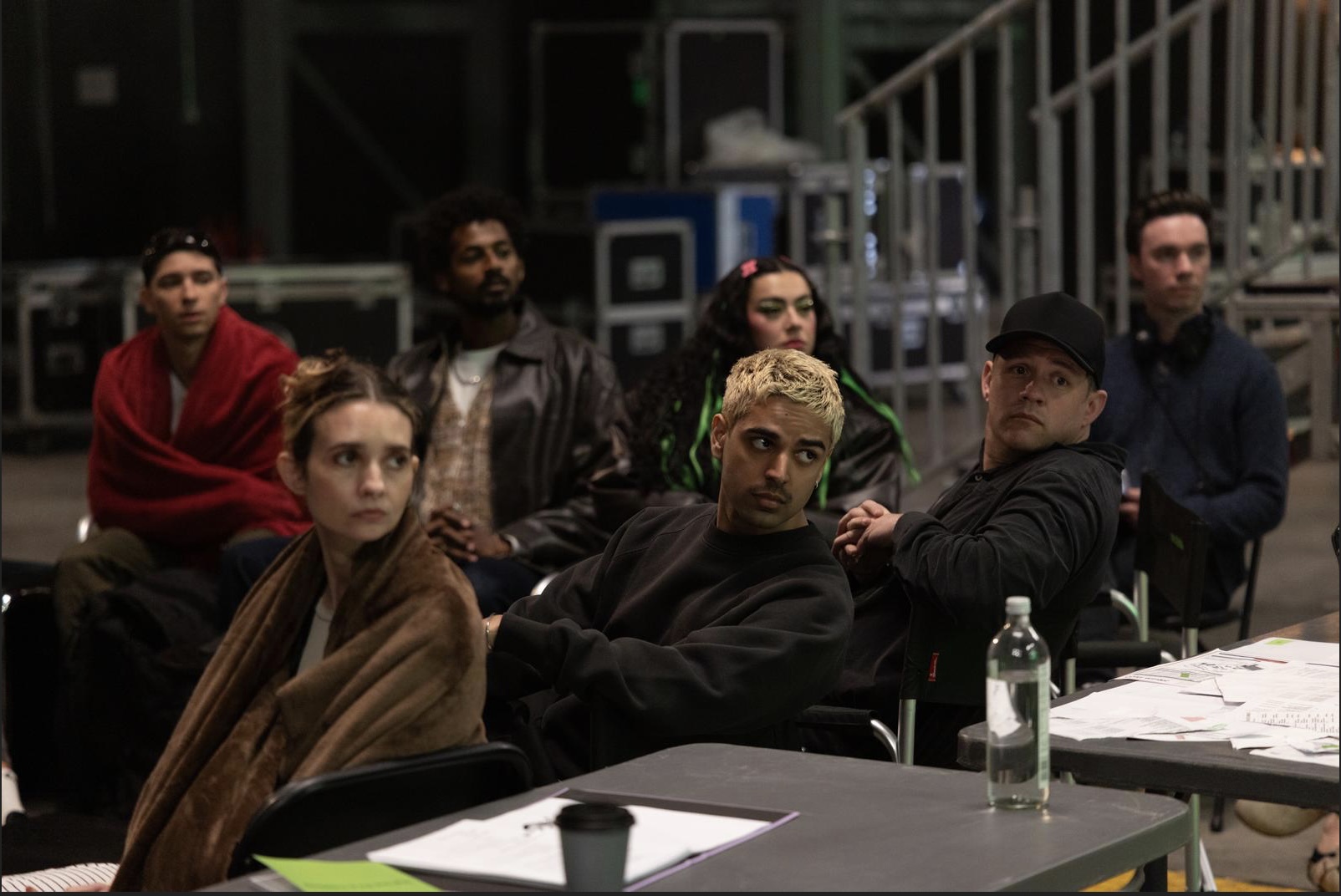
There’s a real satirical ensemble dynamic at play in the film, with yourself and Alexander, Rosanna, of course, Jamie as Charli’s manager Tim. You can really feel that Fleabag-meets-The Office energy in the way Aidan directs. How did you approach comedic timing, especially in that boardroom pitch scene where you stumble over your words?
Oh, my God, yeah, that scene was really fun. You know what, it was the first time I’ve actually lent more into comedy, that’s outside my usual wheelhouse. Even being a part of Overcompensating, I’m not necessarily someone who’s flexing that side of my toolkit, per se. It was a good challenge, and I realised that I actually really love it. Everyone was setting me up and enabling it. People like Jamie, who I look up to so much in that realm, were giving me the green light and go ahead, just like, “man, yeah, this is great.” There was a lot of ad-libbing that was thrown in, I really relished it.
I think I realised that this genre is so specific and it’s so fun and, actually, I would love to do more of it because it feels like it’s just a really freeing and liberating thing. But that is all cultivated from, and trickles down from, the people at the top. That is Aidan who really just allowed it, to be honest, and Bertie [Brandes], our writer, I mean, most of it was already there. Then with the way Sean shoots as well, you never necessarily know where the camera is sometimes. He’s so brilliant, he’ll be shooting from a rooftop across the street, through, like, three sets of glass, and catching our faces. So, you genuinely just have to be on the whole time, which made it really electric.
Electric feels like the perfect word for such a charged film; the strobe titles really amplify that. It feels disorienting and almost overwhelming at times, which makes sense given the frenzy of the BRAT era. How did you interpret that sense of pressure and escalation while making The Moment?
It’s just such an interesting thing. I think witnessing that rise, and I think what the film is trying to depict and describe, and hopefully people can relate to because I think everyone’s been in this sort of situation, is the difficulty and the pressures of bearing the weight of momentum, essentially. When you just feel like, “fuck, I can’t slip up now.” Whether that’s you at school and you’re playing sports, you’ve won two games in a row, and now you’re like, “fuck, we don’t want to lose this next game,” whatever it is, we’ve all been in that situation, and actually, it’s a really terrifying thing. Then there’s also a building feeling of perception at the same time.
Would you say that’s the main message you hope audiences walk away with?
Yeah, I think so, I think that should definitely be one of them. But also that it’s okay, and that pressure is fine, and that sometimes pressure is good. If you have the right outlets and you handle it the right way, and you’re surrounding yourself with the right support and the right people. I think what we see in the film is that sometimes it’s easy to let other people’s decisions become overbearing, and we’ve also all been there, you know? The power of choice, and sometimes putting the brakes on, can do you more good than harm.
There’s that motif of the bird in the rafters, which feels like it’s hinting at something larger. With the way it’s referenced in dialogue, did you ever compare notes on set about what it meant?
When I read it, it was a really funny scene. There were a few iterations. The point of it is, essentially, almost like this foreshadowing thing of what could happen and what might happen, and what we fear has happened to Charli by the end of the film. But also, there’s this massive lightness to it, given the genre and the mockumentary style. When we cut to the idea of Charli having passed, you then cut to, like, someone has a photo of Princess Diana on their desk, you know? It’s almost like a quip, and so I think that’s just what that whole scene felt like to me.
I didn’t know which version they were going to go with, but there was somewhere, I felt like I was being really mean to Jamie’s character, to Tim. Completely misunderstanding him, or actually, rather understanding him and just bullying him and being like, “mate, I think someone’s having you on, you’re crazy, what do you mean there’s a girl up there?” Obviously, being British, bird means woman. That’s just the nauseating British lad within my character, and all of the Atlantic boys, just a little bit too laddish.
When filming rehearsal sequences, especially with a track like “Sympathy is a knife”, was Charli’s music shaping the atmosphere on set, or was she trying to keep some distance from it?
I don’t know if she was the one who was playing it, but it was definitely on rotation. I was thrilled to feel as if I was getting a private, free concert, seeing her hoisted up there in just this really vulnerable way. I mean, that scene is so beautiful and actually really moving. It was really cool to be able to see that when you see her rehearsing and just being there. Aiden, obviously being such an advocate of Charli’s music, and we all are, we were always kind of bumping her music, pardon the pun.
We had some really great cast bonding moments and experiences. We actually had a lot of nights out together, as naturally you would expect we did. We had some karaoke nights, and I think there were some very surprising and impressive renditions of different songs. We had “Cry Me a River” by Jamie Demetriou; it was phenomenal. That boy has lungs. The Atlantic boys and I did JLS, I think it was “Beat Again by JLS”, an absolute banger. Then we again saw Aiden singing and rallying the songs he’d shot with Charli. Again, I was like, “This is so cool.” So there were some special moments, and it was just great to have that on repeat because it obviously set the tone for the film.
Do you have a favourite from BRAT?
I loved “Talk talk” ever since I saw it live, and since Toronto, I would work out and listen to BRAT when I was training for Overcompensating.
Speaking of Overcompensating, what can fans expect from Miles in season two?
I shouldn’t be telling others this, but I have read a draft of episode one, and I am literally, like, on the edge of my seat, stoked, ready to go. Ready to be back out there and filming, and pick up right where we left off. I think there’s going to be some really earnest and beautiful moments between Miles and Benny, and obviously the way we’ve left off with such a cliffhanger, and you don’t know who’s heard what and what’s happened and how Benny’s feeling, we’re in this really sad spot at the end of the season. I think that’s why the season’s so brilliant, because we’ve got such emotional depth by the end, and everyone’s really pulled their hearts out and going through so much.
That’s my hope for season two, actually, is that the audience gets to understand more of who Miles is. I think it’s becoming apparent that he was just a pretty lonely boy who’s trying to understand himself at uni, and make friends ,and that’s not always easy, especially when you’re going to a new place. I think we’re going to have some really hilarious moments as well. I mean, I’ve heard of a lot of the ideas. I just know Benny, his brain works at a million miles per hour. That man is, I’ve said it time and time again, the Duracell Bunny. He’s relentless, and I don’t know how he does it, and he is just the most brilliant man in the way that he inspires people to want to be around him so naturally, and he wears so many hats.
It’s going to be a real privilege to be back, actually. It’s my first time ever going back to a character, and I’m so happy it’s this one in this show, because it really means a lot to me. I’ve felt such sincerity around conversations I’ve had with other people who have seen the show, and I think it really does mean a lot to a lot of people who can relate to it. I’m really excited that we’re going in that direction more and more. There’s like, joke after joke, it’s hilarious, but then there’s also so much heart. Yeah, I can’t wait for fans to see season two. It’s a really fun time shooting, as you can imagine. We’re gonna be back in Toronto, I think next month.
You’ve mentioned wanting to do more comedy, after projects like these, where do you see yourself heading next?
I’ve actually just wrapped up on a show called Sweetpea, which I’m really excited for as well. It’s a UK thriller with Ella Purnell. She’s absolutely brilliant; she can switch on a dime in that show, it’s amazing to see. It’s super different to Overcompensating and The Moment, and the character I’m playing is really different. Hopefully, that’s another one that people can keep their eyes out for, and then hopefully some more exciting stuff. We’re always trying to go back to the drawing board and move forward in great ways. But yeah, that’s the current slate.
The Moment is in UK cinemas now
Words – Douglas Jardim