Wonderland
HERE’S TO MORE YELLOW DAYS
What’s between a Rock And A Hard Place? On his wonderful new album, Yellow Days finds the answer. He talks crossroads, clichés, and tequila-tinged touring.
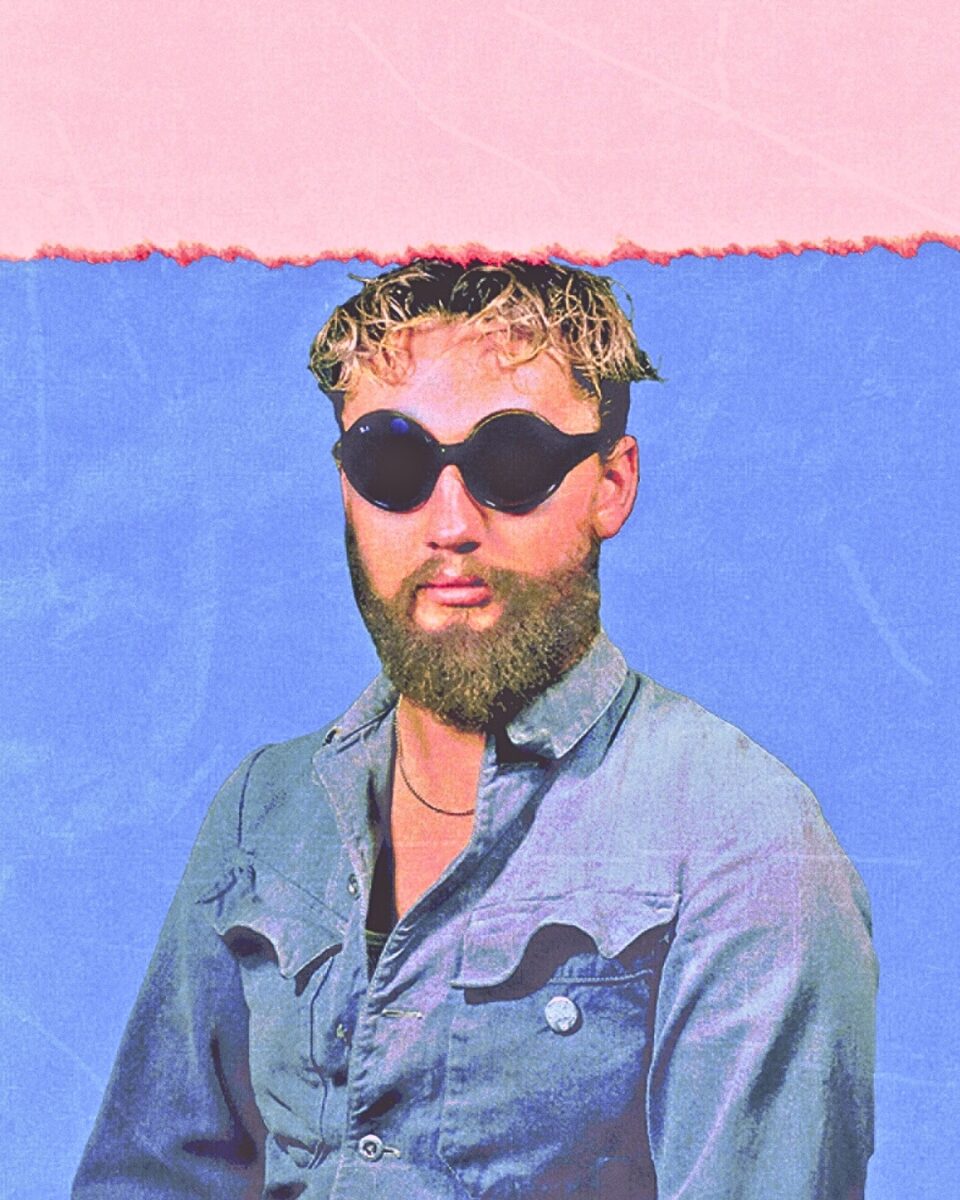
George van den Broek – better known by his chosen sobriquet, Yellow Days – is unfathomably soulful. Since his youthful lo-fi anthems on his 2016 debut project, Harmless Melodies, he has shape-shifted dramatically, yet subtly, now being one of the most slept on British artists of his cohort. If you haven’t heard of him, this is your invitation to lose yourself in his gorgeously gravelly tones and spiralling, cinematic musicality.
We’ve been blessed with a new album, playfully and potently titled Rock And A Hard Place, it’s yet another conceptually complex body of music from the innovative artist, pulling from blues, jazz, soul, psychedelic rock and more to concoct a deftly thrilling and infectiously groovy collection of cuts that can only be heard front-to-back, so don’t you dare click stuff.
van den Broek’s live shows are historic too, and there’ll be a hell of a lot of lineage to add to his legend this spring. He’s off on a world tour, from Mexico City on 20th February to wrapping things up in Glasgow on 11th May.
Getting deep on the album and his journey so far, Yellow Days drops by Wonderland to talk digging himself of a hole, finding the formula for seminality, and his love of being on the road.
Listen to Rock And A Hard Place…
Read the exclusive interview…
Where does this new album find you, artistically and personally?
In truth, at the start of making this album, I was at a low point. Financially, emotionally & mentally, I was in a real hole. It was kind of a rubbish time, to be honest. I felt musically really out of touch. My last album, Hotel Heaven, was a lot of fun to make and tour, but it felt like a real diversion musically from where I should be going and definitely wasn’t my best work. In reflection, a lot of it was mostly fuelled by drink and drugs, not the music. I felt pretty useless, sort of fell out of love with Yellow Days and focused on producing for new artists instead of myself. My wife and friends would get upset with me, saying why aren’t you writing your own music and singing? I think I was in a kind of despair. I got so out of love with being Yellow Days, I even tried to start a record label so I could just produce for artists instead, but couldn’t get any funding for it.
I was out drinking in London after doing a gig I held to try and showcase this label I was trying to start, where I met a bassist called Stan Woodward, who’s a young, fiery Newcastle lad. He sort of beat me up into shape and tried to shake me out of the jaded place I’d found myself. I had a few big breakthroughs writing-wise with songs like California, but it wasn’t till I got in the studio with a big session group that I felt any good about what I was doing. Suddenly, the way the music opened my voice up brought back a love for music and big singing. I feel like I’ve been hiding my voice in effects and production tricks because I didn’t want to really be Yellow Days or a big vocal singer for quite a while. Now I love being Yellow Days again and singing big, but I notice how much I’ve tested and lost a lot of my audience’s patience with it. So it’s a funny feeling – I’ve finally made the album I’ve been meaning to make for years, but I’ve lost a lot of listeners along the way. Which is fine, but it would be a lie to say my relationship with music hasn’t been complicated in the last 5 years.
Your sound is always such a medley of influences, this new album no less so. But what lies at the core?
I don’t really follow any of what my contemporaries are doing right now. In truth, what’s happening in the mainstream doesn’t give me any inspiration, so I just listen to old classic records like Marvin. I’m a hopeless curmudgeon like that – kind of dismissive and uninterested in what’s going on out there, bar a few exceptions. It’s funny because when I started with the wobbly lo-fi sound, I was very much obsessed with what was going on. After all, there was so much stuff happening that I loved or thought was cool at the time. You are what you eat, so my sound has become more ‘retro’, which is a label I don’t like at all, and even sometimes called ‘pastiche’ by people who don’t like it. I understand why to some people it may come across like that, but I think thinking of my music as a retro thing is mistaking retro for my personality, which is definitely one of stubbornness, which I do take pride in as an artist. I think it’s an important characteristic to be able to make a contribution that’s at all interesting/long-lasting.
What is the essence of Yellow Days?
Being a big singer is really what it’s all about. I got this big voice that I was born with. I had the classic artist cliche of being a little boy watching Ray Charles videos. In terms of singing I now find my first few albums really hard to listen back to. It’s like I knew what I wanted to sound like but didn’t have the articulation to do it. Now, when I tour I sing A Little While & Gap In The Clouds the way I wanted to at the time. I’m nearly 27 and have been working as a musician/touring for 10 years so after all that, I can comfortably sing like the big singers like Ray Charles etc., without just totally emulating them or falling short with the technique. I see singing alone as a lifelong pursuit to develop it as much as possible. Other than that, my approach to melody and harmony is probably relatively unique. When I work with other singers & musicians, they find my melodies difficult because they bend so much. I’m self-taught, so I put bass notes where they shouldn’t be and put a lot of expression into the notes because I can’t write super complex jazz parts so I have to maximise the parts I can write in that way.
How has your sound grown and matured since the early successes of “Harmless Melodies”?
As I’ve said, it’s definitely been a rocky journey coming out of the success of the first few years of my career. I don’t have a lot of the answers for why that is – maybe being too young when it happened in order to write a proper a follow up album, putting too much pressure on myself or having lots of failed business relationships behind the scenes – all these things definitely stunted me. But if I think about where I am now, I feel as if I have arrived at a mature adult version of myself musically and personally, too. In reflection, what I hope is that the discography tells a story of a guy who wasn’t afraid to get it wrong and kept digging into what was possible and bravely so. I have a very intense relationship with music, and if that alone comes across, then I’d be happy with that.
What does the album tackle in terms of its lyrical themes?
At its core, it’s an album about being stuck. Being at a crossroads in your life. To those who don’t relate to it it may feel self-pitying and I suppose it is. It’s kind of a ‘how I got here’ sort of album. The ups and downs of life and relationships and having to deal with yourself as you get older. There’s a lot of fear and stress in the album, but also a lot of life lessons and acceptance. I mean I’ve just crossed into the second half of my 20s, so I think a lot of it is about being in that stage of your life. Leaving behind the relentless optimism of teenage years & early 20s and replacing it with a more balanced kind of scepticism that comes with understanding the world better.
What lies between a rock and a hard place?
Probably a big scared-y cat. Someone who wants a ton of stuff out of life but doesn’t know how to get it. When I think about the expression between a rock and a hard place, it’s really describing someone who’s stressed. A friend of mine once said stress is the act of not doing, which is a neat way of explaining stress alone, but the expression is saying more than that. It’s really describing a compounded stress that turns into a kind of disbelief. As I said before, I hit hard times financially, creatively and mentally, so I related to the phrase because I kind of think of it as a guy who’s sat in a great big hole that he dug himself. Then I guess the obvious narrative out of that – which I took – is him trying to get the hell out of it. Which, hopefully, would be a compelling story, which I thought would be best left inconclusive. You know?… A good old cliffhanger.
You’re setting off on a major North America and European tour in late Feb. how are you feeling about the time on the road? Ready for an adventure?
I hear a lot of people talking about touring in the media in a negative light and it is incredibly hard to make the financial aspect of it work but I love to be on the road. I’m old-fashioned like that; singing and playing in a room full of people is really what being a musician is all about to me. Making albums is amazing, but to me, there’s almost no point if you don’t get to share them with people in person. I’m taking a whole new seven-piece band out this year, and none of them has ever been to the US. They’re all a bunch of 22-year-old jazz musicians who are so excited to hit the road. My old band slowly grew tired of the whole thing but I see it as where I belong. Being in a venue every night is what being a performer is all about. If I could be like an old-timey singer in New York playing the same little venue every night, I’d do that with great joy. Of course, travelling the world too is one of the great privileges of being a musician. The amount of politics, people’s life stories and friends you run into is a great gift and gives you a really worldly perspective on things. I guess big pop stars probably don’t get to meet many people because it would be just too intense for them, but the level of fame I have means I’m treated with respect but sort of normally and get welcomed into nearly any city by really nice people. On top of that just getting to play your music that often, to me it’s such a beautiful thing and right where I want to be.
What’s your tour survival guide?
I’m not really the right person to ask this question. On our last tour, my guitarist and I would drink a bottle of tequila every night and stay up late on the bus listening to music, sleeping in till 4 pm – getting up just before soundcheck and living off cheeseburgers. So that was our ‘routine’ if you can call it that. We were putting on great shows, but definitely acting like greedy little piggies. As you can imagine, it led to month-long hangovers and to putting on a lot of weight. I definitely accelerated my ageing, coming back home a few years older. I’m slowly becoming more health-conscious as a person, but I don’t generally worry about things like that. I went through big phases of really paralysing hypochondria when I was a young guy, and I overcame that through a kind of mind-matter outlook on what life’s about. Although having said that, it doesn’t feel good to have a month-long hangover and put on loads of weight, so that ‘philosophy’ probably becomes less meaningful over time.
Finally, the big one… To you, what is yellow days?
When I was younger, I would say the band name Yellow Days is about your youth, your heyday. There’s a jazz standard called Yellow Days done by Frank Sinatra, Duke Ellington and even Bobby Caldwell…randomly, so that one is definitely worth a listen. In the jazz standard tune, it’s very much about the good old days. But to me, the meaning has changed over time. I see it now as just a time in your life when nostalgia or emotions are very high. Sometimes life is straightforward, but then you enter an intense patch of depression, falling in love, heartbreak, missing old friends, or any of the above. To me, Yellow Days is about that intense bit.
Words by Ben Tibbits