[analyse_image type=”featured” src=”https://images.euronews.com/articles/stories/09/63/71/53/1200x675_cmsv2_a17409d5-96c4-5590-8363-888a1544a927-9637153.jpg”]

Is UNESCO to blame for overtourism in this tiny European village?

Pinterest fires employees for creating layoff tracking tool

BlackBerry’s quiet comeback as a cybersecurity firm, CEO reveals all

Kazakhstan is turning Tien Shan gorges into one ski circuit
Is UNESCO to blame for overtourism in this tiny European village?
Pinterest fires employees for creating layoff tracking tool
BlackBerry’s quiet comeback as a cybersecurity firm, CEO reveals all
Kazakhstan is turning Tien Shan gorges into one ski circuit
AI replays, drones, and transparent torches: The tech transforming the 2026 Winter Olympic Games
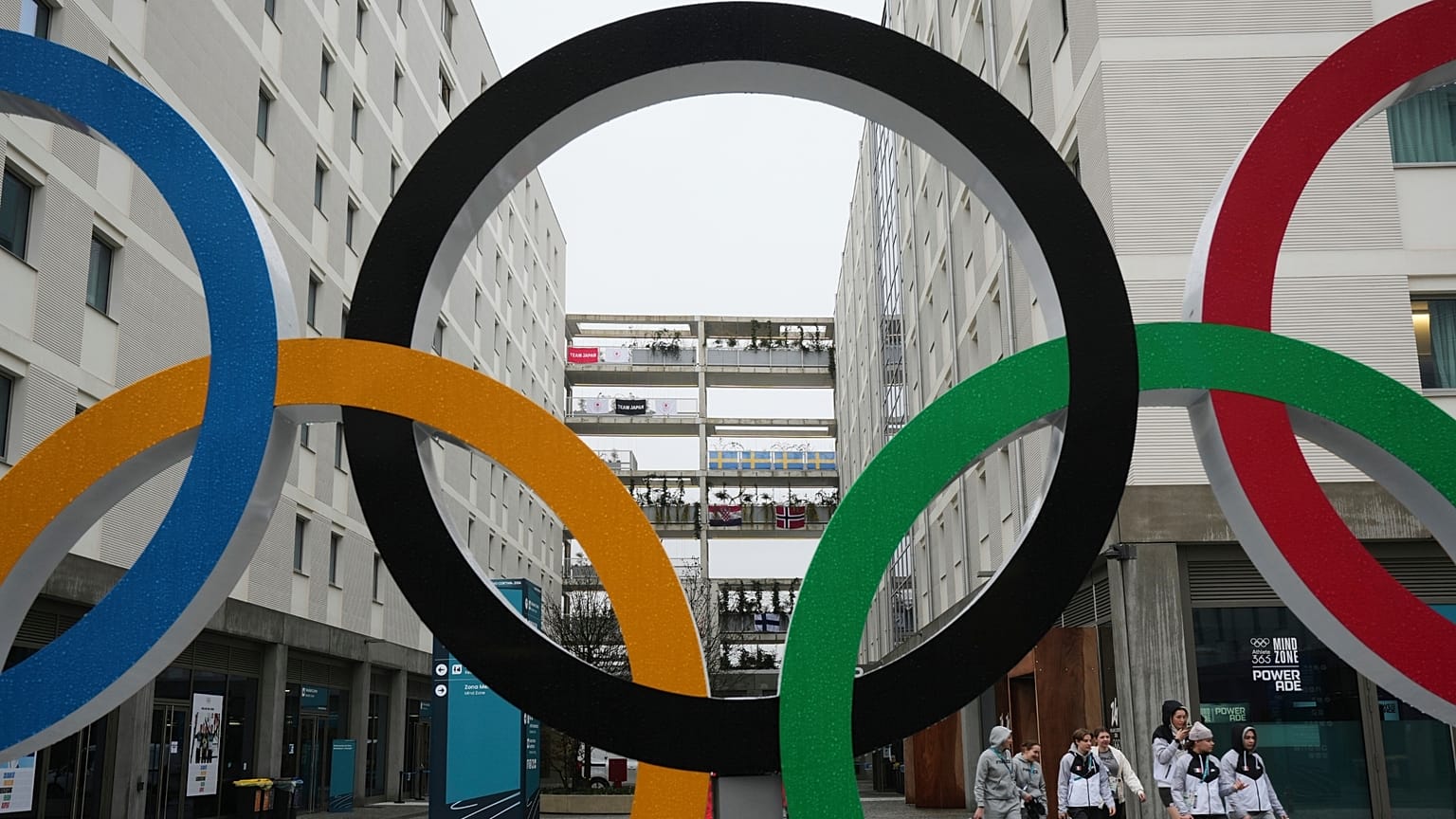
File – Athletes from France walk inside the Olympic Village ahead of the 2026 Winter Olympics, in Milan, Italy, Tuesday, Feb. 3, 2026
– Copyright AP Photo/Antonio Calanni

 Facebook
 Twitter
 Flipboard
 Send
Send Reddit
 Linkedin
 Messenger
 Telegram
 VK
VK Bluesky
 Threads
 Whatsapp
Innovations at Milano Cortina 2026 include AI everywhere and drones.
From first-person drones that will race alongside the athletes to AI-powered replays that freeze images mid-air, the 2026 Milano-Cortina Winter Olympics are going to showcase many technologies.
Organisers say tech will radically change how fans watch the events from their televisions, through AI-powered chatbots, or by scrolling on social media. Other new innovations bring more digital support for athletes and a closer look at how the torches work.
Here’s a look at the key tech that will define the upcoming Winter Games.
AI and drones integrated into Olympic broadcasts
The Milano-Cortina Games will have a “very intense” use of first-person drones (FPV) that will follow athletes at close range, said Yiannis Exarchos, CEO of the Olympic Broadcasting Services (OBS), in a media briefing last week.
While drones were first introduced at the Olympics during the 2014 Sochi Games, Exarchos says the technology has evolved since then. In Italy, drones will, for the first time, take viewers down a luge track, capturing the sport’s speed and intensity in real time.
The goal is that viewers feel like they are on the track with the athletes, Exarchos said.
“What we’ve got now is a new generation of technology that really allows for a safe use of drones that go very close to the action,” Exarchos said. “You will be seeing images that we have not seen before in how these sports are covered.”
OBS is embedding artificial intelligence (AI) into Olympic replays. The broadcaster’s AI-assisted technology can generate 260-degree videos of athletes “in seconds” by combining footage from multiple camera angles, Exarchos said.
In a demonstration video from OBS, a skier’s mid-jump is frozen in the air while the AI generates instant freeze frames of how their position changes while they finish the jump.
On-screen graphics then display data such as jump height, airtime and landing speed, giving viewers a deeper insight into how the athletes perform.
The enhanced replays will be cut into virtual reality (VR) videos for social media platforms such as YouTube, according to the Games’ guide.
AI-driven visuals will support other sports, such as curling. The technology will track the stone’s trajectory, speed, and landing position. It will also show the sweeping frequency as the stone travels across the ice.
An interactive online Olympic experience
For the first time, the official Olympics website will feature a built-in AI assistant capable of answering questions about the Games and delivering real-time results.
Unlike other AI chatbots, Exarchos said their AI assistant does not draw from “random” internet sources. Instead, he said it was trained on “unbiased, accurate” Olympic data.
The Games’ website will introduce AI-powered highlights and article summaries, which will give fans a quick, clear overview of the key Olympic stories and will help them decide what to watch or read next, Exarchos said.
Beyond the website, the Milano Games is expanding its social media storytelling. Organisers launched a first-of-its-kind short film series on TikTok called “On the Road to the Olympics,” and are partnering with YouTube for a new “cultural moments” focused on online trends during the Games.
Coverage is also being integrated into other social media platforms such as Meta’s Facebook, Instagram, WhatsApp and Threads. Additional content hubs are integrated into Asian platforms, such as messaging platforms WeChat and LINE, as well as short-video apps Kuaishou and Douyin.
For the first time, the Olympics are welcoming dedicated social media creators at every venue, who will be producing tailored content specifically for digital platforms.
Tech to support and protect athletes
An AI-powered monitoring system that debuted at the Paris 2024 Games is returning to detect and flag abusive messages targeting athletes for removal.
During the Paris Games, the system flagged 2.4 million posts from 20,000 social media accounts in more than 35 languages, according tothe International Olympic Committee (IOC).
Athletes receive access to digital tools such as the Athlete365 app, which helps competitors connect on the ground, and the Get Set, Train Smarter app, which incorporates injury prevention into training routines.
Another returning feature is “The Athlete Moment,” where athletes can connect with their friends and family via livestream immediately after finishing their events.
The transparent torches
The Milano-Cortina Games also designed a new torch for the Olympics and Paralympics that will demonstrate how the flame stays lit.
The minimalist torches, called “Essential,” feature a long window along one side, which lets spectators and athletes see for the first time how the internal technology keeps the flame burning.
To keep the fire going, the burner uses biofuel made from food waste and scraps, according to the Italian manufacturer Versalis. The torch itself is made with recycled materials, such as aluminium and brass.
Each torch can be reused up to ten times, a design choice that sends a clear message that Italy prioritises sustainability, according to Raffaela Panie, director of brand and identity at the Milano 2026 Olympic Games.
The Olympic torch relay began in Rome on December 6, 2025, travelling across Italy before it arrives in Milan on February 5.
Go to accessibility shortcuts
Read more

UK data regulator opens probe into X over sexual AI deepfakes
Musk calls Spain’s PM ‘tyrant’ over under 16 social media ban

Digital Networks Act: backdoors for network fees and more
UK data regulator opens probe into X over sexual AI deepfakes
Musk calls Spain’s PM ‘tyrant’ over under 16 social media ban
Digital Networks Act: backdoors for network fees and more

How BYD plans to solve Europe’s EV charging and energy cost problem

BlackBerry’s quiet comeback as a cybersecurity firm, CEO reveals all

Musk calls Spain’s PM ‘tyrant’ over under 16 social media ban

Inside Moltbook, the a social network where AI bots hang out

Pinterest fires employees for creating layoff tracking tool
Inside Moltbook, the a social network where AI bots hang out
Winter Olympic Games tech: AI replays, drones, and transparent torches
French government to ditch US’s Teams and Zoom for ‘sovereign control’
Musk calls Spain’s PM ‘tyrant’ over under 16 social media ban
What’s next for VR now that Meta’s dumped the metaverse?
[analyse_source url=”https://www.euronews.com/next/2026/02/04/ai-replays-drones-and-transparent-torches-the-tech-transforming-the-2026-winter-olympic-ga”]