[analyse_image type=”featured” src=”https://images.euronews.com/articles/stories/09/61/41/12/1200x675_cmsv2_d5a3fe17-24f4-54c4-9adb-4c6f8c68d247-9614112.jpg”]

Newsletter: Ukraine peace talks resume in Abu Dhabi

Mark Rutte visits damaged Kyiv energy site as Russia steps up attacks

Oura Ring’s CEO on the future for wearable technology in healthcare

EU Inc: Brussels’ plan for a single company law across Europe
Newsletter: Ukraine peace talks resume in Abu Dhabi
Mark Rutte visits damaged Kyiv energy site as Russia steps up attacks
Oura Ring’s CEO on the future for wearable technology in healthcare
EU Inc: Brussels’ plan for a single company law across Europe
Spain plans to focus on ‘quality over quantity’ as tourist numbers hit record high
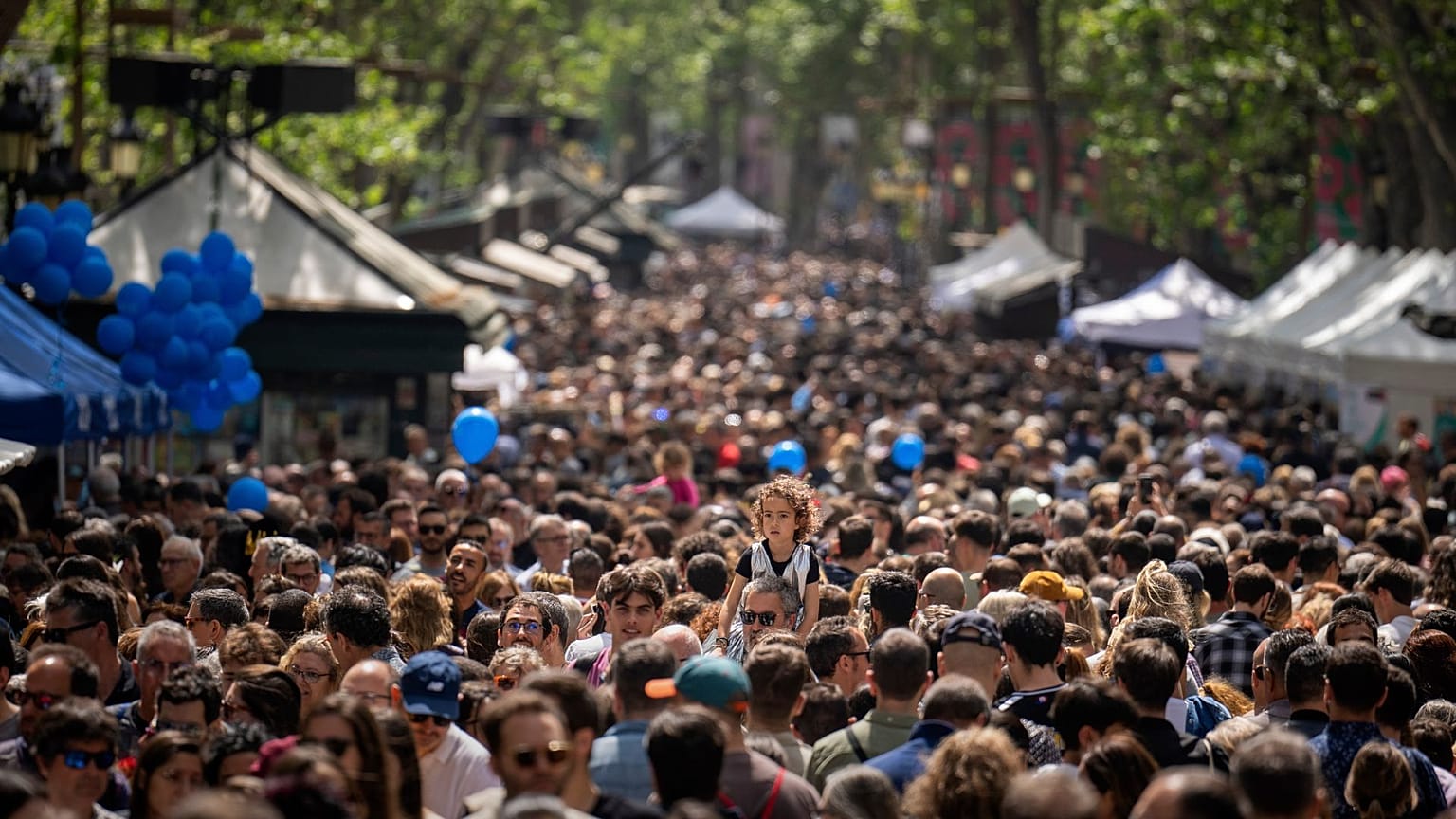
FILE – People crowd along the historic La Rambla promenade of Barcelona as Catalans celebrate the day of their patron Sant Jordi, Spain, Sunday, April 23, 2023.
– Copyright AP Photo/Emilio Morenatti, File

 Facebook
 Twitter
 Flipboard
 Send
Send Reddit
 Linkedin
 Messenger
 Telegram
 VK
VK Bluesky
 Threads
 Whatsapp
Spain has struggled to balance tourism with local life, as residents complain of housing shortages and rising costs.
Spain set a new tourism record in 2025 when it welcomed 96.8 million foreign visitors, according to figures released on 3 February by the National Statistics Institute.
The number of international visitors increased 3.2 per cent compared to 2024, when there were 94 million tourists.
Spain is one of the world’s most popular destinations, where tourism accounts for 12.6 per cent of gross domestic product. It ranks third on the UN World Tourism Barometer’s list of the world’s top tourism earners, after the United Kingdom and France.
The income from foreign visitors rose 6.8 per cent to €134.7 billion last year, compared with €126 billion in 2024, the Ministry of Tourism said.
Meanwhile, the total economic impact of tourism, including direct, indirect and induced spending, was around €260 billion, 4.7 per cent more than in 2024, according to the World Travel & Tourism Council (WTTC).
The increase in the number of tourists and their spending meet the objective of transforming “the tourism model into one that is more sustainable and based on prioritising quality over quantity,” the ministry said in a statement.
Global tourism smashed records in 2025
2025 was a record year for global tourism, too, which contributed a total of €10 trillion – representing 10.3 per cent of the global economy and a growth of 6.7 per cent compared to the previous year.
The sector employs one in three workers worldwide, according to WTTC.
“If we were a country, we would be the third largest economy in the world,” says Gloria Guevara, the organisation’s president and CEO.
More than 1.5 billion people travelled internationally throughout 2025, 80 million more than in 2024. An average of 219,000 international arrivals were recorded each day, signalling the full recovery of the sector on a global scale.
In Europe, tourism’s contribution reached €2.5 trillion, representing 10 per cent of the region’s GDP. Growth was 5.1 per cent year-on-year and 11.6 per cent compared to 2019, the last year before the pandemic.
“We are better off than before the pandemic and better off than in 2024,” says Guevara.
Which parts of Spain were most popular with tourists?
Catalonia, the northeastern region where Barcelona is located, attracted around 20.1 million tourists, 0.6 per cent more than in 2024. It was followed by the Mediterranean islands and the Canary Islands, a flagship of the sun and beach tourism for which Spain is known.
Most travellers came from the UK (19 million), France (12.7 million) and Germany (12 million).
It was Spain’s third record-breaking year since 2019, the year before the COVID-19 pandemic that paralysed international leisure travel.
As tourism rebounded globally, it put pressure on accommodation in Spain, particularly in city centres where short-term rentals have proliferated, causing friction at times with locals, many of whom feel priced out of the housing and rental market due to mass tourism.
Last year set a new record for international tourist arrivals in the post-pandemic era: an estimated 1.52 billion international tourists were recorded worldwide, an increase of almost 60 million than in 2024, according to the UN barometer.
Go to accessibility shortcuts
Read more
Inside the UNESCO-listed churches drawing pilgrims to Cyprus
Will the EES cause travel chaos over the peak summer period?
Everything travellers need to know about the EU’s Entry/Exit System
Inside the UNESCO-listed churches drawing pilgrims to Cyprus
Will the EES cause travel chaos over the peak summer period?
Everything travellers need to know about the EU’s Entry/Exit System

Euronews Travel Channel – Travel News, Guides, Magazines & Inspiration | 24/7

Will the EES cause travel chaos over the peak summer period?

Inside the UNESCO-listed churches drawing pilgrims to Cyprus

This Slovak city just became a new European Capital of Culture
Rome brings in fee to visit one of its most famous monuments
I stayed in a restored party mansion in rural India
Everything travellers need to know about the EU’s Entry/Exit System
Will the EES cause travel chaos over the peak summer period?
The most unique cable car rides in Europe
This Slovak city just became a new European Capital of Culture
[analyse_source url=”https://www.euronews.com/travel/2026/02/04/spain-plans-to-focus-on-quality-over-quantity-as-tourist-numbers-hit-record-high”]