[analyse_image type=”featured” src=”https://ichef.bbci.co.uk/news/1024/branded_news/b14a/live/d8714e10-00b9-11f1-bafa-09e23c2efc9d.jpg”]

 Getty Images
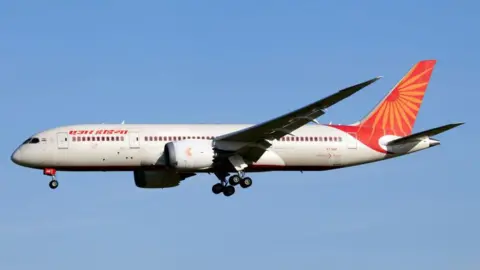
India’s aviation regulator said it found no defect in the fuel control switch of a Boeing 787-8 Dreamliner jet grounded by Air India based on a pilot’s report.
The issue was reported on Sunday after the plane, which took off from London, landed in Indian’s Bengaluru city.
The regulator said that while starting the engine during take-off, the crew noticed that twice the fuel control switch – which regulates the flow of fuel into the plane’s engines – did not “remain positively latched in the run position when light vertical pressure was applied”.
It remained stable the third time and the crew closely monitored the aircraft during the flight, which “was completed without incident”.
Air India had said in a statement on Monday that it informed India’s aviation regulator about the issue and that it was getting the pilot’s concerns checked on a “priority basis”. A Boeing spokesperson had told the BBC in response to a question that the company was supporting Air India’s “review of this matter”.
The Directorate General of Civil Aviation (DGCA) said on Tuesday that when the switches were operated according to Boeing’s recommended procedure, they were found to be “satisfactory”, staying at run instead of moving to cut-off (which can stop fuel supply to the engines).
It added, however, that incorrectly handling the switch caused it to “move easily from run to cut-off”.
These checks were performed in the presence of DGCA officials on the affected aircraft and another aircraft, the statement said. The DGCA has also asked Air India to circulate Boeing’s recommended procedure to operate the switch to its crew members.
The grounding of the plane gained a lot of attention as it came amid an ongoing investigation into last June’s plane crash involving an Air India aircraft of the same model which killed 260 people.
The crash of the London-bound Air India Boeing 787-8 Dreamliner occurred less than a minute after the plane took off from Ahmedabad airport in western India.
India’s Aircraft Accident Investigation Bureau (AAIB) is investigating the crash and a final report is expected to be released in a few months.
A preliminary report last July said that the plane’s engines shut down after its fuel switches moved from the ‘run’ to the ‘cut-off’ position shortly after take-off, but did not establish how this had happened.
- Air India crash plane had record of safety defects, campaigners claim
- Why cockpit audio deepens the mystery of Air India crash
After the report was released, the US aviation regulator said that fuel control switches in Boeing airplanes were safe.
India’s aviation regulator had also ordered an investigation of cockpit fuel switches in Boeing 787 and Boeing 737 aircraft operating in the country after the crash. Air India had said then that its inspections did not find any issue with the locking mechanism of the switch, which it reiterated on Monday.
“Air India had checked the fuel control switches on all Boeing 787 aircraft in its fleet after a directive from the DGCA [Directorate General of Civil Aviation], and had found no issues,” the airline said in the statement.
On Tuesday, Reuters news agency reported that Air India had begun re-checking the fuel switches on its Boeing Dreamliner aircraft following the incident flagged by the pilot.
Aviation consultant and former air accident investigator Tim Atkinson told the BBC that he trusted Boeing’s design of the fuel control switches.
“These switches are designed with one purpose in mind, and that is that they cannot be moved unintentionally. There is no doubt in my mind that the design is good. I would be astonished to find it had some kind of latent defect,” he said.
With additional reporting from Theo Leggett.
Follow BBC News India on Instagram, YouTube,X and Facebook.
[analyse_source url=”https://www.bbc.com/news/articles/c8e5zwndddyo”]