Earlier this week, when Pat McGrath Labs revealed it has filed for Chapter 11 bankruptcy—a way for companies to sort out their debts while staying in business—one person’s response on Twitter cut through the internet’s commiserations about the brand’s financial status: “Pat McGrath products are inaccessible to most Black women, so she’s an oppressive elitist and I’m glad she’s going bankrupt. That’s why Danessa Myricks took her spot.”
From there, a small but loud corner of the Black community piled on, criticizing one of the most successful Black women in beauty history for occupying the luxury space. “To be honest it is too expensive, considering its positioning and the kind of customer it’s hoping to attract. Hence the declining sales. It’s not like Hermès beauty or Carolina Herrera, another user wrote. “Pat McGrath (self) is a legend. But Pat McGrath Labs (company) isn’t established enough to have the same audience range as brands like NARS, MAC, & Too Faced. It’s self sabotage pricing products the same as them when you don’t have that reach yet,” wrote another. One other response reads: “She believed because she did celebrity makeup that her prices had to be stupid expensive out the gate. She came out with high end prices for makeup as a newcomer. You have to crawl before you run.”
For the uninitiated: Pat McGrath, the makeup artist behind the brand (and a Dame of the British Empire, by the way), has painted the faces of people as famous as Naomi Campbell, Taylor Swift, and Gigi Hadid, and she’s revolutionized runway beauty repeatedly; most recently with the viral glass skin she created for John Galliano’s 2024 Maison Margiela Artisanal show.
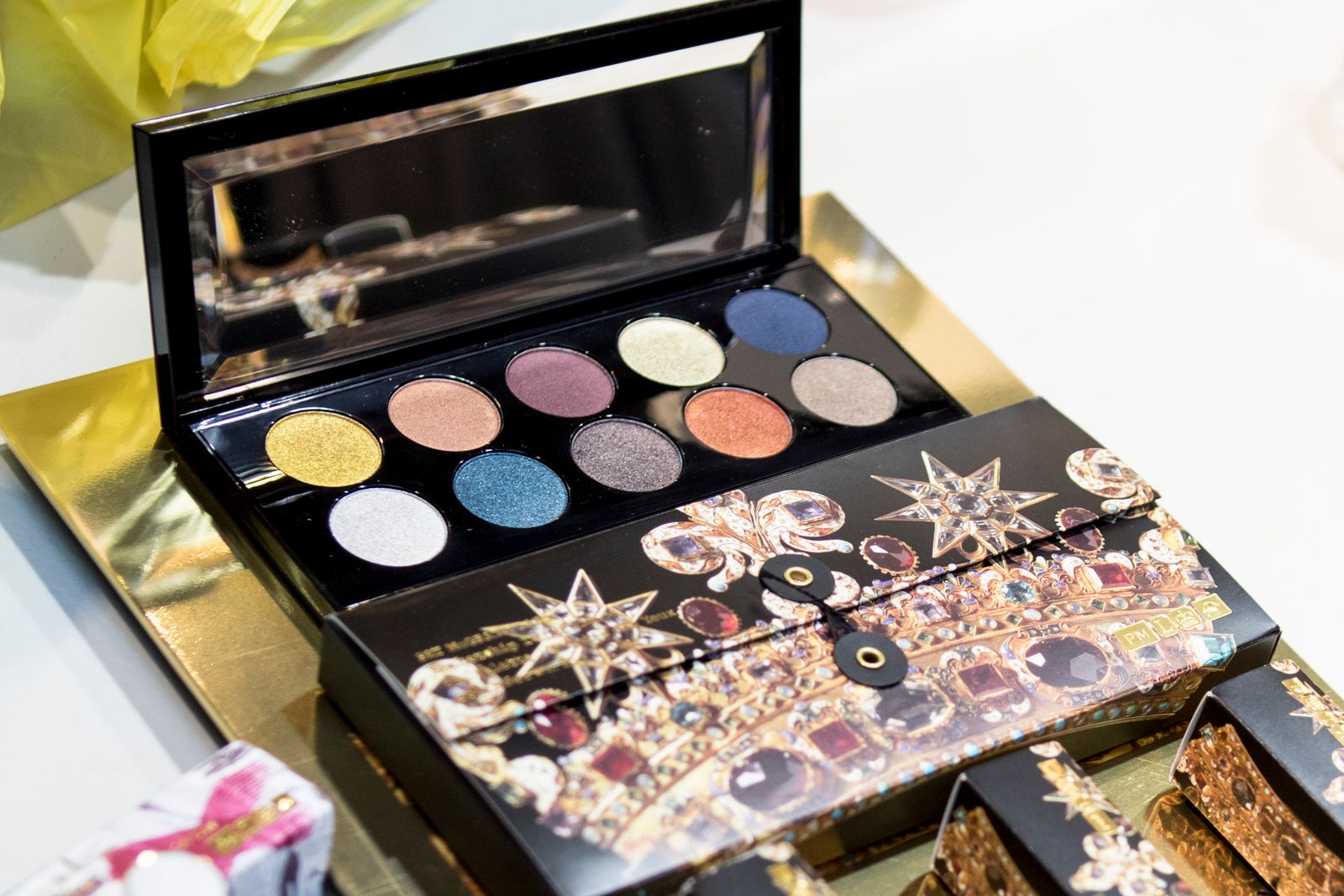
And she’s being held to an egregious double standard. Generally speaking, luxury brands aren’t expected to be price-accessible because it’s simply not their business model. Victoria Beckham Beauty sells foundation for $100, and La Mer charges upwards of $80 for some for some of its moisturizers. No one calls them oppressive or asks them to lower their prices in solidarity with white women who can’t afford them, but it seems that’s exactly what has been expected of Pat McGrath Labs. (Pat McGrath’s 10-shade Mothership eye shadow palettes retail for around $128, by the way, and her lipsticks range from $29 to $39. That puts her squarely in the same price range as brands like Natasha Denona, Chantecaille, and yes, Danessa Myricks—the very brand some Twitter users hold up as the more “accessible” alternative to Pat McGrath Labs.)
For Black-owned brands of all sorts, “accessibility” has become a test. When a Black person launches a brand, there’s an assumption its products should be cheaper and available to a mass market. Founders, like the late Sharon Chuter of Uoma Beauty, have recalled facing countless questions from their customer bases about their prices. It’s an impossible position for Black leaders in luxury beauty. They’re expected to serve their entire community at price points everyone can afford while succeeding on their own terms.
What this online backlash toward Pat McGrath Labs seems to say to Black beauty entrepreneurs is: Build an empire, as long as it’s available at the drugstore. It’s a standard that conveniently keeps Black women from occupying the same spaces as their white counterparts because, apparently, charging at a luxury price point means you’re leaving your own community behind.
There is, to be fair, important context as to why the Black community feels entitled to lower price points from Black-owned brands. You have to understand just how badly the beauty industry has historically failed Black consumers. We like to think everything changed when Fenty launched with its groundbreakingly inclusive shade range in 2017, but as someone with a deep skin tone, I still struggle to find a foundation match among department store brands, and I still can’t find a powder bronzer that works for me in the drugstore aisles.
This legacy of exclusion has created a communal expectation, whether conscious or not, that Black-owned brands exist to fix all the damage left by the beauty industry. That doesn’t just mean catering to our skin tones—that means making sure every Black person can actually afford them. The logic goes that it doesn’t matter if you’ve formulated 42 shades of foundation if they’re all $80. Representation becomes meaningless if it’s not affordable to all.
The policing of Black luxury consumption has a long history, both from outside our community and within it. Historically, Black people who displayed wealth or aspiration were seen as “uppity,” or “not knowing their place.” That history lingers today. In recent years, content creator and brand owner Jackie Aina has spoken about how her audience’s perception of her shifted when she pivoted from being a “relatable” beauty influencer to sharing glimpses of her luxurious lifestyle. She told Refinery29 she’d faced accusations among her fans of mimicking whiteness and forgetting where she came from.
Those who share this mindset are, for what it’s worth, a small group of outliers–the Black community otherwise really supports its own. But that vocal minority has clearly internalized the message that Black luxury in itself is a fallacy. And, of course, negativity gets amplified online in ways that praise rarely does, which makes this backlash seem like more of a widely shared position than it is or ought to be.
There is a pressure, which I understand, to leave the door open for those behind you in your community. Pat McGrath has done that through the invention of inclusive beauty trends that have trickled down from runways to consumer goods. Her brand reflects that, too: It launched out of the gate with 42 foundation shades featuring undertones designed for Black skin. But how that “bring everyone with you on the way up” mentality has been translated into “everything should cost less than $20” doesn’t make sense. Ultimately, the reason Pat McGrath Labs filed for chapter 11 likely wasn’t its product prices (in reality, a multitude of financial factors are at play in bankruptcy cases such as these). There are many of us—myself included—who aren’t millionaires; we’re regular people making regular money who are just willing to spend $40 on a damn good blush.
And it’s not like Pat McGrath Labs is charging top-dollar for nothing. The quality of its formulas, the heft of its packaging, and its technological innovations ought to speak for themselves. The Divine Blushes (my personal favourites) have a uniquely rich pigmentation that makes them actually visible on deep skin, which is a rarity. Those trio-chrome powders and wet-look metallic finishes in her Mothership palettes had never been seen in the consumer market when they arrived.
It’s actually very cool that Pat McGrath has reached the status she has, occupied the highest creative levels in beauty, fashion, and entertainment, and created first-of-its-kind makeup that allows Black people an indulgence we’ve historically been denied. Any backlash toward Pat McGrath Labs’ prices feels less about affordability and more about how much success we’re comfortable allowing Black people to have within the luxury sphere.
Pat McGrath Labs doesn’t owe us affordability. It’s given us innovation and representation in every corner of the beauty industry. It’s shown us proof that Black women can build empires in spaces where we aren’t always welcome. If celebrating that comes with caveats about price, we’re policing success in ways that only benefit the people who never wanted to see us succeed in the first place. All of this shows the cultural power Black beauty has always had, and that we can—and should—charge what we’re worth.
More from the beauty news and culture desk:
- The Blepharoplasty Bun Is Everywhere
- Beauty Brands Are Glamorizing Cigarettes Again
- Don’t Let the Internet Gaslight You Into Thinking These Celebrities Have “New Faces”
Now, a history of boundary-breaking Black women in beauty:
Follow Allure on Instagramand TikTok, or subscribe to our newsletterto stay up to date on all things beauty.
Source URL: https://www.allure.com/story/pat-mcgrath-affordability-controversy