[analyse_image type=”featured” src=”https://velo.outsideonline.com/wp-content/uploads/2026/03/Propel-Advanced-SL-enviro.jpg”]
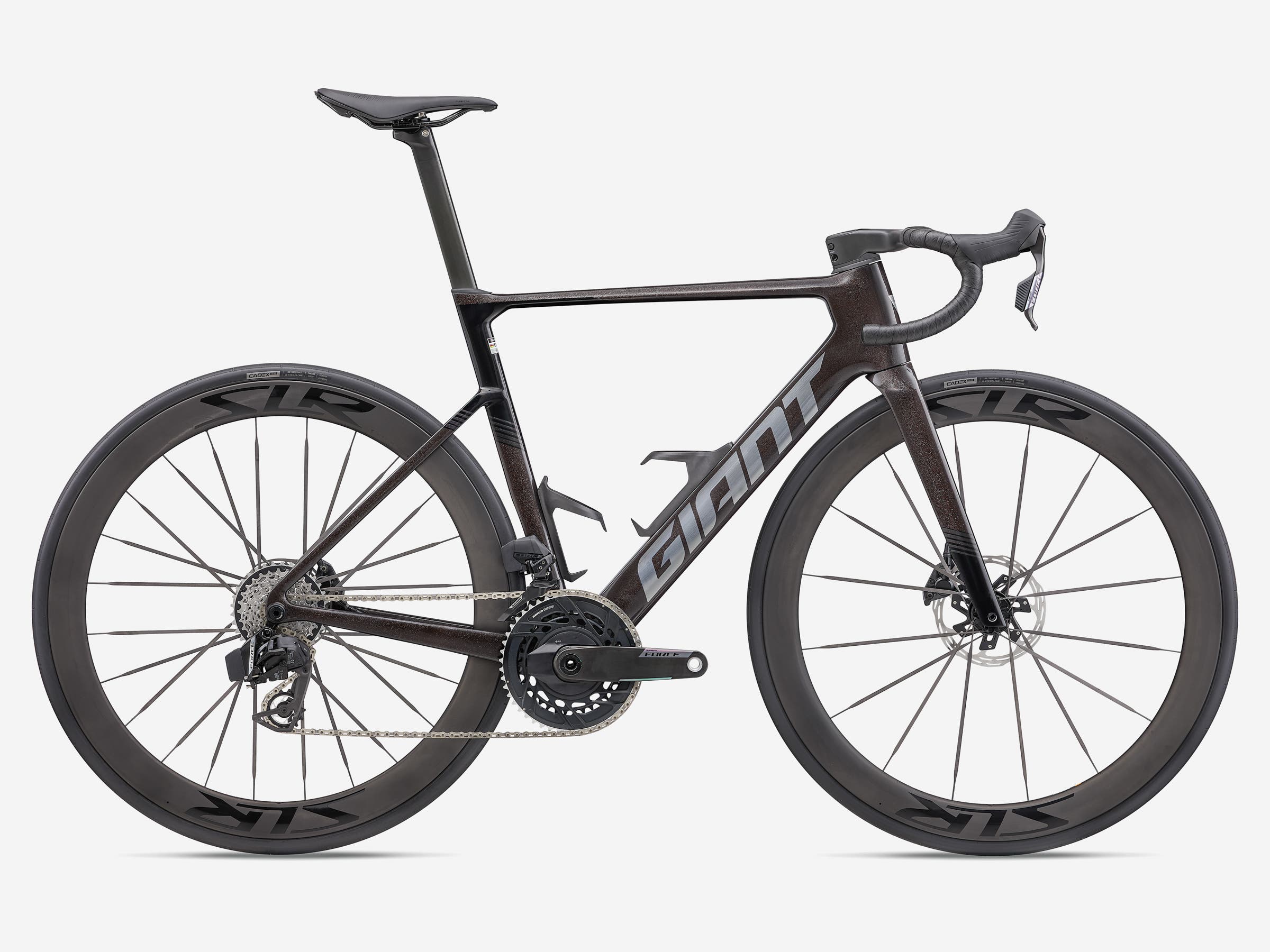
Today, the fourth-generation Giant Propel is officially launching, and it’s faster and lighter than ever. You already expected that though. The Propel debuted in 2013 and, as described by Giant, was a “sprinter’s dream.” For the last 13 years it’s been the brand’s answer to the aero efficiency puzzle so lighter and faster is the name of the game for a new launch. For better or worse though, the market has gotten so tight and so good that it’s no longer easy to carve out massive aero gains.
Despite that reality, Giant is leading the marketing for this bike with a massive claim: according to the brand, the fourth-generation Propel is 18.44 watts faster. If you prefer to think of it in terms of time, that’s a claimed 72 seconds over a 40km course. Or maybe apply it to an interval and imagine being handed a free 18.44 watts on your next VO2 max effort.
It’s a real win that likely ekes out a category win victory for aero dominance, but the outright speed gains aren’t actually the biggest part of this story. Let’s look at the details.
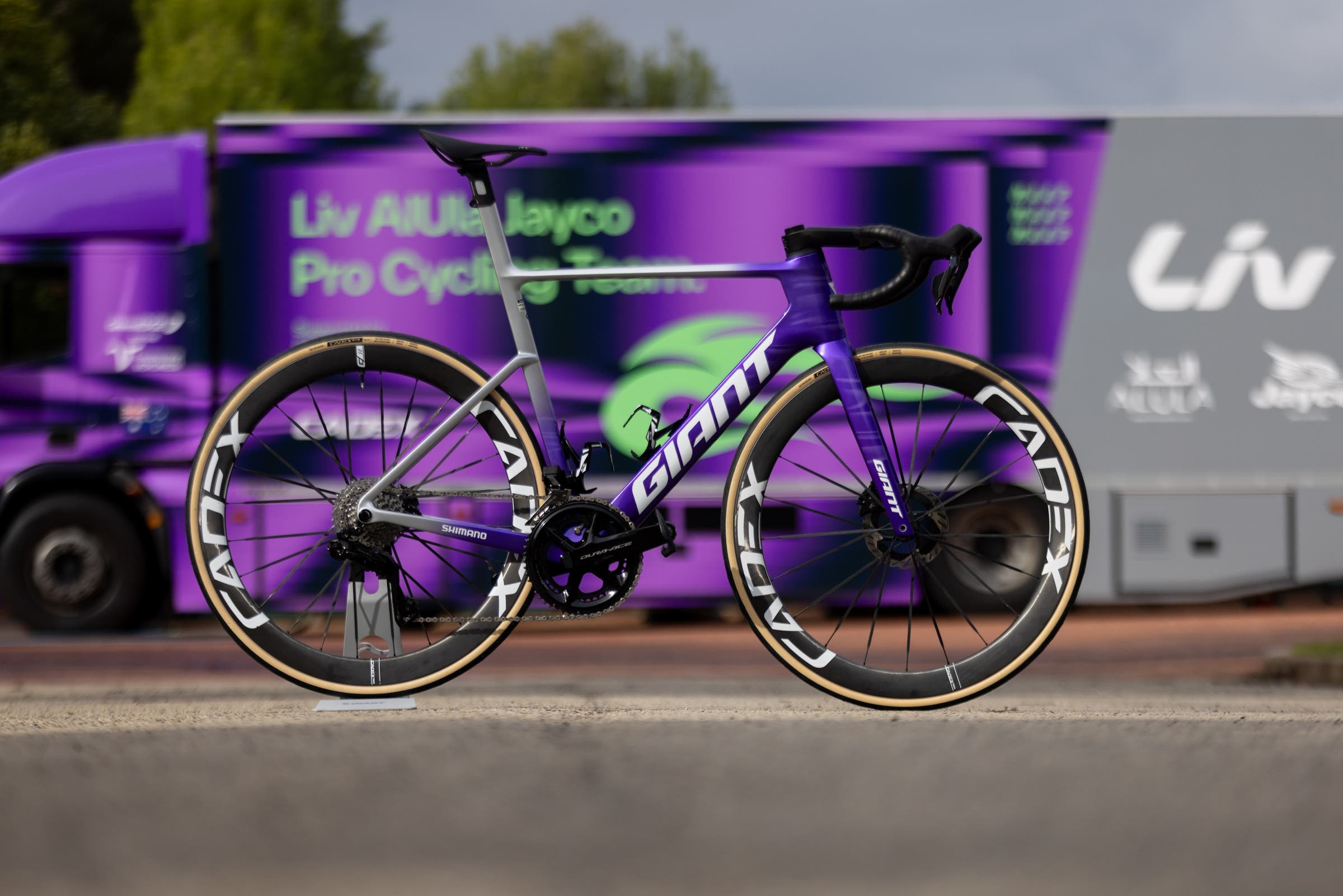
What makes the fourth generation Giant Propel so fast?
| Previous Propel Advanced SL | New Propel Advanced SL | |
| Linear drag (+/- 20° yaw) | 234.9 | 222.48 |
| Wheel rotating drag (front & rear) | 5.46 | 5.04 |
| Tire rolling resistance (front & rear) | 27.4 | 21.8 |
| Total resistance | 267.76 | 249.32 |
| Total energy savings | – | 18.44 |
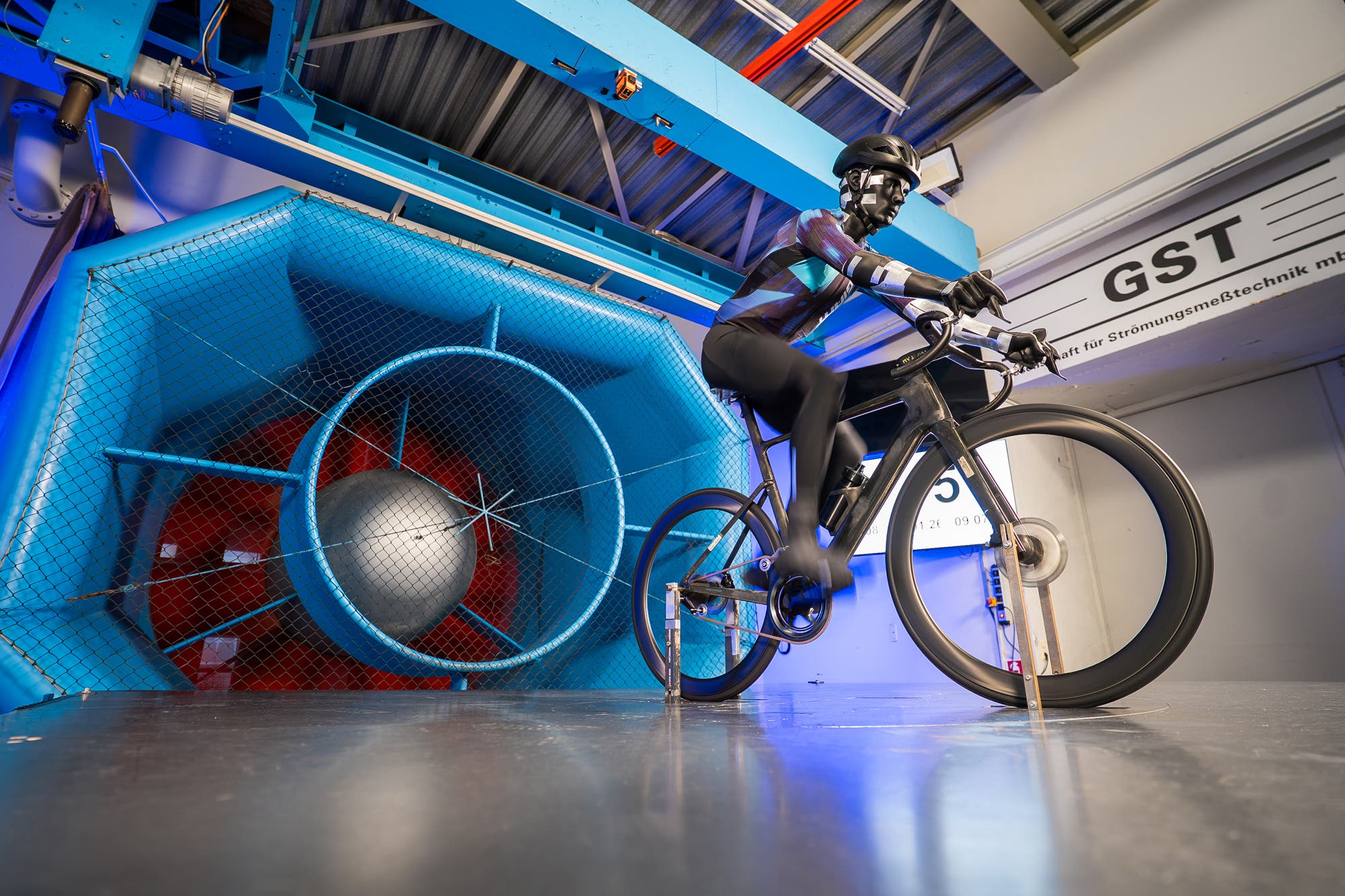
So how did Giant achieve such a massive reduction at a time when there are no more free watts? The brand found them by looking at the whole system and testing with a riding dummy. The new bike is faster, but it’s not only the frame.
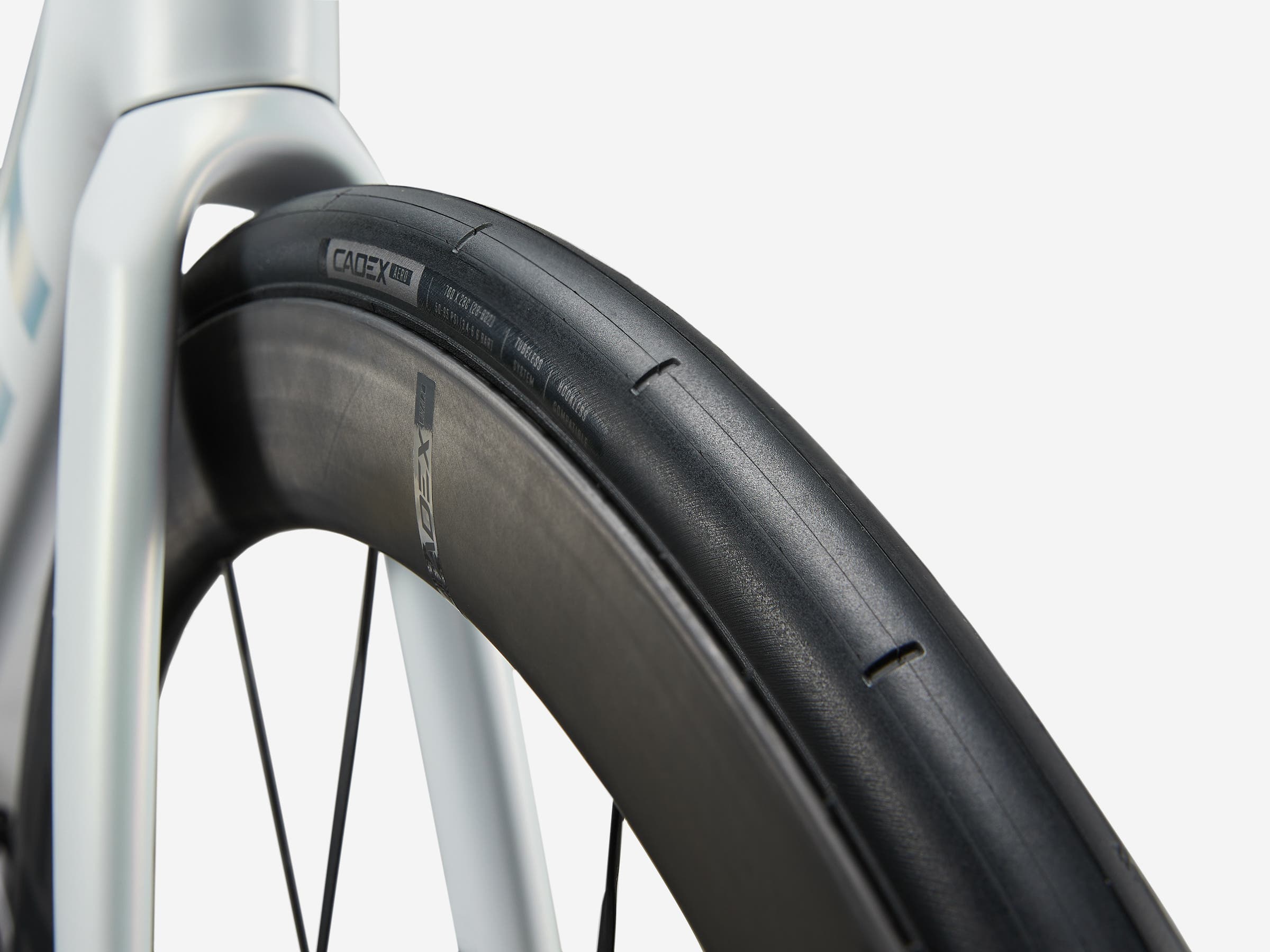
Fast tires
To find those watts, you have to start with the tires, where you can find nearly 40% of the claimed 18.44 watts. Right along with the new Propel, Giant and sub-brand CADEX are launching aero tires. The best of those is, as expected, the CADEX Aero tire with a claimed 2.8-watt lower rolling resistance and 0.76-watt aero drag reduction per tire. Giant attributes this to “a taller, wider aero profile combined with a newly developed 64 microgroove shoulder tread” and a “re-engineered 240 TPI casing and optimized air-retention structure.” There’s also a weight savings of 55 grams per tire.
Keep in mind—and you’ll see this again later—that you only get those savings on the most expensive Propel build. Lower models will instead run Giant Gavia Course tires, and there’s a performance hit. The weight increases from 220 grams for the CADEX 28mm tire to 305 grams for the Giant tire in the same size. Rolling resistance is also increased with a penalty of 2 watts per tire, and there’s no specific aero efficiency claim.
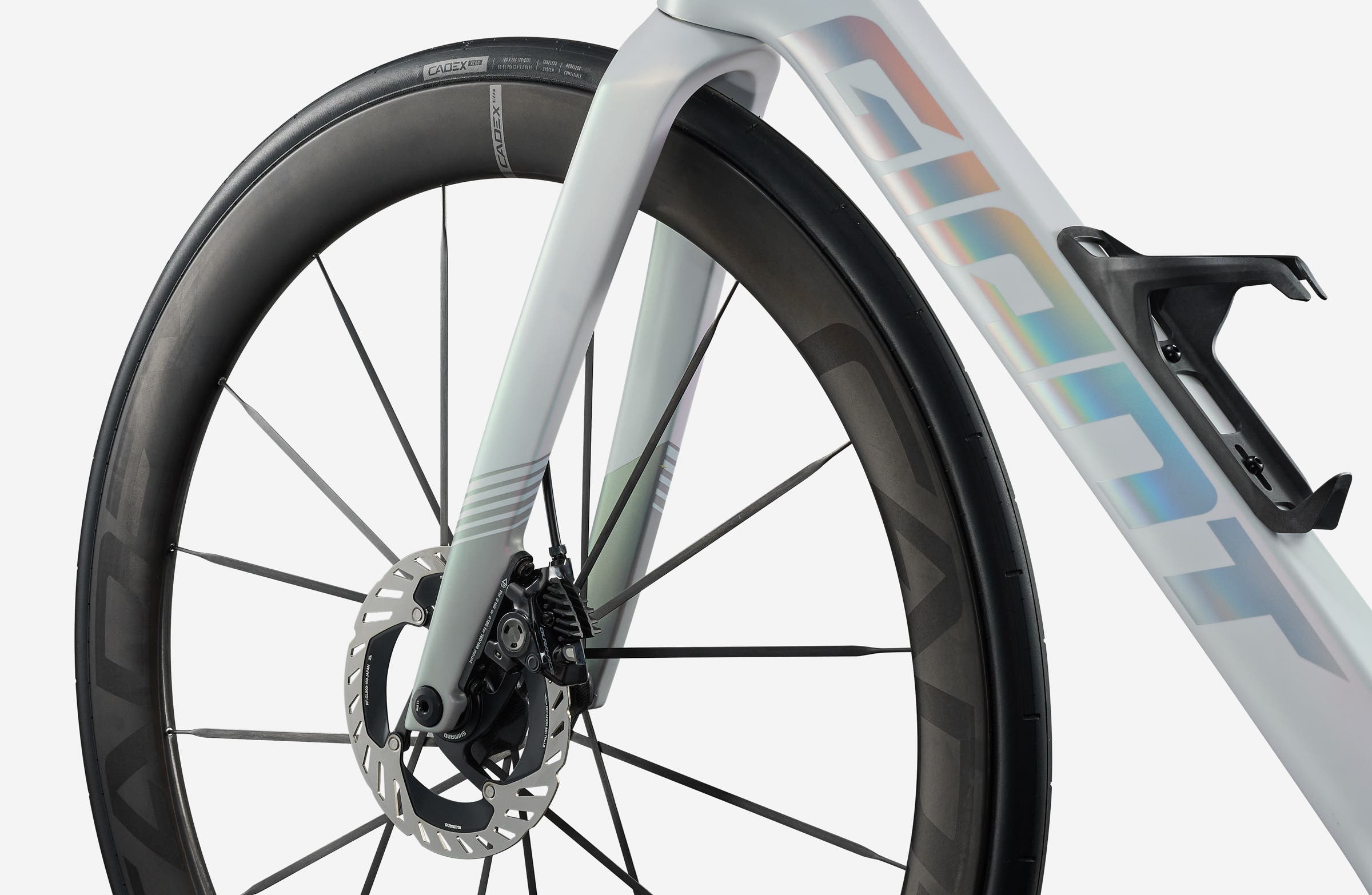
Fast wheels
As with the tires, there’s also a brand-new set of CADEX and Giant wheels. The top-spec Propel is coming equipped with the CADEX Max 50 wheelset. The new wheels integrate the spokes, hub flange, and aero hub design as a single system and manage a claimed 1250-gram wheelset weight (without tape or valves), a 5.4% increase in transmission stiffness, and a 2.18-watt aero advantage over the outgoing CADEX Ultra 50 wheels.
Now again, you won’t get some of that with the lower Propel builds. Those builds include either the Giant SLR 0 50 or SLR 1 50 wheels. They have the same 50mm depth and 22.4mm internal width as the CADEX wheels; however, they lose the integrated hub and spoke system. It’s likely that aerodynamics are close, but there’s a weight penalty and probably a stiffness penalty as well. The SLR 0 50 (found on Advanced Pro models) weighs 1410g, adding a 120-gram rotational weight penalty. The SLR 1 50 (found on Advanced models) weighs 1500g, adding a 210-gram rotational weight penalty.
The bearings also take a hit. The CADEX Max 50 rolls on ceramic bearings, which CADEX claims offer 1.5x smoother action than steel. Both the Giant SLR 0 50 and SLR 1 50 downgrade to standard steel sealed bearings.
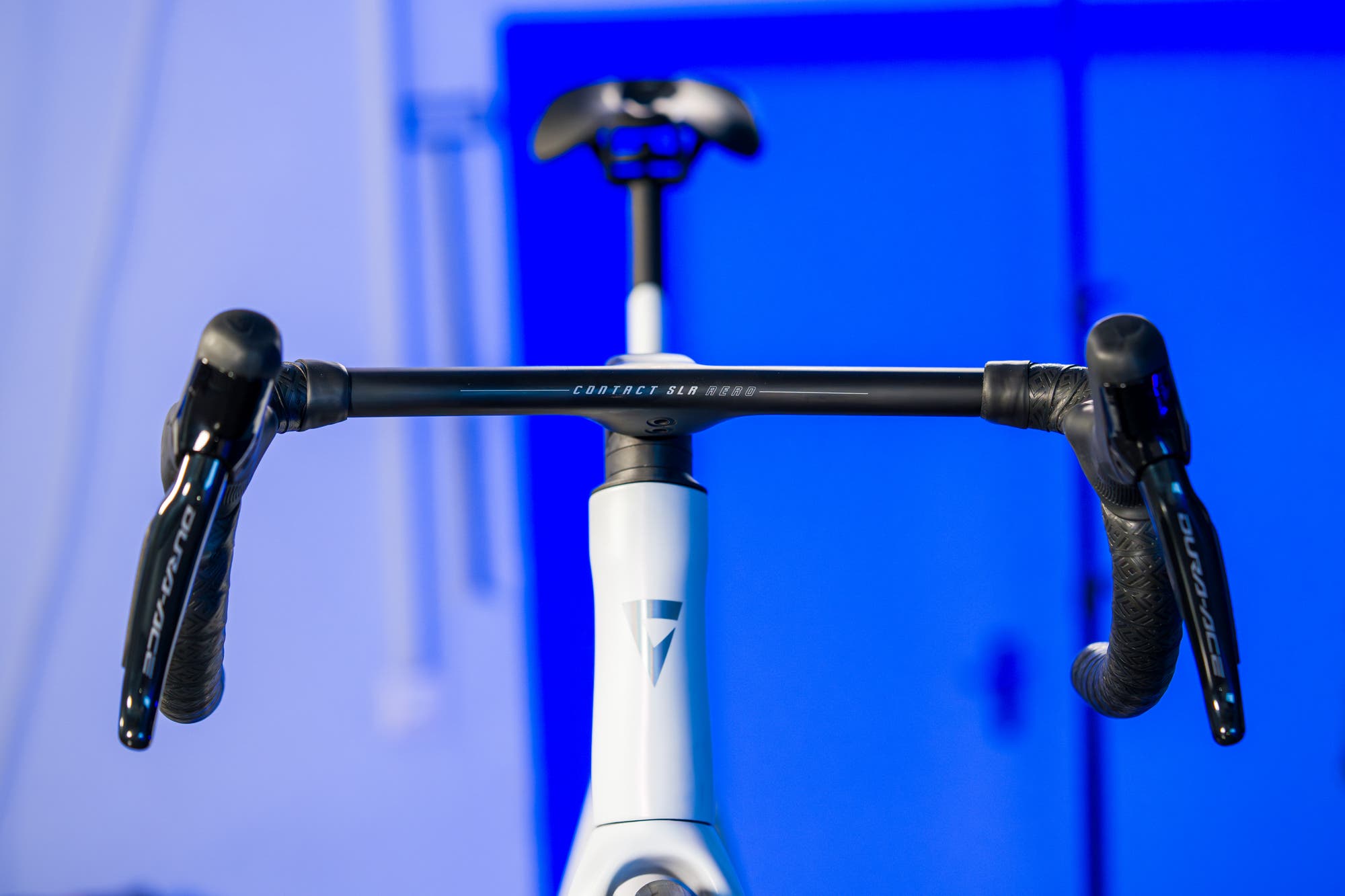
Handlebar sizing
Remember, Giant claims a massive 18.44 watts saved for the new Propel. It’s not a small amount, but roughly 50% of the savings is a combination of the wheels and tires, with the tires being the bigger contributor. Those are legitimate savings, though, and they leave half the savings for the frame, right?
Kind of but this is the nuanced piece. One of the most common places for a brand to find free watts is still the handlebars, and Giant has made some updates to take advantage of this. At the core of this setup is the OverDrive Aero steerer. While Cannondale uses a triangular steerer, Giant has gone D-shaped. This flat-backed design creates a dedicated channel that allows the hydraulic brake hoses to route completely internally from the handlebars down through the head tube, keeping them out of the wind without adding unnecessary bulk to the headtube. That’s old news though, nothing changes about that design for the new bike.
What has changed for this generation are the touchpoints bolted to it. Previously, the Propel Advanced SL 0 had a two-piece bar and stem. That build has now gone to the one-piece carbon Contact SLR cockpit, and the more accessible builds use a two-piece alloy Contact SL Aero. Also changed is that, no matter the build level, the drops now feature a modern 7.3-degree flare. This flared geometry provides a wider, more stable hand position for high-speed descending and cornering while allowing the rider to comfortably maintain a narrow, aerodynamically efficient profile when resting on the hoods.
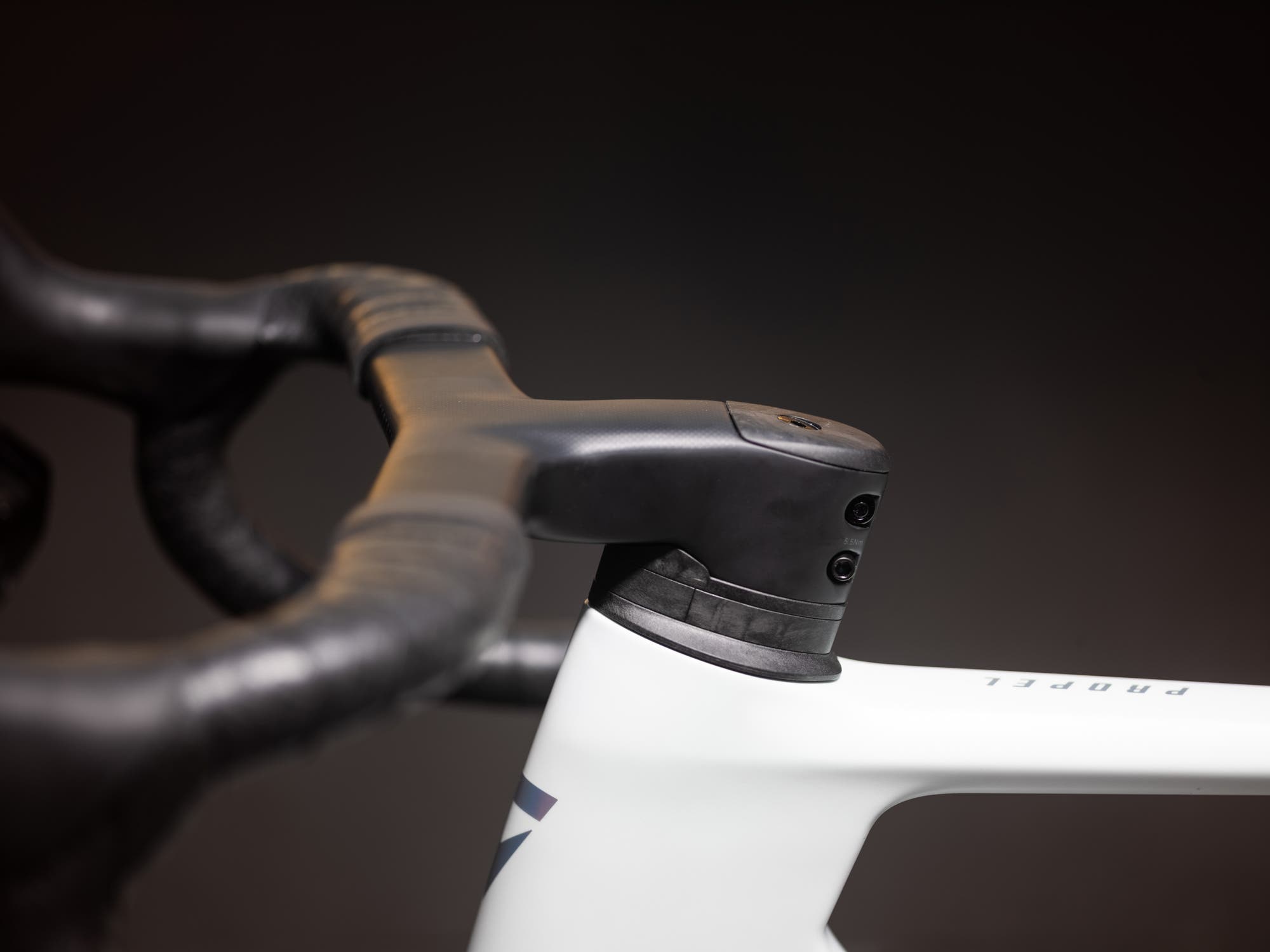
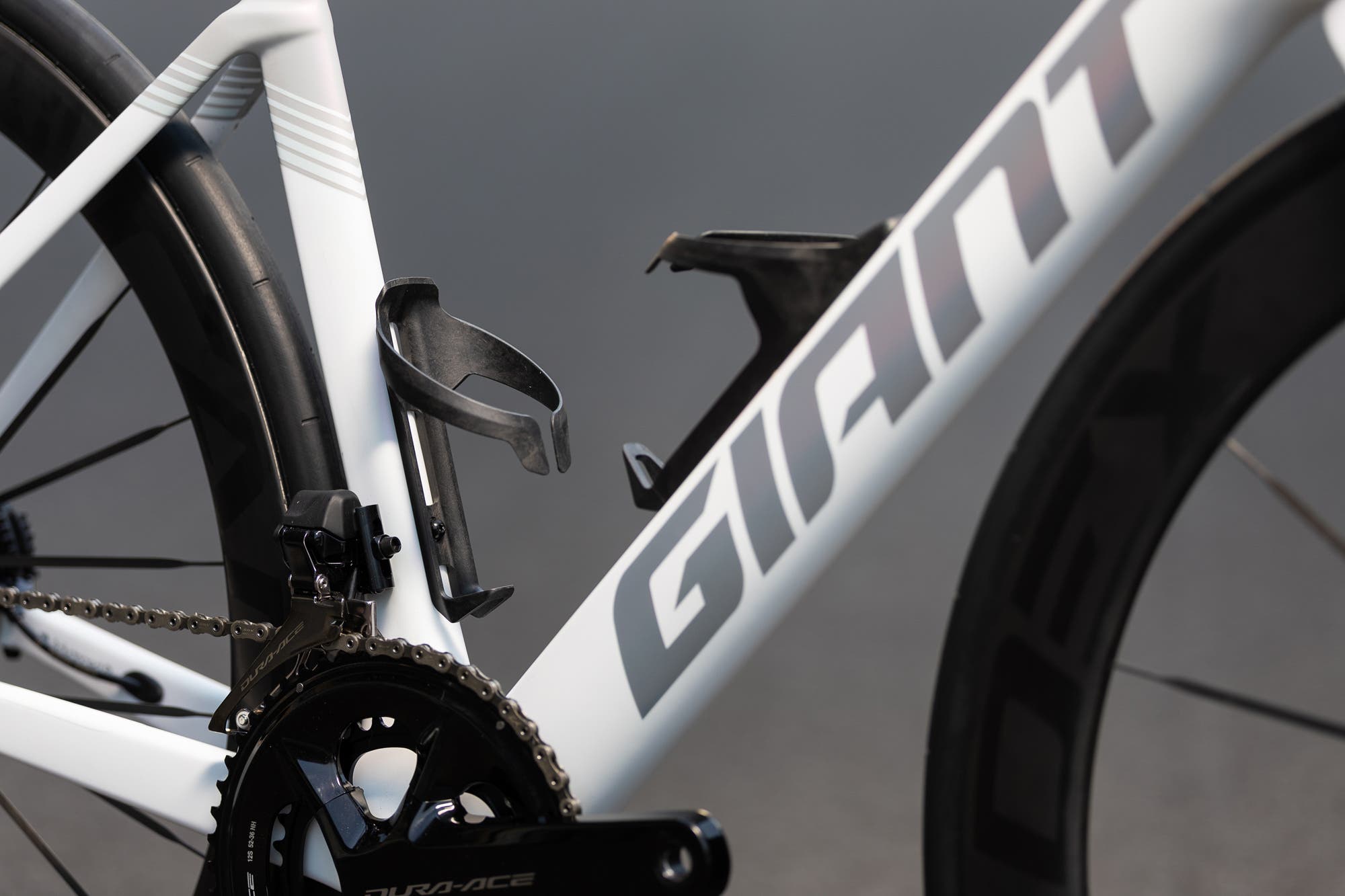
The real savings though, those come from size. The outgoing Giant Propel specs a 420mm bar width on the size Medium (just as an example), and the new model moves down to a 370mm bar width at the hoods. That’s big in the wind tunnel and is almost certainly where a big portion of the leftover saved watts come from. Giant did confirm that’s not all of it though. According to the brand, “small, but perceptible, improvements were also seen across the frameset (frame/fork/water bottle cage).”
Add it all up and there appear to be bigger savings if you can swing for the top build but there’s savings throughout the range. Bonus for anyone with an older Propel, you can also grab some solid speed for as little investment as a new set of tires. Those watt savings aren’t even the real news though.
The real upgrade is ride quality
The headline grabbing 18.44-watts is actually, mostly, available to you even if you’ve got an older Propel but the latest iteration is designed with an eye on the slowest part of the bike, the rider. It might be hard to find big aero gains in a frame in 2026 but there’s still a lot of opportunity to make the rider faster.
Giant proved in the wind tunnel that reducing the handlebar width for a narrower position can net big gains but what about keeping the rider in a more aero position for longer? Giant is referring to this comfort factor as “sustained speed” and goes on to say “one of the most impactful advancements on the new Propel range is a greater emphasis on full-bike compliance”.
To achieve that compliance, Giant went a bit farther than pure layup changes. You can also spot a few subtle moves in the geometry that haven’t been highlighted. On a size Medium, the standover height has shifted to 787mm from 770mm and the seat tube on the models without the integrated seat post (the Advanced Pro and base Advanced) grew from 520mm to 528.5mm. These dimensional shifts aren’t just for flex; they are required to open up the frame to accept modern, high-volume 32mm tires. According to Giant these subtle changes, along with the expanded tire clearance, “work together to improve vertical compliance by up to 25% compared to the previous generation Propel.”
Then, at the front of the bike, the new handlebars aren’t just about aerodynamics. Giant claims that the head tube, stem and handlebars work as a system not just to save watts in the wind but also deliver “12.8% greater front-end compliance to reduce vibrations and minimize road buzz.” The flattened tops aren’t just minimizing frontal area but “improve trunk positioning and comfort in the aero position.”
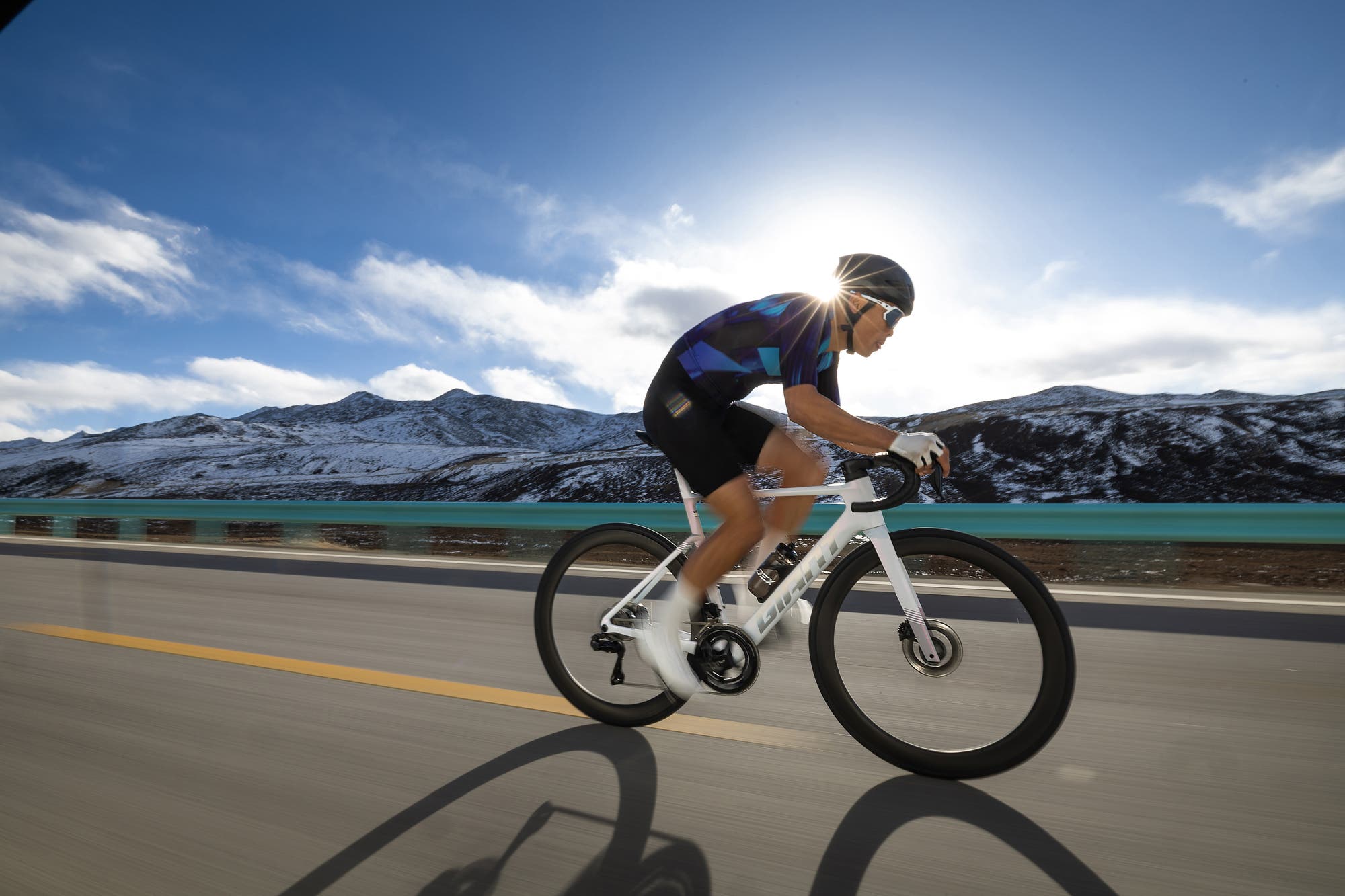
Less weight and the mid-tier sleeper hit
With all the big claims, it’s easy to overlook weight. Just like there’s an expectation of aero gains, there’s also an expectation that the latest bike will lose some weight and that has happened. For the top spec build, Giant claims a 39.9 gram weight reduction for the frame and fork system. Not much but if you include the wheels, tires, and handlebar the claim jumps to 355.5 grams lighter.
| WEIGHT (g) | OLD Propel Advanced SL | NEW Propel Advanced SL | NEW Propel Advanced Pro | NEW Propel Advanced |
| Frame | 845 | 800 | 863 | 863 |
| Fork | 360 | 360 | 360 | 410 |
| Cockpit | 360 | 283 | 283 | 535 |
| Wheels | 1350 | 1250 | 1380 | 1690 |
| Total frameset weight | 1483.1 | 1443.2 (-39.9g) | 1568.5 (+85.4g) | 1618.5 |
| Transmission system weight | 3870.1 | 3514.6 (-355.5g) | 3770 (-100.1g) | 4568 |
Perhaps more relevant, the new mid-range Propel Advanced Pro is actually 100 grams lighter than the outgoing flagship build as claimed by Giant. The brand then goes on to claim that both the weight reduction and improved compliance come along with improved frame stiffness. This in turn translates to “better power transmission, helping the rider reach and maintain higher speeds with less effort” and “superior overall efficiency”.
| FEATURE | OLD Propel Advanced SL | NEW Propel Advanced SL | NEW Propel Advanced Pro | NEW Propel Advanced |
| Frame pedaling stiffness (N/mm) | 82 | 84 (+2.4%) | 77 (-6.1%) | 77 (-6.1%) |
| Frame torsional stiffness (Nm/°) | 120 | 124 (+3.3%) | 110 (-8.3%) | 110 (-8.3%) |
| Fork stiffness (N/mm) | 58 | 60 (+3.4%) | 60 (+3.4%) | 56 (-3.4%) |
| OLD Propel Advanced SL | NEW Propel Advanced SL | NEW Propel Advanced Pro | NEW Propel Advanced | |
| Frameset stiffness-to-weight ratio | 94 | 99.8 (+5.7%) | 87.3 (-7.5%) | 82.7 (-12.4%) |
| System pedaling stiffness-to-weight ratio | 12.1 | 13.9 (+14.8%) | 12.5 (+2.7%) | 9.6 (-20.7%) |
| System controlling stiffness-to-weight ratio | 2.1 | 2.4 (+14.2%) | 2.1 (+1.4%) | 1.7 (-19.5%) |
Giant Propel Geometry
| XS | S | M | ML | L | XL | |
| Seat tube/ISP length | 680 / 484 | 710 / 505 | 740 / 528.5 | 770 / 553.5 | 800 / 576 | 830 / 595 |
| Seat tube angle (degrees) | 74.5 | 74 | 73.5 | 73 | 73 | 72.5 |
| Top tube length | 520 | 535 | 550 | 565 | 580 | 600 |
| Head tube length | 115 | 127 | 145 | 165 | 185 | 200 |
| Head tube angle (degrees) | 71.5 | 72.5 | 73 | 73 | 73 | 73 |
| Fork rake | 45 | 45 | 45 | 45 | 45 | 45 |
| Trail | 67.8 | 61,4 | 58.3 | 58.3 | 58.3 | 58.3 |
| Wheelbase | 971.4 | 973.2 | 980 | 989.8 | 1006 | 1020.3 |
| Chain stay length | 405 | 405 | 405 | 405 | 405 | 405 |
| Bottom bracket drop | 72 | 72 | 69.5 | 69.5 | 67 | 67 |
| Stack | 514.8 | 529.6 | 546 | 565.1 | 581.7 | 596.1 |
| Reach | 377.2 | 383.1 | 388.3 | 392.2 | 402.1 | 412.1 |
| Stand over height | 745.7 | 764.4 | 787 | 808 | 832 | 847 |
| Handlebar width | 380 | 380 | 400 | 400 | 420 | 420 |
| Stem length | 80 | 90 | 100 | 110 | 110 | 120 |
| Crank length | 165 | 165 | 170 | 170 | 172.5 | 172.5 |
| Wheel size | 700C | 700C | 700C | 700C | 700C | 700C |
Giant Propel models, availability, and pricing
The fourth generation Giant Propel is available worldwide today. For more information visit the Giant website.
| Model | Drivetrain | Wheels | Tires | USA (USD) | U.K. (£) | EUR (€) |
| Propel Advanced SL 0 (Dura-Ace) | Shimano Dura-Ace Di2 | CADEX Max 50 | CADEX Aero | – | £9,999 | – |
| Propel Advanced SL 0 (RED) | SRAM RED AXS | CADEX Max 50 | CADEX Aero | $13,500 | £10,499 | €11,999 |
| Propel Advanced SL 1 | Shimano Ultegra Di2 | Giant SLR 0 50 Carbon | CADEX Aero | – | – | – |
| Propel Advanced SL (frameset) | N/A | N/A | N/A | $5,000 | £3,799 | €3,899 |
| Propel Advanced SL (team frameset) | N/A | N/A | N/A | $5,300 | £3,799 | €3,899 |
| Propel Advanced Pro (Dura-Ace) | Shimano Dura-Ace Di2 | Giant SLR 0 50 Carbon | CADEX Aero | $8,000 | £6,749 | €7,999 |
| Propel Advanced Pro 0 (Di2) | Shimano Ultegra Di2 | Giant SLR 0 50 Carbon | CADEX Aero | – | £5,799 | €6,499 |
| Propel Advanced Pro 0 (AXS) | SRAM Force AXS | Giant SLR 0 50 Carbon | CADEX Aero | $7,800 | £5,999 | €6,499 |
| Propel Advanced Pro 1 (AXS) | SRAM Rival AXS | Giant SLR 1 50 Carbon | Giant Gavia Course 0 | – | – | €4,999 |
| Propel Advanced Pro 1 (Di2) | Shimano 105 Di2 | Giant SLR 1 50 Carbon | Giant Gavia Course 0 | – | £4,599 | €4,999 |
| Propel Advanced Pro (frameset) | N/A | N/A | N/A | $3,200 | £2,199 | €2,699 |
| Propel Advanced 0 | Shimano Ultegra Di2 | Giant SLR 2 50 Carbon | Giant Gavia Course 0 | – | £4,199 | €4,799 |
| Propel Advanced 1 | Shimano 105 Di2 | Giant SLR 2 50 Carbon | Giant Gavia Course 0 | $5,300 | £3,499 | €4,399 |
| Propel Advanced 2 | Shimano 105 Mechanical | Giant P-A1 | Giant Gavia Course 0 | $3,500 | £2,599 | €2,999 |
[analyse_source url=”https://velo.outsideonline.com/road/road-gear/giant-propel-4th-gen-launch/”]