Wonderland
RINA LIPA CARRIES THE WEIGHT OF RIBBONS
Rina Lipa is stepping into her own spotlight with her new debut short film, Weight of Ribbons. Directed by a young Louis Melvyn and produced by Kinzy Diab, this story wrestles with how grand a battle ballet can be.
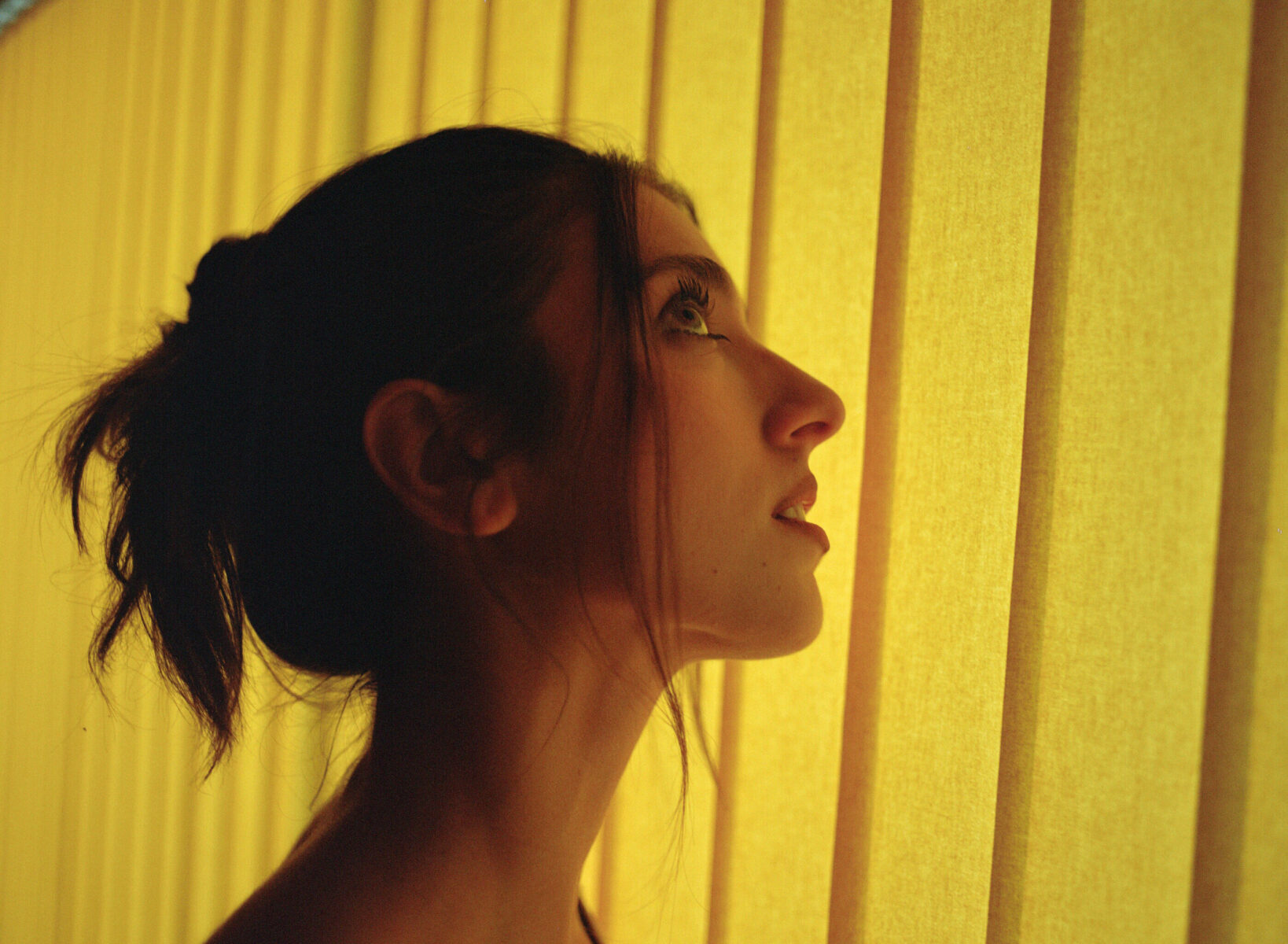
A nameless ballet dancer, slender frame encased by a grey crossover knit and signature pink leotard and tights stuck to her skin, actress and now-screenwriter Rina Lipa steps into frame to grace the studio floor. Her knees bend, her arches heighten and her arms crescendo above her head in a gracious motion.
“For a really long time, when I was young, it was always ‘Rina Ballerina’,” she says. “That was my obsession. Everything revolved around ballet, performing and dancing as a dramatic, hyper child. It was just such a big part of my childhood.”
Those who have been in Rina’s shoes before know the weight and responsibility that come with being a ballet dancer. By 11 years old, she was on pointe – literally. At the same time, she was in classes with girls who were four or five years her senior. “It was definitely a push – I hadn’t developed. I hadn’t grown into myself,” she says. “I was put into these spaces that felt really difficult sometimes, discipline-wise, to handle. I did that for a really long time. And then it’s not that I stopped dancing, it’s just ballet as a form itself…I kind of fell out of love with it. The rules and how strict it could be, but I still carried on doing contemporary dance, which I found lent itself more fully to storytelling.”
Rina always wanted to mix dance, acting and fashion into some sort of project. “I always tried to link everything I do to those creative worlds as well,” she shares. “I haven’t been in touch with that inner child for a while, so I started going back to classes and was like, ‘Okay, let’s sit down and let’s try and articulate this.’ It slowly moulded and took a life of its own and became a whole thing.”
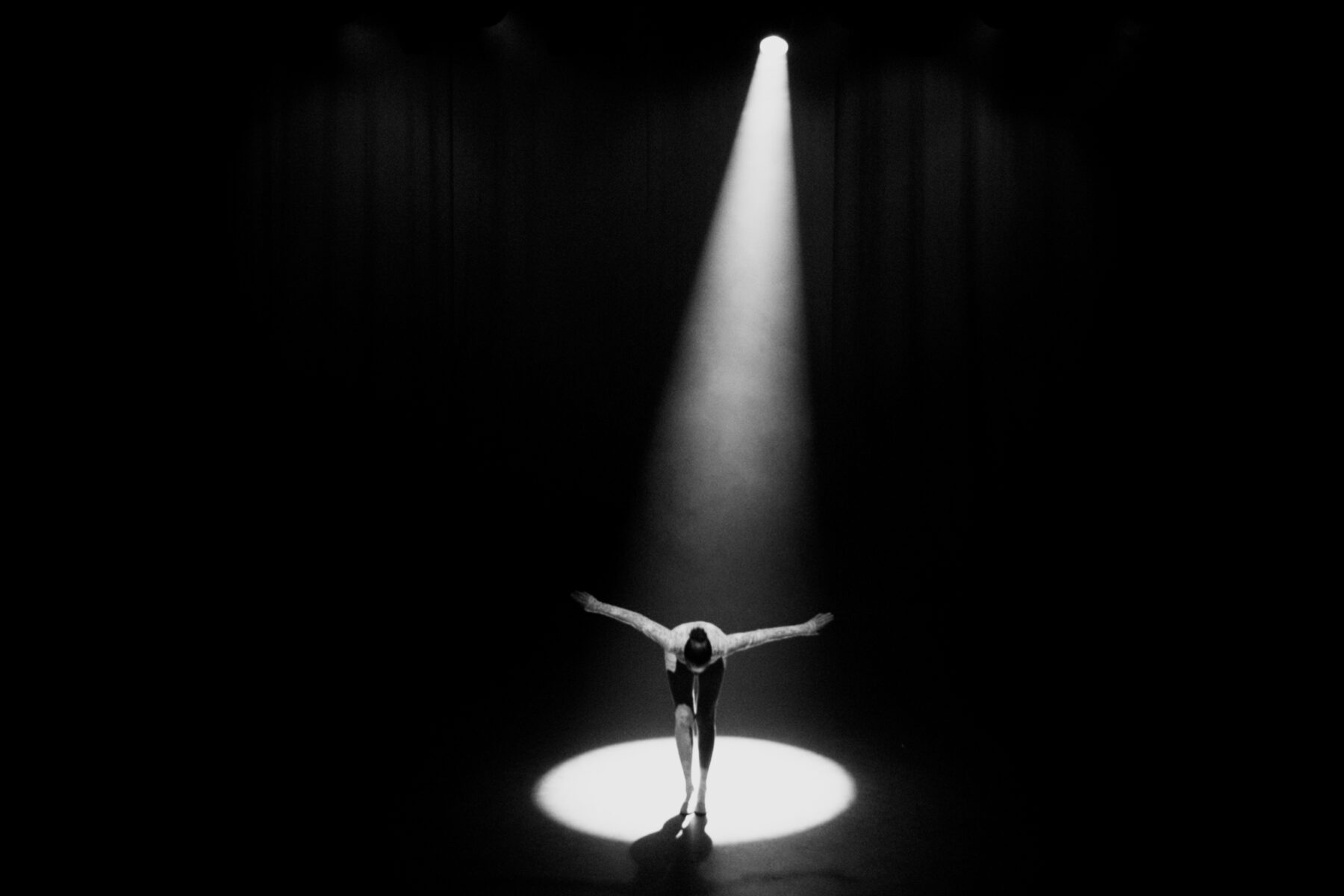
So naturally, when the opportunity arose, through a series of cathartic writing conversations with friends, she was able to find solace in another medium to express herself. “I wanted to share the story because I wanted to create something on my own and push myself in this writing aspect more,” she explains. “I’d written pieces for theatre and things like that, but I hadn’t written a short film and written it down in script form.” And what’s transpired is a “somewhat personal but also, obviously, overly exaggerated and dramatised” portrayal of how it can feel to grow up with ballet, and at some point, leave it behind.
Calling on her friend and collaborator, producer Kinzy Diab, the synergy needed to carry this story rested within close reach. “When Rina first shared the idea, I recognised something very honest about the tension between discipline and desire, and the quiet grief that can come with growing out of a dream you once loved,” she says of the 10-minute short that captures that crossroads powerfully. “It wasn’t simply a story about ballet. It felt like a microcosm for the experience of losing love in any form, whether that’s a passion, a person, or a version of yourself you once held onto.”
And it’s refreshing to see this mutual understanding of the bigger picture – a reminder that the makings of this short film were very much a friends and family affair. A few serendipitous meetings (and happenings) led them to the final piece of this already-full puzzle – an “It” girl-studded list of collaborators; Edie Liberty Rose with styling, pulling some gorgeous threads together, including lacy moments from Miu Miu and Valentino. Millie Hannah on hair and makeup, capturing both Rina’s innocence and allure, and the youngest of the Lipa clan, Gijn, as the film’s audio engineer.
Then, there’s how the title came to me. “I was telling my boyfriend, ‘I want something that gives a feeling of the film’s heavy aspect.’ The character narrates so much of how difficult her kind of experiences are, and obviously, I wanted there to be a part of the title that connotes ballet itself. And he just said, ‘What about ‘Weight of Ribbons’?” and the rest was history. “He ate with that,” she laughs.
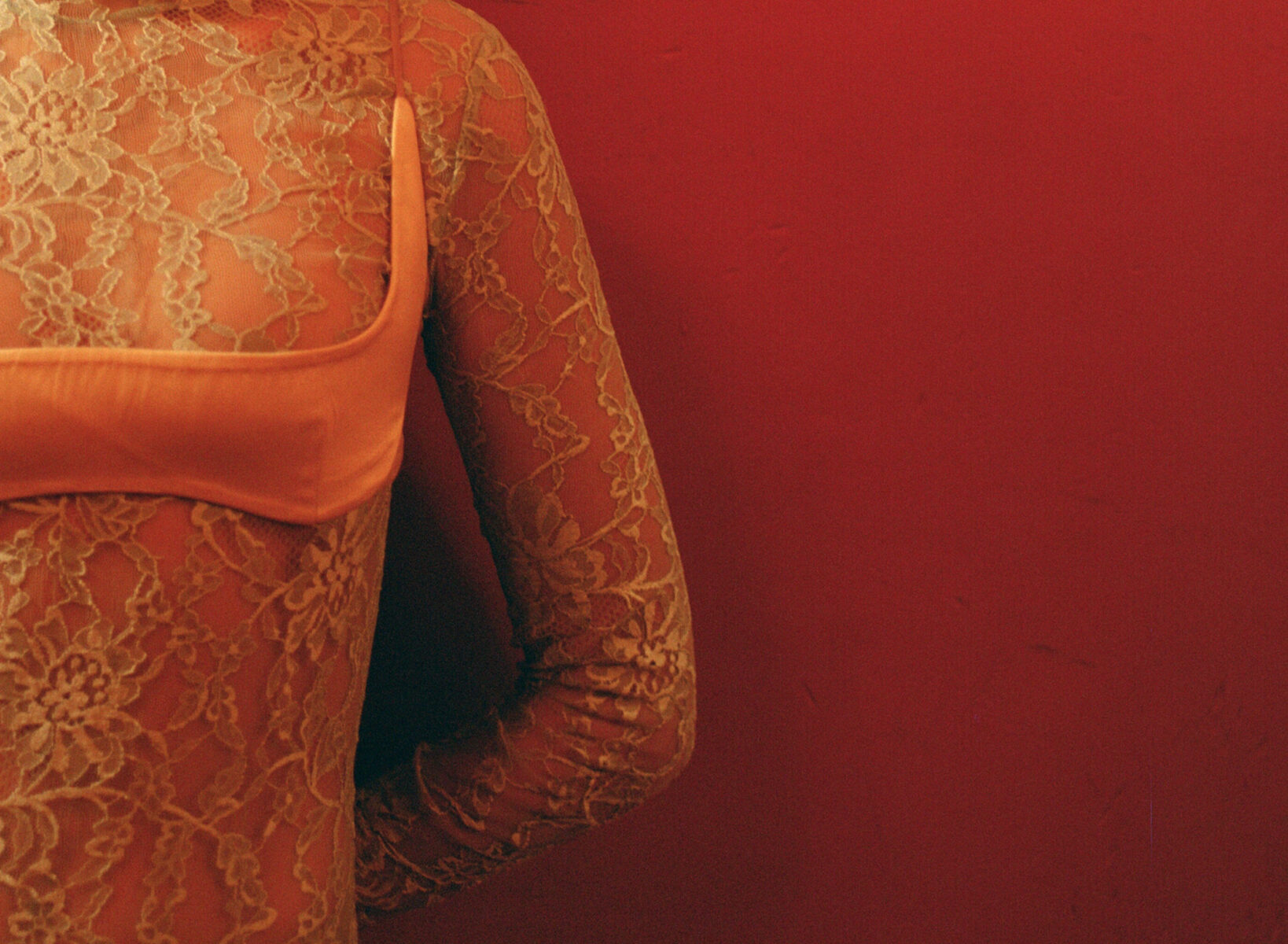
The second chance-happening that helped Rina and Kinzy communicate the film’s intention visually was having a young London-based director, Louis Melvyn, onboard. “Ballet itself is very clinical and [about] perfection. I wanted to flip that completely on the head and make it a bit exaggerated,” he reveals. So, he unravelled himself creatively into an enriching research process, pulling references from films like Darren Aronofsky’s Black Swan (2011) to looking at lenses used for war films, alongside WOR’s DOP Joseph Dunn, to help affirm his direction.
And there were key goals to achieve. One was “to make the colours quite vibrant,” another was that “the ballet teacher in the film is very flamboyantly dressed,” and “the locations are quite colourful, [but] the school is not.” It surpasses style and lies in a pace that he felt mirrored the storyline’s temperament and the emotional gravitas of the broader message. “It’s got a tempo of how you would in ballet, but it’s all stranger than that. It becomes a weird hybrid between the story, which is a common thing, and what’s expected when you think of ballet,” he says.
Against a backdrop of Camden’s KOKO theatre, a childhood core for Rina, the film takes on a deeper charm. “The space holds both grandeur and emptiness, which mirrored the resolution we were working towards – that unresolved question at the heart of the film: When the hole is healed, will it make me whole again?” says Kinzy. “It allowed the ending to feel expansive, but still quietly uncertain.” And that’s the beauty of this story – nothing is definitive, but there is a subtle comfort in the questioning.
Louis’ cinematography shines in that juxtaposition, his meticulous eye for composition and shape at the forefront. “It’s really a psychological articulation of thoughts and fragments of ideas and things that happen,” he says. “But it’s hard for me to describe this style. It was really difficult.” And although nailing that style, a darkened but not gothic, vignette-framed depiction of that desire and discipline, was hard to define, it was much loved, nonetheless. And in doing so, he spun faster into a process that allowed him to understand and experiment with both his craft and the art of ballet in a new way. Taking larger leaps to develop a signature style-in-the-making.
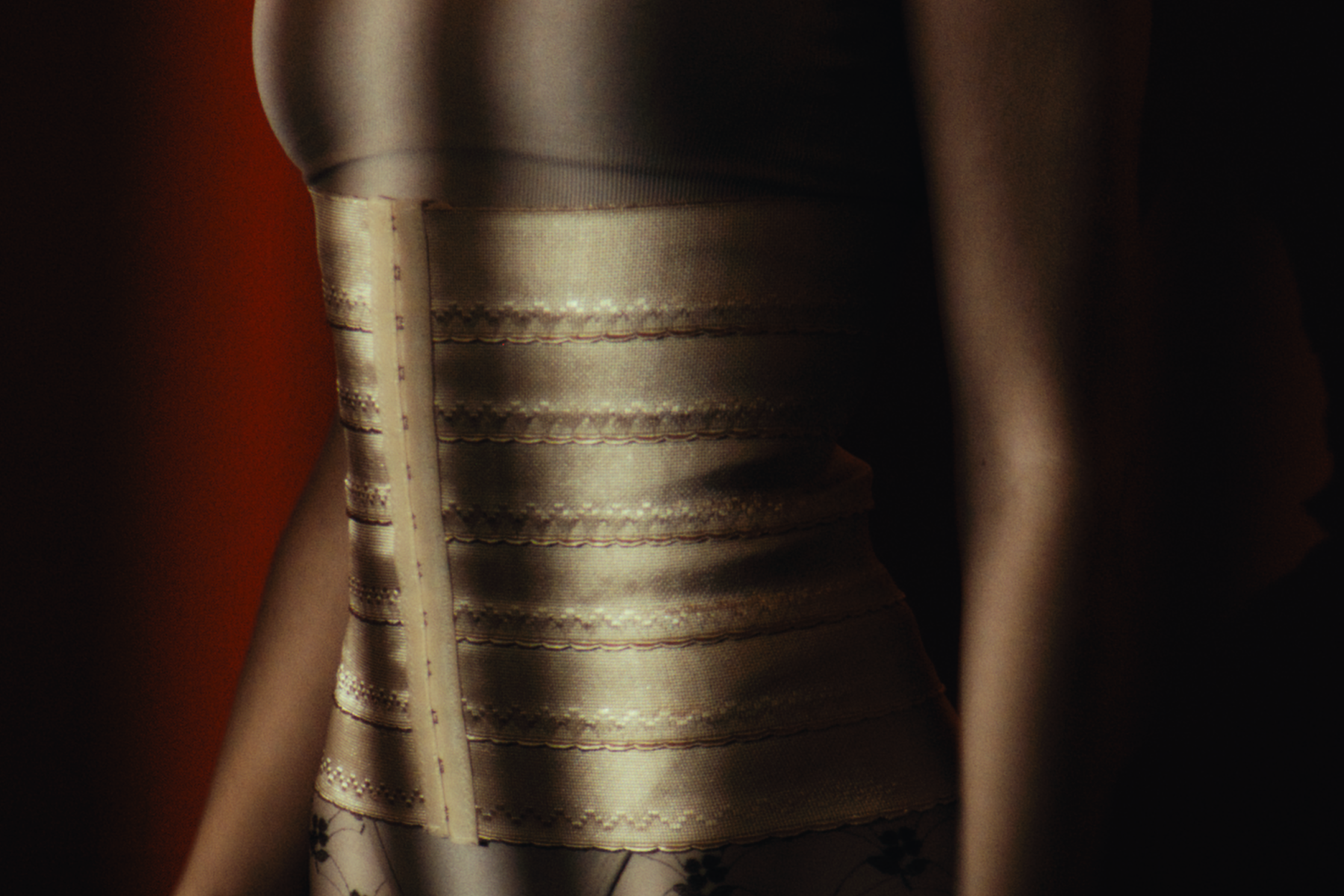
“I’ve really come to understand how much of a craft this is, and what actually goes into it, in terms of expectation, pressure, even in terms of the body, how taxing it is on your feet, your limbs and everything,” he says. “The first scene, specifically, is kind of a big crescendo to a snapping point. That, for me, was the way of articulating the first disjunction between the main character and the art form, because the mirror becomes disjointed with her dancing. It’s a visualisation of a disjointness from passion, from what you love, in a physical sense, which, again, is an example of the abnormalities that I like to explore. I’ve diverted a lot.”
Sometimes, however, diversions have great results – as is the case for Weight of Ribbons. “Going back to ballet made me realise why I kind of love the arts,” says Rina. For this reason, this big step into even bigger waters with film marks a turning point in her creativity, one she’s willing to explore at length – and one we’re excited to watch unfold. In terms of what we can expect in the future, well: “I do love a horror film,” Rina grins. “A good horror film would be so fun and so different – dramatic! But honestly, as long as I can play female characters that reflect the real world. You could meet them outside – it’s not your cliche kind of tropes that are like girl next door, or at school, or ‘Jealous Girlfriend’, these tropes that you see all the time – but very complex characters that have a lot to say.”
With Weight Of Ribbons, it’s fair to say she – and the team – have achieved that aspiration, and Kinzy puts it best: “I hope audiences leave with a sense of freedom and permission to evolve, to let go of versions of themselves they have outgrown, and to sit with that loss without needing to frame it as failure.” In that alone, there’s so much more to say.
Photography by Louis Melvyn
Styling by Edie Liberty Rose
Hair and Makeup by Millie Hannah
Production by Kinzy Diab
Words by Aswan Magumbe